Carbon monoxide is produced whenever combustion is incomplete, and its hazard comes as much from its invisibility as from its chemistry. OSHA sets the permissible exposure limit at 50 ppm as an 8-hour time-weighted average, with a ceiling of 200 ppm. NIOSH places the immediately dangerous to life or health threshold at 1,200 ppm — a concentration that can be reached within minutes in a poorly ventilated enclosed space. The gap between those two numbers is where industrial CO incidents tend to happen: slow enough that workers don't notice until symptoms appear, fast enough that there's little time to respond once a process goes wrong.
The case for fixed detection over portable monitoring comes down to one thing: fixed systems don't depend on human behavior. Portable detectors are appropriate for non-routine confined space entry, where a worker enters, monitors, and exits. But in environments where combustion sources run continuously — forklifts cycling through a warehouse shift, diesel engines idling in a tunnel heading, a boiler operating through the night — the exposure risk is area-wide and ongoing. A fixed network covers the space regardless of who is present or what they're doing.
The three settings examined here — warehouses with internal combustion forklifts, underground mines and tunnels, and industrial boiler and combustion facilities — each present a distinct version of this problem. They differ in how fast CO accumulates, what other gases are present, what the regulatory environment looks like, and what the carbon monoxide detection system needs to connect to. The table below captures those differences at a glance before we work through each setting in detail.
| Parameter | Warehouse / DC | Underground Mine | Boiler / Combustion |
|---|---|---|---|
| CO Buildup Rate | Slow — hours | Medium — minutes | Fast — seconds to peak |
| Measurement Range | 0–200 ppm | 0–100 ppm | 0–2,000 ppm |
| Explosion-Proof Certification | Usually not needed | Mandatory (ATEX/IECEx) | Depends on fuel type |
| Other Gas Threats | Low | High — CH₄, NOx, CO together | Moderate — NOx alongside CO |
| Control System Link | Recommended | Required | Required |
| Calibration Interval | 6–12 months | 3–6 months | 3–6 months |
1. Warehouses and Distribution Centers with Forklift Traffic
How Carbon Monoxide Accumulates in a Modern Warehouse
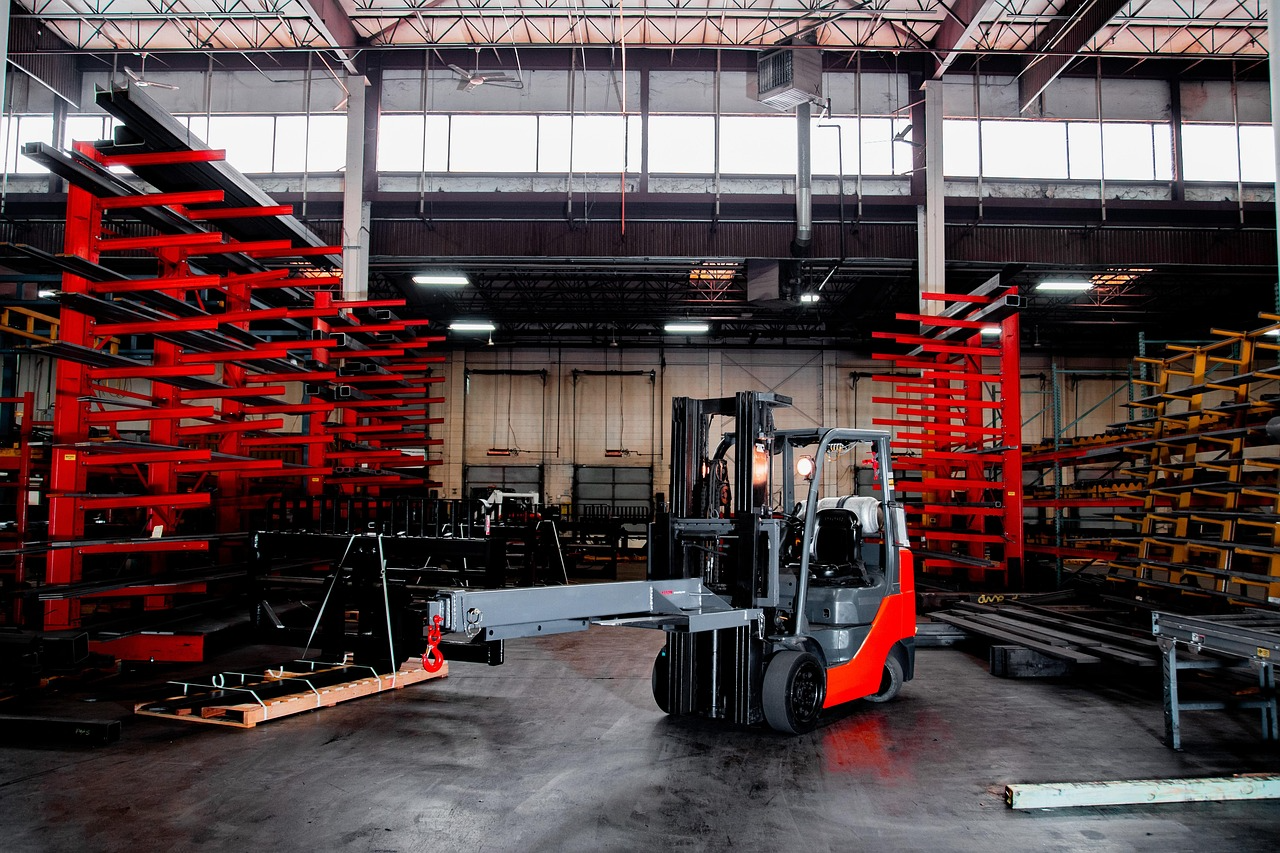
A single propane-powered forklift operating for one hour produces roughly 3–6 grams of CO under normal conditions — more if the engine is running rich or hasn't been recently serviced. That figure matters less in isolation than in context: what happens to that CO once it enters the building?
A fleet of propane forklifts operating simultaneously in a sealed distribution center can sustain ambient CO concentrations well above OSHA's 50 ppm TWA limit without triggering any visible sign that something is wrong. Workers develop headaches, attribute them to fatigue, and the exposure continues.
Where CO Actually Concentrates and Where Detectors Belong
CO mixes throughout the breathing zone rather than stratifying at ceiling or floor level. Sensor height matters: mounting at 1.5 to 1.8 meters captures the concentration workers are actually exposed to, while ceiling-mounted sensors in high-bay warehouses can read significantly lower. Placement should follow forklift traffic patterns, with priority given to loading dock areas and charging lanes where engines idle longest.
Connecting Detection to Ventilation Response
The practical value of fixed CO detectors in a warehouse comes from its connection to ventilation control. A tiered response structure — alert operators and increase ventilation at 25–35 ppm, sound alarms and restrict forklift entry at 50 ppm, trigger mandatory evacuation and full ventilation at 100 ppm or above — converts a passive measurement into an active safety system. Integration with the facility BMS or PLC via 4–20 mA analog output is standard for this application; facilities with existing PLC infrastructure can alternatively use RS485 Modbus RTU, which supports addressable multi-sensor networks over a single cable run.
Without this connection to the facility BMS or PLC, a CO detector is a measuring instrument. With it, the system becomes an active control layer.
2. Underground Mines and Tunnels
A More Complex Gas Environment
Underground settings present the most demanding version of the CO detection problem — not necessarily because concentrations are higher, though they can be, but because the combination of factors makes a safe response genuinely difficult. Escape routes are limited. Ventilation is mechanical and can fail. And CO rarely appears alone.
The sources are varied and produce different concentration profiles. CO sources underground range from diesel exhaust to post-blast gas to coal seam oxidation — each with a different concentration profile, but sharing the same fundamental problem: in a confined heading with limited ventilation, the window between safe and lethal can be as short as four to eight minutes. That's not enough time for a worker to notice symptoms, locate the source, and initiate an evacuation without automated detection and alarm propagation already in motion.
Why CO-Only Detection Is Often Insufficient Underground
Methane accumulates in gassy mines independently of CO, creating a situation where a CO detector alone gives an incomplete picture of atmospheric safety. Nitrogen oxides from blasting and diesel combustion add a third toxic component. The practical question for engineers is which combination of gases justifies which level of monitoring: a non-gassy road tunnel with diesel equipment warrants a single-gas fixed CO network; a coal mine requires CO and methane at minimum; deep mines with active blasting should carry full atmospheric monitoring across CO, methane, oxygen, and NOx.
Hardware Constraints That Do Not Exist in Other Settings
Any fixed carbon monoxide gas detector deployed in a Zone 1 or Zone 2 classified underground environment — where explosive atmospheres are probable or possible — must carry ATEX certification in Europe or IECEx internationally, at minimum Group I, Category M1 for coal mines. Where methane or H₂S co-exposure is likely, the detector should additionally support multi-gas monitoring with 4–20 mA output. This isn't a design preference; it's a legal constraint in most mining jurisdictions, and procurement of non-certified equipment creates liability exposure regardless of whether an incident occurs. Enclosures additionally need to withstand the mechanical impacts common in mining environments, typically IK08 rating or higher.
3. Industrial Boilers, Furnaces, and Combustion Processes
CO as a Process Signal, Not Just a Hazard Indicator
The boiler room is where CO detection carries a dimension that the other two settings don't: it tells you something useful about the combustion process itself, not just about worker exposure risk.
When combustion is incomplete — whether from insufficient air supply, a misaligned burner, or a shift in fuel quality — CO production increases sharply and rapidly. In boiler room applications, concentrations can move from under 100 ppm to over 2,000 ppm within seconds. This is the defining characteristic of combustion CO monitoring: it is not a slow accumulation problem, it is a transient event problem. The detector needs a measurement range that reaches 2,000 ppm and a response time fast enough to catch the spike before it propagates.
The practical implication is that a fixed CO sensor positioned in the flue gas stream serves two functions simultaneously. From a safety standpoint, it detects incomplete combustion by-products before they migrate into occupied spaces. From an operational standpoint, it provides real-time feedback on combustion quality: 50–200 ppm CO in flue gas indicates optimal combustion; below 50 ppm suggests excess air and heat loss; above 400 ppm indicates fuel waste and the beginning of a CO hazard. Operators and control systems can act on that signal continuously, not just when an alarm threshold is crossed.
Where Sensors Go and What They Connect To
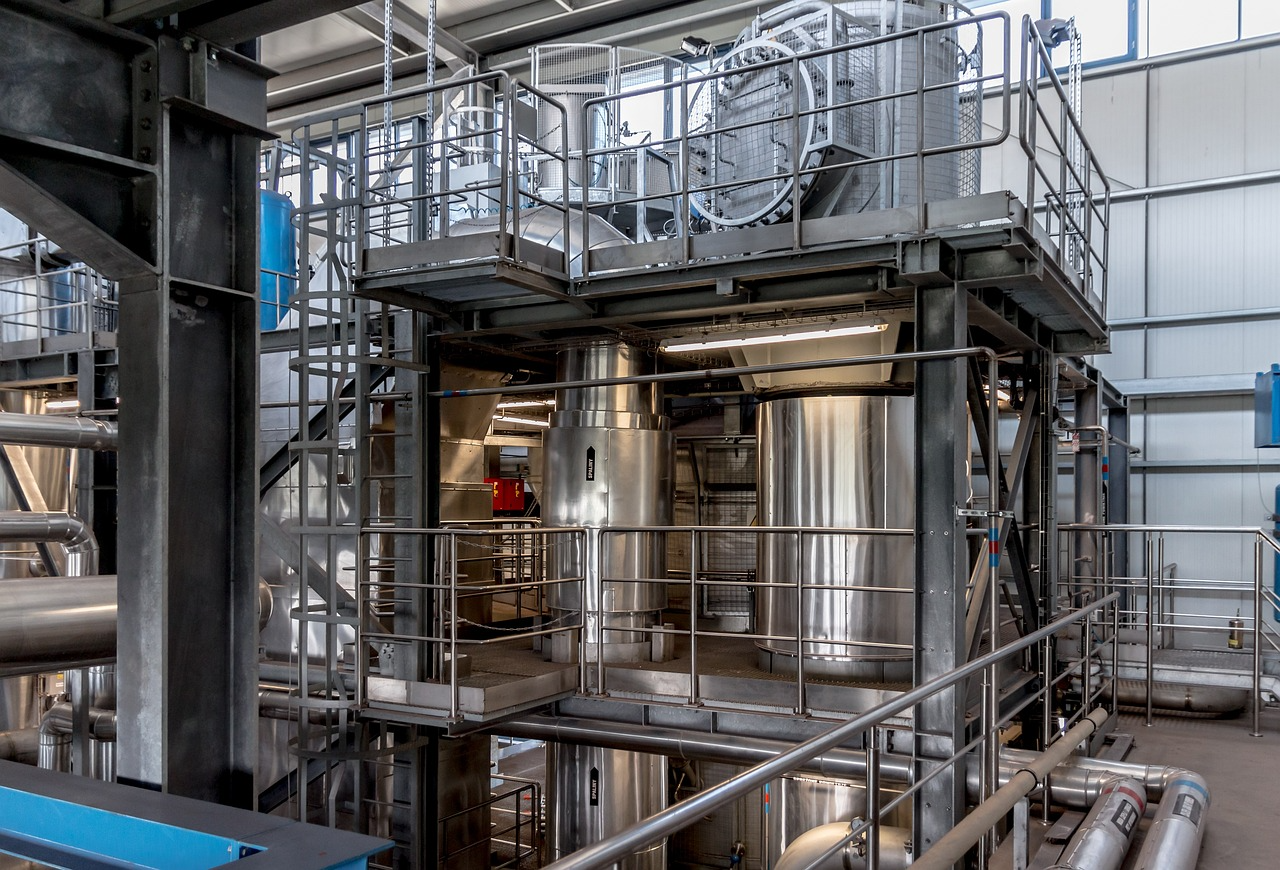
Carbon monoxide sensor placement in boiler room applications splits across two purposes. Flue gas sensors sit downstream of the combustion chamber and feed into the burner management system — this is the combustion efficiency measurement. Personnel protection sensors go at breathing zone height in the equipment room itself, covering the scenario where CO leaks from flue connections, heat exchanger failures, or back-drafting. Adjacent spaces — basements, equipment closets, connected mechanical rooms — warrant their own coverage, since CO migrates through building penetrations in ways that are difficult to predict.
The interlock logic for boiler applications is more consequential than in warehouse settings. At 200 ppm in the equipment room, forced ventilation activates and operators are alerted. At 400 ppm, evacuation alarms sound. At 800 ppm, combustion equipment shuts down automatically and emergency services are notified. On the flue gas side, sustained concentrations above 1,000 ppm trigger a burner management system response — not just an alarm, but a combustion adjustment sequence. The 4–20 mA signal standard, where 4 mA corresponds to zero concentration and 20 mA to full scale, integrates directly into existing DCS and burner management platforms without additional signal conditioning.
Sensor Degradation in High-Temperature Environments
Electrochemical sensors in boiler rooms age faster than in other settings. Ambient temperatures above 40°C accelerate electrolyte evaporation; high humidity attacks the membrane; some combustion processes produce hydrogen, which electrochemical CO sensors read as a positive signal. The practical consequence is a shorter calibration interval — 3 to 6 months rather than the 6 to 12 months typical in warehouse environments — and a tighter specification requirement at procurement: sensors should be rated for at least -20°C to +50°C operating range, 10–95% RH non-condensing humidity, and a hydrogen cross-sensitivity coefficient below 10% equivalent.
Choosing the Right Detector Starts With the Right Scenario
Not every fixed carbon monoxide gas detector is built for the same environment, and the differences matter more than most procurement decisions acknowledge. A warehouse with forklift traffic presents a manageable, slow-building risk — a single-gas CO detector at the lower end of the measurement range is often sufficient, and cost-efficiency is a reasonable priority. A boiler room is a different calculation entirely: CO concentrations can spike within seconds of a combustion upset, which means the detector needs a measurement range extending to 2,000 ppm and a response time fast enough to catch the event before it propagates. An underground tunnel or confined space adds another layer — CO rarely appears alone, and a detector that ignores H₂S, O₂ depletion, or combustible gas accumulation is only telling part of the story.
The practical implication is that matching the detector to the environment is not a minor specification detail — it determines whether the system actually protects the people working in it.
GasDog designs fixed gas detectors across this full range of industrial scenarios, from entry-level single-gas CO monitoring to multi-gas systems built for the most demanding confined space and combustion environments. For anyone working through the decisions this article has outlined, their range is worth a look.