Every industrial control system eventually reaches a critical tipping point where its status as a proven, reliable asset shifts into that of an operational liability. While holding onto legacy hardware may seem like a cost-saving measure, the reality is that outdated technology often carries hidden costs that manifest only during a crisis. Transitioning from reactive maintenance to a strategic lifecycle plan is essential for maintaining production continuity in an increasingly digital landscape.
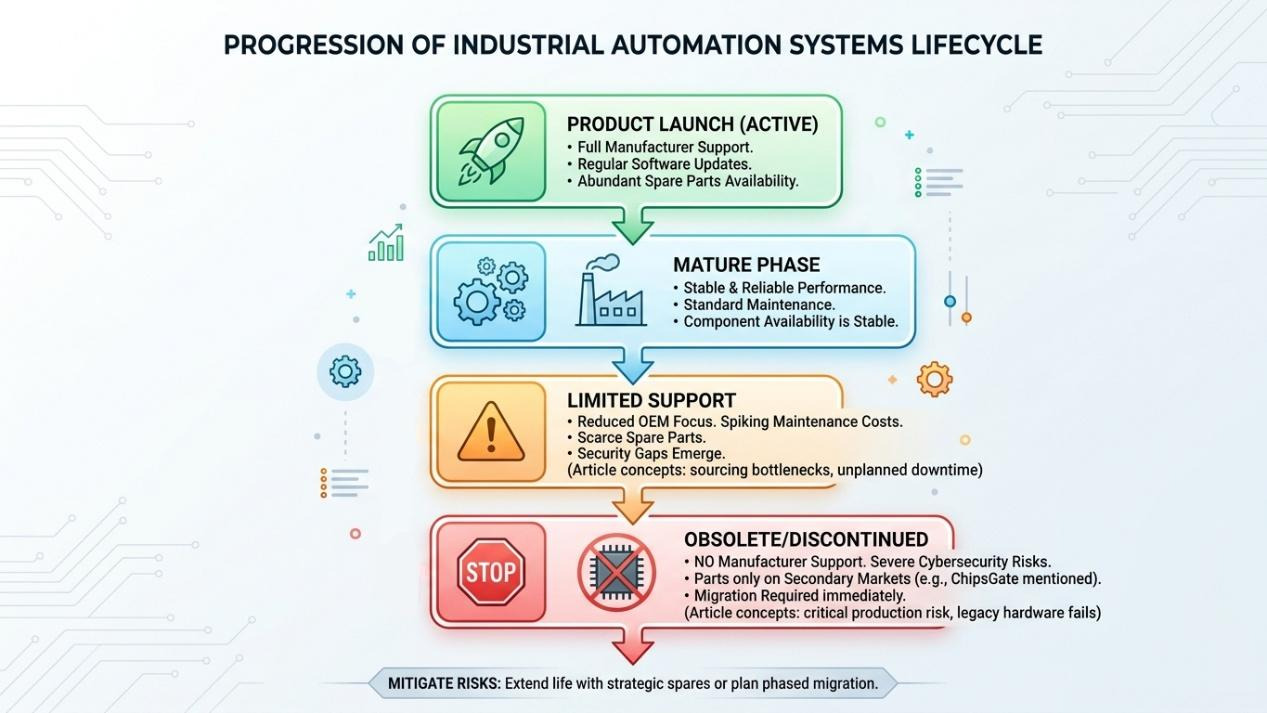
Identifying the Hidden Risks in Discontinued Control Systems
Unplanned Downtime and Sourcing Bottlenecks
When legacy hardware fails, theMean Time to Repair (MTTR)often spikes because the primary challenge shifts from technical repair to procurement logistics. Hunting for a direct replacement for a damaged HMI or a specific I/O module becomes a race against time once the Original Equipment Manufacturer (OEM) no longer stocks the part. Without a pre-verified source, facilities face extended outages that can last weeks while searching for compatible, functional hardware on the open market.
Cybersecurity Vulnerabilities in Outdated Firmware
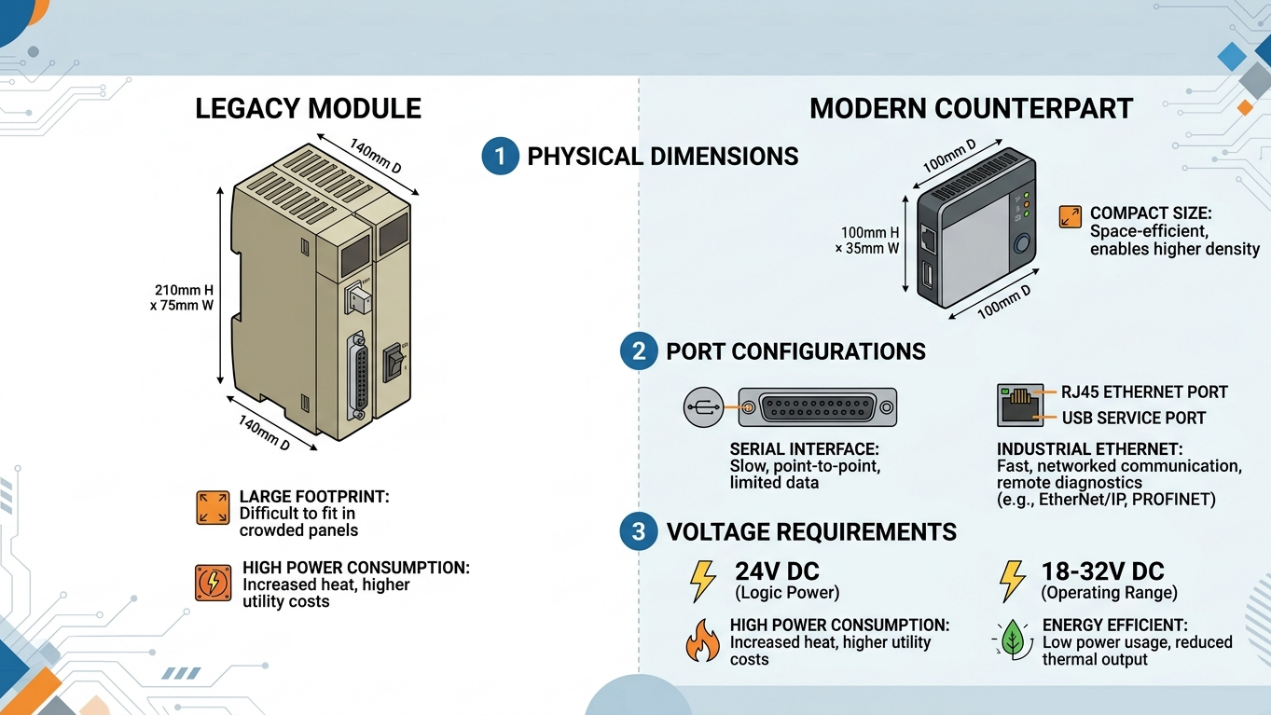
Older Programmable Logic Controllers (PLCs) and Human-Machine Interfaces (HMIs) were designed in an era when "air-gapping" was the primary security strategy. These devices often lack modern encryption, secure boot features, or the ability to be patched against contemporary threats. Connecting legacy protocols, such as older serial interfaces, to modern Ethernet-based networks without robust isolation creates entry points that bypass standard industrial security frameworks likeIEC 62443.
The IIoT Compatibility Gap
A significant risk of relying on legacy hardware is the "Dark Data" problem, where valuable machine insights remain trapped in isolated silos. Older systems often lack the processing power or communication protocols required to integrate with Industrial Internet of Things (IIoT) platforms. This prevents facilities from implementingpredictive maintenanceand real-time data analytics, effectively capping the efficiency of the entire production line at 20th-century levels.
What to Do When Legacy Hardware Fails
Step-by-Step Diagnostic Protocol for Discontinued PLCs
When a legacy PLC enters a "Fault" state, a systematic approach is required to determine if the hardware is salvageable or requires immediate replacement. Follow this standard diagnostic sequence to minimize guesswork:
- Isolate the Fault: Determine if the error is localized to the power supply, a specific I/O module, or the central processing unit (CPU).
- Cross-Reference Error Codes: Use archived OEM manuals or technical databases to interpret legacy LED blink patterns or hexadecimal error codes.
- Verify Backplane Integrity: Inspect the physical communication bus for corrosion or mechanical wear before testing a replacement module.
- Check Firmware Compatibility: Ensure the replacement module’s firmware version is compatible with the existing CPU and software project.
Evaluating Repair vs. Direct Replacement
Deciding whether to repair a component or seek a "drop-in" replacement depends on the criticality of the machine and the availability of technical expertise. A component-level repair may be cost-effective but often lacks the long-term reliability of a fully tested replacement unit.
Criteria | Legacy Repair | Drop-in Replacement |
|---|---|---|
| Lead Time | High (Days to Weeks) | Low (If in stock) |
| Reliability | Variable (Depends on technician) | High (Tested/Certified) |
| Cost | Moderate | Variable (Market dependent) |
| Integration Effort | Zero (Same unit) | Minimal (Plug and play) |
Proven Strategies to Mitigate Legacy Hardware Risks
Conducting a Comprehensive Spares Inventory Audit
The first step in risk mitigation is visibility. Engineering teams should conduct a thorough audit of all control panels to catalog exact part numbers,firmware revisions, and the physical condition of active equipment. This data allows procurement managers to create a priority list based on "critical path" machinery—identifying which single point of failure could halt the entire facility.
Securing a Reliable Supply Chain for Critical Spares
Proactive facilities do not wait for a failure to begin the sourcing process. It is vital to identify secondary markets and distributors capable of providing authenticated, testeddiscontinued automation components. Establishing these channels early ensures that when a component reaches its end-of-life, a compatible spare is already verified and ready for deployment, preventing the inflated costs of panic-buying during a shutdown.
Partnering with Specialized Technical Distributors
Managing the lifecycle of industrial electronics requires more than just a standard parts supplier. Procurement managers should look for partners who offer comprehensive testing reports and warranty provisions for legacy hardware. Utilizing established vendors like Iainventory serves as a prime example of partnering with specialists who maintain deep inventories of obsolete parts and understand the nuances of industrial component lifecycles.
Conclusion
Legacy automation systems are not inherently defective, but maintaining them without a robust sourcing and management strategy is a significant production risk. By conducting regular inventory audits and identifying reliable supply chains for critical spares, engineers can extend the life of their existing assets while planning for a phased migration. The goal is to move away from reactive crisis management toward a controlled, predictable maintenance environment.