If you build or maintain remote-access systems, IoT fleets, or monitoring pipelines, you have probably run into a wall that consumer proxy guides never mention: rotating addresses break authentication, whitelisting, and session state. This article explains what a static IP actually is at the protocol level, why certain engineering projects require a fixed, dedicated address instead of a rotating pool, and how a static IP proxy server differs from a standard datacenter proxy. You will leave with enough technical grounding to specify the right proxy type for your next deployment.
What Is a Static IP Address at the Protocol Level?
An IP address identifies a device on a network so packets know where to go. At Layer 3 of the OSI model, the network layer, every packet carries a source and destination address that routers use to forward traffic correctly.
A dynamic IP is assigned by a DHCP server, typically from your ISP or a local router, and it can change each time a device reconnects. A static IP is set manually or reserved permanently, so the same address is bound to the same device or account indefinitely.
That permanence matters more than it sounds. Firewalls, VPN gateways, and access control lists often reference specific IPs rather than domain names, because domain resolution introduces DNS lookups, caching delays, and an extra point of failure. When the underlying address never changes, those rules stay accurate without constant updates.
Why Do Remote-Access, IoT, and Monitoring Projects Need a Fixed Address?
Three project types run into this requirement constantly, and each has a slightly different reason.
Remote access. If you manage industrial control systems, remote lab equipment, or field devices over a VPN, the gateway usually authenticates based on source IP as one layer of defense. A rotating address forces you to reconfigure the firewall rule every time it changes, which is both a security risk and an operational headache.
IoT fleets. Devices that phone home to a cloud platform, or that pull firmware updates from a specific endpoint, often need to present a consistent identity. Cloud IoT platforms like AWS IoT Core and Azure IoT Hub support certificate-based authentication, but many legacy or budget-constrained deployments still rely on IP allowlisting as a secondary control, particularly for MQTT brokers exposed to the public internet.
Monitoring and testing. Synthetic monitoring tools that check uptime or API behavior from a fixed vantage point need a stable outbound IP so the target service can distinguish legitimate monitoring traffic from random internet noise. This also matters for testing geo-restricted services, where the same session needs to persist across multiple requests to avoid being flagged as suspicious.
If you are new to how devices communicate on constrained networks, it helps to first understand the broader category these systems belong to. The Engineering Projects has a solid primer on embedded systems that covers the hardware and firmware layer these networking decisions sit on top of.
How Do Static IP Proxies Differ From Rotating Consumer Proxies?
Most people encounter proxies through consumer tools built for price comparison or ad verification. Those services usually rotate IPs aggressively, sometimes on every single HTTP request, to avoid detection by anti-bot systems.
Rotation works well for large-scale, stateless data collection. It fails immediately for anything that depends on session continuity. If a service checks your IP once at login and again ten minutes later, a rotating pool will present a different identity the second time, and the session gets flagged or terminated.
A static IP proxy server holds one address for a defined period, often weeks or months, sometimes indefinitely. That period is usually called a sticky session when it is short-term, and a dedicated or static allocation when it is long-term and tied to your account specifically rather than shared with other users.
The distinction matters for cost too. A dedicated address is typically priced higher per unit than a rotating pool, because the provider cannot resell that specific IP's bandwidth to multiple customers simultaneously.
What Is a Datacenter Proxy, and Where Does It Fit In?
A datacenter proxy is an IP address hosted on commercial server infrastructure, issued by a data center or cloud provider rather than an ISP handing it to a home or mobile customer. These addresses are fast and inexpensive to provision at scale, since a single data center can host thousands of IPs on a handful of physical racks.
The tradeoff is detectability. Websites that care about bot traffic maintain lists of known datacenter IP ranges and treat them with more suspicion than residential ranges. For internal tooling, API access, or infrastructure testing where you control both ends of the connection, that suspicion does not matter and datacenter proxies are the more economical choice.
For engineering use cases specifically, datacenter proxies work well when you are testing your own services from multiple regions, load-testing an API gateway, or accessing infrastructure that does not run bot-detection heuristics. Latency also tends to be lower than residential alternatives, since data center network paths are typically better optimized than consumer broadband.
What Is a Static IP Proxy Server, and When Should You Use One?
A static IP proxy server pairs the permanence of a fixed address with either datacenter or residential sourcing. The residential variant is worth calling out separately because it solves a problem datacenter IPs cannot: it looks like a genuine home internet connection because it is one, assigned by a real ISP to a real subscriber and then made available through the proxy network.
That combination, a single stable address plus residential origin, suits a specific set of engineering scenarios:
Long-running API sessions where a platform ties authentication tokens to the originating IP and any change forces a re-login.
Ad verification and brand monitoring that needs to appear as a genuine local user over days or weeks, not a single scrape.
Multi-region infrastructure testing where you need a consistent, geographically anchored address per test environment rather than a fresh one each run.
Account management tools for platforms that flag logins from new IPs as a security risk, which is common on financial and social platforms.
If your project does not need to blend in with residential traffic, a static datacenter IP is usually cheaper and just as reliable for the fixed-address requirement alone.
How Do Static Residential Proxies Compare to Static Datacenter Proxies?
Both give you a fixed address. The difference is where that address comes from and how the target system perceives it.
A static datacenter proxy runs on server infrastructure, so it is fast, cheap per gigabyte, and easy to scale across dozens of endpoints. It is also easier for sophisticated detection systems to flag, since the IP range is registered to a hosting provider rather than a residential ISP.
A static residential proxy runs on an IP block assigned to real households. It costs more, generally two to five times the price of an equivalent datacenter allocation, but it passes IP reputation checks that block known hosting ranges outright. For engineering work that touches consumer-facing platforms, that difference decides whether the connection succeeds at all.
What Should Engineers Look For in a Proxy Provider?
Four technical factors decide whether a provider will hold up in production, beyond the marketing page.
Protocol support. Confirm the provider supports HTTP, HTTPS, and SOCKS5, since SOCKS5 is often required for non-browser applications, custom scripts, and IoT gateway software that cannot pass HTTP CONNECT requests cleanly.
Session persistence guarantees. Ask exactly how long a static or sticky session lasts, and what happens if that specific IP goes offline. A provider should document a failover process, not leave you guessing.
Geographic targeting granularity. Country-level targeting is standard, but city-level or ISP-level targeting matters for testing that depends on precise location, such as regional pricing checks or CDN edge validation.
Network transparency. Ask how the provider sources its residential IPs. Networks built on consent-based participation, where device owners knowingly opt in and get compensated, avoid the legal and ethical problems tied to IPs harvested through bundled SDKs without clear disclosure.
Why Evomi Is Worth Considering
Evomi is based in Switzerland, which places the company under some of the strictest data protection law in the world and gives engineering teams a clear jurisdiction to reference for compliance reviews. The network is built on ethically sourced residential IPs, meaning device owners opt in and are compensated, rather than IPs collected through undisclosed bundling.
The company holds ISO 27001 certification, the internationally recognized standard for information security management systems. For teams that need to document vendor security posture during a procurement review, that certification gives you something concrete to cite rather than a vague trust claim.
On the operational side, Evomi reports strong uptime figures and maintains responsive support, both of which matter more than headline pricing once a static IP is wired into a production authentication flow. Losing a dedicated address for even a few hours can cascade into failed logins, broken monitoring alerts, or a disconnected IoT fleet, so provider reliability is not a minor detail.
How Much Does a Static IP Proxy Cost?
Pricing varies by sourcing and volume, but general ranges hold across the market. Datacenter proxies typically run from under a dollar to a few dollars per IP per month for shared or rotating pools, with dedicated datacenter IPs costing more depending on region and bandwidth allocation.
Static residential proxies cost more because the underlying IP comes from a real consumer connection with limited, finite supply. Expect pricing structured around bandwidth consumed rather than a flat per-IP fee in many cases, since residential bandwidth is the scarcer resource.
For a small engineering team running a handful of monitoring endpoints or a single IoT gateway, monthly costs typically land in the range of a modest cloud hosting bill. Costs scale up meaningfully once you are running dozens of persistent sessions across multiple regions.
Practical Takeaways for Your Next Deployment
Before you specify a proxy type in a project requirements document, run through this short checklist.
Confirm whether the target system checks IP consistency across a session, a login, or every single request. That single fact decides between static and rotating.
Decide whether the connection needs to look residential. Internal infrastructure testing rarely does; consumer-facing platforms almost always do.
Test SOCKS5 support early if your stack includes non-browser clients, since not every provider implements it fully.
Document the failover behavior for your chosen static IP in your own runbook, not just the provider's.
Factor bandwidth-based pricing into your cost model if you choose residential, since usage can spike unpredictably during testing.
Frequently Asked Questions
Is a static IP the same as a dedicated IP?
Not always. A static IP simply does not change. A dedicated IP is static and also reserved exclusively for one customer, with no sharing. Some providers use the terms interchangeably, so confirm exclusivity in the provider's documentation before assuming one implies the other.
Can I get a static IP from my home ISP instead of a proxy service?
Yes, many ISPs offer static IP add-ons for a monthly fee, usually ten to thirty dollars. That works for a single fixed location but does not help if you need geographic diversity or want to separate your production traffic from your home network.
Do static proxies work with SOCKS5 for IoT gateways?
Most established providers support SOCKS5, which many embedded and IoT gateway applications require since they cannot handle HTTP-only proxy configurations. Confirm SOCKS5 availability for the specific static IP tier you are purchasing, since some providers restrict it to higher-priced plans.
Will a static residential IP get blocked less often than a datacenter IP?
Generally yes, because residential ranges are not on the standard hosting-provider blocklists that many platforms check automatically. It is not immune to blocking entirely, since abusive traffic patterns can still get flagged regardless of IP origin.
How long can a static IP session last?
This depends entirely on the provider. Some offer sessions lasting a few hours, others offer allocations that persist for the length of your subscription. For production systems, choose a provider that documents session length explicitly rather than leaving it undefined.
Is it legal to use static residential proxies for business monitoring?
Yes, using proxies for monitoring, testing, and verification is legal in the United States and most jurisdictions. Legal exposure comes from what you do with the connection, such as violating a platform's terms of service, not from using a proxy itself.
What is the difference between a static IP proxy and a VPN?
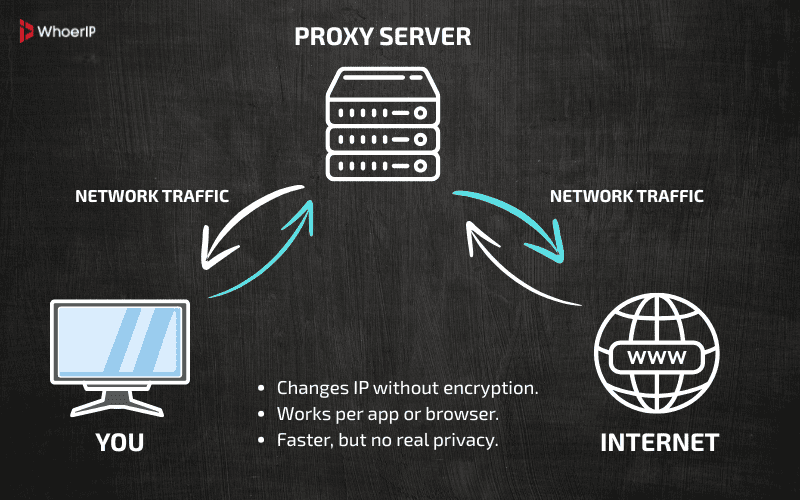
A VPN routes all your device traffic through one encrypted tunnel and typically assigns you one shared exit IP. A static IP proxy is usually configured per application or per request, gives you a dedicated address rather than a shared one, and does not necessarily encrypt the full device connection the way a VPN does.