Contemporary engineering facilities are dependent on stable transference of loads involved between steel structures and concrete foundations. This connection is ensured by two important parts that include foundation bolts and embedded concrete plates. These elements play a crucial role in structural stability, proper alignment and durability in civil, mechanical and industrial engineering activities.
This paper describes the operation of FastenMetal Foundation Bolts and embedded concrete plates in the engineering systems and the reason why they cannot be ignored when it comes to the foundation and structural design.
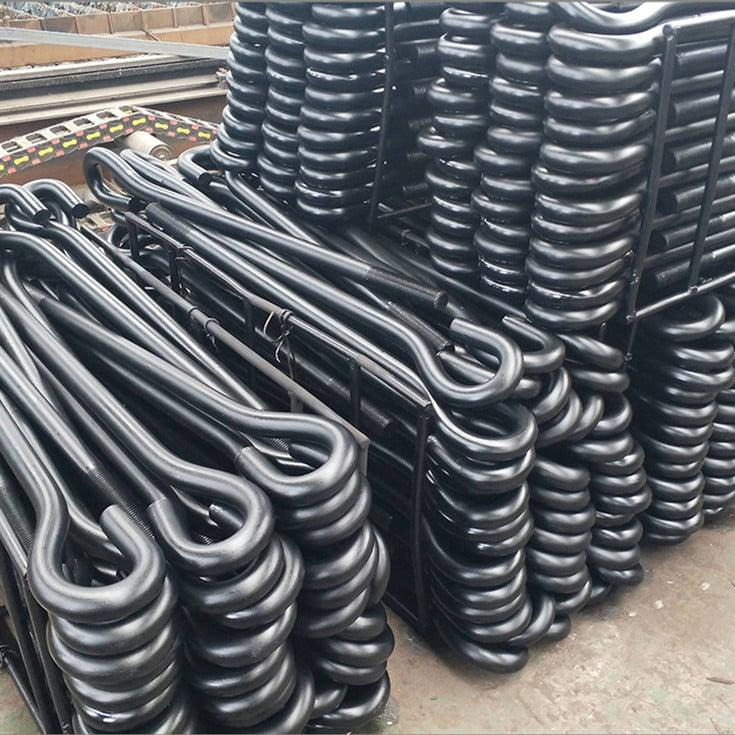
What Are Foundation Bolts?
Foundation bolts, also called anchor bolts are fastening elements, which are used to hold structural elements of a steel column, machines base, or frame to concrete foundations. Installing them is done in advance of the pouring of concrete or fitted into the pre-drilled holes once they are cured.
Engineering Use of Foundation Bolts
Engineering Foundation bolts serve a number of important purposes:
• Move tensile and shear forces of the structure to the concrete base.
• Avoid uplift due to wind, seismic or equipment vibration.
• Upkeep of column and base plate positions.
• Enhance the general structural safety and the distribution of loads.
During the placement and design, foundation bolts should be properly designed and placed to prevent pull out, concrete cracking, or misalignment failure modes.
Types of Foundation Bolts Used in Engineering Projects
Depending on the requirements of installation and load conditions, foundation bolts are produced to different forms
• L shaped structural anchoring bolts in general.
• J shaped bolts that are used to withstand heavy loads.
• Anchor bolts which have straight anchor plates or nuts.
• Custom curved bolts of specialized foundation layouts.
Engineers choose the size of bolts, embedment depth, and material grade depending on the calculations of design and the standards that should be used.
Understanding Embedded Concrete Plates
Embedded concrete plates, which are also known as embed plates, are steel plates that are poured in concrete. Such plates serve as the permanent welding or bolting locations of structural steel elements after the concrete is dried.
The mechanism of Embedded Plates in Concrete Structures.
Embedded plates operate on the principle that the forces are spread out on a broader region of concrete, thereby spread out the stress. The plate is welded on its back with studs or anchors which guarantee mechanical interlocking with concrete to stop pull out or rotation during the course of loading.
Their main operations are:
• Offering safe steel to concrete bonding.
• Post construction Adding beams, brackets, or equipment.
• Elimination of need to drill or use chemical anchors.
• Delay reduction and precision of construction.
Embedded plates are better than surface mounted anchors with respect to load transfer and alignment because of their cast in place configuration in providing superior anchoring.
Project sharing platform
Civil and Mechanical Engineering Applications
Applications in engineering Common applications Foundation bolts and embedded concrete plates are common in many fields of engineering, including:
• Installation of structural steel columns.
• New industrial equipment foundations and machinery.
• Bearing and support frames of the bridge.
• Substations and power plants.
• Precast concrete systems
These components are particularly significant in mechanical installations to deal with dynamic loads and vibration produced by rotating equipment.
Integrated Application of Foundation Bolts and Plates inbuilt
In most of the engineering designs, foundation bolts are utilized alongside concrete plates embedded to improve the performance of the structures. The purpose of foundation bolts is to offer vertical anchoring and embedded plates to offer horizontal connection points of secondary steel members.
This combined strategy guarantees:
• Improved load distribution
• Increased resistance to moving forces.
• Minimized installation errors.
• Increased structural reliability.
Industrial buildings, heavy machinery bases, as well as modular construction projects often have such systems.
Importance of Precision and Material Quality
The working of foundation bolts and embedded plates is an engineering issue that greatly determines the material quality and the precision of manufacturing. Poor dimensional accuracy or poor materials may result in trouble in the installation, and structural problems in the long-run.
Quality components give:
• Predictable load behavior
• Increased resistance to corrosion.
• Longer service life
• Engineering design compliance.
To ensure the safety and effectiveness of the structure in its lifespan, it is important to choose effective fastening and embedment systems.
Conclusion
In foundation and structural engineering, relationship between concrete and steel determines the strength of the whole system. FastenMetal Foundation Bolts offer certain anchoring of structural components and embedded plates of concrete are flexible and strong anchoring points in concrete foundations.
These elements combined are the key to building modern construction and mechanical installations, as engineers have an opportunity to make the structures safer, stronger and more efficient.