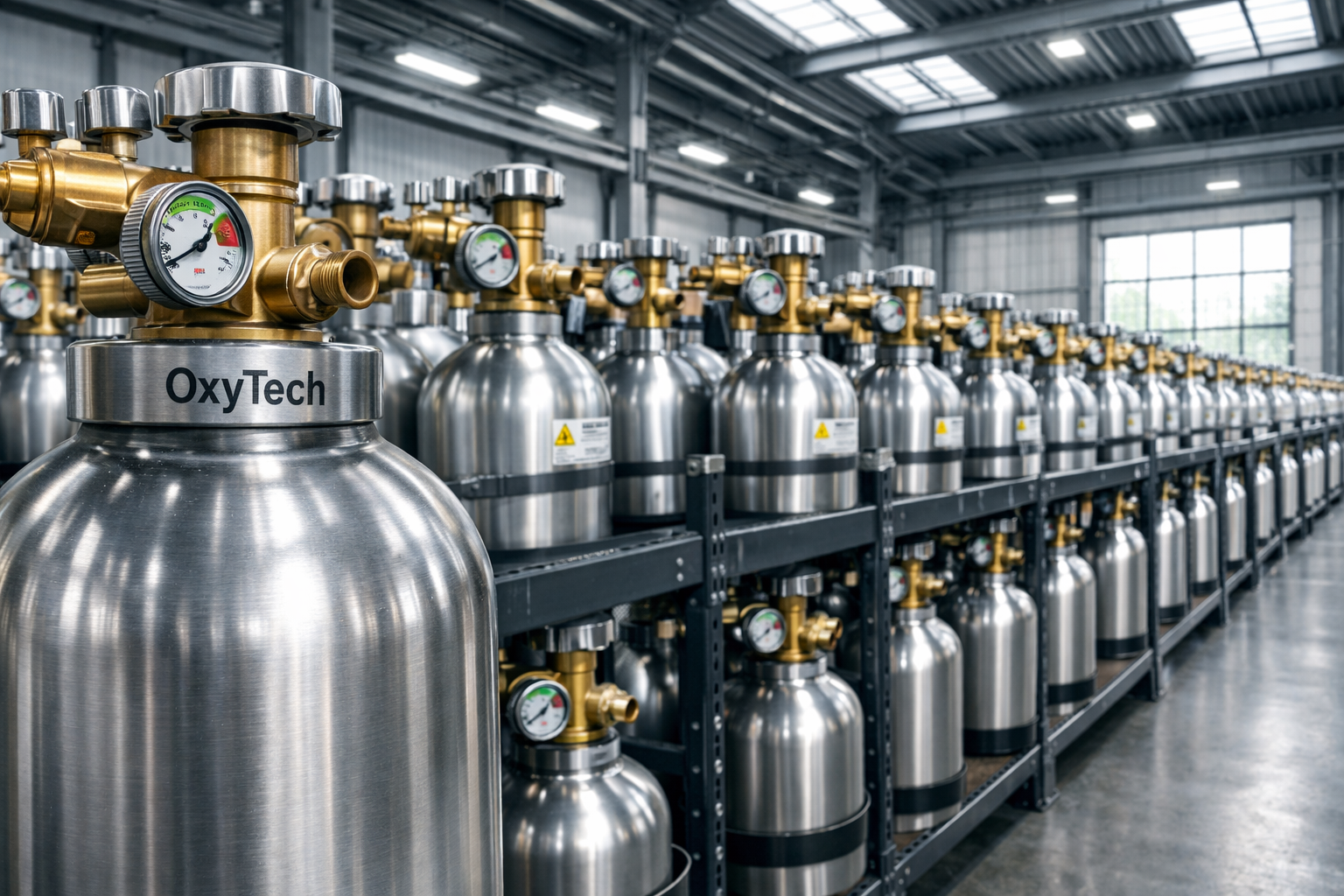
When businesses select high-pressure gas containment systems, the margin for error is non-existent. From medical oxygen distribution to beverage carbonation, industrial welding, and scuba diving, compressed gas storage relies heavily on material science and strict manufacturing standards. Aluminum has become the modern material of choice for high-pressure gas storage, replacing heavier traditional metals without sacrificing strength. Understanding how an experienced cylinder manufacturer approaches the design and production of these essential vessels reveals the critical engineering choices that guarantee both safety and peak operational performance.
1. Material Selection and Heavy-Duty Aluminum Alloys
Safety in high-pressure containment begins with basic metallurgy. Manufacturers prefer high-strength aluminum alloys, such as 6061-T6, because they offer an exceptional strength-to-weight ratio. These alloys undergo targeted heat treatment processes to achieve optimal tensile strength, yield strength, and structural ductility. Choosing specialized alloys provides distinct operational advantages:
- Superior resistance to atmospheric corrosion and chemical degradation
- Significant weight reduction compared to traditional carbon steel options
- Enhanced structural integrity under continuous internal pressure cycles
- Excellent compatibility with food-grade, medical, and industrial gas applications
Through expert custom aluminum cylinder manufacturing techniques, facilities tailor vessel dimensions, wall thickness profiles, and alloy compositions to exact operational requirements. This deliberate material engineering ensures that every vessel maintains its structural integrity across demanding transport environments and harsh chemical exposures.
2. Deep Drawing and Impact Extrusion Processes
Converting raw aluminum into a seamless, high-pressure vessel requires specialized mechanical shaping methods. The process usually begins with solid aluminum slugs or thick plate discs. Through precision cold impact extrusion or deep drawing, hydraulic presses apply immense pressure to force the aluminum into a seamless cylindrical body.
Creating a seamless structure is crucial for structural integrity. Welds introduce potential points of weakness, thermal stress zones, and corrosion risks. By shaping the main shell from a single monolithic piece, a skilled cylinder manufacturer eliminates longitudinal seams altogether. This process guarantees uniform wall thickness along the entire length of the vessel, allowing internal pressures to distribute evenly without concentrating force on mechanical joints.
3. Precision Necking and Thread Engineering
Once the main cylindrical body takes shape, the open end must be formed into a narrow neck to accommodate valves and regulatory pressure relief assemblies. High-temperature spinning or automated necking operations shape the open shoulder while preserving consistent wall density.
Thread machining represents one of the most critical stages in high-pressure cylinder production. Automated precision lathes cut clean, exact threads into the neck opening to ensure a tight, leak-proof seal with standard valve assemblies. Improper thread tolerances can lead to gas leaks, valve binding, or dangerous mechanical failures under high operating pressures. Quality control teams inspect these thread profiles using calibrated plug gauges and optical comparators to confirm perfect engagement before assembly.
4. Advanced Heat Treatment for Maximum Tensile Strength
Raw extruded aluminum lacks the yield strength needed to hold gases under hundreds of atmospheres of pressure. To reach peak mechanical performance, the formed cylinders undergo rigorous heat treatment cycles. The heat treatment process generally follows two vital steps:
- Solution Heat Treatment: Cylinders enter high-temperature furnaces where key alloying elements dissolve uniformly throughout the aluminum matrix.
- Artificial Aging: Rapid quenching followed by controlled re-heating stabilizes the grain structure, raising the metal to its final T6 temper rating.
This heat treatment gives the aluminum alloy its necessary toughness. It balances hardness with flexibility, ensuring the metal can expand slightly under extreme pressure spikes rather than shattering or cracking under stress.
5. Comprehensive Hydrostatic Testing and Regulatory Compliance
Before any gas vessel enters service, it must undergo rigorous safety evaluations. Hydrostatic testing serves as the ultimate benchmark for pressure boundary validation. Technicians fill the finished vessel with water, place it inside a sealed expansion chamber, and pressurize it well beyond its rated operating pressure.
During this test, sensors measure both elastic expansion (how much the vessel stretches under pressure) and permanent expansion (how much the vessel stays stretched after pressure releases). If a vessel exhibits permanent distortion beyond strict regulatory limits, it is immediately discarded. Regulatory bodies, including the Department of Transportation and international transport authorities, enforce these standards to ensure every cylinder withstands real-world service demands.
6. Surface Finishing and Internal Cleaning Protocols
The internal and external surface treatment of an aluminum gas vessel impacts both longevity and gas purity. Internal surfaces must remain completely free of moisture, oils, oxidation, and particulate matter. Specialized shot blasting, chemical washing, and ultrasonic cleaning processes scrub the interior walls, ensuring the gas contents remain pure and uncontaminated.
Externally, aluminum naturally forms a protective oxide layer that shields against weather and moisture. To enhance durability and visual identification, manufacturers apply protective finishes such as powder coating, anodizing, or specialized marine-grade paints. These coatings protect the cylinder body against external abrasion, impact, and chemical exposure while maintaining clear color coding for distinct gas types.
7. Quality Control Inspections and Final Verification
Every stage of vessel production relies on continuous quality assurance. Ultrasonic testing equipment scans the finished cylinder walls to detect hidden internal voids, cracks, or material inclusions that could compromise safety under pressure. Visual inspections verify surface consistency, neck alignment, and branding markings.
A responsible cylinder manufacturer tracks every production batch through precise serial numbers and stamped markings. These permanent stamps on the cylinder shoulder document critical historical data, including working pressure ratings, test dates, alloy designations, and tare weights. This complete traceability guarantees accountability across the entire lifecycle of the vessel, helping safety managers and field technicians perform routine field re-testing and maintenance with complete confidence.
Summary
Engineering a high-performance aluminum gas cylinder requires a careful balance of metallurgy, precision machining, rigorous heat treatment, and exhaustive safety testing. By eliminating structural welds, maintaining exact thread tolerances, and verifying structural integrity through hydrostatic testing, modern production facilities deliver reliable, lightweight gas containment systems. These engineering standards ensure that every cylinder delivers consistent performance, long service life, and maximum safety across all industrial, medical, and specialized gas applications.