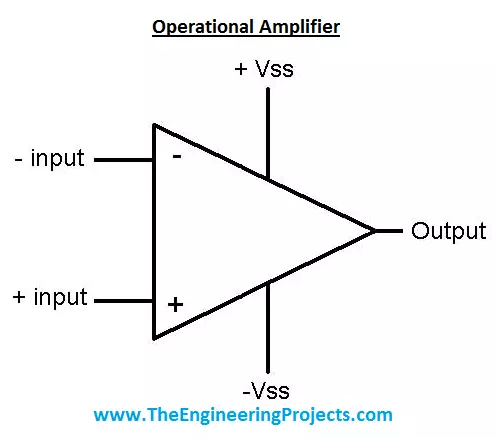
Hello friends! Today, we will discuss the operational amplifier, usually called an op-amp. It is one of the most useful building blocks in analog electronics, allowing us to amplify small signals, buffer a sensor, combine voltages and build active filters. The same basic symbol appears in many circuits, but its behavior depends strongly on the components connected around it. An op-amp responds to the voltage difference between two inputs. By feeding part of its output back to an input, we can obtain a predictable relationship between input and output. This feedback arrangement is the key to understanding practical amplifier circuits. We will start with the symbol and an ideal model, then introduce the limits of real devices. Along the way, we will calculate common amplifier gains and devel ...
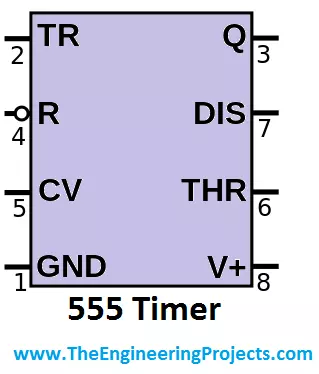
Hello friends! Today, we will answer a basic but very useful question: what is a 555 timer? The 555 is an integrated circuit used to generate delays, pulses and repeating waveforms. By connecting a few external components, we can use the same device as a one-shot timer, an oscillator or a simple two-state control circuit. The important idea is that the 555 watches voltages at its inputs and changes state when they cross defined thresholds. A resistor and capacitor can turn those voltage changes into a time interval. Once you understand that relationship, the familiar timing formulas become much easier to remember and apply correctly. We will examine the internal functional blocks, explain all eight pins, and work through the three common operating modes. We will also distinguish the tradit ...