The only honest way to design a monitoring system for a hazardous site is to assume that part of it is already broken. Not "might break someday." Broken now, quietly, while the dashboard glows green. Every sensor drifts, every cable corrodes, every radio link drops packets, and every controller eventually hangs. The engineering question was never whether components fail. The question is whether the rest of the system notices, says so loudly, and keeps watching while you fix it. A system that cannot answer that question is barely a monitoring system at all; it is closer to a decoration with a power supply. The stakes are not abstract. Over nearly three decades, U.S. chemical safety investigators have examined close to 180 major chemical incidents that together produced more than 200 fatalit ...
Hello friends, I hope you are doing well. In the previous tutorial, we studied the working principle of a relay . Today, we will connect a 12 V relay to a PIC18F4550 microcontroller through a ULN2003A driver. A relay coil needs more voltage and current than a microcontroller pin should provide. It is also an inductive load, so it produces a voltage transient when switched off. The ULN2003A solves these interface problems by providing seven low-side Darlington drivers and seven internal clamp diodes in one package. The key point is that the ULN2003A does not convert a 5 V logic signal into a 12 V output. The 12 V energy comes from a separate 12 V supply. A logic high merely turns on one internal driver, which connects the low side of the relay coil to ground. We will examine that current pa ...
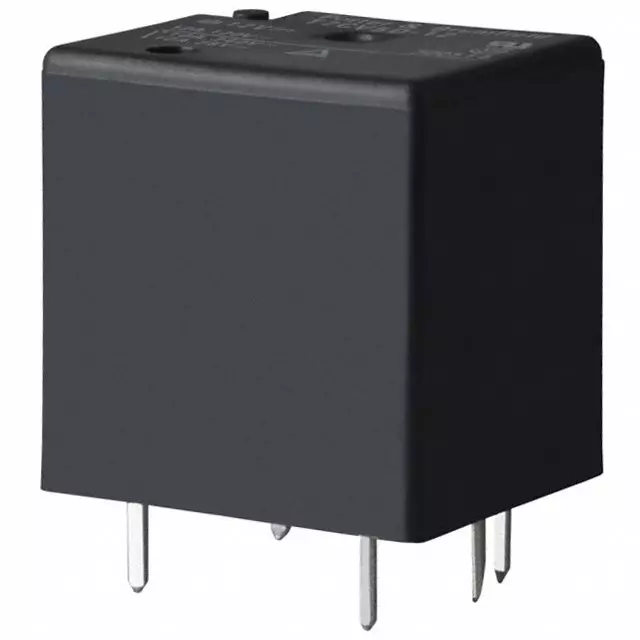
Hello everyone! I hope you are doing well. In this tutorial, we will study the relay from its basic construction to practical selection and control. A relay allows one electrical circuit to operate contacts in another circuit. This makes it useful when a low-power controller must switch a different voltage, a larger load or an electrically isolated circuit. We will focus first on the common electromechanical relay because its moving contacts make the operating principle easy to understand. We will then compare electromagnetic, reed, solid-state, thermal and hybrid relays, calculate coil current, discuss contact ratings and examine a safe microcontroller driver. A relay is often described as an automatic switch, but that short definition hides several important details. The coil and contact ...