


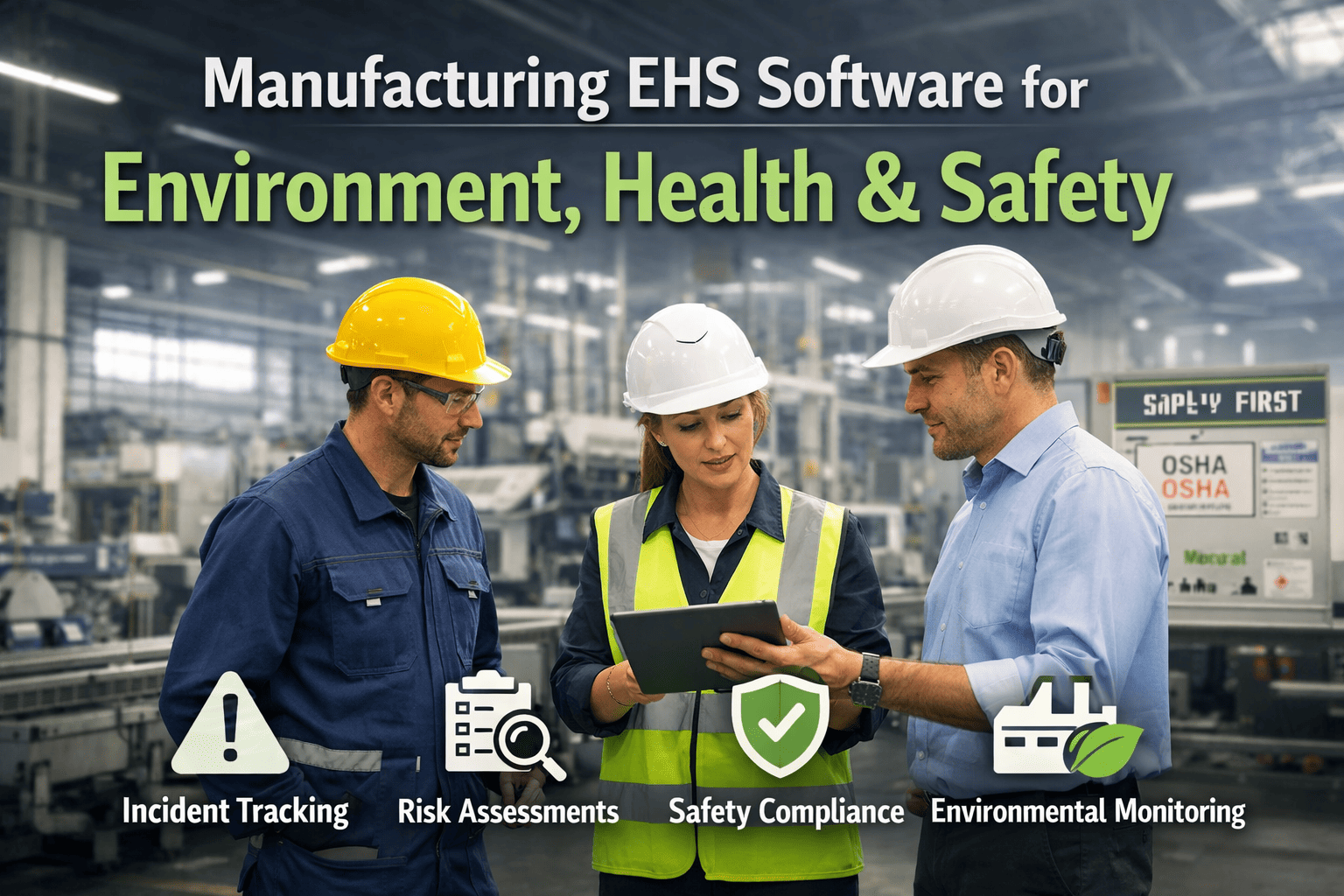
EHS Regulatory Compliance for Manufacturing Engineers: Automating Safety Audits in Industrial Plants


Manufacturing engineers are often close to the details that decide how safe a plant really is. They know how equipment behaves after years of use, how production changes affect the floor, and where a process looks fine on paper but becomes harder to control during a full shift. That practical view is valuable in any environmental, health, and safety program.
The problem is that safety audits can become too slow for the pace of modern manufacturing. A paper checklist may capture a condition during one walkthrough, yet the plant keeps changing after the form is filed. EHS regulatory compliance software helps close that gap by giving teams a better way to record findings, assign corrective action, and keep evidence ready for review.
Automation does not make compliance effortless. It makes the work more visible and harder to lose in folders, inboxes, or informal conversations. For manufacturing engineers, that visibility can turn safety audits from occasional inspections into a steadier part of plant discipline.
Why Manufacturing Engineers Are Central to EHS Compliance
EHS compliance is often owned by a safety or environmental team, but manufacturing engineers have a direct role in how requirements are applied. Their decisions influence equipment layout, machine guarding, energy control, process changes, ventilation, material handling, and maintenance access. A regulation may define the standard, but engineering choices decide how well the plant meets it in daily operation.
This is why audit automation needs engineering input. A generic checklist may miss the way a specific line runs or how a machine is actually serviced. Manufacturing engineers can help turn broad requirements into audit questions that align with the process, equipment, and risk.
Their involvement also improves credibility with production teams. When a finding is tied to real process knowledge, it feels less like paperwork and more like a practical safety correction. That matters because compliance depends on behavior as much as documentation.
Why Paper Audits Break Down on the Plant Floor
Paper audits often fail because they separate the observation from the follow-up. A hazard may be documented during a walkthrough and later handed off to someone who did not see the condition firsthand. By the time the corrective action is discussed, the context may already be weaker.
Plants also change quickly. Equipment is moved, production priorities shift, and temporary fixes can become normal if no one tracks them properly. A paper record may prove that an audit occurred, but it may not show that the issue was corrected in sufficient detail.
There is another problem with consistency. Two auditors may describe the same condition in different ways, which makes trends harder to see. Digital audits can improve the quality of the record by standardizing what gets captured while still leaving room for notes, photos, and engineering judgment.
How Automation Makes Audits More Reliable
Automated safety audits create a clearer path from inspection to action. A finding can be recorded in the field with supporting evidence, then routed to the right person for follow-up. This reduces the chance that a serious issue will be overlooked after a busy audit day.
Digital forms can also guide auditors through the plant with more discipline. The system can require key fields, prompt for evidence, and prevent incomplete submissions. This is useful when a facility has many areas to inspect and several people involved in the process.
Automation also helps managers see patterns over time. A single finding may be easy to fix. A repeated finding in the same area may point to a deeper process weakness. When audit records are searchable and up to date, manufacturing engineers can see where design or process changes may be needed.
Turning Findings Into Corrective Action
An audit is useful only if it leads to correction. Many plants already know where their recurring problems are, but they struggle to close the loop. The finding is recorded, the meeting happens, and then production pressure pushes the work aside.
A digital workflow can make ownership clearer. Each corrective action can have a responsible person, a due date, and a record of completion. That does not remove the need for leadership, but it makes delay harder to hide.
Manufacturing engineers can add value by reviewing the quality of the correction. A quick fix may remove the immediate hazard without solving the cause. A stronger correction looks at how the process created the risk in the first place. That is where audit data begins to support safer engineering decisions.
Keeping People in Control of the System
Automation should support safety judgment, not replace it. A system can prompt an inspection and track a finding, but people still need to judge severity, feasibility, and risk. Manufacturing engineers are especially useful here because they can connect compliance requirements with the real limits of the process.
Training matters as much as the software. Auditors need to know how to record useful evidence, describe findings clearly, and avoid turning the system into a box-checking exercise. If the process feels like administration only, people will give it minimum attention.
The best systems are practical enough for the floor and detailed enough for compliance review. They help teams document conditions, respond faster, and learn from repeated findings. In industrial plants, the real promise of automated safety audits is safer work, cleaner records, and better control over the risks engineers already see every day.
Using Audit Data to Prepare for Inspections
Regulatory inspections are easier to manage when the plant can show a clear record of what was found, what was corrected, and how the team verified the result. Manufacturing engineers often help create that evidence because they understand the technical reason behind a corrective action. A vague note may satisfy an internal checklist, but it may not explain why a change was appropriate or how it reduced risk.
Automated audit records give the plant a cleaner way to prepare before an outside review. Instead of searching through paper files or old email threads, the team can review recent findings, open actions, completed corrections, and supporting evidence from one system. This saves time, but the larger benefit is confidence. The plant can show that safety concerns are being managed through a repeatable process rather than handled only when an inspection is expected.
Good records also help after the inspection. If a regulator asks for clarification or follow-up, the response can be based on documented work instead of memory. That makes the compliance process less stressful for engineers and safety teams, while giving leadership a more accurate view of where the plant is improving and where more attention is still needed.
Comments
0