


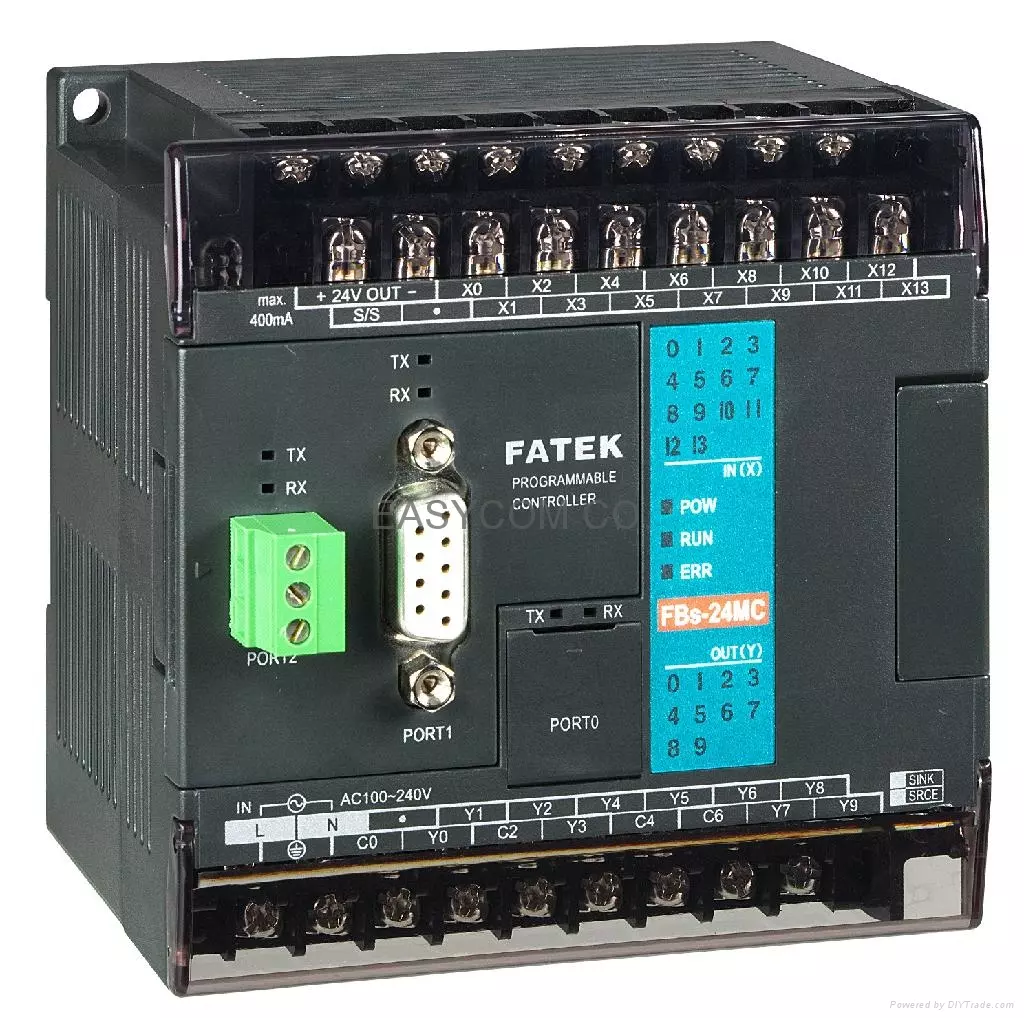
Hello friends! Today we will begin our PLC series with the hardware and operating principles of a programmable logic controller. My original introduction grew out of an automated coffee-mixing project. That is a useful example because it involves several familiar tasks: reading switches, checking conditions, opening valves and controlling how long a process runs. Before drawing a ladder program, we need to understand what happens between a sensor and an actuator. A correct program cannot repair an incorrectly wired input, an unsuitable output or a missing power supply. We will therefore work from the controller's main sections through its scan cycle, input and output connections, and a small process example. The original project identified its controller as a FATEK FBs-20MA. We will retain ...