Hey buddies! Welcome to the next tutorial on deep learning, in which you are about to acquire knowledge related to Python. This is going to be very interesting because the connection between these two is easy and useful. In the last lecture, we had an eye on the latest and trendiest deep learning algorithms, and therefore, I think you are ready to take the next step towards the implementation of the information that I shared with you. To help you make up your mind about the topics of today, I have made a list for you that will surely be useful for you to understand what we are going to do today.
How do you introduce the Python programming language to a deep learning developer?
How is Python useful for deep learning training in different ways?
Do Python provide the useful frameworks for ...
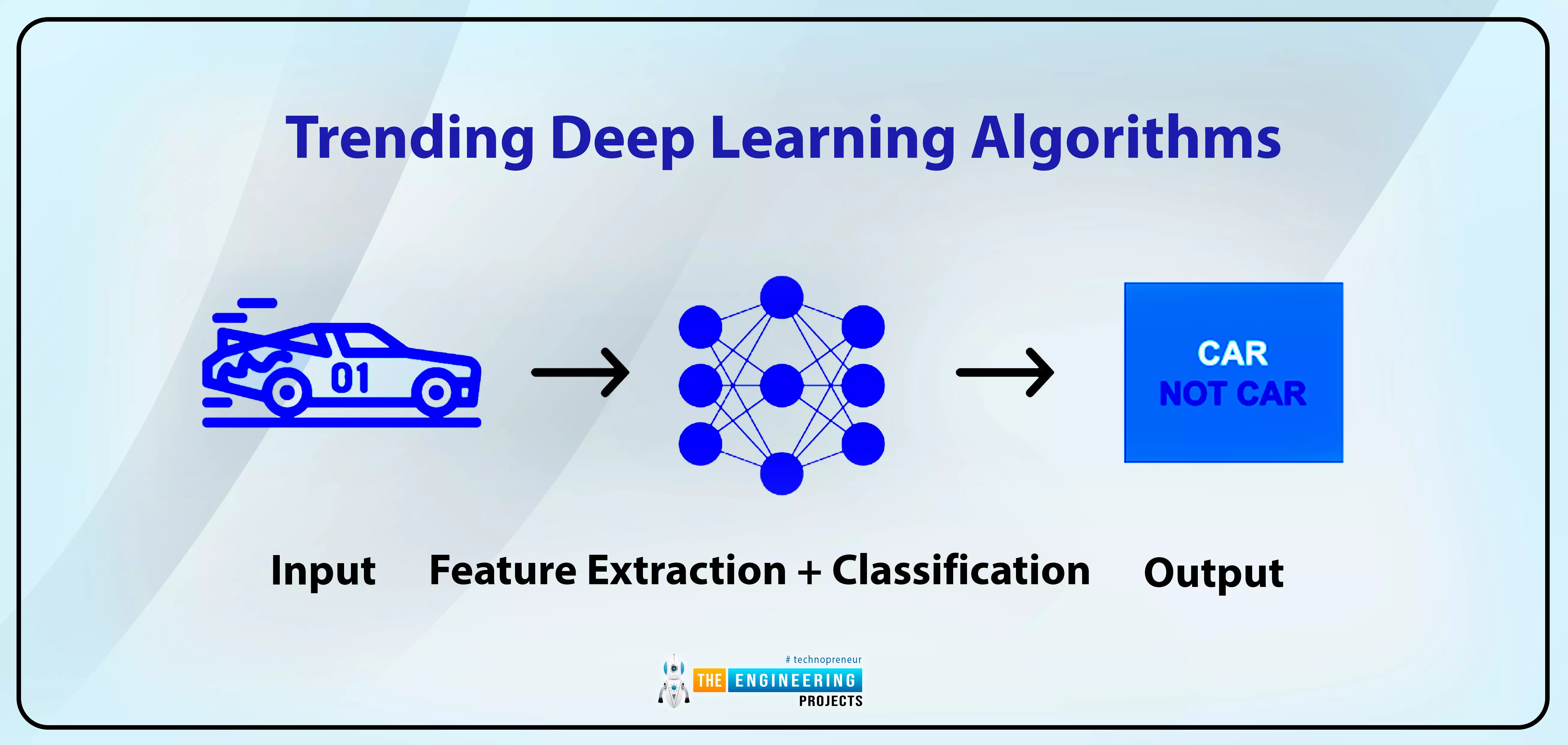
Hello pupils! Welcome to the following lecture on deep learning. As we move forward, we are learning about many of the latest and trendiest tools and techniques, and this course is becoming more interesting. In the previous lecture, you saw some important frameworks in deep learning, and this time, I am here to introduce you to some fantastic algorithms of deep learning that are not only important to understand before going into the practical implementation of the deep learning frameworks but are also interesting to understand the applications of deep learning and related fields. So, get ready to learn the magical algorithms that are making deep learning so effective and cool. Yet before going into details, let me discuss the questions for which we are trying to find answers.
How does dee ...
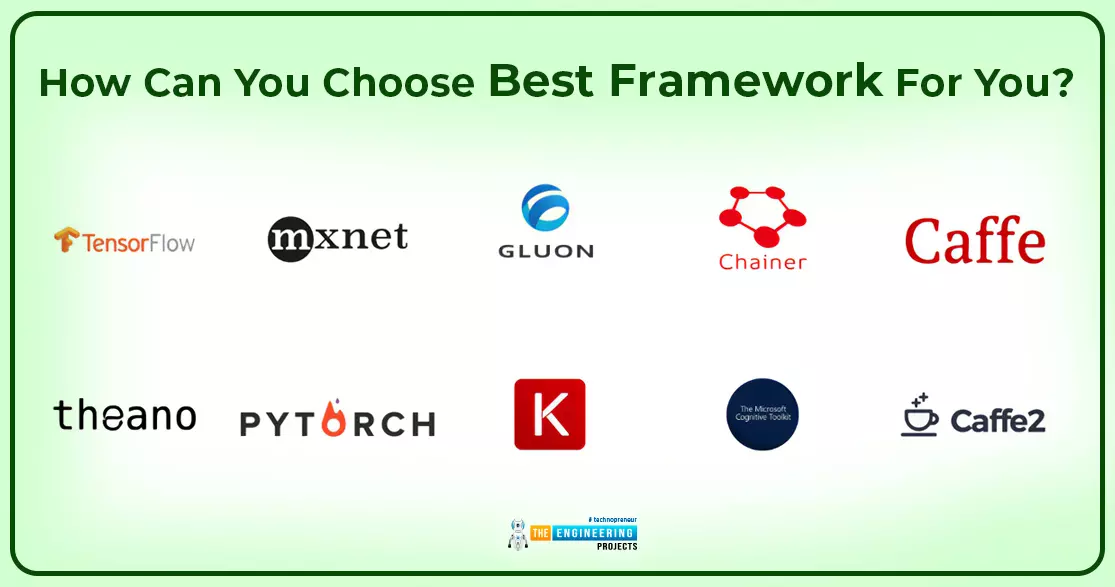
Hello peeps. Welcome to the next tutorial on deep learning. You have learned about the neural network, and it was an interesting way to compare different types of neural networks. Now, we are talking about deep learning frameworks. In the previous sessions, we introduced you to some important frameworks to let you know about the connection of different entities, but at this level, it is not enough. We are telling you in detail about all types of frameworks that are in style because of their latest features. So before we start, have a look at the list of concepts that will be covered today:
Introduction to the frameworks of deep learning.
Why do we require frameworks in deep learning?
What are some important deep learning frameworks?
What is TensorFlow and for which purpose of using Ten ...
Hello Learners! Welcome to the next lecture on deep learning. We have read the detailed introduction to deep learning and are moving forward with the introduction of the neural network. I am excited to tell you about the neural network because of the interesting and fantastic applications of neural networks in real life. Here are the topics of today that will be covered in this lecture:
What do we mean by the neural network?
How can we know about the structure of the neural network?
What are the basic types of neural networks?
What are some applications of these networks?
Give an example of a case where we are implementing neural networks.
Artificial intelligence has numerous features that make it special and magical in different ways, and we will be exploring many of them in dif ...
Hello students, welcome to the second tutorial on deep learning in the first one, we have learned the simplest but basic introduction of deep learning to have a solid base about what we are actually going to do with deep learning. In the present lecture, we will take this to the advanced level and will learn the introduction with the intention of learning more and more about the introduction and understanding what we want to learn and how will we implement the concepts easily. So, here is a quick glance at the concepts that will be cleared today:
What do we mean by Deep learning?
What is the structure of calculation in neural networks?
How can you examine the Neural Networks?
What are some platforms of deep learning?
Why did we choose TensorFlow?
How can you work with TensorFlow?
...
Hello friends, I hope you all are having fun. Today, we are bringing you one of the most advanced and trending courses named "Deep Learning". Today, I am sharing the first tutorial, so we will discuss the basic Introduction to Deep Learning, and in my upcoming lectures, we will explore complex concepts related to it. Deep Learning has an extensive range of applications and trends and is normally used in advanced research. So, no matter which field you belong to, you can easily understand all the details with simple reading and practicing. So without any further delay, let me show you the topics that we are going to cover today:What is deep learning?What are artificial intelligence and machine learning?Working with deep learning using neural networks.Trends in deep learning.Deep learning as ...
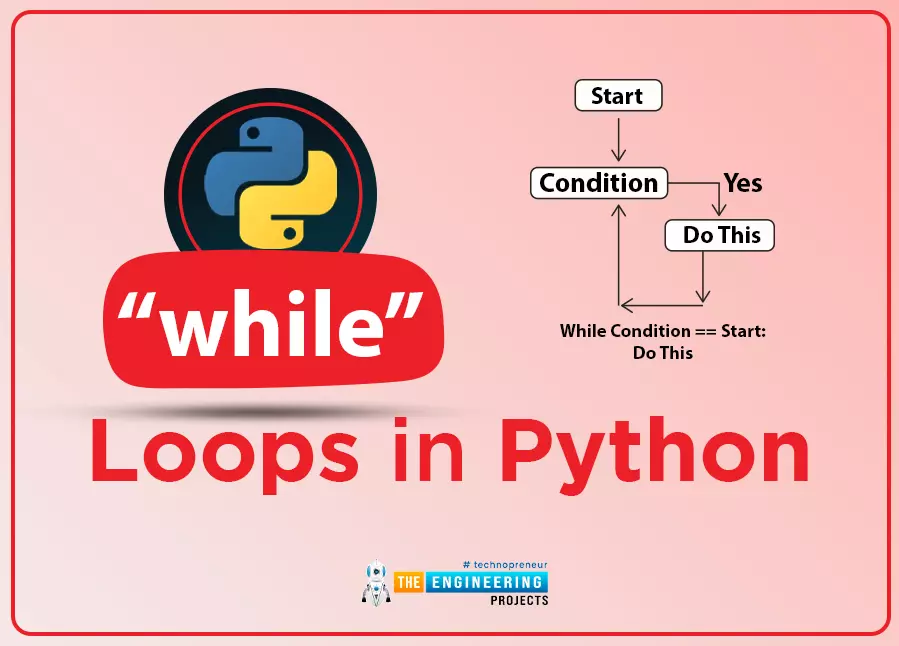
Welcome to the next lesson of our python programming class. In the last session, we looked at the use of If-else statements and created simple programs to demonstrate the concept. While loops are another type of conditional statement, and in this tutorial, we'll look at how they're used.
What will you learn?
In this article, you'll learn how to prematurely exit a while loop, a Python control structure for endless iteration. You will also learn how to write conditions in a single line to produce short and readable code.
Iteration in while loop
The term "iteration" refers to the practice of repeatedly running the same piece of code. A loop is a type of programming structure that implements iteration.
Bo ...
Welcome to the fifteenth chapter of this python course. Python lists and tuples were studied extensively in the last session, and we learned how to manipulate the data contained in these types of structures. You've only experienced sequential execution up to this point, where each statement is performed sequentially in the order they appear in the code.
However, the real world is frequently more nuanced. Sometimes, a program must skip over certain statements, run a set of statements repetitively, or pick between other sets of statements to execute. This is called "conditional branching."
That's when control structures come into play, which controls the sequence in which statements in a program are executed.
What will you learn?
The if statement ...
Welcome to the fourteenth chapter of our python tutorial course. In the last lesson, we looked at sets and operations done to sets, including union and intersection. In this tutorial, we'll take a closer look at lists and tuples to see how they're used. Python's most versatile and useful data types are lists and tuples. A non-trivial Python application will nearly always have these.
What will you learn?
Lists and tuples have a number of significant features that you'll learn about. In this course, you'll understand the definitions and applications of these terms. By the time you're done, you'll know when and how to employ different Python object kinds.
What are lists?
In other words, Lists are similar t ...
This is the next lesson in our Python course. Previously, we looked at an overview of the different data types in python such as dictionaries, Boolean and sets. This tutorial will focus on Python sets to get a deeper understanding of this data type, so let's get started. During your schooling, there is a good chance you learned about sets and set theory. Venn diagrams may even be familiar to you:
Don't worry if you don't recognize this! You should still be able to access this tutorial without any problems. Rigidly defining a set in mathematics can be both abstract and difficult to understand. A set is thought of as a well-defined group of unique objects, which are sometimes called "elements."
Python's built-in set type facilitates the grouping of ...