Basketball has always been a game of instincts, grit, and split-second decisions, but in today’s NBA, the algorithms play a bigger role in the making of champions, along with the athleticism. The AI process has gone from being a background tool to taking a prominent position in today's NBA with its contribution to the teams' smarter decisions on and off the court. The organizations have switched their primary decision-making from being instinct-based to Data-driven and machine learning, which is now the core of drafting, training, and in-game strategies. The systems are capable of analyzing all aspects of the game, including the movements of the players and risks of injury, their main focus being to ease the performance, create better plays, and assess talents more precisely than traditional scouting alone. The coaches and the front offices have been increasingly relying on such insights to get the upper hand in the competition. Besides this, the AI is revolutionizing the in-court experience of the fans by its provision of highlights tailored to the individual user and also through interactive content. These innovations, data, and algorithms are becoming indispensable in the process of developing the next generation of NBA winners. This article describes how, since AI has been given its major role, online basketball NBA success has been transformed in terms of scouting, performance, injury prevention, strategy, and fan engagement through data-driven decisions. For a long ...
Engineering projects involving construction machinery, industrial equipment, or large-scale automation systems require careful logistical planning well before any physical work begins. Whether you're deploying excavators to a remote site, relocating CNC machines between facilities, or transporting specialized testing equipment for a prototype installation, understanding heavy equipment logistics can prevent costly delays and budget overruns. Most engineering curricula focus on design, simulation, and implementation—but rarely address the practical challenges of moving heavy machinery from point A to point B. This gap in knowledge often leads to project managers underestimating transport timelines, misallocating budgets, or failing to account for regulatory requirements. A 40,000-pound hydraulic press doesn't simply "show up" at your facility. It requires specialized trailers, route planning to avoid low bridges and weight-restricted roads, and potentially escort vehicles for oversized loads. Understanding these requirements during the planning phase allows engineers to build realistic project timelines and avoid the frustration of equipment sitting idle at a port or staging area. Heavy equipment transport methods vary based on weight, dimensions, and whether the machinery is operational or requires specialized handling. Flatbed Transport serves as the standard method for most construction equipment under 48,000 pounds. Equipment like skid steers, compact excavators, and ...
Digital signage plays a vital role in retail today. With shoppers moving quickly, retailers need to grab their attention fast. Digital signage changes traditional displays into engaging tools. It can promote special offers and tell the brand's story, all to attract customers and create a memorable shopping experience. Think about your last visit to a store. How many screens did you notice? With digital signage software, retailers can create eye-catching visuals that speak directly to shoppers. These tools allow businesses to display real-time information such as prices, ads, and social media feeds, making them highly versatile. Let's look at how you can use digital signage in your retail strategy for the best results. Digital signage's biggest advantage is its ability to display changing promotions. Instead of static posters that often get overlooked, digital screens can rotate through promotions so customers see the latest deals. Retailers can update content in real time, offering attractive deals that may change throughout the day. For example, if a customer walks into a store during a sale, bright images and strong messages on the screens can significantly increase the chances of a purchase. Using digital signage software, businesses can plan messages for busy holidays or events, attracting customers when they shop most. This immediate attention can lead to more sales and a better shopping experience. Digital signage software helps with inventory management. By linking ...
Security is a significant concern for businesses of all sizes. With increasing cyber threats and physical risks, companies are seeking technology solutions to protect their operations, assets, and employees. From advanced cameras to innovative software, technology helps create a safe environment where businesses can operate without worrying about breaches or intrusions. It's important to invest in tools that not only protect but also help staff and customers feel safe. To strengthen security, it's key to consider different technology options to enhance business protection. Here are some ways to upgrade your security measures. Video surveillance is often the first line of defence in security. Smart surveillance systems have advanced, offering features such as high-definition video, night vision, and motion detection. These systems allow businesses to monitor their premises in real time, even from a smartphone while away from the office. Thanks to cloud storage and mobile access, you can check your security feeds anytime. Some systems even use artificial intelligence to detect suspicious activity, helping reduce false alarms and respond quickly to threats. Controlling physical access is also important for security. Gone are the days of just using traditional locks and keys. Modern access control systems now use keycards, fingerprints, and mobile devices to manage who can enter specific areas. Biometric systems scan a person's fingerprint or face to grant access. This method is ...
Digital festival greetings are increasing fast when the audiences are adopting visual rich messages. Holiday videos that are animated can be used to establish more emotional connections as compared to inactive cards. Numerous labels and personalities are seeking motion designs that are refined and significant. Good imagery encourages better interaction particularly in cultural and seasonal festivals. This growing need has enhanced the urge towards platforms that produce professional outcomes under lesser effort. Pippit gets into this space as a creative festival message generator, which makes the whole process simple and production fast. The conventional digital cards are usually limiting since static graphic editors inhibit creativity. Traditional design tools can hardly provide fluent animations or realistic motion effects. It is also not easy to add 3D accents or realistic voiceovers with consistency by many users. It can be very time-consuming to render every frame and format every asset. Such hurdles hinder the speed at which content is created at the highest periods of the festival when time constraints are minimal. Most designs do not have the visual richness that contemporary audiences demand even after hours of work. An AI video editor solves many of these gaps by automating complex creative tasks and adding professional motion support. Through AI-based tools, festival messages are transformed into an emotional narrative through one image. You can post a family ...
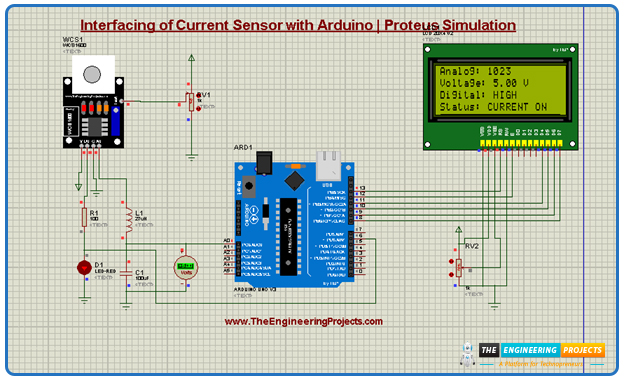
In modern electronics, the ability to monitor and control current flow is essential for maintaining the efficiency and safety of electrical systems. Engineers often rely on current sensors to observe how much current passes through a circuit, helping them analyze system behavior under different conditions. In this project, we simulate the interfacing of a current sensor with an Arduino using the Proteus software environment. Libraries Libraries used in this tutorial Arduino Library for Proteus: V1.0 (2015, used in this tutorial) · latest version: V4.0 (October 2026) Current Sensor Library for Proteus: V1.0 (2023, used in this tutorial) LCD Library for Proteus: V2.0 (2023, used in this tutorial) · latest version: V3.0 (October 2026) Helping Tools The aim of this simulation is to demonstrate how Arduino can read both the analog and digital outputs of the current sensor to identify the presence and level of current in a circuit. The system also displays the voltage reading and current status on a 20x4 LCD while controlling an LED indicator to represent current detection visually. By the end of this tutorial, you will understand how to integrate current sensors into Arduino-based circuits, interpret their output values, and visualize the results effectively using Proteus. A current sensor is an electronic device used to detect and measure the amount of current flowing through a conductor. It converts the current into a corresponding voltage signal that can be easily read by ...
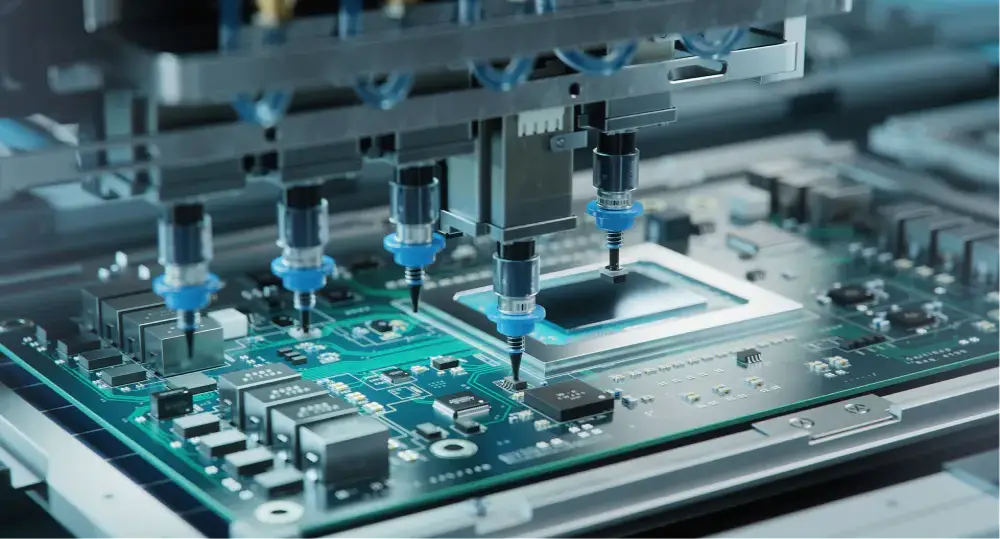
Hi innovators! Wishing you the best day. Have you ever waited a couple of weeks for a prototype? Now, these days are gone. Quick-turn PCB redefines the speed of hardware development. In today’s guide, we will discuss how Quick Turn PCB Fabrication helps innovators to launch their product in just a few days. Quick Turn PCB Fabrication is an accelerated process of manufacturing and delivering printed circuit boards. Quick-turn PCB manufacturing delivers boards in 1-5 business days, significantly faster than the typical multi-week schedule. This quick turnaround plays a vital role in fast prototyping, emergent projects, and applications where speed and innovation are the basis of competitive advantage, such as consumer electronics, automotive, medical devices, and aerospace. The Quick Turn PCB production process involves design verification, imaging, lamination, drilling, plating, solder mask, surface finishing, and electrical testing. It is also simplified through the implementation of superior equipment like laser direct imaging (LDI), flying probe testers, as well as inventory materials. The benefits of quick-turn PCB fabrication include enhanced time to market, less risk during development, and more design flexibility. These advantages significantly improve the way engineers design PCB solutions for rapid prototyping and agile hardware development. Still, there are issues; premium services are more expensive, and materials can be restricted because manufacturers use ...
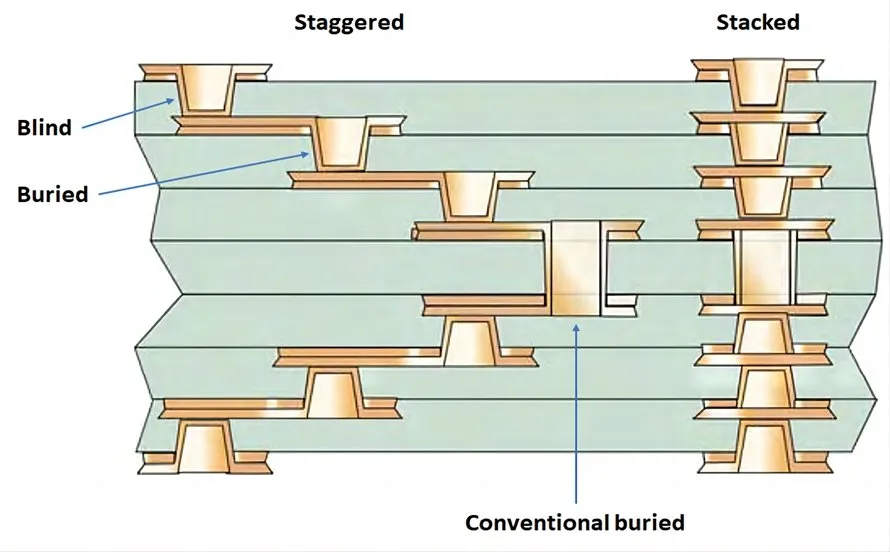
Hi innovators! I hope you are having a great day. Electronics are getting smaller, faster, and more powerful due to rapidly developing technology. You are making or breaking a PCB with your options of stacked or staggered microvias. Today, we will learn which is the right choice, a stacked or staggered microvia. In a rapidly changing environment of innovative electronics, miniaturization and high performance are the main drivers of modern PCB design. Devices such as smartphones, 5G infrastructure, wearables, medical implants, automotive electronics, and aerospace systems require small but powerful solutions. High-density interconnect (HDI) printed circuit boards are solutions offered to engineers to meet these requirements and enable them to route complex designs on a reduced footprint and offer long-term availability. The microvia is the structural element of HDI design, a very small but extraordinarily effective component, joining the different layers of the PCB. Unlike traditional through-hole vias, which occupy a lot of the board space and limit design flexibility, microvias allow interconnections among more than two layers (or even among more than two layers), and do not require the valuable real estate that standard through-hole vias consume. This makes them worthless in the creation of small, light, and quick electronic units. In the microvia design, there are two predominant methods, namely: stacked microvias and staggered microvias. The two play a key role in ...
Data analytics has been made a pillar of the contemporary business strategy wherein organizations make sound decisions using precise insights. With the increasingly exponential increase in data volumes, conventional systems of storage are frequently unable to keep up, which can create a respite in the analysis process and decision-making. Cloud storage has proven to be a trusted option, and it provides scalable, flexible, and secure data management, which aligns with the multifaceted demands of the analytics operations. Cloud-based solutions are changing how an organization conducts its data analysis with the capacity to store, process, and retrieve very large volumes of data. Combining cloud storage with the tools of data analytics enables companies to get real-time analysis and react promptly to the changes in the market. This ability is especially crucial in those sectors where the decisions made in time are crucial. Using the cloud solutions, companies will be able to unify various sources of data, workflow, and make sure that their analytics is agile and efficient. The advantages are not limited to technical effectiveness, which has an impact on strategic planning and performance in all spheres. Cloud storage can also be expanded at an amazing scale, and an organization can increase or reduce its storage capacity in line with its data needs. Cloud solutions can be expanded with business requirements without substantial development in the basic infrastructure (as compared ...
Thermal expansion represents the primary technical challenge for modern metal roofing, causing premature failures in one out of three installations according to recent industry data. This issue particularly affects aluminum installations, which exhibit thermal expansion rates 30% higher than traditional steel systems, creating significant structural stress during temperature fluctuations. Modern aluminium roof systems face considerable thermal stress, especially during summer expansion-contraction cycles that can cause panels to expand up to 1.56 inches over a 100-foot span with temperature increases of 100°F. Industry data reveals that aluminum's coefficient of thermal expansion reaches 22.2 × 10⁻⁶ per degree Celsius, nearly double that of steel at 12.3 × 10⁻⁶ per degree Celsius. The global aluminum roofing market, valued at $5.21 billion in 2024 and projected to reach $8.13 billion by 2033 with 5.2% annual growth, masks a concerning reality: thermal-related failures account for 68% of summer roofing claims across commercial installations. Temperature variations create measurable expansion challenges, with aluminum panels expanding 3.45mm over a 5-meter length when subjected to 30°C temperature increases - significantly more than other roofing materials. These movements occur because metal surface temperatures can reach 20°C higher than ambient air temperatures, particularly on dark-colored surfaces. Systematic thermal movement creates three primary failure modes that ...