In 2026, link building has evolved beyond chasing high-DA numbers. For engineering websites — from civil infrastructure and mechanical design firms to SaaS platforms supporting engineers — backlinks now act as credibility signals within specialized technical ecosystems. Search engines (and AI Overviews) are getting smarter about context. A link from an engineering publication, CAD community, or industrial supplier carries far more value than ten random general-interest blogs. That’s why choosing the right link-building partner matters more than ever. We’ve reviewed dozens of SEO and outreach agencies, analyzed their client portfolios, and compared relevance for engineering, manufacturing, and technical industries. Here’s our list of the top link-building agencies for engineering websites in 2026 — each chosen for credibility, niche fit, and ROI-driven performance. Website: stanventures.com Stan Ventures continues to lead the pack in 2026 — not just as a backlink-building agency but as a strategic SEO partner. The company’s white-label model and in-house outreach network make it a go-to for engineering firms that need scale without sacrificing quality. What makes Stan Ventures stand out: Whether it’s a mechanical engineering firm looking for industry citations or a manufacturing SaaS wanting to build topical authority, Stan Ventures aligns link placements with measurable business outcomes. Ideal for: Engineering companies, B2B SaaS platforms, and industrial brands looking for ...
In the fast-paced world of engineering, small mistakes can snowball into massive complications — especially when it comes to component identification, labeling, and documentation. Whether you’re managing an electrical system, a mechanical setup, or an IoT prototype, clear and accurate identification is the unsung hero that keeps everything running smoothly. Yet, many projects suffer from avoidable identification errors that lead to maintenance delays, compliance issues, and even costly rework. The good news? Each of these mistakes can be prevented with a few simple best practices. Let’s look at six of the most common identification mistakes engineers make — and how to fix them efficiently. One of the most frequent mistakes is inconsistent labeling. When different team members use varying symbols, abbreviations, or numbering systems, confusion spreads quickly. It becomes difficult to trace connections, troubleshoot systems, or align documentation with the actual setup. Example Scenario: In an automation project, one team labels sensors as S1, S2, S3, while another labels them SEN_A, SEN_B, SEN_C. Later, when faults occur, identifying the correct sensor becomes a headache. Pro Tip: Use vector-based templates for nameplates so text and graphics remain crisp even at small sizes. Many engineers overlook the operating environment when choosing identification materials. For instance, a standard plastic tag might degrade quickly in a high-temperature or chemical-rich environment. ...
The world of online casinos has evolved far beyond simple web-based games of chance. Behind the thrilling spins, flashing lights, and seamless gameplay lies a deep web of engineering innovation — from real-time data processing and server optimization to encryption protocols and sensory design. Engineering doesn’t just build the backbone of online casinos; it shapes the very experience that keeps millions of players engaged worldwide. In the past, casino games were designed purely by mathematicians and game developers. But as the industry grew into a multi-billion-dollar digital ecosystem, engineers stepped in to make everything faster, safer, and more immersive. Today, engineers are responsible for the algorithms that determine fairness, the servers that power real-time multiplayer games, and even the visual rendering systems that create lifelike 3D slot environments. At the heart of every online casino lies software engineering — the discipline that ensures games run smoothly, payouts are accurate, and player data is secure. Every spin of a roulette wheel or flip of a card is powered by carefully written code designed to mimic real-world physics and probability. Most casino game platforms operate on highly modular software architectures that allow multiple games to run simultaneously while maintaining stable performance. Engineers use object-oriented design patterns to structure these systems, separating logic for gameplay, user interfaces, and backend management. Modern ...
AI in document management is moving quickly. In 2025, it’s no longer a side story – it’s becoming the backbone of how enterprises handle their critical files. Two recent developments illustrate the trend: Filevine’s $400 million raise in the legal tech sector and Box’s release of new AI-powered features for enterprise customers. These cases point to the same conclusion: AI is reshaping the market from both ends – deep specialization and broad enterprise adoption. In September 2025, Filevine, a Utah-based legal technology firm, secured $400 million in funding. The most striking part is the revenue breakdown: AI-driven products now bring in more income than Filevine’s older modules. The company is leaning heavily into AI for tasks that eat up countless hours in law firms: Instead of just trimming costs, Filevine is repositioning itself as a company where AI isn’t an add-on but the primary driver of growth. One month later, at BoxWorks 2025, Box announced three major AI updates: While Filevine focuses on depth in one industry, Box illustrates the opposite play: spreading AI horizontally across thousands of organizations. With more than 115,000 enterprise customers, the company is positioning itself as the go-to platform for document intelligence at scale. If you’re looking for a custom AI document management platform, a good choice would be to talk to a team like S-PRO. The Intelligent Document Processing (IDP) market was valued at about $2.3 billion in 2024 and is projected to ...
The engineering and construction world in 2025 is defined by ambition — smart cities, renewable grids, advanced transport links, and sustainable towers reshaping skylines. Yet behind every impressive new bridge or solar field lies something less visible but equally essential: development finance. It’s the quiet engine that turns blueprints into reality. Understanding how to access and use it has become a key skill for today’s engineers and project managers. Gary Hemming, a Commercial Lending Expert at ABC Finance explains, “ Development finance works because it mirrors the build — funds arrive in stages, risks are managed in stages, and value is created in stages. That alignment is what turns a viable plan into a funded project.” Development finance is a specialised form of funding designed for long-term projects that require substantial capital and support wider economic growth. It sits somewhere between traditional loans and equity investment — offering a flexible structure that matches the complexity and duration of engineering and construction projects. At its heart, development finance bridges the gap between concept and completion. It includes products such as project finance, property development loans, infrastructure bonds, public-private partnerships (PPPs), and grants from development finance institutions (DFIs). These are structured to accommodate extended timelines, technical risks, and large upfront costs. In property and construction, development finance ...
The oil and gas sector operates on complex infrastructure, high-risk environments, and capital-intensive projects. Each project involves a chain of technical planning, compliance, and execution. So, the engineering services have become a critical factor in enabling that balance, especially as assets grow more complex. A clear example of this approach can be seen in PLC Construction oil and gas engineering services, which illustrate how specialized design and field expertise support consistent performance across volatile field conditions and high-stakes project cycles. From feasibility studies to digital automation, oil and gas engineering services are essential for driving safe, efficient, and sustainable development across the energy value chain. Let’s talk about these services in detail. Before ground is broken or materials are ordered, engineering firms perform extensive feasibility studies. These assessments determine whether a project is technically and economically viable, taking into account geological data, market trends, and risk models. At this stage, engineers may create simulation models to predict output, material flow, or reservoir behavior. They evaluate multiple project configurations to optimize yield and reduce environmental impact. Pre-FEED (front-end engineering design) studies guide decision-makers through cost planning, permitting timelines, and strategic resource use, ensuring that future stages are both achievable and profitable. Engineering services ...
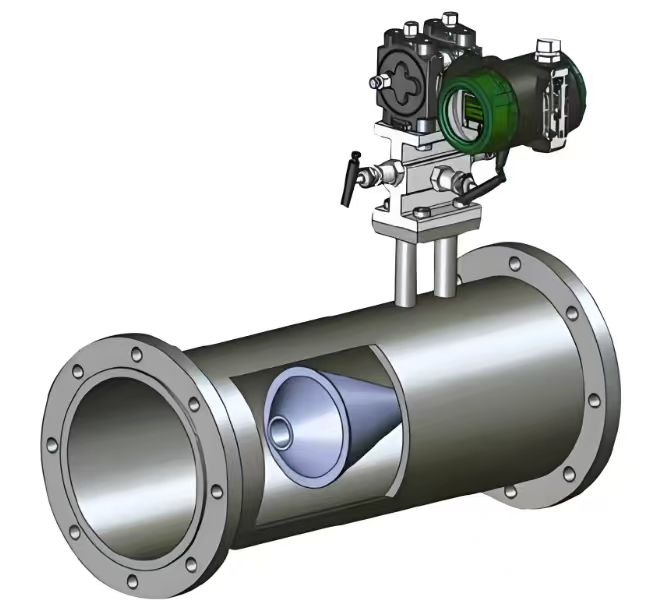
In modern industries, natural gas is a crucial energy source used in power generation, chemical processing, heating systems, and fuel supply networks. To make sure everything runs efficiently and safely, accurate measurement of gas flow is essential—for example, to ensure a gas-fired power plant operates at optimal fuel efficiency or to maintain proper conditions in a chemical reaction. However, there’s no single “perfect” gas flow meter, as each type comes with its own advantages and limitations. The following overview introduces the most common types of flow meters used for natural gas, how they work, and the applications where they are most effective. The thermal mass flow meter measures gas flow by detecting heat transfer. Inside the meter, a heated sensor and a reference sensor monitor temperature changes as gas passes through. The resulting temperature difference, proportional to the gas mass, is converted into a flow signal. Thermal gas flow meters are used for natural gas, biogas, compressed air, and flare gas. They are typically installed in boilers, burners, and air systems where precise flow measurement is required. These meters can detect low flow rates, making them suitable for leak detection applications. The Coriolis mass flow meter measures gas mass by detecting the Coriolis force in vibrating tubes. As gas passes through U-shaped tubes, it slightly twists the vibration pattern, and this phase shift is proportional to the mass flow. In addition to mass, the ...
Launching the new project or product can feel like you step onto a stage with no one there. You may spend weeks or months working on your idea and design a test version. You might feel excited about what could happen, but it is hard to get seen online. If there is no way to check if people care, then good projects may not be noticed by others. This is why testing with people early and finding ways to talk to your audience can help you a lot. Let’s look at Lena, a designer working on a new eco-friendly notebook, who wants to see if her idea connects with users before she puts a lot of money or time into making it. Just putting her idea online, without a plan, may not bring helpful feedback. A lot of people think that just sharing their work will get people to look at it. But to get seen, there needs to be early likes, comments, or shares. If there isn’t much happening at the start, posts might get lost. Then, people like Lena may not know if others care about what they made. Lena wanted to see if people would like her notebook. So, she set up some small and cheap tests to find out. She put up a short video. That video showed some special things about the notebook. She asked people to share what they think in the video captions. She also made polls in her story so people could say what they liked most. The reach was not that big. But even with a few people, these first results were good. Lena learned a lot about what her new idea people noticed and what parts the audience liked ...
Short-form creators live or die by the first 24 hours. When your demo video or tutorial enters the feed, it must earn quick micro-signals likes, rewatches, taps to profile so the For You algorithm expands your reach. But “post and pray” isn’t a strategy. If you’re showcasing a product walkthrough, a coding trick, or a before-and-after build, you need a reliable way to kickstart velocity without feeling spammy or off-brand. This article breaks down a simple playbook: pair smart packaging with a targeted likes push to prime distribution, attract real viewers who care, and convert that attention into follows, comments, and clicks. A targeted likes boost functions like an initial spark: it signals early relevance so the platform tests your clip with wider audiences. The key is intent. You’re not buying vanity; you’re buying time in the right rooms to let your content prove itself. That’s where Celebian enters the picture—used deliberately, it can add the momentum you need for demos, tutorials, and project showcases to break past the first algorithmic gate. Before pushing likes, pressure-test your content against Purpose, Packaging, and Payoff. · Purpose: What action should a viewer take after watching—save, comment with a question, click your bio, or DM for pricing? If you can’t answer that in one sentence, revise the concept. · Packaging: Thumbnails, hooks, and captions act like airport signage. Your first three seconds must promise a clear outcome: “Make your first micro-SaaS ...
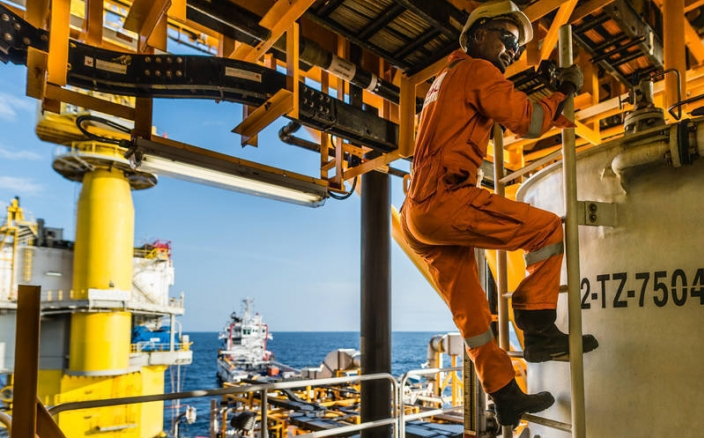
Oil platforms represent some of the most challenging and potentially hazardous work environments on Earth. These massive structures, standing alone in vast expanses of ocean, house hundreds of workers who extract petroleum from beneath the seabed. The question of safety on these installations is complex, involving multiple layers of risk management, regulatory oversight, and technological advancement that have evolved significantly over decades of offshore drilling operations. Offshore oil platforms face unique safety challenges that distinguish them from land-based industrial facilities. The marine environment presents constant threats from severe weather conditions, including hurricanes, storms, and high seas that can damage equipment and endanger personnel. The isolation of these platforms means that emergency response times are extended, making immediate medical care and evacuation procedures critical considerations in safety planning. The presence of flammable hydrocarbons creates inherent fire and explosion risks that require constant vigilance. High-pressure systems, heavy machinery, and the corrosive marine environment add additional layers of complexity to maintaining safe operations. Workers must navigate these hazards while performing physically demanding tasks, often in challenging weather conditions and at considerable heights above the ocean surface. The offshore oil industry operates under strict regulatory oversight designed to minimize risks and protect ...