Hi readers! I believe you are doing fine and continuing to learn something new every day. This day marks the discussion about the diagnosis of a faulty MAP (Manifold Absolute Pressure). A MAP sensor is an important component in the engine management system of a vehicle, functioning to determine the absolute pressure inside the intake manifold and reporting back the real-time pressure to the Engine Control Unit (ECU), which then does the math to achieve an exact air-fuel mixture and timing of injection, allowing combustion to be smoother with all the variables at play and reduced emissions. The MAP sensor detects the changes in air pressure inside the inlet manifold. The data relative to this pressure is used by the ECU to calculate fuel injection and ignition timing. The MAP sensor enables the fuel to be delivered correctly at higher altitudes or different loads. Some far-reaching performance problems that can be caused by a bad MAP sensor include below-par fuel economy, engine misfires, rough acceleration hesitation, idle roughness, and increased emissions. The faulty sensor ultimately leads the ECU to over or under-fuel the engine, which gives rise to inefficient burning and drivability hitches. Thus, consistent checking, cleaning, and replacement of a faulty MAP sensor can avoid these issues and keep the performance and efficiency of the engine at their best. You will find a step-by-step guide for diagnosing bad MAP sensors including symptoms, causes, testing procedures, ...
Hi readers! I hope you are doing well and learning new things daily. Today, we have a detailed overview of the MAP(Manifold Absolute Pressure) Sensor, its working principle, types, structure, and features. The Manifold Absolute Pressure (MAP) sensor is a crucial element in a vehicle's engine to control pressure. The MAP sensor measures the pressure inside the intake manifold and transmits this data to the ECU so that fuel injection, ignition timing, and air-fuel mixture can be optimized. The MAP sensor is used to ensure engine efficiency, performance, and fuel economy. The MAP sensor functions by the transformation of manifold pressure variations into an electrical signal, which is then interpreted by the ECU to calculate engine load. It is complemented by other sensors, including the Mass Air Flow (MAF) sensor and the Throttle Position Sensor (TPS), to increase fuel delivery precision. MAP sensors are available in analog and digital forms, with different types depending on absolute and gauge pressure measurements. A faulty MAP sensor may cause poor fuel efficiency, engine misfire, or stalling, which necessitates maintaining smooth engine performance. This article discusses the datasheet, working operation, characteristics, design, and MAP sensor types and their comparison in exhaustive detail. The internal combustion engine depends on a Manifold Absolute Pressure (MAP) sensor to operate because this device serves as an integral electronic control component. The sensor acts ...
Every engineer has stared at a script in their IDE and thought, “This works… but I wonder if it could do more?” That small piece of code, a side project, or a utility you built for fun could be the seed of a full-fledged business. The problem is, writing good code is only the first part of it all. Turning it into a product that generates revenue requires thinking beyond functions and algorithms. Many engineers struggle with this transition because the skills that make a great coder don’t always translate to business strategy, marketing, or legal compliance. You can have an elegant solution, but without understanding the market, protecting your intellectual property, and setting up a proper business structure, that code might never reach paying customers. In this article, we’ll walk you through the steps to turn your engineering projects into sustainable products. You’ll learn how to validate your ideas, protect your code, establish a business structure, navigate compliance, and ultimately scale your product for use by real-world users. Before you pour months of blood, sweat, and angst into coding, take a step back and ask if anyone actually wants what you’re building? Ultimately, you must view market research as a necessary part of the process–it’s a reality check. Understanding who your users are, what problems they face, and how they currently solve them can save you from building a brilliant product no one needs–and no one buys. Think in MVP terms. Engineers often want to ...
As the world evolves, development projects are becoming larger, more complex, and more demanding. Companies need to balance safety, cost, and efficiency while delivering results on schedule. As such, smart technology has become the backbone of this progress. Tools such as sensors, data analytics, and cloud platforms give firms better control over operations. They also reduce the risks that slow projects down. By adopting these innovations, industrial teams are transforming how they plan, build, and manage projects. In today’s world, data is everything, but collecting data is only the first step. The real value comes when analytics tools process that information into insights that guide decision-making. Industrial projects generate huge amounts of data from equipment, supply chains, and work schedules. Analytics helps project managers stay ahead and get things done efficiently. Here’s how: Industrial projects involve many different teams, often spread across multiple locations. Cloud platforms bring all stakeholders together by providing one secure space for information. For large industrial projects, this type of collaboration is essential. Cloud platforms cut down on miscommunication and create a single source of truth for everyone involved. Here’s how: With so many connected devices and cloud systems, cybersecurity is no longer optional. In fact, cybersecurity frameworks have become standard in construction sites, manufacturing plants, and energy facilities. This is mainly ...
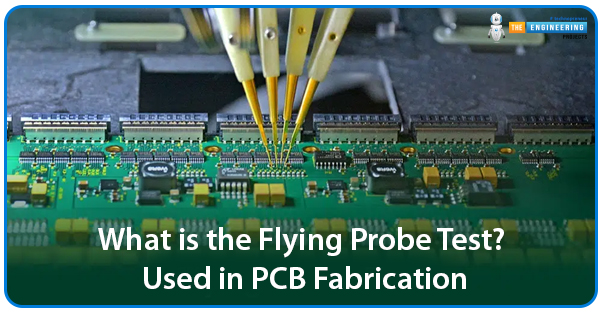
Hi readers! I hope you are well and finding some thrilling advancement. In the high-speed electronic world where accuracy cannot be compromised and error is unthinkable, the Flying Probe Test is the unsung hero of PCB integrity. Today, the topic of our discourse is the Flying Probe Test and its use in PCB Fabrication. In the complex realm of contemporary electronics, the dependability of a printed circuit board (PCB) can either make or destroy a product. With devices shrinking in size, speeding up in performance, and becoming increasingly feature-dense, the need for unflinching quality and accuracy in PCB manufacturing has grown stronger. Getting each trace, via, and connection perfectly manufactured is no longer a choice; it's a necessity. That's where Flying Probe Testing (FPT) comes in as a potent solution. Differing from conventional bed-of-nails testing with its need for expensive and time-consuming special fixtures, flying probe testing provides a build-to-order, fixtureless process well suited to prototype development and low-to-medium volume production. As robotic probes zip across the PCB surface at high speed, the process can detect continuity, shorts, resistance, and even component functionality with accuracy that's on target. FPT is particularly worth its while in companies where quick design iteration and high quality standards overlap, like aerospace, medical, automotive, and consumer electronics. It equips manufacturers with the means to rapidly verify PCB ...
The evolving Philippine online casino industry comes with new regulatory challenges. The main role is taken by the way players do their transactions. This article examines the two main payment systems involved - GCash and cryptocurrencies. Find out how they are compared under the latest BSP framework and what Filipino players should know about them. In August this year, the BSP (Bangko Sentral ng Pilipinas) issued a directive requiring all supervised financial institutions to remove in-app links and icons redirecting users to gambling sites within 48 hours. This change has affected numerous platforms, including many online casinos using GCash on Online-Gambling.com and similar review sites. GCash officially suspended gaming access via GLife at 8:00 p.m. on August 16. GCash remains the dominant payment method in the Philippines despite the new restrictions. The e-wallet now operates under a modified framework where direct in-app gambling links and GLife mini-apps have been removed. What remains unchanged is the near-instant deposit capability through standard checkouts. The payment flow now requires access to the casino sites directly rather than through wallet apps. According to the GCash Help Center, "While GLife gaming access is suspended, standard payment functionality to licensed casinos remains operational through proper web channels, subject to existing verification and monitoring protocols." The OGPS draft suggests GCash payments may soon face additional restrictions ...
Good day, readers! I hope everyone is having a beautiful day! A hidden process in your diesel engine keeps it powerful and clean. DPF regeneration, a forgotten warrior in emission control. Today, we are going to cover DPF regeneration, a procedure by which your diesel engine breathes freely. A Diesel Particulate Filter (DPF) is a part of modern diesel engines that catches and holds undesired soot particles of exhaust gases, which are no longer useful. With time, soot builds up gradually, and unless proper care is taken on the filter by routinely cleaning it, it may become blocked, hence impede its efficiency, use up a lot of fuel, and cause costly replacements. This regeneration basically burns off trapped soot to improve filter efficiency once again. Fields of regeneration cover passive, active, and forced regeneration. Passive regeneration occurs when you drive on the highway with high exhaust temperatures, while active regeneration occurs when the engine control unit occurs to initiates regeneration due to high soot levels yet to be cleaned, and forced regeneration occurs when the regeneration cycle is activated manually by technicians with a DPF regeneration tool. But to ensure that your automobile is up to the environmental standards, it is very critical to understand the DPF reset meaning and its role in resetting the DPF pressure sensor. The caution of DPF reset and learning the ways to carry it out ensures even further the long life of a filter and smooth operation of ...
Hi readers! I hope you are doing well and finding something new. In the high-speed world of electronics, a micrometer of solder paste can make or break your PCB assembly. Today, we will discuss solder paste stencil design and its importance for perfect PCB printing. Solder paste stencil design is a building block of surface mount technology (SMT) and an important factor in the success of printed circuit board assembly (PCBA). The stencil is an exact template used for depositing solder paste onto PCB pads before the placement of components and soldering. Its design sets the amount of solder paste applied, its location, and how well it picks up from the stencil and gets onto the board. Even slight variations in stencil design can cause major assembly flaws, including solder bridging, inadequate solder joints, tombstoning of components, or improper alignment—all of which are factors in product reliability and manufacturing yield. As contemporary electronics get smaller and more complex, the tolerance for error when applying solder paste is reduced. Perfect PCB printing involves keen attention to several stencil parameters such as material selection, aperture geometry, stencil thickness, area ratio, and surface finish. New age techniques such as nano-coating and step stencils have also improved performance for high-density and fine-pitch designs. In this article, you will know the solder paste stencil, material used, manufacturing method, area ratio, aspect ratio, key stencil ...
Getting started with Forex doesn’t always require a deposit. In fact, for new traders looking to break into the market without immediate financial risk, there’s a better route, using a free signup bonus like the one offered by MTrading. It’s a simple way to test real trading conditions and aim for actual profits, all without touching your own funds. But just because the money is free doesn’t mean success is guaranteed. If you want that first profit to count, you’ll need to treat the opportunity like a serious setup, not a shortcut. It’s easy to get carried away when you’re trading with bonus funds. After all, it’s not your money, right? But that’s the exact mindset that leads to quick losses. The key is to treat the bonus like it’s your own capital. Don’t expect to double it overnight. Instead, focus on a clear, manageable profit target. Think 5–10%, not 100%. The goal isn’t to get rich off the bonus, it’s to learn, stay in control, and ideally walk away with some earnings you can withdraw. This is where many new traders go wrong. They try a bit of scalping, then switch to swing trades, then jump into news-based setups. That scattered approach doesn’t work when you’ve got limited time and capital. Pick a simple, proven strategy, something like support/resistance trading or moving average crossovers. Backtest it, understand its logic, then stick to it. Jumping between styles based on emotion or market noise almost guarantees failure. Even with a free bonus, risk management ...
Hi readers! I hope you are having a great day and want to learn something new. Developing an effective engine emission control system makes every puff of smoke from your engine a story of power, efficiency, and a cleaner planet. Today, the topic of discourse is the engine’s emission control system. The primary role of the engine emission control system is to prevent the release of toxic pollutants into the atmosphere during fuel combustion. It works together with fuel injection, the ignition timing, and exhaust treatment technologies so that it complies with the government regulations as far as the environment is concerned. Its principal parts comprise of catalytic converter, oxygen sensors, the exhaust gas recirculation (EGR) system, and the onboard diagnostics (OBD). The different emission control devices regulate and correct the proportion of air-fuel to maximize the decrease of the emissions related to nitrogen oxides (NOx), carbon monoxide (CO), and unburned hydrocarbons (HC). Today, the modern systems are usually fully integrated in the ECU, which receives input from all relevant sensors and duly makes adjustments based on the results for optimal performance and keeps doing so in real-time. In the case of fuel injection, for instance, only the right amount of fuel is injected directly into the combustion chamber so as to ensure complete burning to reduce emissions further. Error codes such as p130 may be thrown for anything from a misfire to emission control problems, ...