


What Engineers Should Know About Carbide Pins Before Moving into Production


Prototype tooling often makes a process look more stable than it really is. In early development, the main goal is to get the part made, prove the concept, and move the project forward. A component only has to perform long enough to confirm that the design works. It does not have to survive months of repeated cycling, constant contact, or the pressure of full production output.
That is why scale-up exposes problems that were easy to miss during prototyping. A setup that looked dependable in a short run starts drifting once production speed increases. Wear appears faster than expected. Alignment becomes less reliable. Rework begins showing up in places that once seemed settled.
This is where small tooling choices start to matter a great deal. Pins are a good example. They are easy to treat as secondary details when a team is focused on larger design issues, but once a process enters production, they often play a direct role in repeatability, maintenance, and part quality. Engineers who understand that shift tend to make better decisions early.
Prototype Results Can Be Misleading
A prototype tool is built for speed and learning. It is meant to help a team evaluate performance quickly, not always to prove long-term durability. That difference matters more than many teams expect.
During short runs, even a component that is wearing down too quickly can still look acceptable. The tool works. The part comes out. The project stays on schedule. Since the cycle count is limited, small dimensional changes often stay hidden.
Production changes that picture completely. The same pin that performed well during early testing now sees far more contact, more motion, and far more chances to wear. What once felt like a small detail starts affecting the entire process.
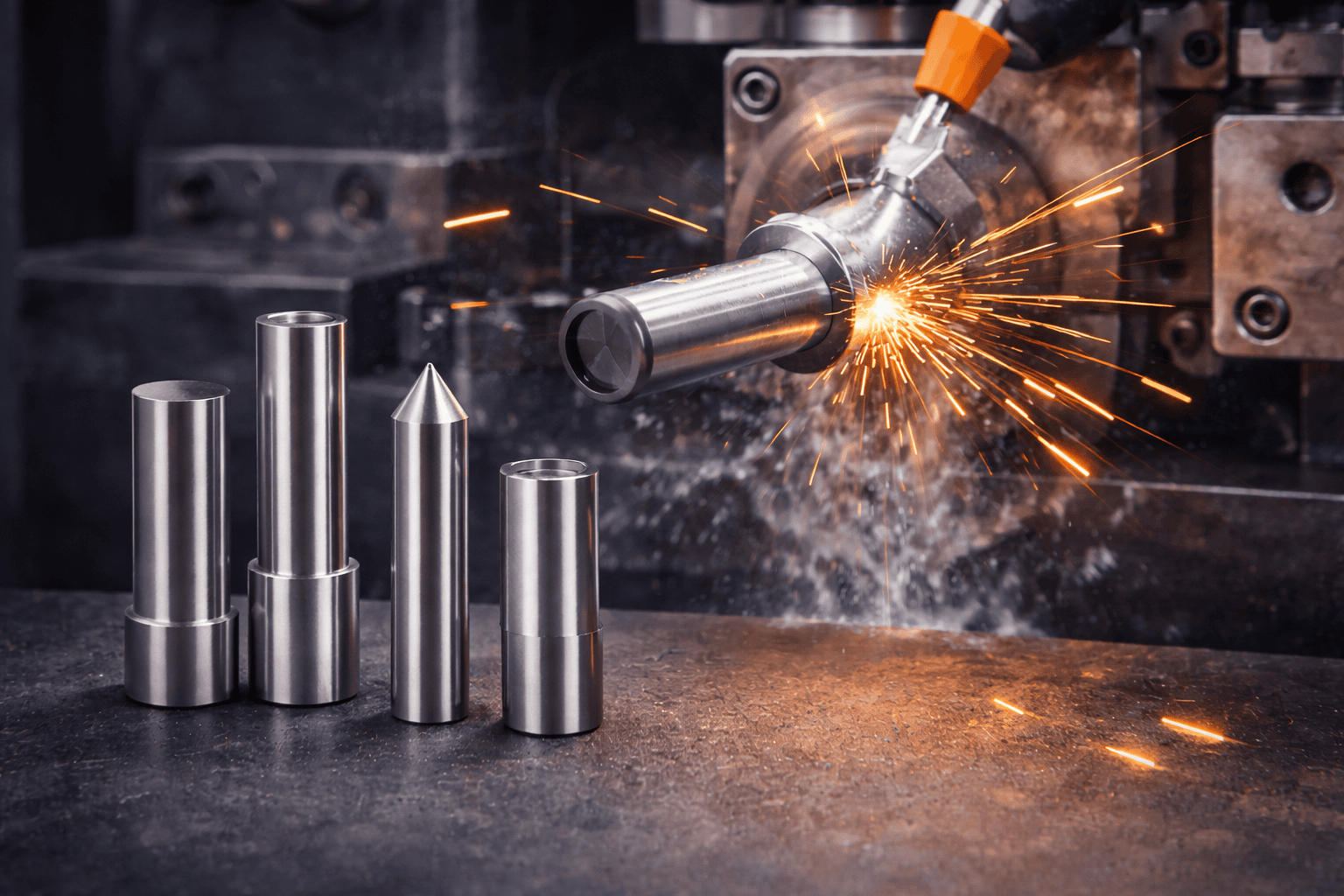
That is one reason carbide pins deserve closer attention before a project moves into sustained output. In high-wear tooling environments, they help preserve geometry and fit far longer than materials that lose accuracy under repeated use.
Rework Usually Starts Small
Rework rarely begins with one dramatic failure. More often, it starts with a slow shift that no one notices right away. A locating feature wears slightly. A fit becomes a little looser. A guided surface stops repeating in exactly the same way. The process still runs, but it no longer runs as cleanly as it did during early trials.
At first, those changes look manageable. Operators compensate. Inspection catches the variation. Maintenance makes a small adjustment. But those small corrections add up over time. What looks like a minor tooling issue can turn into:
more setup changes
added inspection time
inconsistent part output
higher scrap or rework rates
extra maintenance interruptions
That is why wear resistance matters so much during scale-up. The goal is not simply to avoid breakage. The goal is to hold size, maintain contact surfaces, and prevent the slow drift that turns stable production into a constant correction cycle.
Alignment Matters More Once Volume Rises
During development, teams usually have more room to intervene. Engineers are watching closely, so problems are caught early and adjustments happen in real time. Production does not offer that same margin.
Once a line is running at volume, tooling needs to hold alignment without constant attention. That is especially important in fixtures, dies, automation systems, and assemblies where repeatable positioning affects everything downstream.
When pins wear, even slightly, repeatability starts to suffer. Parts stop returning to the same position. Guided movement becomes less precise. A process that looked controlled during prototyping begins creating variation during longer runs. This is one of the clearest lessons of scale-up. Engineers know that alignment problems often trace back to components that seemed too small to deserve much attention. In reality, those components are often what keep the larger system stable.
Material Choice Affects Labor Too
When teams talk about production costs, the first concern is often scrap. That makes sense, but scrap is only part of the real cost. Labor is the quieter issue.
When tooling components wear too quickly, someone has to deal with it. Operators spend more time making corrections. Maintenance teams replace parts more often. Engineers go back into troubleshooting mode. Quality teams inspect more frequently because the process no longer feels dependable. That creates drag across the entire operation.
A pin choice that looks inexpensive at the purchasing stage can become expensive later if it leads to frequent adjustments and lost time. This is why experienced teams look at the full impact of a component, not just its initial price.
A better wear component helps reduce:
unplanned intervention
adjustment frequency
maintenance time
inspection burden
process instability
Standard Materials Do Not Always Survive Production Conditions
Steel remains useful in many tooling applications. It is familiar, available, and often perfectly suitable in lower-wear environments. The problem is not that steel is wrong. The problem is that production often demands more from it than a prototype run ever revealed.
Once cycle counts increase, wear patterns become much harder to ignore. Abrasive contact, repeated loading, sliding wear, and tight positional requirements all push components harder than a short trial run can show. A pin that looked perfectly acceptable during development can start losing fit much sooner than expected once the process runs at full pace.
This is where carbide pins become a practical engineering choice. They are not about excess. They are about matching the component to the actual conditions it will face once the process becomes real production rather than limited testing.
Wear Resistance Is Not the Only Factor
One common mistake is assuming that the hardest material is automatically the best one. Engineers know the decision is rarely that simple. A pin does not only need wear resistance. It also needs the right balance of toughness, stability, and fit for the application. Some environments are dominated by abrasion. Others involve impact, side loading, or heat. Those details change what “best” actually means.
Before choosing a pin material, engineers usually need to think through questions like these:
What kind of wear is happening? Is it abrasion, sliding contact, impact, or a mix of several conditions?
How sensitive is the assembly to small dimensional loss? Some tools can tolerate slight wear. Others cannot.
How often will the component cycle? A low-volume operation and a full production run create very different demands.
Is the current issue material failure or fit stability? Sometimes the problem is not basic hardness. It is how well the part holds geometry over time. Thoughtful selection early in the process prevents a great deal of avoidable trouble later.
Finishing Quality Matters More Than Teams Expect
Material gets most of the attention, but finishing plays a major role in performance. A pin can be made from the right material and still fall short if the diameter, straightness, or surface finish is inconsistent. Those details affect how it fits, how it wears, and how reliably it performs in the assembly.
This becomes more important during scale-up because production is less forgiving than development. During prototyping, a slightly imperfect fit might never become obvious. During production, that same inconsistency can contribute to drift, wear, or unstable setup conditions.
Engineers who have spent time around tooling understand this well. Real component quality is not just about what the part is made from. It is also about how accurately it is finished.
Production Often Requires More Custom Thinking
Prototype tooling usually favors speed. Teams use what is available, what is easy to modify, and what gets the project to the next milestone.
Production changes the standard.
Once a process is expected to run consistently, standard off-the-shelf solutions do not always provide the fit or geometry the application truly needs. Custom dimensions, tighter tolerances, or application-specific shapes often become more important because the system is no longer judged by whether it works once. It is judged by whether it works every time.
That is another reason engineers revisit pin selection during scale-up. A component that was acceptable during development may no longer support the precision or durability the process now requires.
In Conclusion
Moving from prototype to production changes the standard completely. What worked during a short run now has to prove itself under repetition, speed, and real operating pressure. That is where small tooling components stop being background details and start affecting results in visible ways.
Engineers who think carefully about material choice, wear behavior, finishing quality, and application fit before launch usually avoid a great deal of rework later. That is the practical value of evaluating carbide pins before production begins. It is not about overcomplicating a design. It is about building a process that stays stable once the easy margin for error is gone.
Comments
0