Hello friends, I hope you all are doing great. In today's tutorial, we are going to have a look at what are Middleware in ASP.NET Core. It's our 3rd tutorial in ASP.NET Core series. In order to understand the Middleware, we have to open the Startup.cs file present in Solution Explorer.
In our previous lecture, we have discussed the Code in Startup.cs and I have told you thhat we will discuss the Configure method later, so now we have to understand that code first. So, first let's define middleware components and then have a look at that code:
Middleware in ASP.NET Core
Middleware in ASP.NET Core are simple software components used to control HTTP requests and handle both incoming requests as well as outgoing responses.
Each middleware is a se ...
Hello friends, I hope you all are doing great. In today's tutorial, we are gonna have a look at Filters in ASP.NET MVC. It's our 9th tutorial in ASP.NET MVC series. It's also a new concept which is essential to discuss as it's used almost in every form submission.
We have already understand Controllers in ASP.NET MVC and we know that Controllers have action methods in it which are directly assigned to respective Views, which are then displayed to the user. But in some cases, we have to place some checks (called Filters) before or after this action method called. So, let's have a look at these Filters in ASP.NET MVC in detail:
Filters in ASP.NET MVC
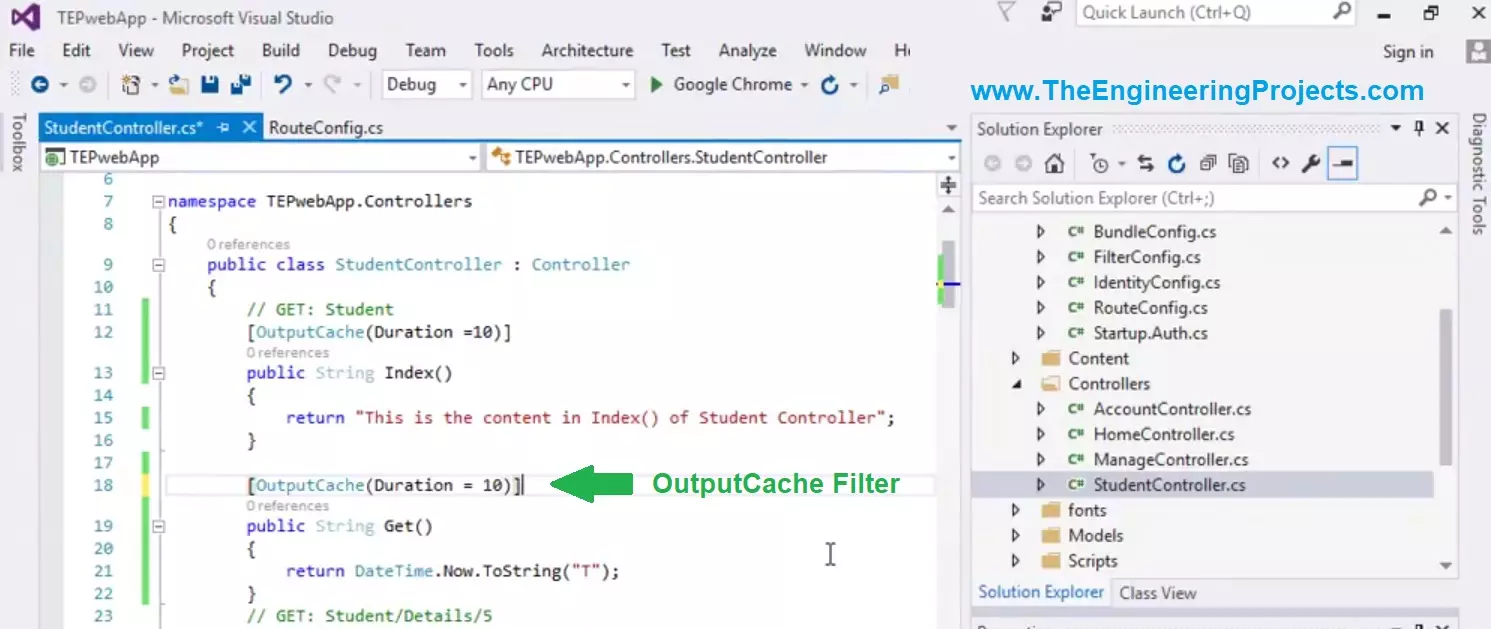
Filters are attributes which we can use before or after action method called in a Controller.
C ...
Hello friends, I hope you all are doing great. In today's tutorial, we are gonna Create a New Controller in ASP.NET MVC. It's 6th tutorial in our ASP.Net MVC series. We have already had a look at basic Introduction to Controllers in ASP.NET MVC and they are used to communicate between Views & Models.
So, now we are gonna have a look at How to Create a New Controller in ASP.NET MVC. It's a very quick tutorial, as there's not much to do with Controller rite now, we will just create one. So, let's get started with it:
Create a New Controller in ASP.NET MVC
In order to Create a New Controller in ASP.NET MVC, you have to right click on the Controllers folder in Solution Explorer.
Now click on the Add and then click on Controllers as shown in ...
Hello friends, I hope you all are doing great. In today's tutorial, we will have a look at URL Routing in ASP.NET MVC. It's the 8th tutorial in this ASP.NET MVC series. Today's tutorial is on a new concept in asp.net and it's essential to understand URL routing before going any further.
URL Routing is actually a part of core ASP.NET but MVC applications also use it. URL Routing is implemented by System.Web.Routing and ASP.NET MVC uses System.Web.Routing. So, let's have a look at what's URL Routing in ASP.NET MVC:
URL Routing in ASP.NET MVC
URL Routing is used for directing the HTTP request (generated by the user) to the respective controller in ASP.NET MVC.
Whenever a user types some url in the browser and hit enter then an HTTP request is ge ...
Hello everyone, I hope you all are doing great. Today, I am going to start this new series on ASP.NET Core and it's our first tutorial in this series. I will start from basics and will slowly move towards complex concepts. So, if you haven't worked on ASP.NET then you don't need to worry about that but you must have some basic knowledge of C# and object oriented programming.
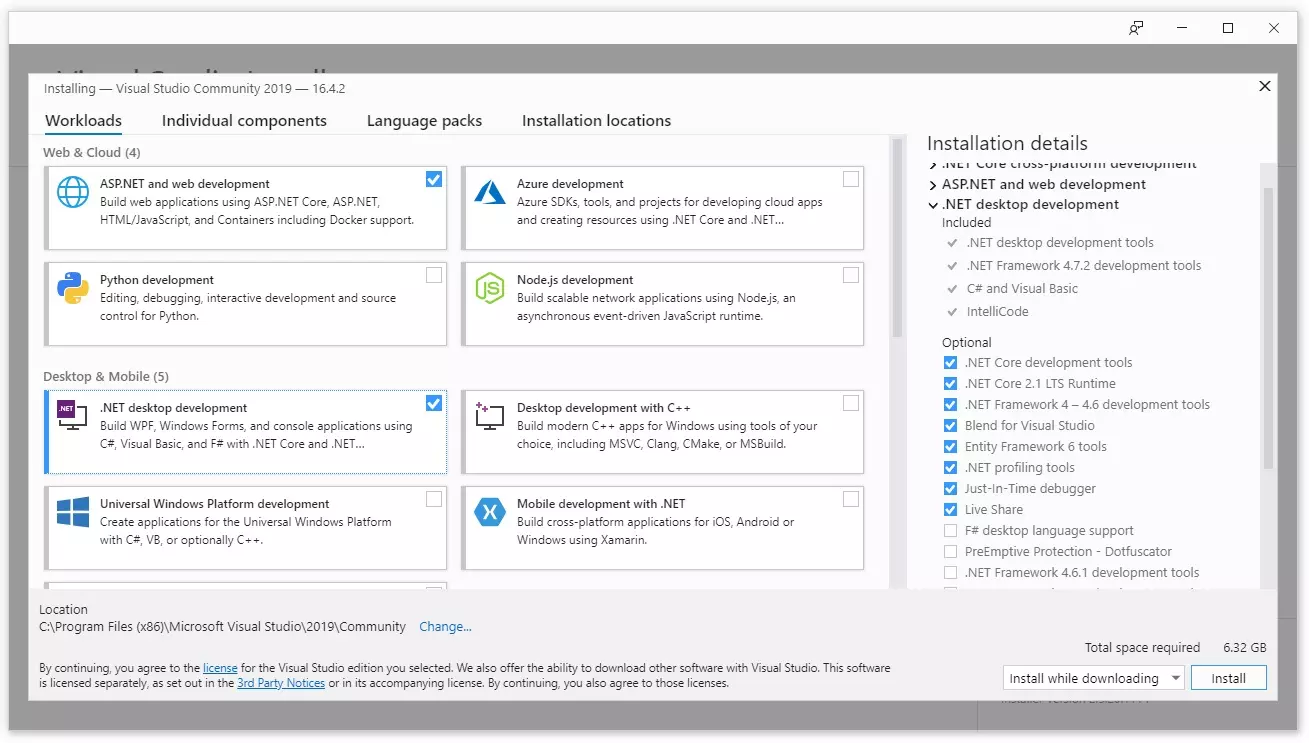
I will use Visual Studio 2019 for these tutorials, it's community version is free to use and I will use C# language for developing ASP.NET Core web applications. So, let's first have a look at what is ASP.NET Core:
Introduction to ASP.NET Core
ASP.NET Core (originally deemed as ASP.NET xNext & was going to named as ASP.NET 5) is ...
Hello friends,I hope you all are doing great and having fun with your lives. In today's tutorial, we are gonna have a look at Model Binding in ASP.NET MVC. It's our 13th tutorial in ASP.NET MVC series. Today, we are gonna discuss a new concept in ASP.NET MVC and it's more of a luxury as it automates the job and makes our work easy.
Suppose, in your application, you want to create a registration form and thus you need to pass this data from View to your model, so that it could be saved in your database. So, in order to bind this HTTP request data from View to Model, we use Model Binding. Let's have a look at Model Binding in ASP.NET MVC in detail:
Model Binding in ASP.NET MVC
Model Binding in ASP.NET MVC is used to bind the data sent by the HTTP ...
Hello friends, I hope you all are having fun with your lives. In today's tutorial, we are gonna have a look at Action Selectors in ASP.NET MVC. It's the 11th tutorial in ASP.NET MVC series and if you have covered so far then that means you really want to learn this language. Action Selectors are also new for you as we haven't discussed them yet but they are not that difficult to understand.
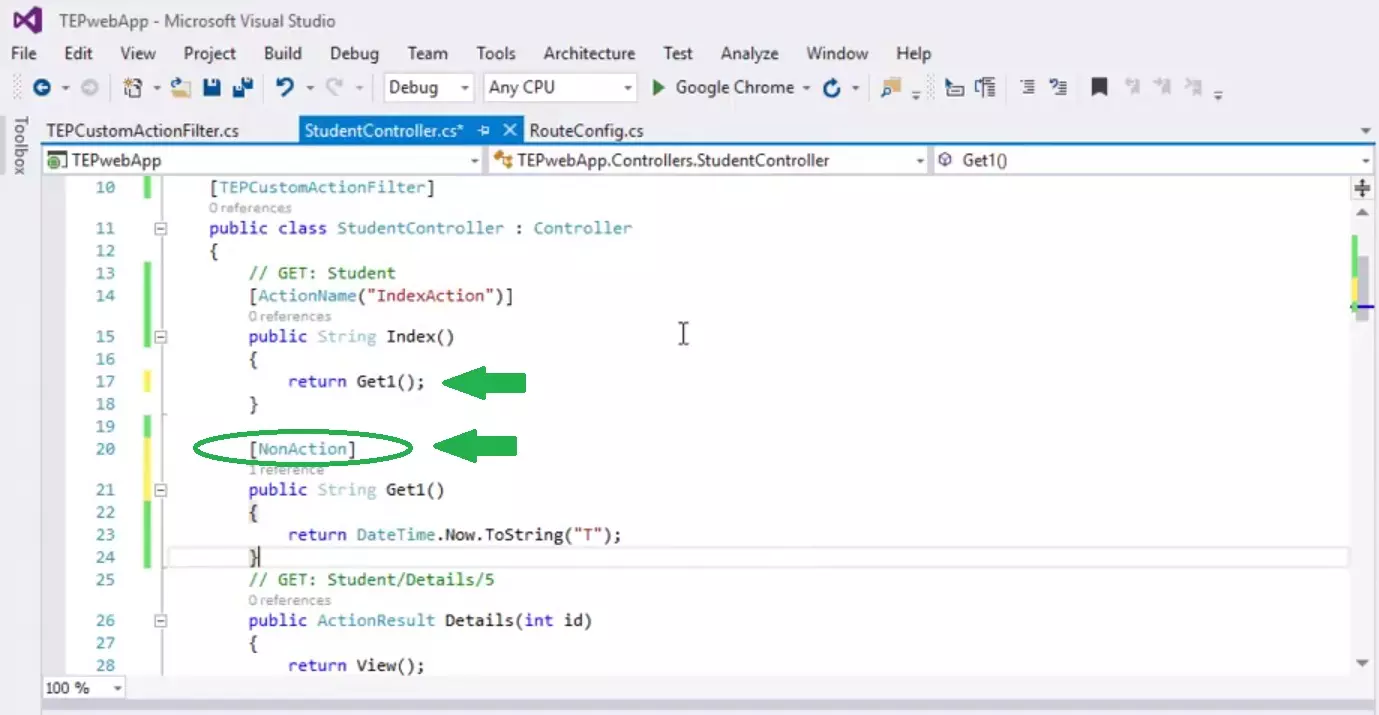
Action Selectors are built-in attributes of ASP.NET which are directly applied to action methods of Controllers. We use Action Selectors to influence on Controller's action methods. In simple words, we use Action Selectors to guide URL Routers in selection of correct action method. Let's have a detailed overview of Action Selectors:
Action Selectors in ASP.NET ...
Hello friends, I hope you all are doing great. In today's tutorial, I am going to start this new series on ASP.NET MVC Framework. I am gonna start from basics and will slowly move towards professional projects. I will share all the codes during this series and if you got into any trouble then ask in comments and I will help you out.
One of our Team Member has already designed videos on ASP.NET MVC and I will keep on embedding the respective videos throughout this tutorial series. In our first tutorial, we are gonna have a look at How to Setup your First Project in ASP.NET MVC Framework. So, let's get started with it:
Setup your First Project
I will use Microsoft Visual Studio 2015 and I hope that you have already installed it.
If you are usin ...
Hello friends, I hope you all are doing great. In today's tutorial, we will have a look at URL Routing in ASP.NET Core. It's our 11th tutorial in ASP.NET Core series and it's an important but quite easy concept to understand.
You must be wondering how we are routing rite now as we haven't added any routing codes yet. But if you remember, we have used MVC with default route middleware in our pipeline and this middleware automatically sets up this default URL routing for our web application. So, let's understand how this URL Routing works in ASP.NET Core:
URL Routing in ASP.NET Core
URL Routing in ASP.NET Core is used to provide the controller's action method to the incoming HTTP request.
In simple words, when a user enters an HTTP URL in its ...
Hello friends, I hope you all are doing great. In today's tutorial, we will have a look at what is DbContext Class in Entity Framework Core. It's our 17th tutorial in ASP.NET Core series. In our previous tutorial, we have discussed Entity Framework Core in detail and have also installed it in our web application.
So, now we need understand how to work with Entity Framework Core and for that we have to look at its classes & functions. So, today we will discuss one of its class named DBContext in detail:
DbContext Class in Entity Framework Core
EF Core contains an important class named DbContext, which is mainly responsible for communication between Database & software objects.
We communicate with our database using this DbContext class ...