


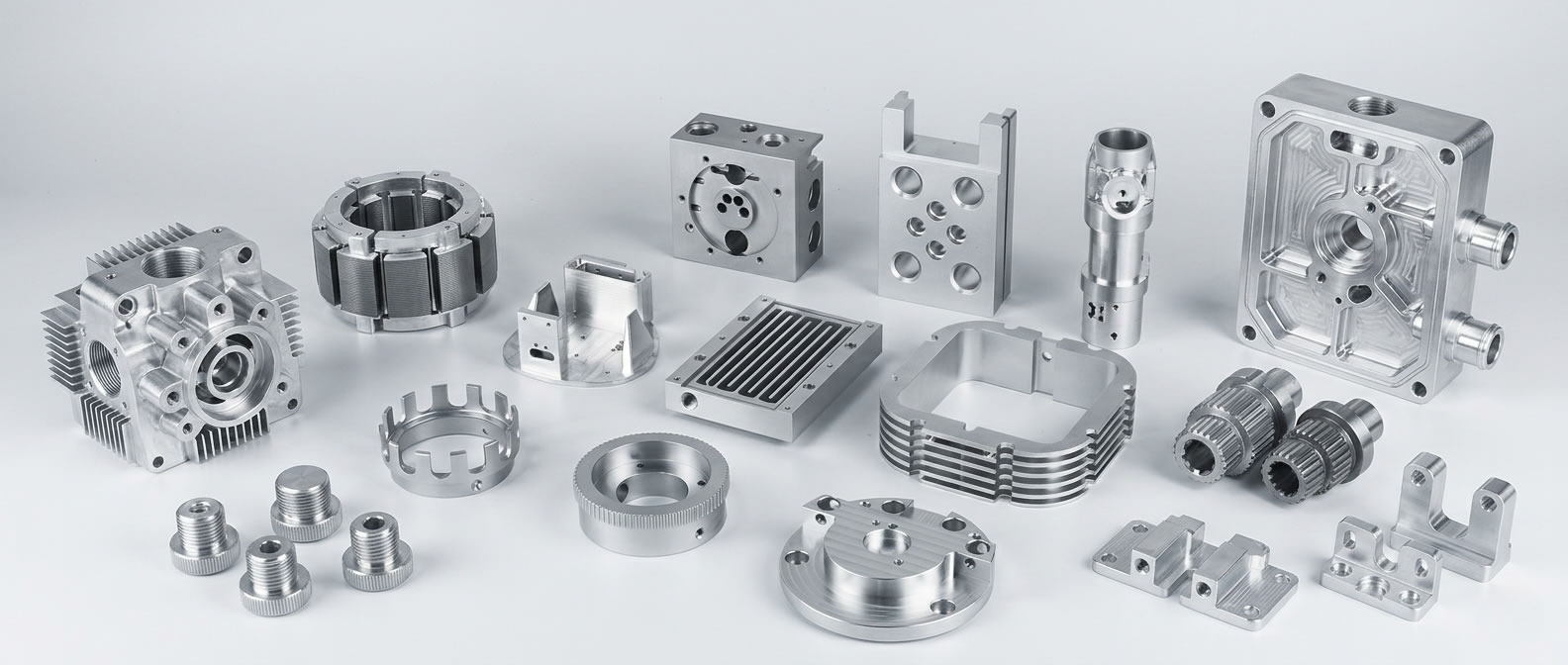
From STEP File to Real Part: What Hardware Engineers Need to Know About Sourcing CNC Milled Components


Most hardware engineering teams hit the same wall at the same point in a project. The CAD model is ready. The BOM is locked. Firmware is running on a dev board. Then comes the mechanical work: a test fixture, an aluminium housing, a custom bracket — and suddenly the question of how to actually get that part made becomes the blocker.
Designing for manufacture is covered in textbooks. Finding a reliable shop to make your part on schedule, at the right tolerance, and without requiring a procurement department behind you is not. That gap is where a lot of prototype-to-production timelines fall apart.
This article covers what hardware and mechanical engineers need to understand about the practical realities of sourcing CNC milled components — particularly from China, where the majority of high-volume precision machining capacity now sits.
Why milling is usually the first external process engineers encounter
Most engineers start with additive — FDM or SLA printing for form-fit-function checks. But printed parts have obvious limitations: material properties are anisotropic, tolerances are loose, and surface finish is rarely acceptable for anything that needs to interface precisely with another component.
The moment a project needs an aluminium heatsink bracket, a steel motor mount, or an acetal fixture plate, the team needs subtractive manufacturing. CNC milling is the most common first step: it can produce tight-tolerance flat and 3D profiles across a huge range of metals and engineering plastics, and it is widely available at scale.
The challenge is that most engineering teams do not have an existing relationship with a machine shop that can take on their work at a competitive price. Searching cold and vetting shops individually is slow, and the results are inconsistent. This is where structured platforms are increasingly useful. Platforms that aggregate vetted CNC milling companies — with documented machine inventories, axis capabilities, supported materials, and quality credentials already visible — let engineers shortlist suitable shops based on technical fit before sharing a single drawing.
What tolerances CNC milling can realistically hold
One of the most common mismatches in engineering projects is between what a designer specifies on a drawing and what a standard shop can cost-effectively produce. Understanding the realistic tolerance bands for CNC milling helps engineers design appropriately and select the right supplier.
General CNC milling tolerances by category:
Standard commercial tolerance: ±0.127mm (±0.005 inches) — achievable by most equipped shops, suitable for non-critical features, housings, and structural parts.
Medium precision: ±0.05mm — requires well-maintained machinery and good fixturing. Appropriate for sliding fits and features that interface with off-the-shelf hardware.
High precision: ±0.025mm or tighter — requires dedicated fixturing, climate-controlled environments, and experienced operators. Usually involves additional cost and lead time.
Hole diameter tolerances: H7/h6 fits are achievable with boring or reaming operations, suitable for shaft and bearing interfaces.
When specifying a part, identify which features genuinely need tight tolerance and which do not. Over-specifying drives cost and limits supplier options without adding engineering value.
Material selection: what mills well and what does not
The choice of workpiece material has a direct effect on machining time, tool wear, and cost. For engineers selecting materials for CNC milled parts, here are the key considerations:
Aluminium alloys (6061, 7075)The most common choice for structural hardware prototypes. 6061-T6 offers excellent machinability, good strength-to-weight ratio, and wide availability. 7075 is stronger but more expensive and slightly harder to machine. Both finish well and are anodisable.
Stainless steel (303, 304, 316)303 is the most machinable grade. 304 and 316 are tougher and require slower feeds and sharper tooling. Suitable for parts that need corrosion resistance or food-grade properties.
Mild steel (1018, 1045)Cost-effective for structural parts that do not require corrosion resistance. Machines predictably. Often used for fixtures, jigs, and machine components where weight is not a concern.
Engineering plastics (Delrin/POM, PEEK, nylon)Delrin machines cleanly and holds tolerance well. PEEK is used for high-temperature and chemical-resistance applications. Both are more dimensionally stable than printed alternatives.
TitaniumHigh strength-to-weight, excellent corrosion resistance, but slow to machine and expensive. Use only where the engineering requirement genuinely demands it.
Understanding the RFQ process for milled parts
The quality of the information a shop receives directly determines the quality of the quote. Poorly communicated requirements lead to under-specified quotes, surprises during production, and delays at first-article inspection.
A complete RFQ package for a CNC milled part should include:
3D model (STEP or IGES format): Most modern shops work from STEP files. Include the model in the correct units (mm preferred for Chinese shops). Parametric modelling history is not required.
2D drawing with GD&T callouts: The 3D model defines geometry; the 2D drawing defines intent. Every tolerance-critical dimension, surface finish requirement, and datum reference should be on the drawing. Do not rely on the shop to interpret tight tolerances from the model alone.
Material specification: Name the alloy and temper (e.g., "Aluminium 6061-T6"), not just the material family. If a substitute is acceptable (e.g., 6082 instead of 6061 for European supply), state that clearly.
Surface finish requirements: Define Ra value for critical surfaces. State whether anodising, plating, or coating is required and specify colour, thickness, and standard where relevant.
Quantity and required delivery date: Include prototype quantity and expected production volume if known. Shops price differently for one-off prototypes versus recurring production batches.
Inspection requirements: Specify whether first-article inspection (FAI) with a dimensional report is required, and which features need measuring.
Finding CNC machining capacity in China
For engineers and small teams working on hardware products, direct relationships with Chinese machine shops have historically been difficult to establish without local contacts or a sourcing agent. That model is changing.
Structured platforms built around CNC machining services in China allow design and engineering teams to access pre-screened Chinese CNC suppliers — with machine type, axis count, supported materials, quality certifications, and export experience documented before an RFQ is submitted. The practical effect is that the supplier discovery and initial qualification phases, which previously required significant research time, can be compressed significantly without sacrificing selection rigour.
For hardware teams that need to run parallel prototyping programs across multiple part types, or that want access to higher-volume production pricing without establishing a dedicated supply chain team, this model offers a practical middle path between a local prototyping shop and a full offshore sourcing operation.
Common mistakes engineers make when first sourcing CNC parts
Specifying uniform tolerances across the whole drawing
Applying ±0.05mm to every dimension on a housing that only has one precision bore is expensive and unnecessary. Tight-tolerance features require more time, more fixturing, and more inspection — apply tolerances selectively.
Leaving surface finish unspecified
"As machined" means different things to different shops. If a surface will be visible, will mate with a seal, or will be anodised, specify the Ra value and any pre-treatment requirements explicitly.
Not requesting samples before production
For any part going into production above 10–20 units, always run a first-article approval before committing to volume. This catches fixturing errors, material substitutions, and interpretation differences before they propagate across a full batch.
Sending only a 3D model without a drawing
A 3D model communicates shape. A drawing communicates intent — tolerances, finish, datum structure, and inspection requirements. Shops that work only from a model are making assumptions about everything not explicitly modelled. For precision parts, that is a risk.
Selecting supplier on price alone
A quote 30% below every other response is not necessarily a good deal. In CNC machining, underpriced quotes often indicate that the shop did not fully read the drawing, is substituting material, or is quoting without accounting for the full inspection requirement. Review the quote against the specification before assuming it is comparable to others.
What to check before confirming a CNC supplier
Before awarding work, verify the following directly:
Machine type and maximum work envelope relative to your part
Whether the shop has run the same material and alloy grade previously
ISO 9001 or equivalent quality certification status
First-article inspection capability (CMM or optical measurement)
Export documentation experience (commercial invoice, packing list, HS code handling)
Lead time commitment in writing with milestone checkpoints
This set of checks takes under an hour per supplier and eliminates the most common failure modes in first-time CNC sourcing.
Comments
0