Welcome to chapter 9 of our python tutorial. In the previous chapter, we looked at frequent examples of invalid Python syntax and learned how to fix them. Up to this point, you are well aware of errors that may occur in your Python program and how you can solve them easily and quickly. Therefore, in this tutorial, we will look at a few more causes of syntax errors and zero-error divisions.
Mistaking Dictionary Syntax
As you learned before, omitting the comma from a dictionary element can result in a syntax error. In Python dictionaries, the equals symbol (=) is used instead of a colon to separate key and value pairs.
This error message is once again useless. In this case, the repeated line and caret come ...
The first step to becoming a Python coder is to install or update Python on your computer. Python can be installed in a variety of ways, including through the official Python.org distribution, a software package manager, the IoT (Internet of Things) and scientific computing, just to name a few.
In this article, we'll be using official Python distributions, which are often the best option for beginners.
What will you learn from this?
How to check if you have the right Python release installed on your computer before proceeding.
Installation of Python3 on Windows pc and Linux machine.
How to use Python on the web with the help of online interpreters.
INSTALLING REQUIRED PYTHON ENVIRONMENTS
Installing the most recent versions of Python and ...
Hello friends, I hope you all are doing great. In today's tutorial, I am going to show you How to use Data types in Python. It's our 2nd tutorial in Python series. In our first tutorial, we have seen a detailed introduction to python and we have also installed PyCharm IDE to work on python.
Today, we will understand data types in detail as in order to design an efficient program, you need to select correct data types. Incorrect selection may cause memory loss and may slow your application. So, let's get started with data types in Python:
Data types in Python
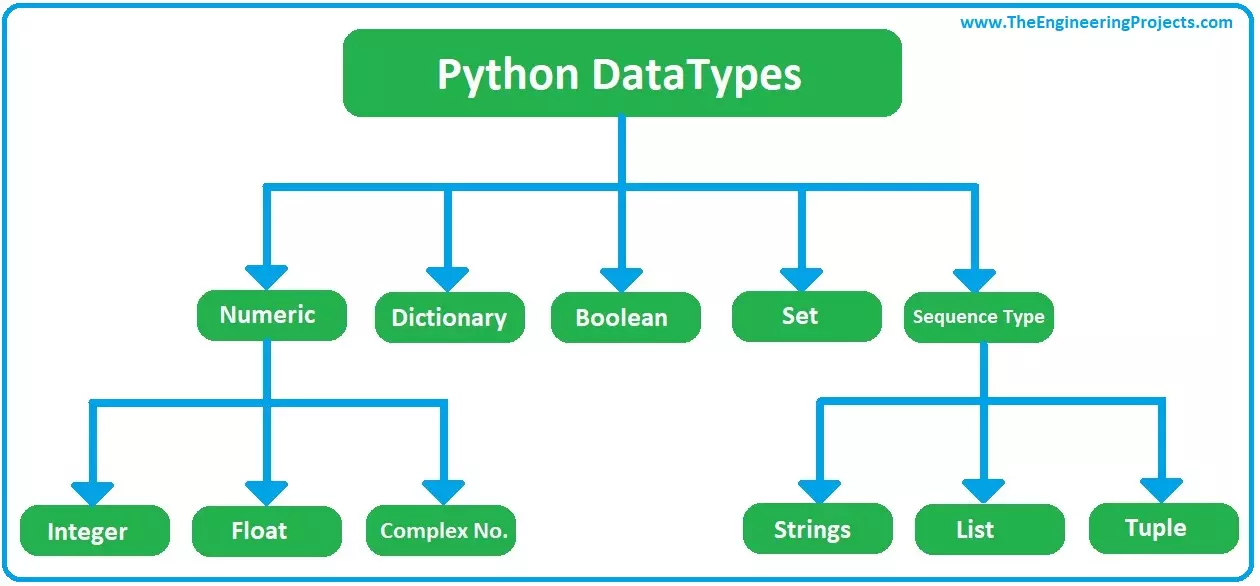
Data Types are used for the classification or categorization of similar data packets. There are numerous data types available in python, which we can use depending on our projects' requirem ...
Hello students! Welcome to the new Python tutorial, where we are learning a lot about this programming language by applying the codes in a Jupyter notebook. It is interesting to see how simple codes with easy syntax can be useful to store, retrieve, and use data in different ways. Many things in Python are so unadorned and pre-defined that programmers may use them in a productive way without any issue.
In the previous lecture, we have seen the details of the sets and how different types of mathematical operations are used to get the required results. We have seen many codes, the examples of which were taken from day-to-day life. In the present lecture, the mission is to learn a new topic that is related to the concepts of previous lectures. Yet, it is important to have a glance at t ...
Hey pupils! Welcome to the new tutorial on deep learning, where we are in the section on Python learning. In the previous lecture, we were discussing the tuple data type, which is a sub-class of sequences. In the present lecture, the discussion will be about the byte sequence and byte array. The whole discussion is cleared with the help of practical implementation in TensorFlow by using simple and easy codes. If you understand the concepts of list and tuple, then this lecture will be easy for you. Yet, before going into the details of this topic, you must know the highlights of the content discussed in this lecture:
What is the byte method in Python?
How can you use byte in TensorFlow?
What are some examples of bytes?
Give examples of error handling in bytes.
How can you convert in ...
Welcome to the next tutorial of our python course. We learned about python numbers in the last tutorial, and in this tutorial, Data types in Python include, dictionaries, sets, and Boolean, among others. We'll give a quick overview of the above data types in this section but later in this course, we'll go over each of them in-depth.
Introduction
In the Python programming language, data types are a necessary concept. Python assigns a data type to each value. Data Types are used to classify data objects or to assign a value to a data category. It aids in comprehending the many operations that can be applied to a value.
Python considers everything to be an object. Classes are represented by data types in Python. Variables are the names given to the ...
Hola students! Welcome to the new Python tutorial, where we are learning about OOP. We all know why OOP is important in programming. In the previous lecture, a detailed overview of classes and objects was discussed. We are moving towards the next step of learning where our focus will be on inheritance. Yet, programming also contains inheritance. We have all read about inheritance in real life and are aware of the concepts surrounding it. This time, we will discuss these concepts according to the workings of the classes and related entities. The concept of inheritance is the same in both scenarios, and with the help of interesting examples, the practical implementation of inheritance will be shown to you, but first of all, it would be interesting to know about the main headings that will be ...
Hello friends, I hope you all are doing great. In today's tutorial, we will have a look at How to use String in Python. It's our 3rd tutorial in Python series. We have discussed strings in our previous lecture How to use Data Types in Python.
String is a most commonly used data type in python that's why I have created a separate lecture on it. Python has many built-in string operations, which we will discuss today in detail. So, let's get started with String in Python:
How to use String in Python
String Data Type is used to store or collect one or more characters or sequence of characters, we can place any alphanumerical or special character in a string.
Let's create a string in python, it has a simple syntax, as shown below:
first_var = "He ...
Hey peeps! Welcome to the new tutorial for the Python programming language, where we are at the point where we are going to learn about the loops. Loops are fundamental concepts in programming, and if we talk about Python, there is a smaller variety of loops in it, but the most important ones are available to practice in Python. In the last session, there was a long discussion about the while loop in detail. We had seen some examples and the details of the statements that can be used within the while loop. In the present lecture, we are going to discuss the second type of loop in Python, that is, the for loop. You will go through the training of every important and basic step about this loop, but first of all, you have to look at the basic list:
Why do we prefer for loop over some other c ...
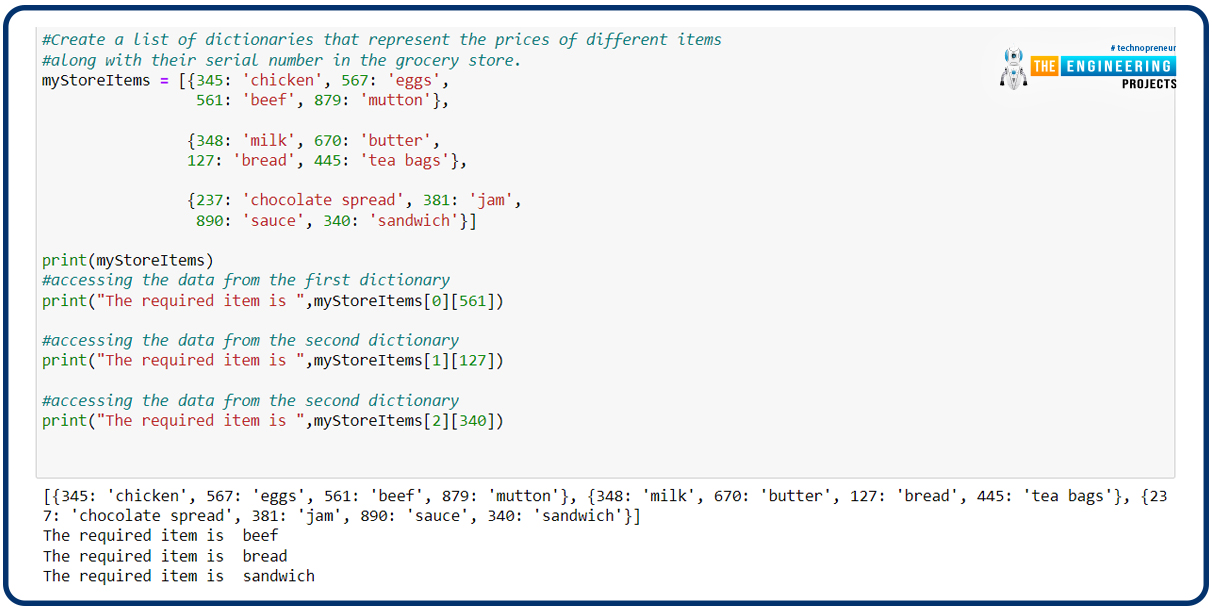
Hello peeps! Welcome to the new episode of the Python tutorial. We have been working with different types of data collection in Python, and it is amazing to see that there are several ways to store and retrieve data. In the previous lecture, our focus was on the basics of dictionaries. We observed that there are many important topics in the dictionaries, and we must know all of them to make our base of concepts solid. For this, we are now dealing with the dictionaries in different ways, and this tutorial is going to be very interesting because we will pay more heed to the practical work and, by choosing a few cases in our codes, we will apply multiple operations to them. So have the highlights of today’s learning, and then we will move forward with the concepts.
What are nested diction ...