Hey people! Welcome to another tutorial on Python programming. We hope you are doing great in Python. Python is one of the most popular languages around the globe, and it is not surprising that you are interested in learning about the comparatively complex concepts of Python. In the previous class, our focus was to learn the basics of sets, and we saw the properties of sets in detail with the help of coding examples. We found it useful in many general cases, and in the present lecture, our interest is in the built-in functions that can be used with the sets. Still, before going deep into the topic, it is better to have a glance at the following headings:
What are the built-in functions?
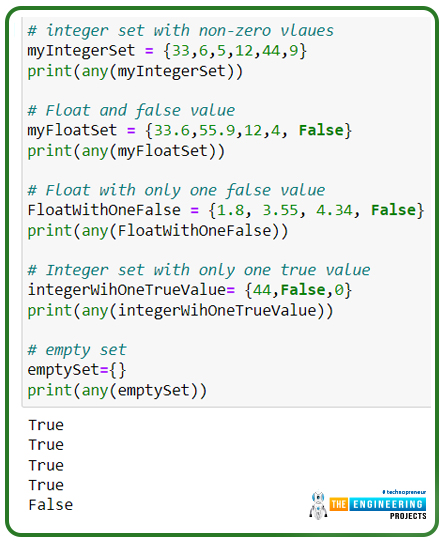
How do we perform the all() function with examples?
What is the difference between any() and all()? ...
Hi learners! Welcome to the next episode of learning the arrays using string data. We have been working with the arrays and in the previous lecture, we saw the interesting characteristics of the string arrays. In the present lecture, our target is to get knowledge about the built-in functions and we will take the strings in the array so that we may know about both of them together. String arrays are used in many officials uses and therefore, we want to use the built-in functions that every Python programmer must know. Here is the list of the concepts that will be polished in this lecture:
What are the built-in methods?
How do you differentiate between methods and functions in programming?
Give different examples to understand different built-in methods to be used in the same code.
How ...
Hey students! Welcome to the fantastic tutorial of this series, where we are talking about deep learning. Till now, the discussion has been about artificial intelligence, deep learning, and TensorFlow, but today’s lecture will change the type of discussion from the previous one. You will see that we will now talk a lot about the Python programming language and will connect all the discussions with TensorFlow. You will see the reason for both of these choices in just a bit, but before that, I want to show you the list of the concepts that will be cleared today:
What is the Python programming language when we are talking about deep learning?
Why did we select Python for deep learning when there were other options?
What is the importance of TensorFlow when we are learning deep learning by ...
Hey peeps! Welcome to the new lecture on the sequence data type, where we are discussing the range data type. We are interested in working on deep learning, and for this, we are learning the Python programming language from scratch. If we talk about the previous episode, we saw the byte and byte array methods that were amazing for converting the different data types into bytes. The current lecture will discuss the range data type, which is slightly different from the other types of sequences, so students will learn new and interesting concepts in the lecture; however, before we get into the details of our topic, take a look at today's highlights:
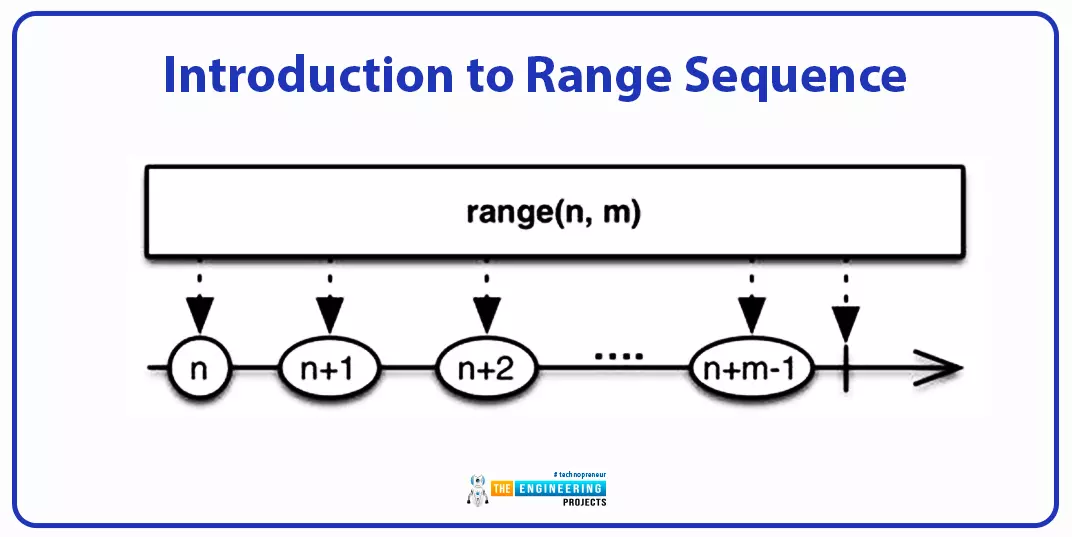
What is the range function?
How can you elaborate on the syntax of the range function in detail?
What are the three types of range functions ...
Hey peeps! Welcome to the Engineering Projects where you are learning the basics of Python in detail. We are working a lot with the arrays as these are important concepts in most of the high-level programming languages till now, the numeric data was used in the arrays but for our practice, we are moving towards the next step where the focus will be on the string data type. The practice is done on the Jupyter notebook and every step is going to be explained well without skipping any concepts but to keep things easy, we are not emphasising unnecessary details and concepts. So, before going deep into the topic, have a look at the list of the contents that will be discussed in this lecture:
What are the strings?
How do we use the string in arrays?
What is the list?
How do we extract the ch ...
Hey pupils! Welcome to the new tutorial on deep learning, where we are in the section on Python learning. In the previous lecture, we were discussing the tuple data type, which is a sub-class of sequences. In the present lecture, the discussion will be about the byte sequence and byte array. The whole discussion is cleared with the help of practical implementation in TensorFlow by using simple and easy codes. If you understand the concepts of list and tuple, then this lecture will be easy for you. Yet, before going into the details of this topic, you must know the highlights of the content discussed in this lecture:
What is the byte method in Python?
How can you use byte in TensorFlow?
What are some examples of bytes?
Give examples of error handling in bytes.
How can you convert in ...
Welcome to the next tutorial of our python course. We learned about python numbers in the last tutorial, and in this tutorial, Data types in Python include, dictionaries, sets, and Boolean, among others. We'll give a quick overview of the above data types in this section but later in this course, we'll go over each of them in-depth.
Introduction
In the Python programming language, data types are a necessary concept. Python assigns a data type to each value. Data Types are used to classify data objects or to assign a value to a data category. It aids in comprehending the many operations that can be applied to a value.
Python considers everything to be an object. Classes are represented by data types in Python. Variables are the names given to the ...
Welcome to the fifteenth chapter of this python course. Python lists and tuples were studied extensively in the last session, and we learned how to manipulate the data contained in these types of structures. You've only experienced sequential execution up to this point, where each statement is performed sequentially in the order they appear in the code.
However, the real world is frequently more nuanced. Sometimes, a program must skip over certain statements, run a set of statements repetitively, or pick between other sets of statements to execute. This is called "conditional branching."
That's when control structures come into play, which controls the sequence in which statements in a program are executed.
What will you learn?
The if statement ...
Hey, peps! Welcome to the new tutorial on the Jupyter notebook. As we are moving towards a higher level of Python, therefore, it is important to understand other ways of doing the same task. As we read in the previous lecture about 2D arrays, this time it is going to be done with the help of a famous library in Python. This time, you are going to learn different, engaging, and advanced-level concepts that not only help you deal with the 2D array but also the installation and working of the unique library of Python, which is NumPy. This lecture is going to be very useful and interesting, and therefore, we suggest you have a glance at all the goals of this lecture.
Getting the introduction to NumPy
Successfully installation of NumPy and knowing different methods for it
Using the arrays wi ...
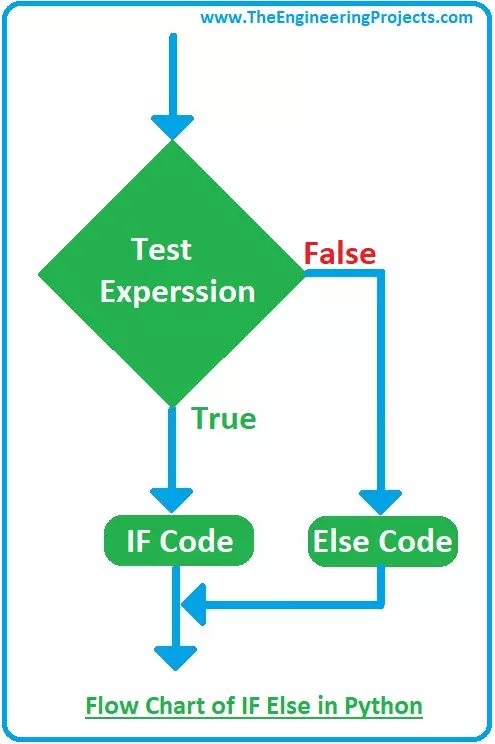
Hello friends, I hope you all are doing great. In today's tutorial, I am going to show you How to use IF Else in Python. It's our 5th tutorial in python series. In our previous lectures, we have covered the detailed Introduction to Python and then we have also discussed Data Types in Python & How to use Strings in Python. So, now it's time to move on a little further.
In today's tutorial, we will cover If else statement in python and its not that difficult to understand but quite an essential one as its use a lot in programming projects. So, let's get started with How to use IF Else Statement in Python:
How to use IF Else Statement in Python
IF Else Statement in python takes a Boolean Test Expressio ...