Hey Fellas! Hope you are doing well. Today, I'll uncover the details on the Introduction to PIC12F683. It is an 8-bit PIC microcontroller that contains eight pins and is mainly used for real-time applications related to automation and embedded system.
If you are a newbie or an expert, you need PIC controllers every now and then for the development of electronic projects. These controllers help you drive automation in your projects with the ability to perform a number of functions on a single chip.
In this tutorial, I'll discuss each and everything related to PIC12F683 so you don't have to grapple your mind surfing the whole internet and find all information in one place. Let's dive in and break down everything you need to know.
Introduction to P ...
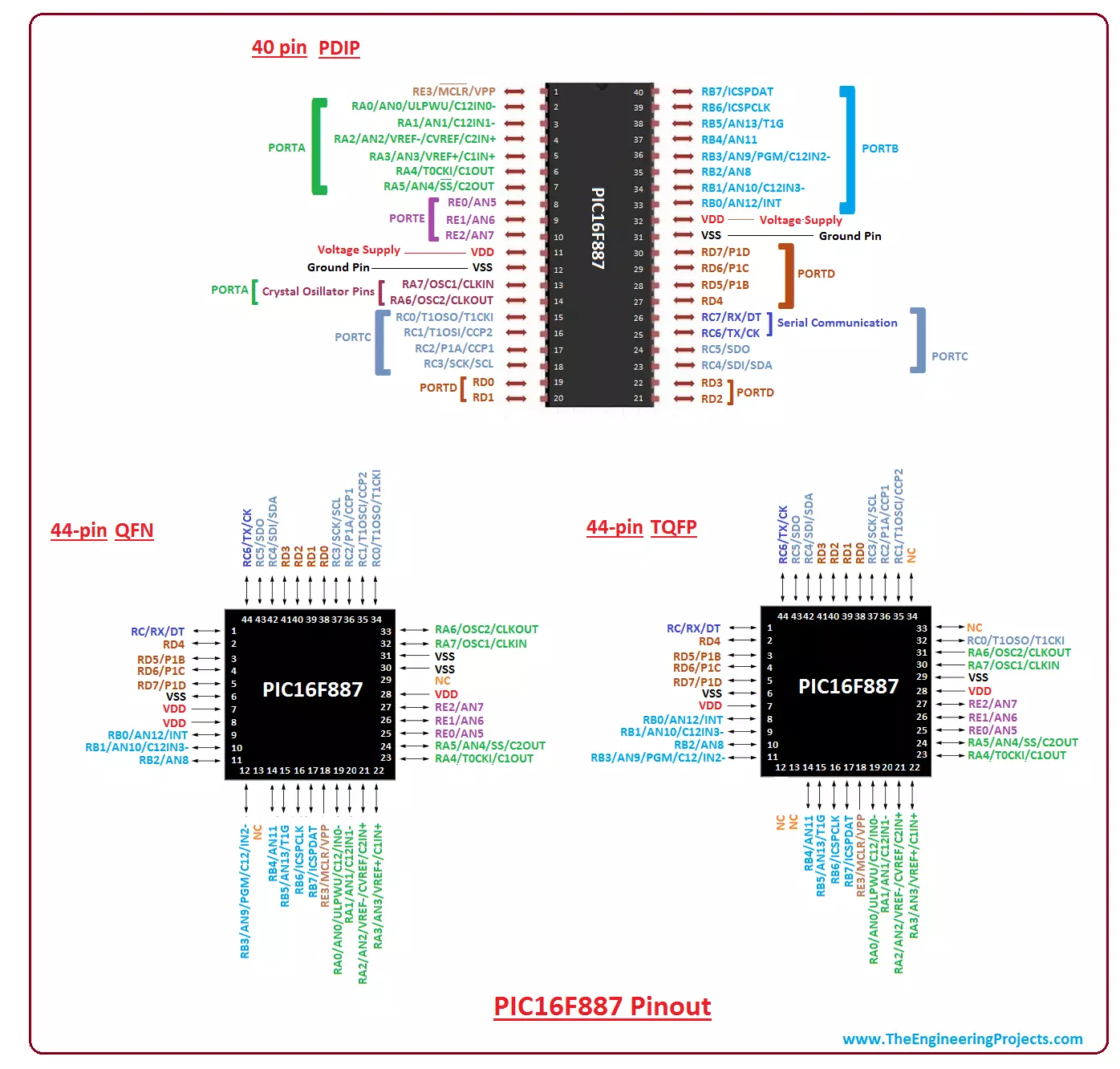
Hey Guys! Hope you are doing well. This is a platform where we keep you updated with valuable information so you keep coming back for what we have to offer. Today, I'll uncover the details on the Introduction to PIC16F887. It is a 40-pin PIC microcontroller, introduced by Microchip, and is a successor of PIC16F877A.
Microcontrollers have revitalized the technology by providing a flawless interface and an ability to perform numbers of functions on a single chip. Gone are days, when you had to rely on external components to develop your projects which might be time-consuming, covered more space, and required a number of prior skills before making your project in real time. Microcontrollers have made things easy by covering each and every aspect of ...
Hey Guys! Hope you are doing well. I am back to give you valuable information as per your technical needs and requirements. Today, I’ll unlock the detailed Introduction to PIC16F877.
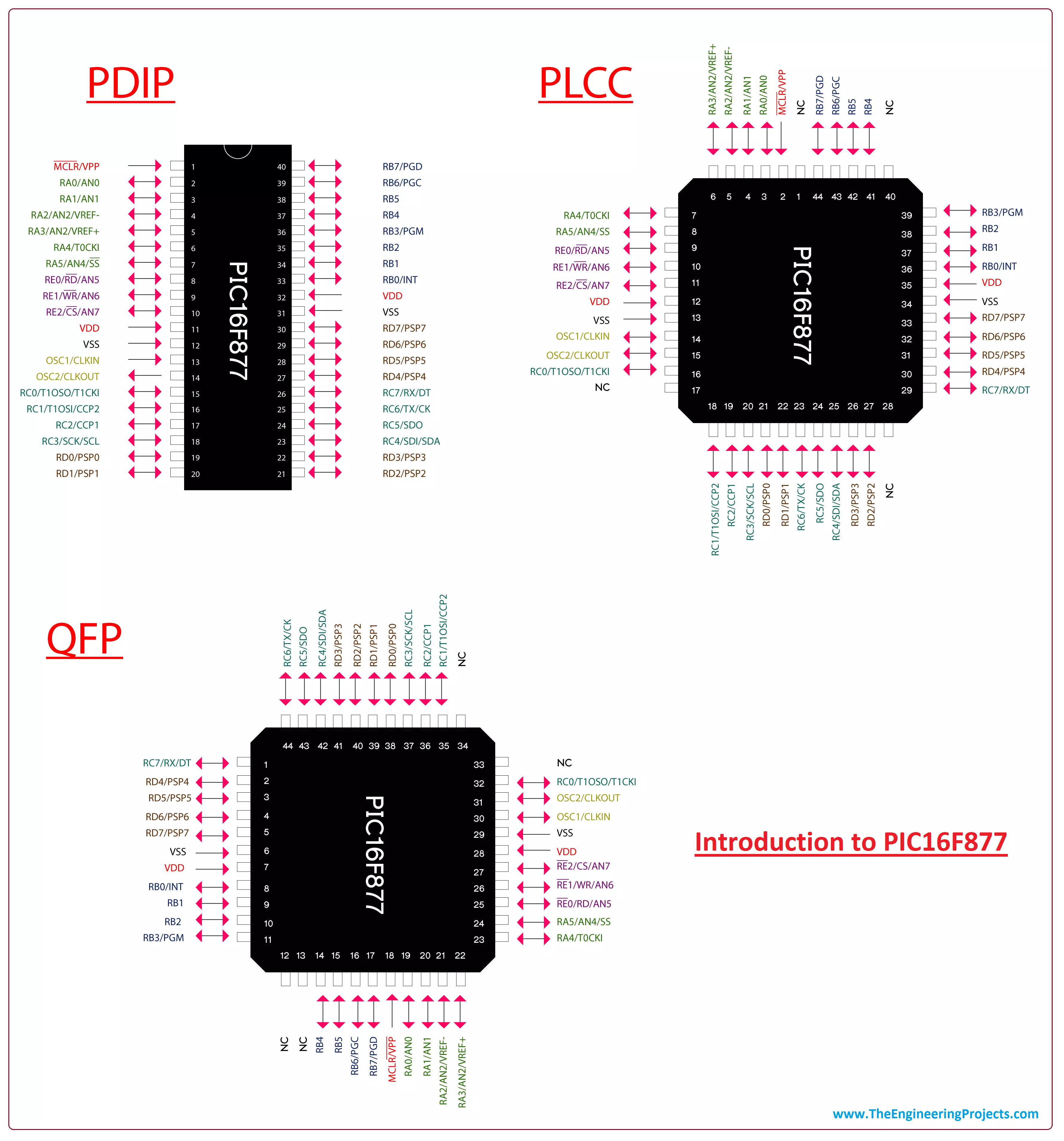
It is an 8-bit PIC microcontroller that comes with 40-pin interface (PDIP). It is based on Flash type memory. The High-Performance RISC CPU is incorporated inside the device that comes with only 35 single-word instructions, targeting mainly two types of instructions: single cycle and double-cycle.
In this post, I'll cover each and everything related to PIC16F877: its features, pinout and pin description, main functions, memory interface, compiler and burner used and applications. Let's dive right in and get down to the nitty-gritty of this tiny device.
Introduction ...
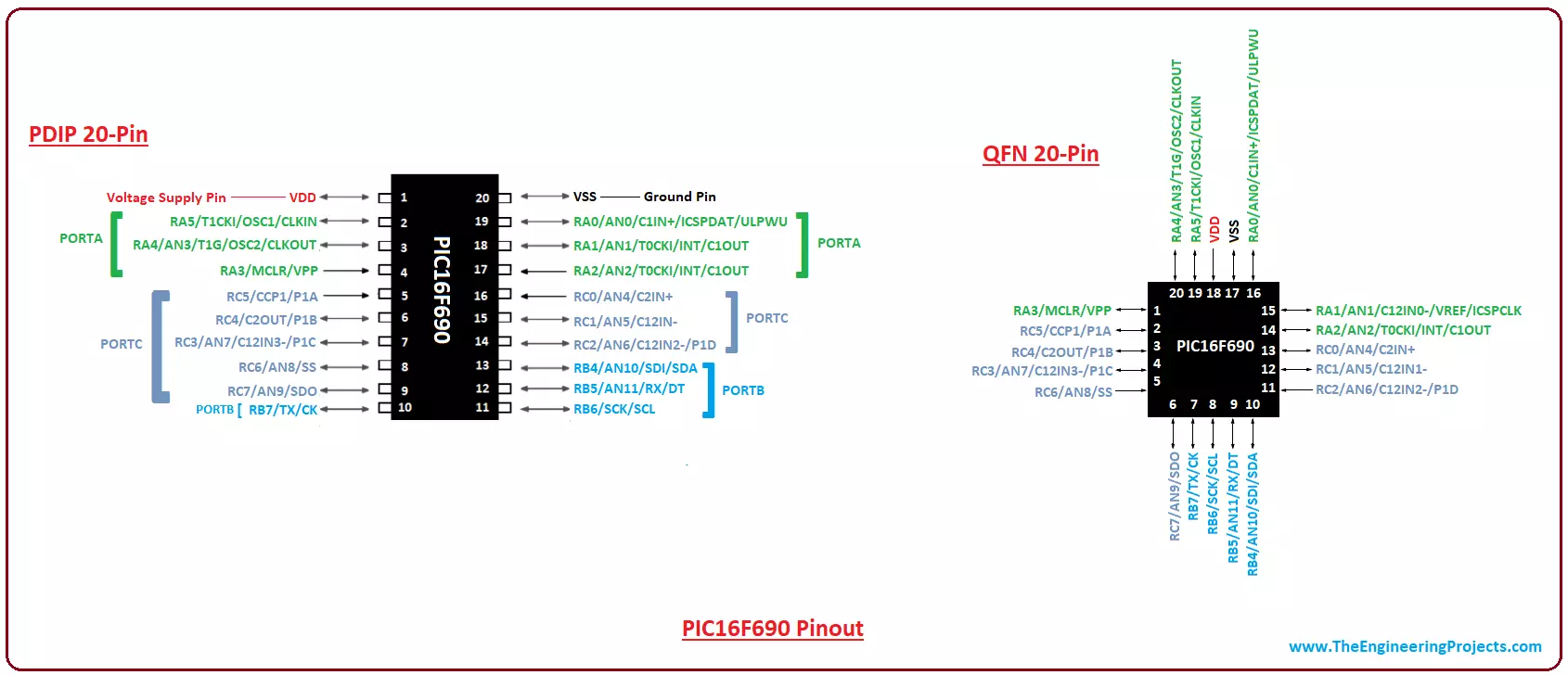
Hi Guys! Hope you are doing well. We are here to keep you updated with valuable information related to engineering and technology. Today, I will unlock the details on the Introduction to PIC16F690. It is a 20-pin Flash-based PIC microcontroller that comes with high-performance RISC CPU and mainly used in automation and embedded systems.
If high processing speed and memory space is anything to go by, this PIC module has already made a renowned place in the market where it can handle electronic projects pretty well. If you are a newbie or an expert, you can start working on the PIC module with little or no prior knowledge.
In this post, I'll cover everything related to PIC16F690, its pinout, pin description, main features, block diagram, memory la ...
Hello friends, hope you all are fine and having fun with your lives. Today, I am going to share Pure Sine Wave Inverter Simulation in Proteus. I have already posted a tutorial on Pure Sine Wave Inverter Design, which got quite popular and I got a lot of requests on posting its simulation in Proteus. So, I worked on it and finally I got it working and here I am sharing it with your guys. As, it got a lot of effort to design it in Proteus that's why its not open source but I have placed a very small amount of $50 on it and you can easily buy it from shop by clicking on the below button. It include the complete code as well as the Proteus Simulation working perfectly.
Let's start with the basics of Pure Sine Wave Inverter Simulation, first of all, I ...
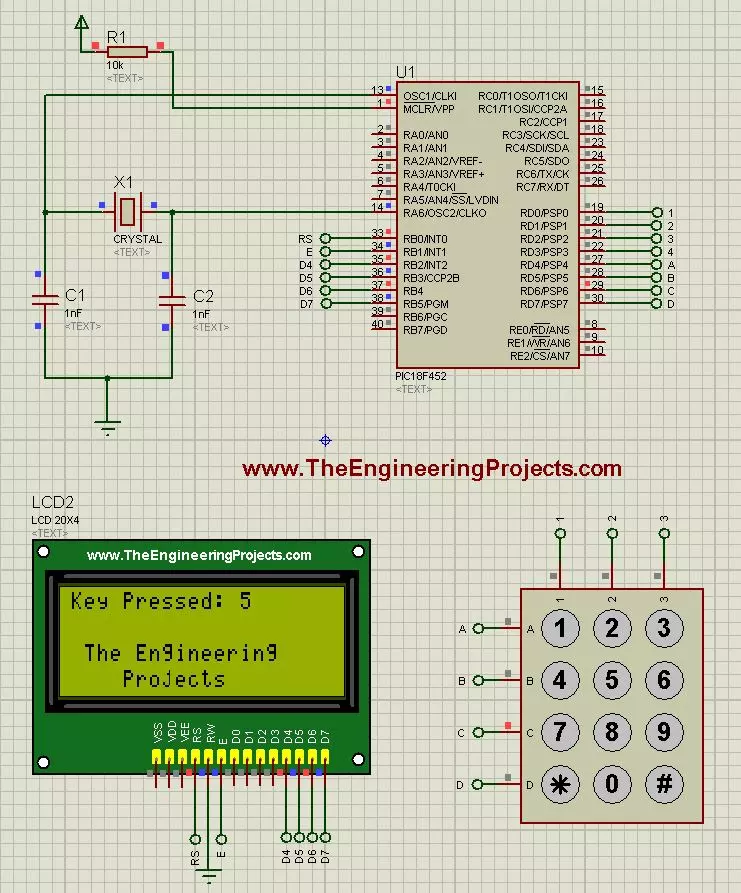
Hello everyone, I hope you all are doing great. Today, I am going to share a very basic tutorial on PIC Microcontroller, which is Interfacing of Keypad with PIC Microcontroller. I have designed this simulation of Keypad with PIC Microcontroller in Proteus ISIS and the simulation along with code is given below for download. But I would suggest you to read it first and then design it on your own so that you learn most out of it.
In today's tutorial, I am not gonna discuss the details of How keypad works because I have discussed it in detail in my old tutorial Interfacing of Keypad with Arduino so if you don't have much idea about working of keypad then I would recommend you to read that tutorial first, before proceeding with today's tutorial. I hav ...
Hello friends, hope you all are healthy, wealthy and wise.
First of all, I am quite sorry about not posting for a long time, actually the load of work has really increased and I don't even have time to comb my hair.
Secondly, I have a really great news for you guys and the news is we have officially set up our office. Now, we will be more professional than ever and will respond to your queries quite fast now. I will update the photos of my new office soon INSHAHLLAH.
Let's come back to our topic. Previously, I have discussed the DC Motor control in Proteus ISIS and Stepper Motor Control in Proteus ISIS. So, now we are ...
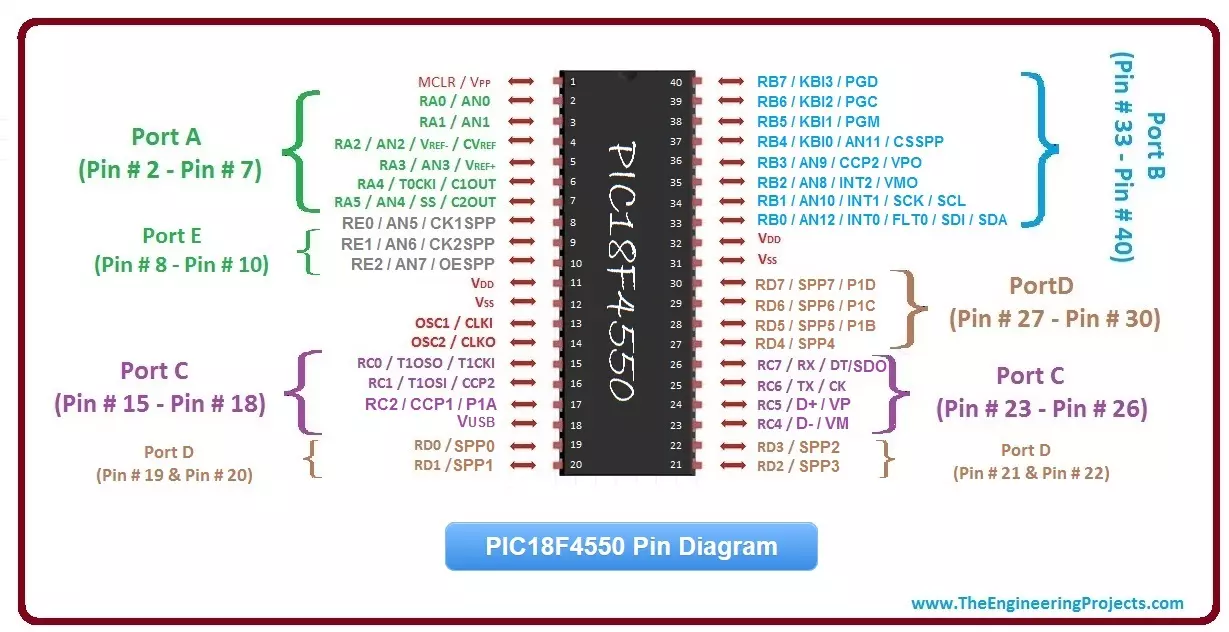
Hello friends I hope you all are doing great. Today, I am going to give you a detailed Introduction to PIC18F4550. Its one of the most renowned PIC Microcontroller and is used in almost every field. You should also have a look at my previous tutorial Introduction to PIC16F877a, as it will also be helpful. PIC18F4550 also has 40 Pins and is quite similar to PIC16F877a with some additional features.
In today's post we will get the general overview of this microcontroller, which is very essential if you wanna start working on it. If you have any problem in any part of it then ask your questions in comments and I will try my best to resolve them out. So, now let's get started with Introduction to PIC18F4550:
Introduction to PIC18F4550
PIC18F4550 is a ...
Today's post based on my personal experience so I thought of sharing it with you guys. Today I thought of using PICkit3 for programming PIC microcontroller. Before that, I was using PIC JDM Programmer for PIC , the only reason for switching is the usb port as I want to burn the PIC on my laptop instead of PC, as my laptop don't have serial port. So, I connected PICkit3 with my laptop and tested it with MPLAB and it worked well. But actually the project on which I am currently working demands MikroC (Client's requirement to use MikroC compiler but personally I always prefer MPLAB).
Anyways I thought it wont be much of an issue to connect it but when i practically did that i was kind of surprised, there was no method anywhere (at least i didn't fi ...
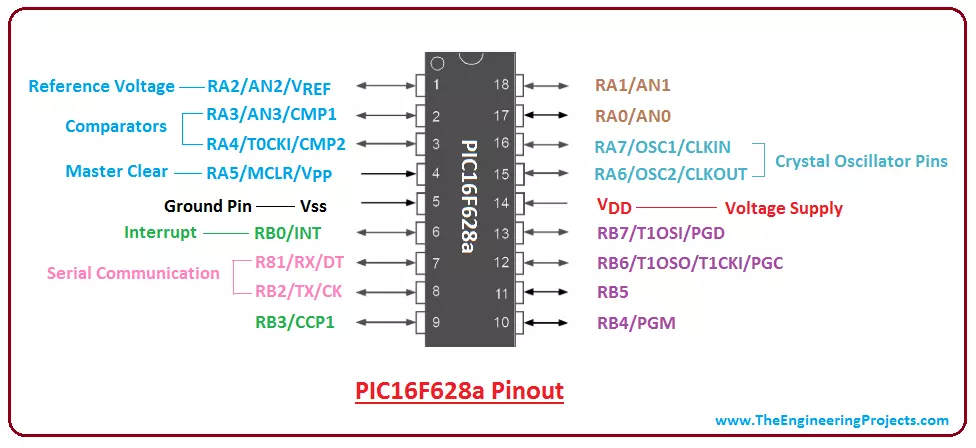
Hi Fellas! I am back to give you have a daily dose of valuable information so you keep coming back for what we have to offer. Today, I will discuss the details on the Introduction to PIC16F628a. It is defined as a self-contained 18-pin PIC Microcontroller that comes with memory, processor, peripherals and mainly used for embedded systems and applications.
Microcontrollers always remain a top priority for experts where automation is the main concern. Before the invention of microcontrollers, microprocessors were widely used for carrying out different functions related to industrial automation and processing applications. Both of them work identical in one way or the other, however, there are some exceptions i.e. microprocessors don't come with ROM ...