


Project Files of IoT GPS Vehicle Tracker with ESP32 - Proteus Simulation
 Libraries
 Code
 Projects
 Simulation
esp32-gps-tracker-tep-v1-0-9f84b803bbf14b108c5ffcf39b95807a.zip

IoT GPS Vehicle Tracker with ESP32 - Proteus Simulation V1.0
IoT GPS Vehicle Tracker with ESP32 - Proteus Simulation V1.0 comes as a ZIP archive of 21 files (4.3 MB, 9.6 MB unpacked) holding Proteus library files, simulation model DLLs, a Proteus simulation, an Arduino sketch and compiled HEX firmware.
- LIBProteus library
- DLLProteus model
- DSNProteus simulation
- INOArduino sketch
- HEXHEX firmware
Description
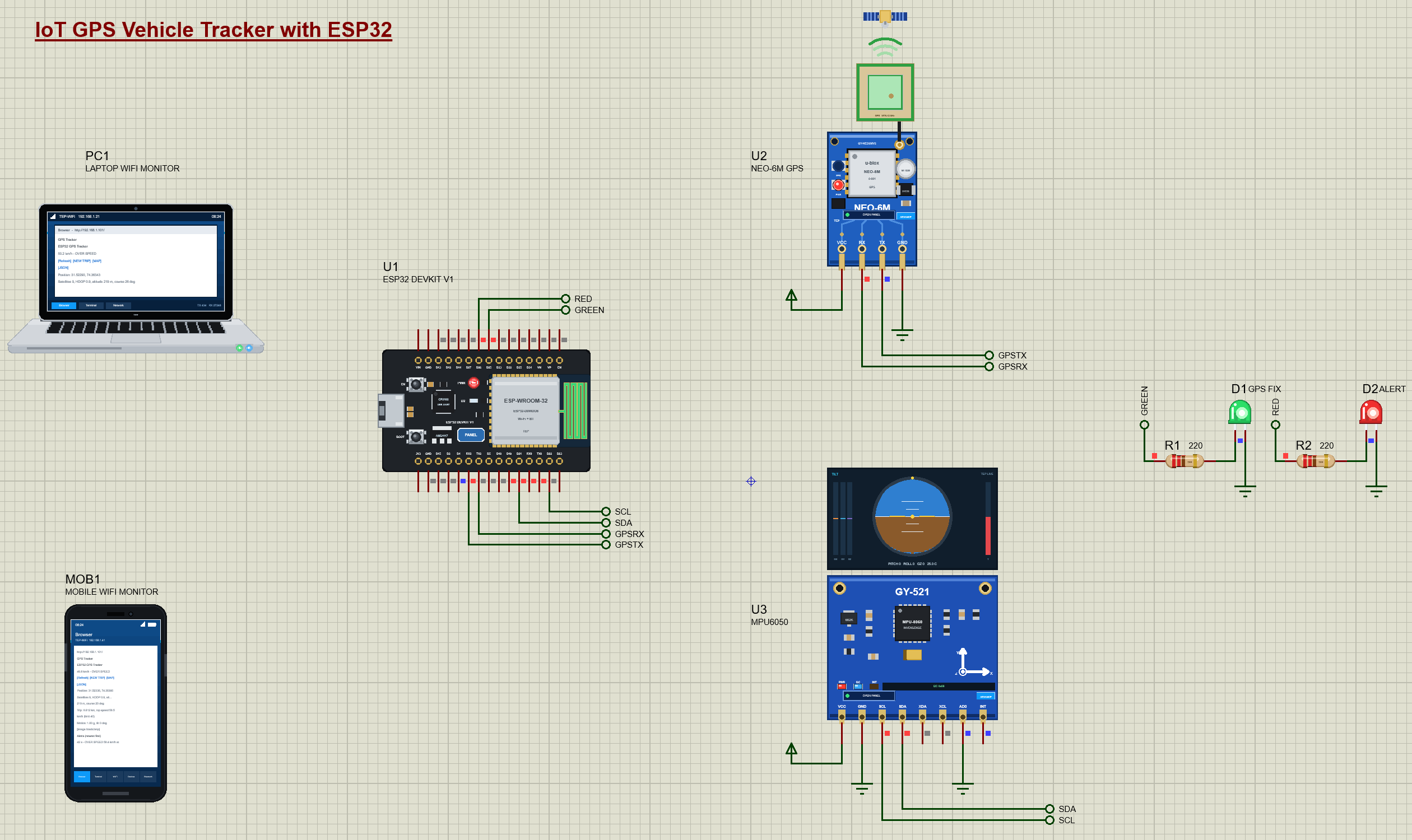
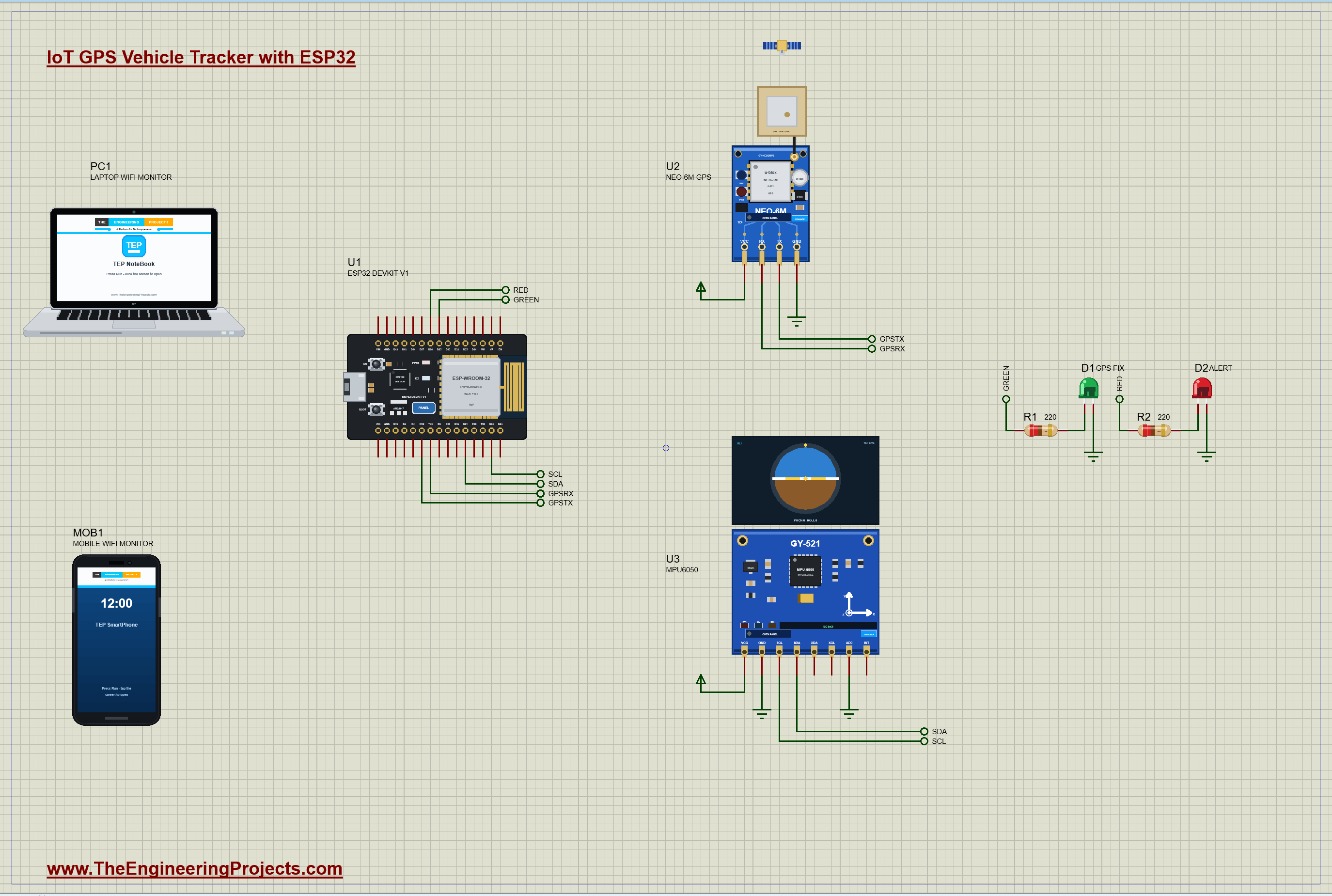
IoT-GPS-Vehicle-Tracker-ESP32-Proteus-Simulation-v1.0.zip: the complete Proteus simulation project (ESP32 DevKit V1, NEO-6M GPS, MPU6050, LEDs, the Laptop and Mobile WiFi Monitors), the ESP32 sketch and its HEX file, every LIB and DLL the simulation needs, and a README.

File Structure
 File Structure
11.5 KB36.6 KB39.5 KB21.8 KB13.1 KB130.9 KB56.2 KB306.9 KB289.5 KB537 KB404 KB2.9 MB311 KB34.5 KB110.5 KB289.5 KB537 KB404 KB2.9 MB311 KB11.9 KBGallery12 images from the tutorialOpen the tutorial
 Gallery12 images from the tutorial
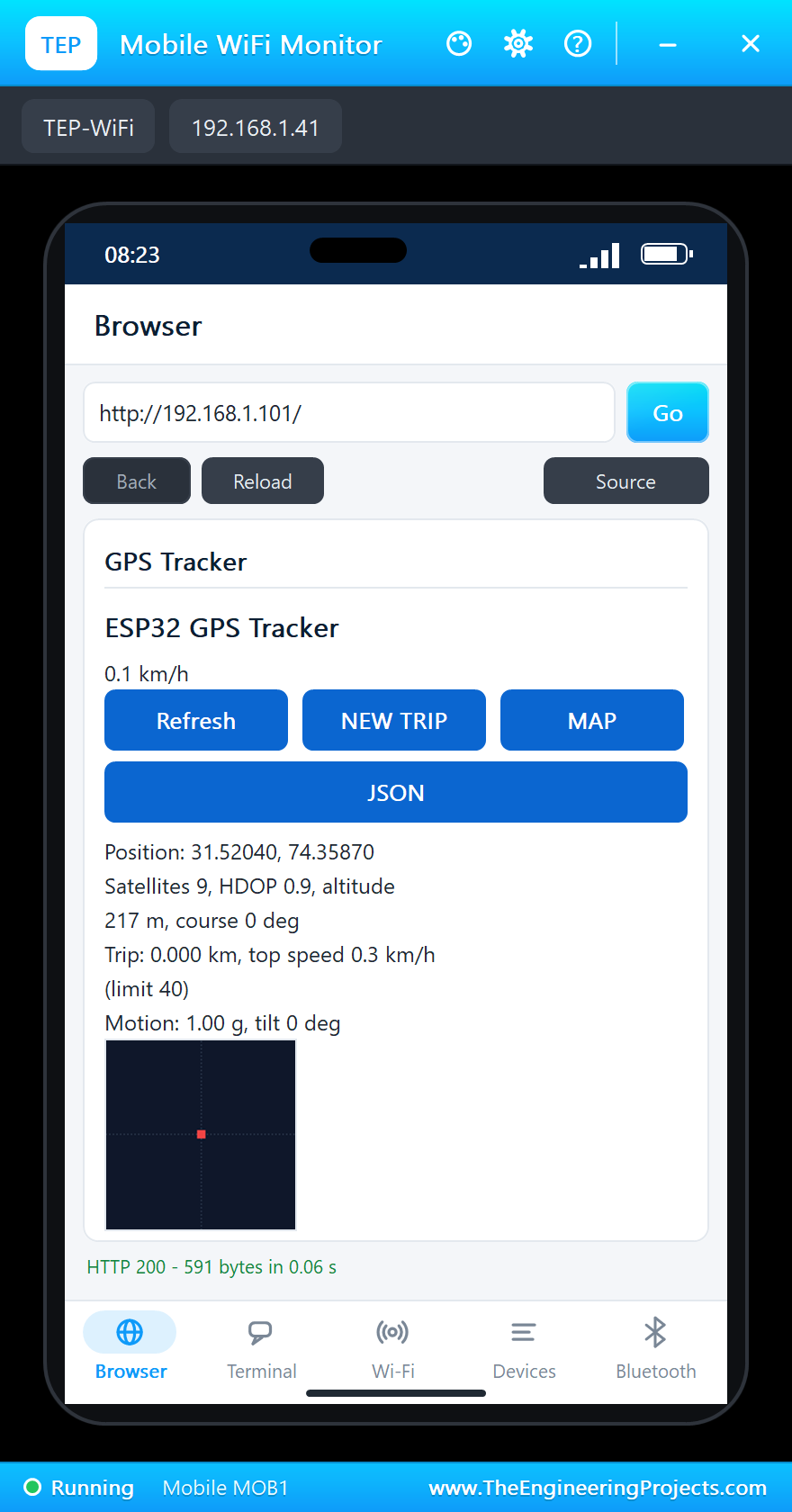
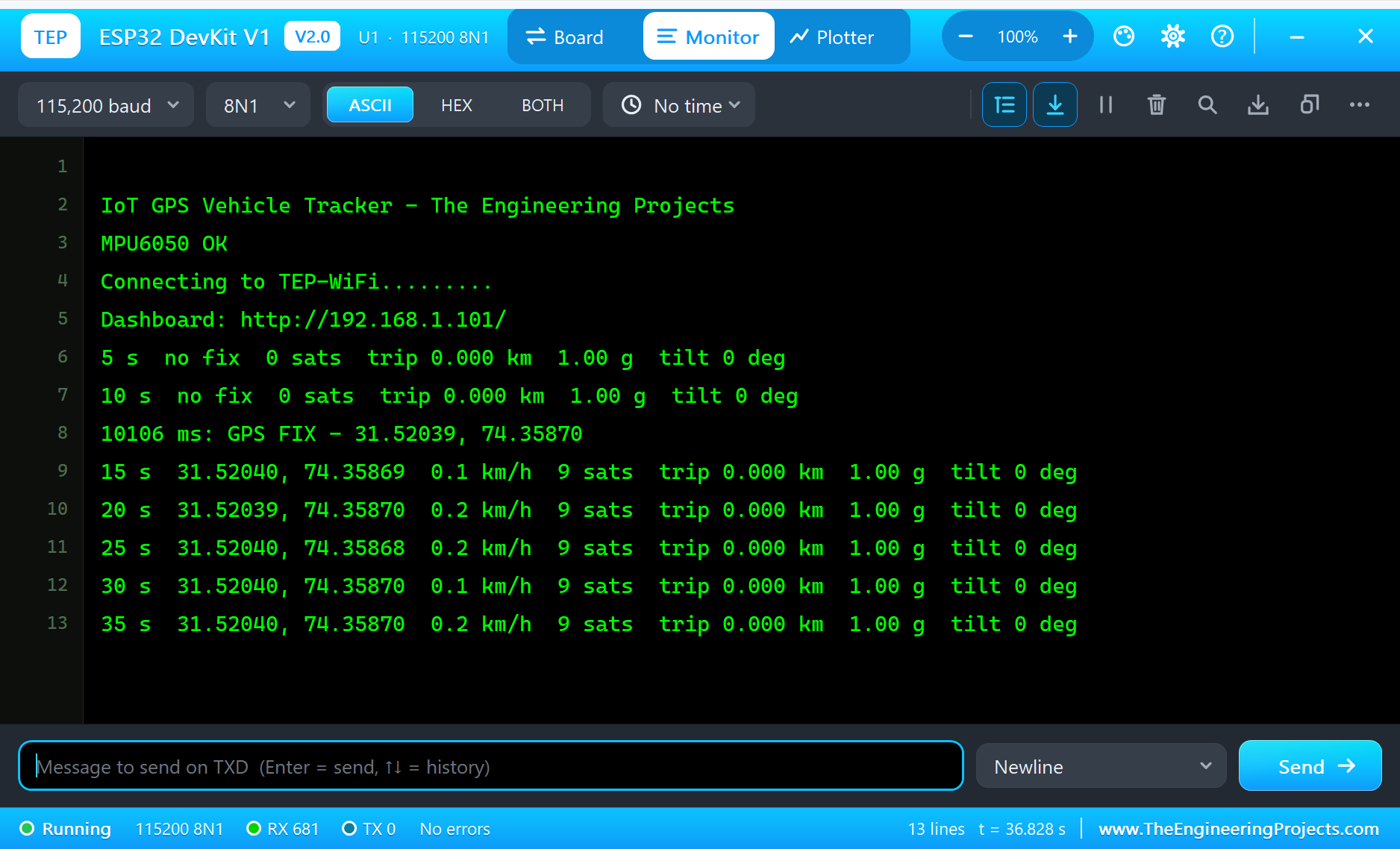
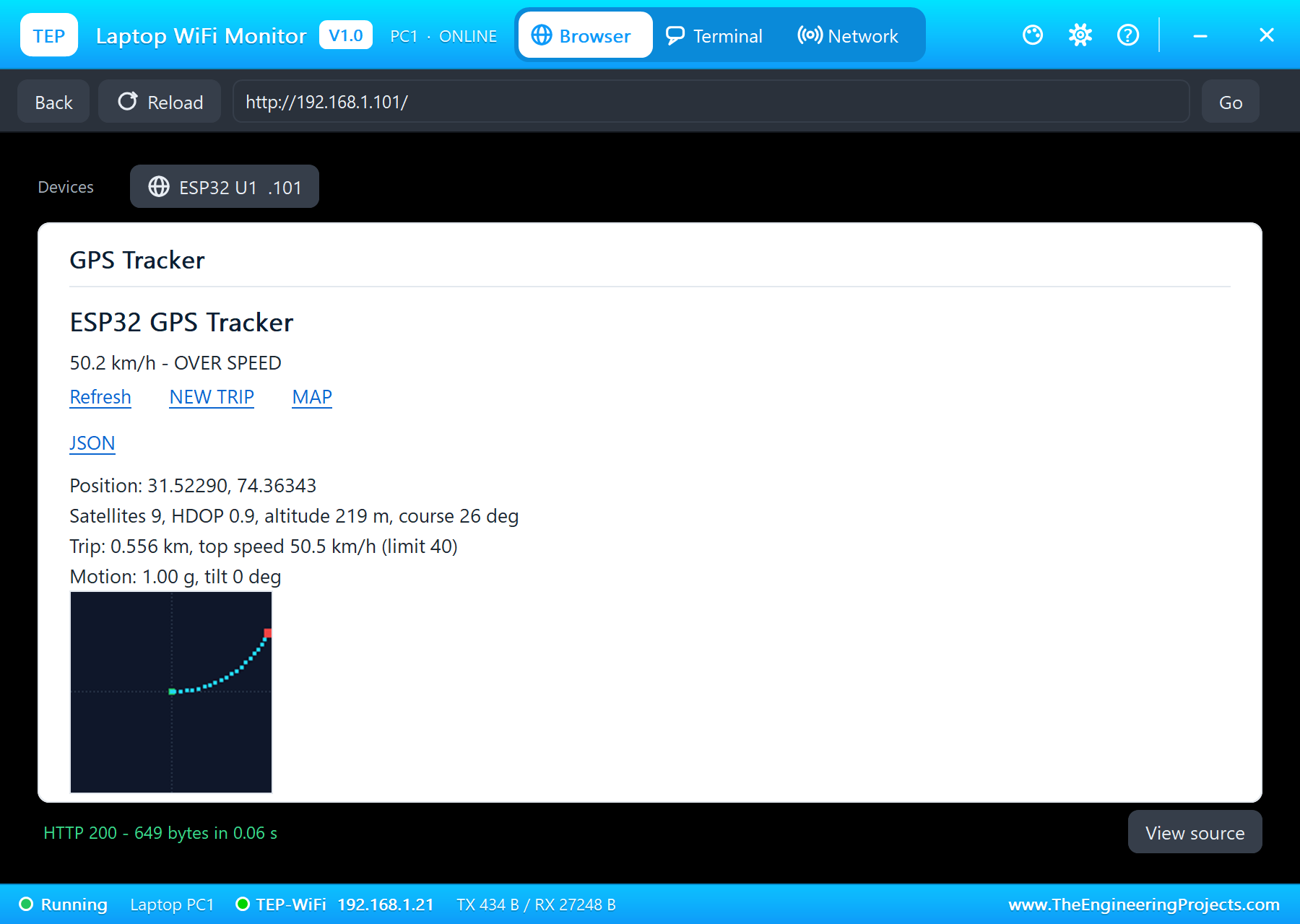
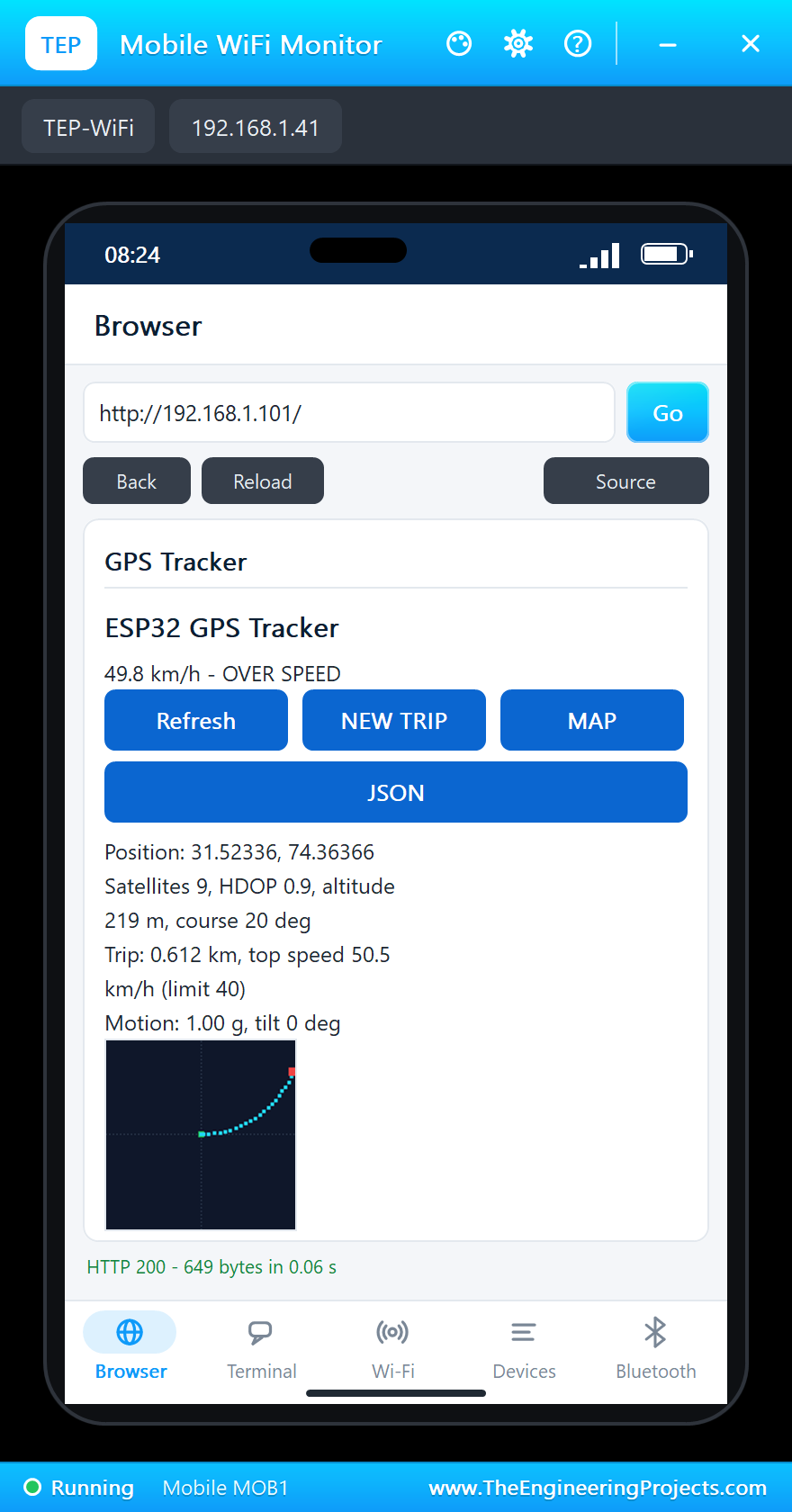
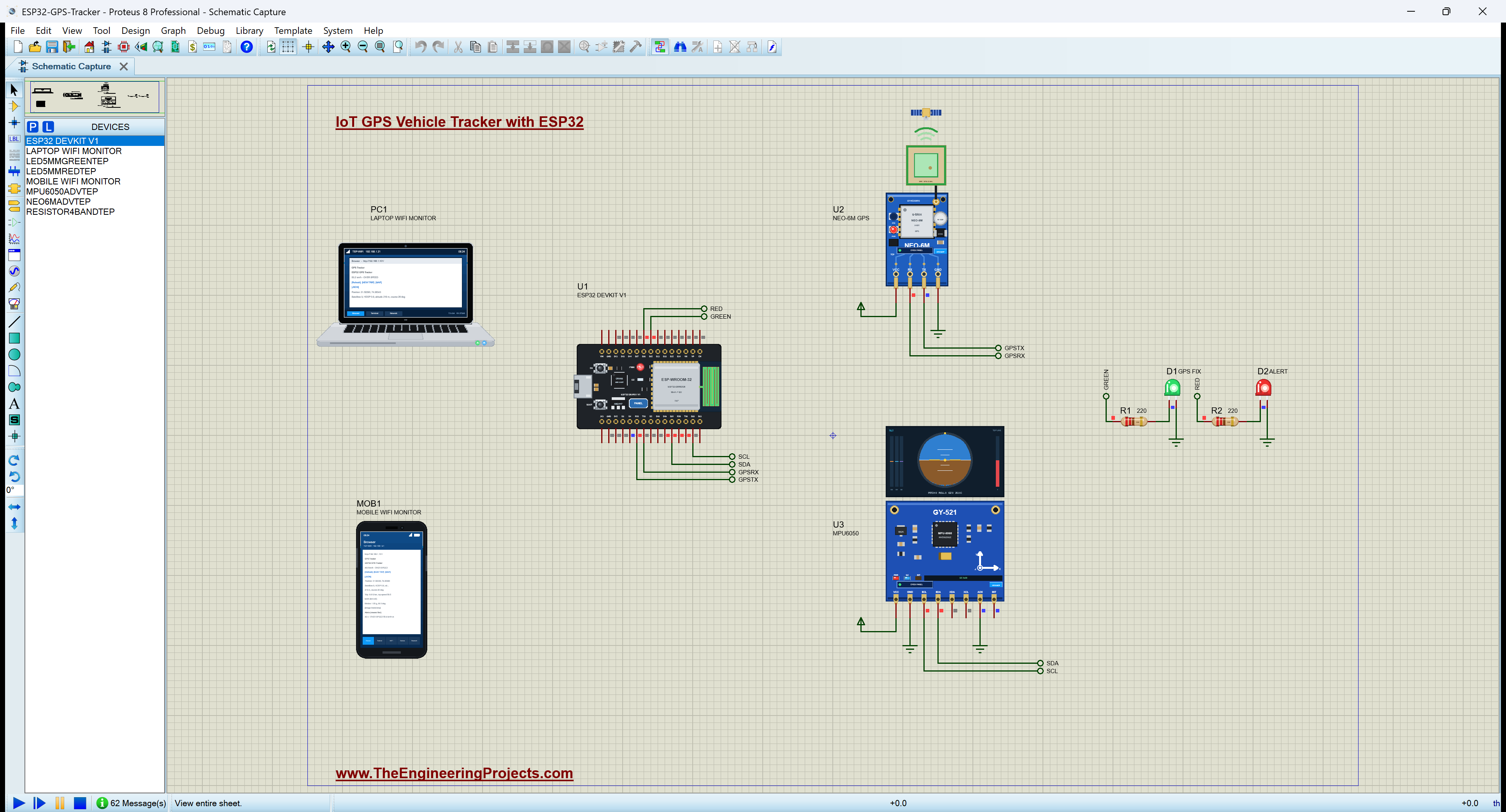
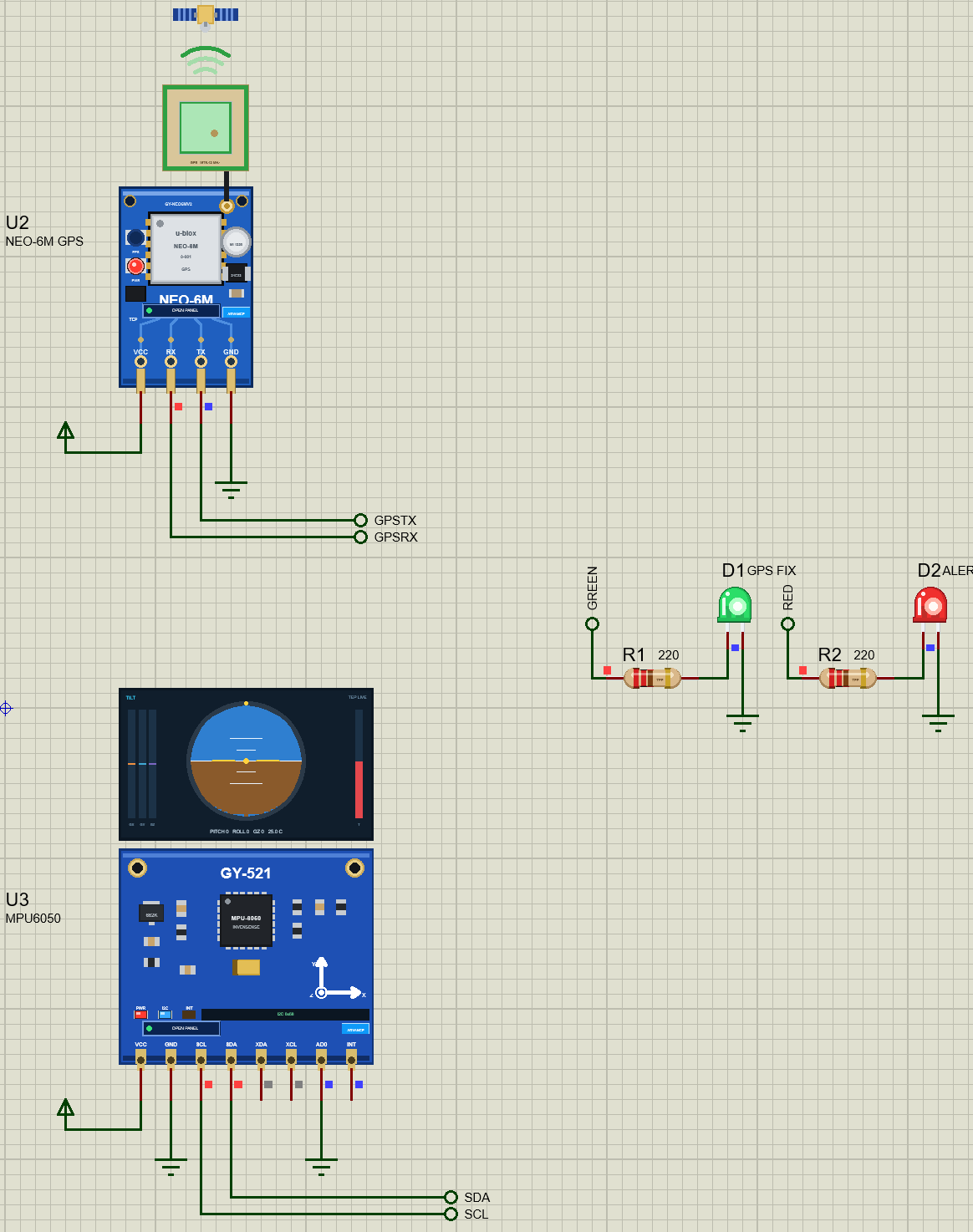
The circuit, the board and the results as they appear in IoT GPS Vehicle Tracker with ESP32 - Proteus Simulation. Open an image for its full size.
README
 README
===============================================================================================================
  IoT GPS Vehicle Tracker with ESP32 - Proteus Simulation Project V1.0
  The Engineering Projects - www.TheEngineeringProjects.com
===============================================================================================================

IMPORTANT LINKS
  The project tutorial (circuit, code, simulation results):
    https://www.theengineeringprojects.com/2026/11/iot-gps-vehicle-tracker-esp32-proteus-simulation.html
  The libraries this project is built from (each post has its own full download and tutorial):
    ESP32 DevKit V1 board:
      https://www.theengineeringprojects.com/2026/10/esp32-devkit-v1-library-for-proteus-v2-0.html
    NEO-6M GPS module:
      https://www.theengineeringprojects.com/2026/10/neo-6m-library-for-proteus.html
    MPU6050 motion sensor:
      https://www.theengineeringprojects.com/2026/09/mpu6050-proteus-library.html
    5mm LED:
      https://www.theengineeringprojects.com/2026/11/5mm-led-library-for-proteus.html
    Resistor:
      https://www.theengineeringprojects.com/2026/11/resistor-library-for-proteus.html
    Laptop WiFi Monitor:
      https://www.theengineeringprojects.com/2026/10/laptop-wifi-monitor-library-for-proteus.html
    Mobile WiFi Monitor:
      https://www.theengineeringprojects.com/2026/10/mobile-wifi-monitor-library-for-proteus.html
  Support our free work: https://www.theengineeringprojects.com/donate

FILE STRUCTURE
ESP32-GPS-Tracker-TEP-v1.0/
|-- Proteus Library Files/
|   |-- TEPESP32V1.LIB                                 36.6 KB   a part of the project -> LIBRARY folder
|   |-- TEPLAPTOP.LIB                                  39.5 KB   a part of the project -> LIBRARY folder
|   |-- TEPLED5MM.LIB                                  21.8 KB   a part of the project -> LIBRARY folder
|   |-- TEPMOBILE.LIB                                  13.1 KB   a part of the project -> LIBRARY folder
|   |-- TEPMPU6050.LIB                                130.9 KB   a part of the project -> LIBRARY folder
|   |-- TEPNEO6M.LIB                                   56.2 KB   a part of the project -> LIBRARY folder
|   |-- TEPRESISTOR.LIB                               306.9 KB   a part of the project -> LIBRARY folder
|-- Proteus Model Files/
|   |-- TEPLED5MM.DLL                                 289.5 KB   a model -> MODELS folder
|   |-- TEPMPU6050.DLL                                537.0 KB   a model -> MODELS folder
|   |-- TEPNEO6M.DLL                                  404.0 KB   a model -> MODELS folder
|   |-- TEPNET.DLL                                     2.89 MB   a model -> MODELS folder
|   |-- TEPRESISTOR.DLL                               311.0 KB   a model -> MODELS folder
|-- Proteus Simulation/
|   |-- ESP32_GPS_Tracker.hex                         110.5 KB   the firmware
|   |-- ESP32-GPS-Tracker.pdsprj                       34.5 KB   the project simulation
|   |-- TEPLED5MM.DLL                                 289.5 KB   copy of the model
|   |-- TEPMPU6050.DLL                                537.0 KB   copy of the model
|   |-- TEPNEO6M.DLL                                  404.0 KB   copy of the model
|   |-- TEPNET.DLL                                     2.89 MB   copy of the model
|   |-- TEPRESISTOR.DLL                               311.0 KB   copy of the model
|-- Arduino Code/
|   |-- ESP32_GPS_Tracker/ESP32_GPS_Tracker.ino        11.5 KB   the sketch (source of the .hex)
|-- README.txt                                        ~12.1 KB   this file
Total: 9.55 MB (unzipped). The C++ source code of the models is not included.

WHAT IS IT?
  A complete IoT vehicle tracker you can run in Proteus: an ESP32 DevKit V1 reads a GPS module and a motion sensor,
  and shows where the vehicle is, how fast it goes, how far it has driven and whether it has had a crash on a web
  page for a laptop or a phone, all inside one Proteus simulation.
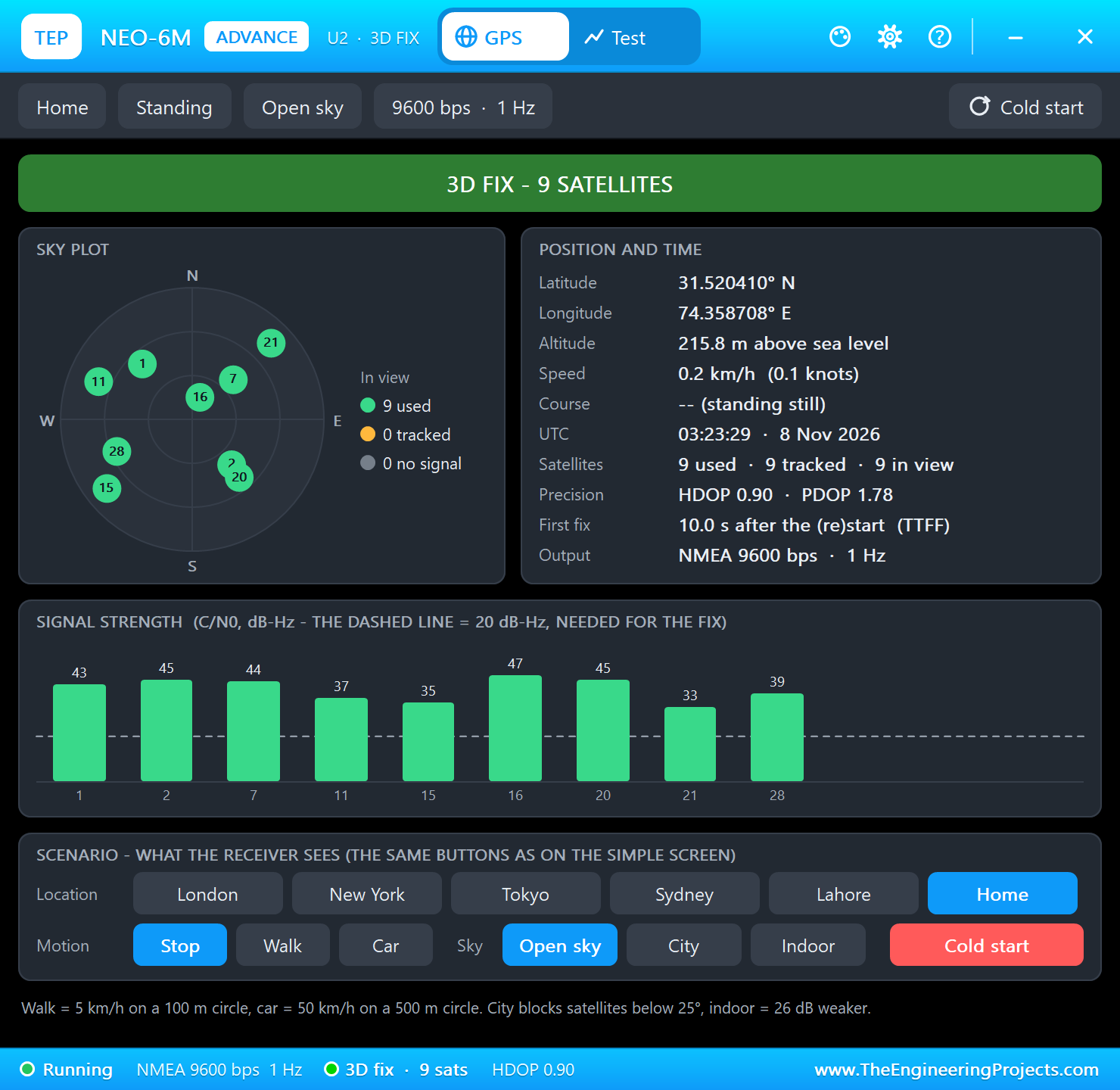
    * NEO-6M GPS module (NEO6MADVTEP, U2) on 5 V: its TX to the ESP32's RX2 (GPIO16), its RX from TX2 (GPIO17),
      9600 baud. It sends the NMEA sentences RMC, VTG, GGA, GSA, GSV and GLL once a second. The project starts it in
      Lahore (GPSLAT 31.52040, GPSLON 74.35870); every start is a cold start: the first fix after about 10 s.
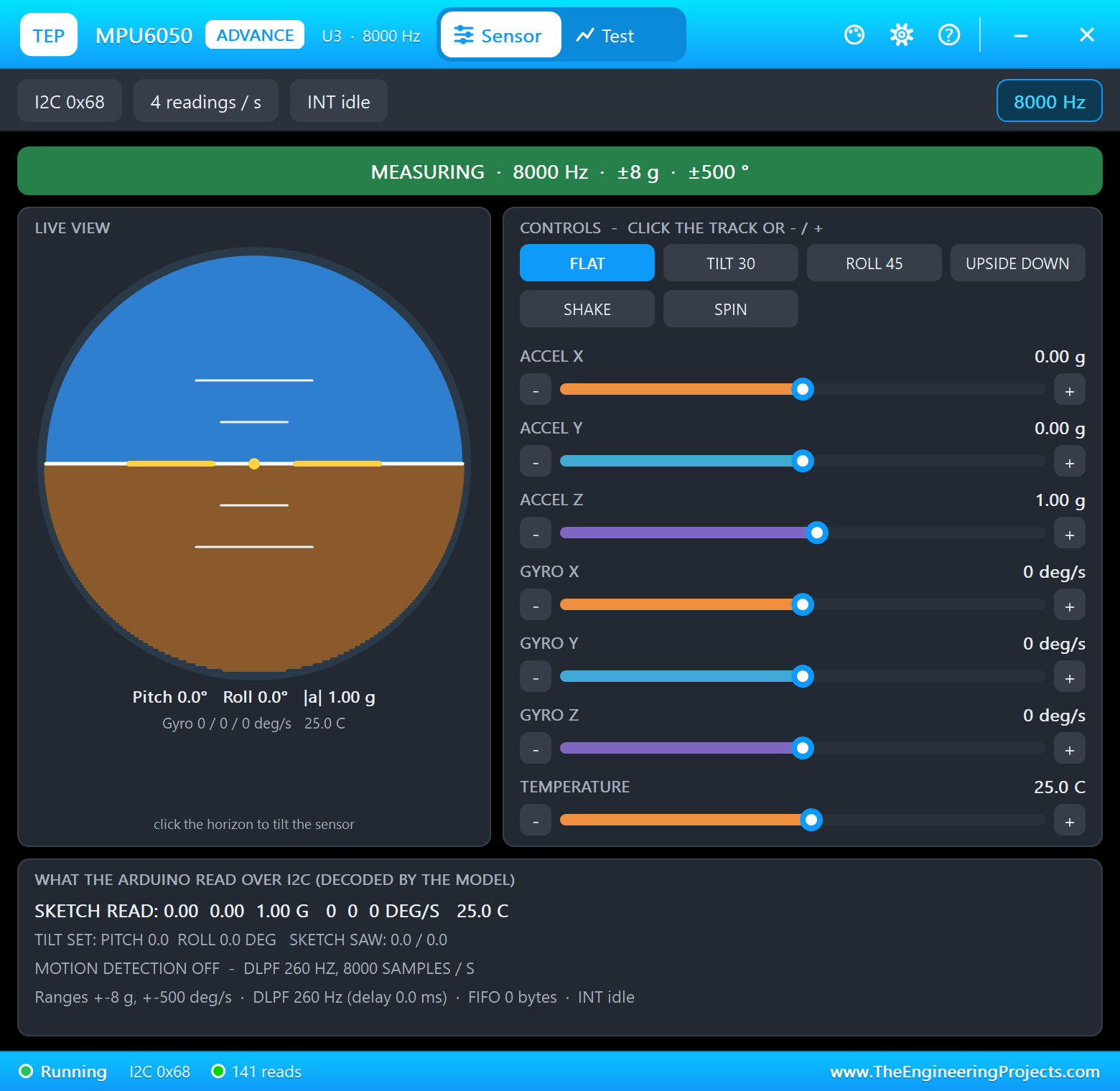
    * MPU6050 motion sensor, GY-521 board (MPU6050ADVTEP, U3) on 5 V, I2C 0x68 (AD0 to ground), SDA D21, SCL D22:
      the crash alarm - a jolt over 2.5 g is an IMPACT, a tilt of more than 60 degrees for 1 s is a ROLLOVER.
    * Green LED on D25 (blinking: searching for satellites; steady: a fix), red LED on D26 (an alert), each through
      220 ohm.
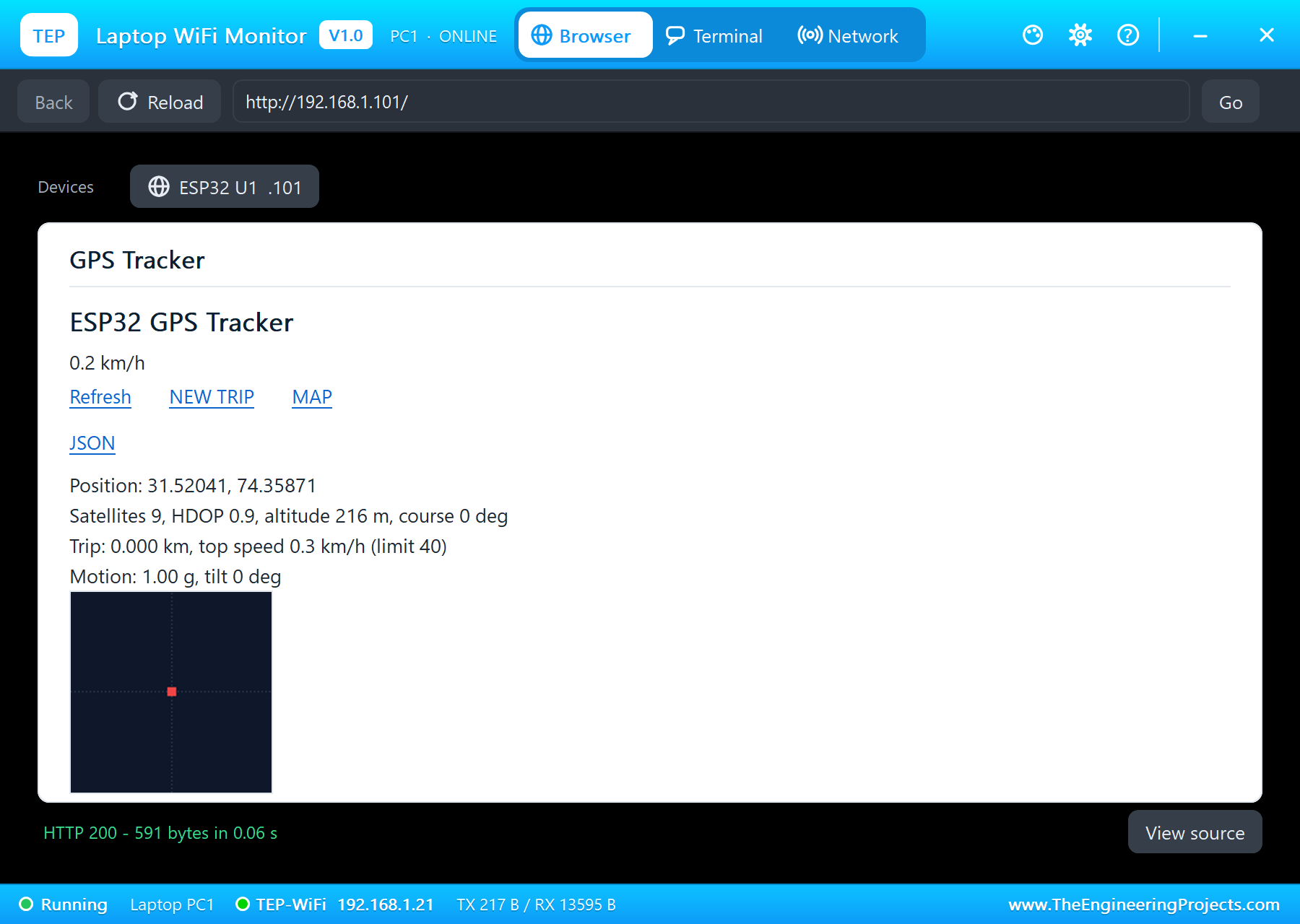
    * Laptop WiFi Monitor (PC1) and Mobile WiFi Monitor (MOB1) open the dashboard at http://192.168.1.101/.
  The sketch reads the NMEA sentences with TinyGPS++, adds up the trip distance between fixes while moving, keeps the
  top speed, warns OVER SPEED above 40 km/h, records the route (a point every 2 s, the last 2 minutes) and draws it.
  Its pages:
    /            the dashboard: the speed, the position (MAP opens it in a map on a real phone or PC), the
                 satellites, the trip, the motion and the alerts with their positions, and the route picture
    /track.bmp   the route of the last 2 minutes (the start green, the route cyan, the vehicle red), drawn by the ESP32
    /reset       a new trip
    /data        everything as JSON

TEST STATUS
  Tested in Proteus 8 Professional on Windows 11, the run that made the tutorial's screenshots:
    * MPU6050 OK; TEP-WiFi joined, the dashboard at http://192.168.1.101/. The GPS cold start: "Searching for
      satellites", the green LED blinking; the fix at 10.1 s of simulation: 31.52039, 74.35870, 10 satellites,
      HDOP 0.9, altitude about 217 m; the green LED steady.
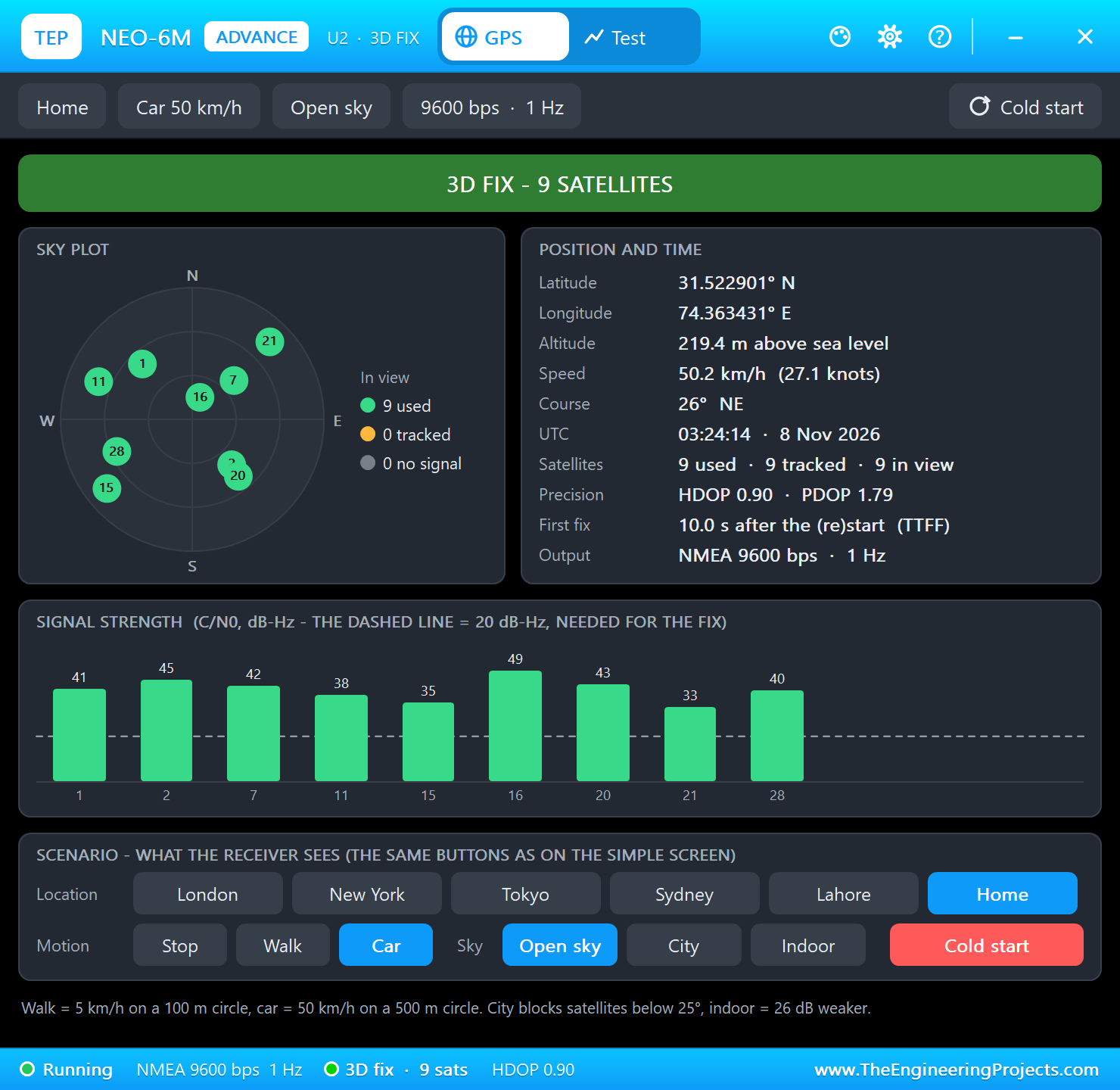
    * Car (the GPS pop-up): 50 km/h on the 500 m circle - "OVER SPEED 50.4 km/h" at 42.1 s, the red LED on; the
      trip passed 1.004 km at 115 s, top speed 50.5 km/h; the route picture drew the arc from the start.
    * UPSIDE DOWN (the MPU6050 pop-up): "ROLLOVER 180 deg at 31.52699, 74.36336" at 116.8 s.
    * Stop: the speed down to 0.2 km/h, the trip 1.116 km; FLAT: "upright again" at 132.6 s.
  135 s of simulation took about 14 minutes on our PC with all the captures.

INSTALLATION
  1. Close Proteus. Extract the WHOLE zip file, for example to your Desktop.
  2. Copy the files from "Proteus Library Files" into the LIBRARY folder of Proteus, for example
     C:\Program Files (x86)\Labcenter Electronics\Proteus 8 Professional\LIBRARY
  3. Copy the files from "Proteus Model Files" into the MODELS folder (next to LIBRARY).
  4. Start Proteus. Press P in the schematic and search for ESP32 DEVKIT V1, NEO6MADVTEP or MPU6050ADVTEP to check
     that the parts are there.

RUN THE SIMULATION
  1. Open "Proteus Simulation\ESP32-GPS-Tracker.pdsprj". Keep the .hex and .DLL files beside it.
  2. Press Play. The green LED blinks while the GPS searches; after about 10 s of simulation it has a fix.
  3. Open the Laptop WiFi Monitor (PC1) or the Mobile WiFi Monitor (MOB1) and press Go. Press Refresh to update it.
  4. In the GPS pop-up press CAR: the vehicle drives at 50 km/h on a 500 m circle - OVER SPEED, the trip grows and
     the route picture draws the arc. WALK is 5 km/h, STOP stands still.
  5. In the MPU6050 pop-up press UPSIDE DOWN: a ROLLOVER alert with the position; FLAT puts it back.
  Your own sketch: the source is in "Arduino Code". Install the TEP Boards for Proteus add-on from the ESP32 DevKit V1
  post, and the TinyGPSPlus, Adafruit MPU6050, Adafruit BusIO and Adafruit Unified Sensor libraries from the Arduino
  Library Manager; choose Tools > Board > ESP32 DevKit V1 (TEP Proteus), export the compiled binary and set the
  board's PROGRAM property to the new .hex file. The same sketch runs on a real ESP32 Dev Module.

PROPERTIES USED IN THIS PROJECT
  U1 ESP32 DEVKIT V1   PROGRAM=ESP32_GPS_Tracker.hex
  U2 NEO6MADVTEP       GPSLAT=31.52040, GPSLON=74.35870, GPSALT=217, GPSTTFF=10 (s), GPSBAUD=9600
  U3 MPU6050ADVTEP     AX=0, AY=0, AZ=1 (g: flat), the gyro 0
  PC1, MOB1            HOMEPAGE=http://192.168.1.101/

TROUBLESHOOTING
  * "Searching for satellites" never ends: the GPS's TX is not on RX2 (GPIO16), or its pop-up SKY is INDOOR.
  * "MPU6050 missing": SDA / SCL swapped, or AD0 is high (the sketch asks for 0x68).
  * The speed stays 0: the GPS pop-up's MOTION is STOP; press CAR or WALK.
  * A rollover alert at start: the MPU6050 is not FLAT (AZ = 1 g).
  * "Connecting to TEP-WiFi......" never ends: the .hex file is missing beside the project, or TEPNET.DLL is not in
    MODELS. Copy the files again and restart Proteus.

LICENCES
  * The project, the sketch, the parts (LIB files) and the models (DLL files) are made by The Engineering Projects
    and are free for learning and for your own projects. The models use only standard Windows libraries.
    The C++ source code of the models is not included; the source code is not included for any model.
  * The .hex file is built from the sketch with TEP Boards for Proteus, the Arduino add-on in the ESP32 DevKit V1
    download (its licences are listed in that download), and contains the libraries below.
  * Proteus is a product of Labcenter Electronics and is not included. ESP32, NEO-6M (u-blox) and MPU6050 (TDK
    InvenSense) are names of their owners; this project is not made or endorsed by them.

THIRD-PARTY LICENCES (compiled into ESP32_GPS_Tracker.hex)
  TinyGPS++ (TinyGPSPlus) 1.0.3a - Copyright (C) 2008-2022 Mikal Hart - GNU Lesser General Public License 2.1
  (https://www.gnu.org/licenses/old-licenses/lgpl-2.1.html). Its source is at https://github.com/mikalhart/TinyGPSPlus;
  the complete sketch is in "Arduino Code", so the .hex file can be rebuilt with a changed TinyGPS++.
  Adafruit MPU6050 2.2.9 - Copyright (c) 2019 Bryan Siepert for Adafruit Industries - BSD licence: Redistribution and
  use in source and binary forms, with or without modification, are permitted provided that the following
  conditions are met: 1. Redistributions of source code must retain the above copyright notice, this list of
  conditions and the following disclaimer. 2. Redistributions in binary form must reproduce the above copyright
  notice, this list of conditions and the following disclaimer in the documentation and/or other materials provided
  with the distribution. 3. Neither the name of the copyright holders nor the names of its contributors may be used
  to endorse or promote products derived from this software without specific prior written permission. THIS SOFTWARE
  IS PROVIDED BY THE COPYRIGHT HOLDERS AND CONTRIBUTORS "AS IS" AND ANY EXPRESS OR IMPLIED WARRANTIES, INCLUDING, BUT
  NOT LIMITED TO, THE IMPLIED WARRANTIES OF MERCHANTABILITY AND FITNESS FOR A PARTICULAR PURPOSE ARE DISCLAIMED. IN
  NO EVENT SHALL THE COPYRIGHT HOLDER OR CONTRIBUTORS BE LIABLE FOR ANY DIRECT, INDIRECT, INCIDENTAL, SPECIAL,
  EXEMPLARY, OR CONSEQUENTIAL DAMAGES HOWEVER CAUSED AND ON ANY THEORY OF LIABILITY, WHETHER IN CONTRACT, STRICT
  LIABILITY, OR TORT (INCLUDING NEGLIGENCE OR OTHERWISE) ARISING IN ANY WAY OUT OF THE USE OF THIS SOFTWARE, EVEN IF
  ADVISED OF THE POSSIBILITY OF SUCH DAMAGE.
  Adafruit BusIO 1.17.4 - Copyright (c) 2017 Adafruit Industries - MIT licence: Permission is hereby granted, free
  of charge, to any person obtaining a copy of this software and associated documentation files (the "Software"), to
  deal in the Software without restriction, subject to the following conditions: The above copyright notice and this
  permission notice shall be included in all copies or substantial portions of the Software. THE SOFTWARE IS
  PROVIDED "AS IS", WITHOUT WARRANTY OF ANY KIND, EXPRESS OR IMPLIED.
  Adafruit Unified Sensor 1.1.15 - Copyright Adafruit Industries - Apache License 2.0
  (https://www.apache.org/licenses/LICENSE-2.0).

VERSION
  V1.0 - the first release of the project.
===============================================================================================================Development1 release
 Development1 release
-
V1.0IoT GPS Vehicle Tracker with ESP32 - Proteus Simulation V1.0this page
V1.0 is the only release in the Download Center so far. When a newer version is published, it appears above with its own download page.
Installation8 steps
 Installation8 steps
From the download to a working project, in order. The steps follow what the package contains.
You will need
- Proteus Design SuiteProteus 8 or newer (Labcenter), on Windows
- Arduino IDE1.8 or 2.x, with the board of the tutorial chosen under Tools → Board
- Any archive toolWindows, macOS and Linux extract ZIP files on their own
Steps
- 1
Extract the archive
Right-click esp32-gps-tracker-tep-v1-0-9f84b803bbf14b108c5ffcf39b95807a.zip and choose Extract All (or open it with 7-Zip or WinRAR) into a folder you can find again. Keep its folder structure (ESP32-GPS-Tracker-TEP-v1.0) as it is.
- 2
Copy the library files into Proteus
Move TEPESP32V1.LIB, TEPLAPTOP.LIB and TEPLED5MM.LIB and 4 more and the files into the LIBRARY folder of your Proteus installation: C:\Program Files (x86)\Labcenter Electronics\Proteus 8 Professional\LIBRARY for Proteus 8, or the matching Proteus 7 folder. Older versions keep it under ProgramData\Labcenter Electronics. If Proteus is open, close it first.
- 3
Add the simulation model
Copy TEPLED5MM.DLL, TEPMPU6050.DLL and TEPNEO6M.DLL and 2 more into the MODELS folder next to LIBRARY, so the component can run, not only be drawn.
- 4
Restart Proteus and place the component
Start Proteus, open a schematic, press P (Pick Devices) and search for the component by the name used in the tutorial. It appears with its pins ready to wire.
- 5
Open the sketch in the Arduino IDE
Open ESP32_GPS_Tracker.ino, select your board and port under Tools, then Verify. Sketch → Export Compiled Binary writes the HEX file a simulation needs.
- 6
Load the HEX file
In Proteus double-click the microcontroller, set Program File to ESP32_GPS_Tracker.hex and run the simulation. For real hardware, flash the same file with your programmer.
- 7
Open the example simulation
Open ESP32-GPS-Tracker.pdsprj in Proteus to see the wiring exactly as in the tutorial. Check the controller's Program File path, then press Play.
- 8
Follow the tutorial
IoT GPS Vehicle Tracker with ESP32 - Proteus Simulation explains every connection and setting in order; keep it open beside the files while you build.
FAQs9 questionsContact TEP
 FAQs9 questions
How do I download IoT GPS Vehicle Tracker with ESP32 - Proteus Simulation V1.0?
Wait for the 30-second guest countdown on this page, then press the download button; the file comes straight from our storage. Members who are logged in skip the wait. If the browser opens the file instead of saving it, use its Save as option. The download link is made for you when the countdown ends and works for 15 minutes; a saved or shared link stops working, so share this page instead.
What is inside the archive?
IoT GPS Vehicle Tracker with ESP32 - Proteus Simulation V1.0 comes as a ZIP archive of 21 files (4.3 MB, 9.6 MB unpacked) holding Proteus library files, simulation model DLLs, a Proteus simulation, an Arduino sketch and compiled HEX firmware. Open the File Structure tab for the full list of 21 files.
What should I do if the download does not start?
Check the browser's download list first; an ad blocker or a company firewall can also hold it back, so try another browser or network. If the file arrives incomplete, download it again. For an installation problem, read the Install tab or tell us in the comments with your software version and the exact error message.
Is this file free?
Yes. Every file in the TEP Download Center is free for learning, personal and student projects. If you share it, link back to this page or the tutorial so others find the latest version.
How do I check that the file arrived complete?
Compare its SHA-256 with the one on this page, 4c29a05bf529a41e333c77536e011b734305f313c102e1fce9f52129c98d3b3e. In PowerShell run Get-FileHash "esp32-gps-tracker-tep-v1-0-9f84b803bbf14b108c5ffcf39b95807a.zip"; on macOS or Linux run shasum -a 256 "esp32-gps-tracker-tep-v1-0-9f84b803bbf14b108c5ffcf39b95807a.zip". The same value means the file is exactly the one in our storage; a different one means the download broke off, so download it again.
Do I need WinRAR to open the ZIP file?
No. Windows, macOS and Linux open ZIP archives on their own (Extract All, or double-click). WinRAR and 7-Zip work too. Extract the whole archive before using the files.
Where do I put the LIB and IDX files?
Both files go into the LIBRARY folder of your Proteus installation (Proteus 8: C:\Program Files (x86)\Labcenter Electronics\Proteus 8 Professional\LIBRARY; Proteus 7 has the same folder under its own name). Restart Proteus afterwards and search for the component with P.
Which Proteus version does the library need?
The tutorial names the Proteus version the library was made and tested with. Most TEP libraries work in Proteus 7 and Proteus 8; if the component does not appear after a restart, check that both the LIB and the IDX file were copied and that Proteus was fully closed while copying.
How do I get the HEX file into the simulation?
Compile the sketch in the Arduino IDE (Sketch → Export Compiled Binary gives you the HEX next to the sketch), then in Proteus double-click the board, set Program File to that HEX and run.
Members skip the wait. Log in or join TEP.

- 2Total downloads
- 4%Popularity
- ProteusCategory
- 0Comments
- ssyedzainnasirUploaded by
- 12 Nov 2026Uploaded at


 SHA-256
4c29a05bf529a41e333c77536e011b734305f313c102e1fce9f52129c98d3b3e


 Need help with this file?
 Tags
Related Proteus
All Proteus tutorials


More GPS project files
All GPS tutorials


Comments
0