


Project Files of PZEM-004T Energy Meter Library for Proteus Simulation
 Libraries
 Code
 Projects
 Simulation
9f96a55189b74993b4b2d46685732d36.zip
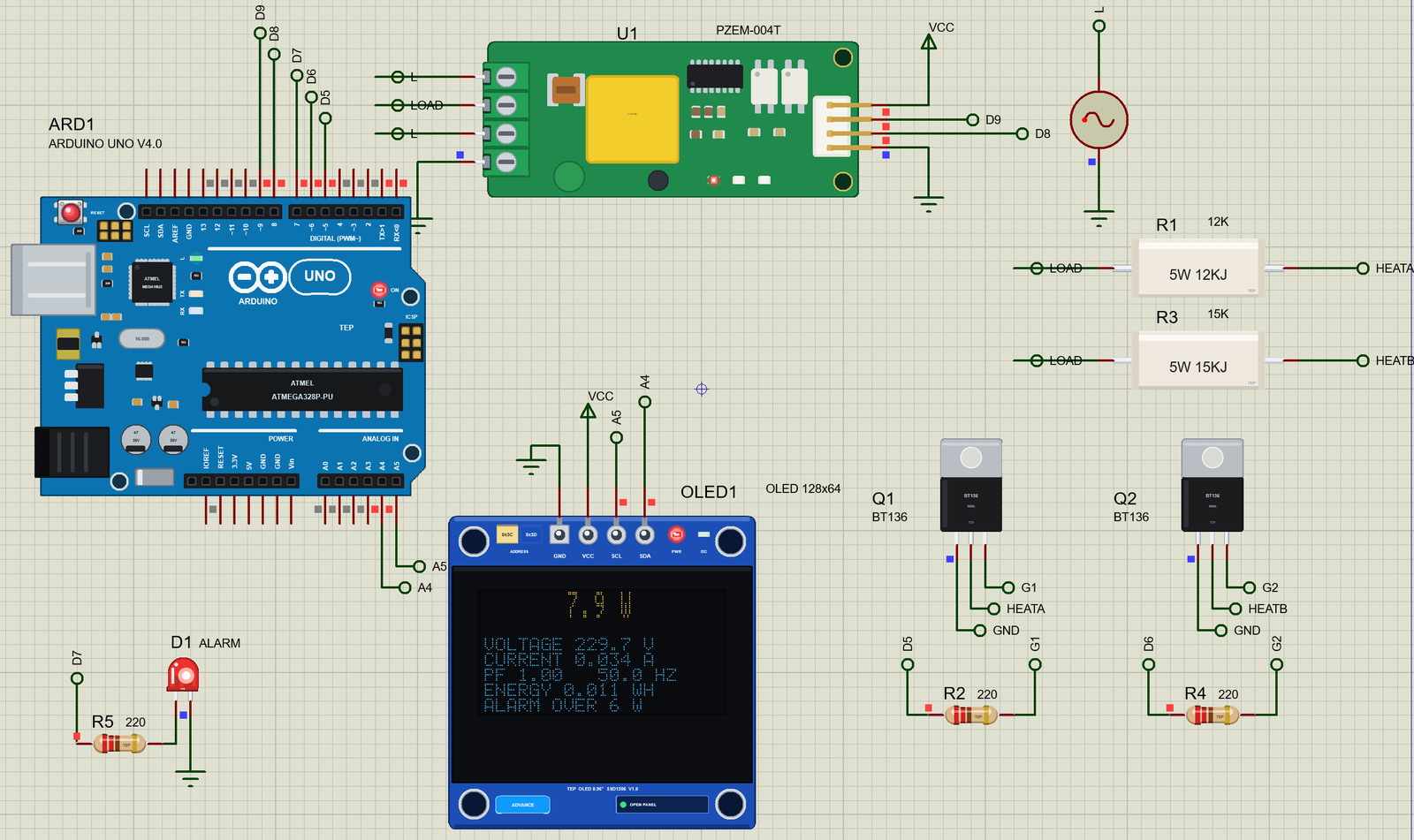
PZEM-004T Energy Meter Library for Proteus V1.0
PZEM-004T Energy Meter Library for Proteus V1.0 comes as a ZIP archive of 25 files (2.8 MB, 6.3 MB unpacked) holding Proteus library files, simulation model DLLs, a Proteus simulation, an Arduino sketch and compiled HEX firmware.
- LIBProteus library
- DLLProteus model
- DSNProteus simulation
- INOArduino sketch
- HEXHEX firmware
Description
PZEM-004T-Energy-Meter-Library-for-Proteus-v1.0.zip with the PZEM-004T energy meter for Proteus simulation (TEPPZEM004T.LIB and TEPPZEM004T.DLL), our OLED, SCR and TRIAC, power resistor, 5 mm LED and resistor libraries, our Arduino UNO V4.0, the A4 demo and a README.

File Structure
 File Structure
9.5 KB201.9 KB21.8 KB112.4 KB157.2 KB21.5 KB306.9 KB15.1 KB883.5 KB289.5 KB342.5 KB304.5 KB318.5 KB311 KB306.5 KB30.9 KB33.2 KB883.5 KB289.5 KB342.5 KB304.5 KB318.5 KB311 KB306.5 KB17.2 KBGallery12 images from the tutorialOpen the tutorial
 Gallery12 images from the tutorial
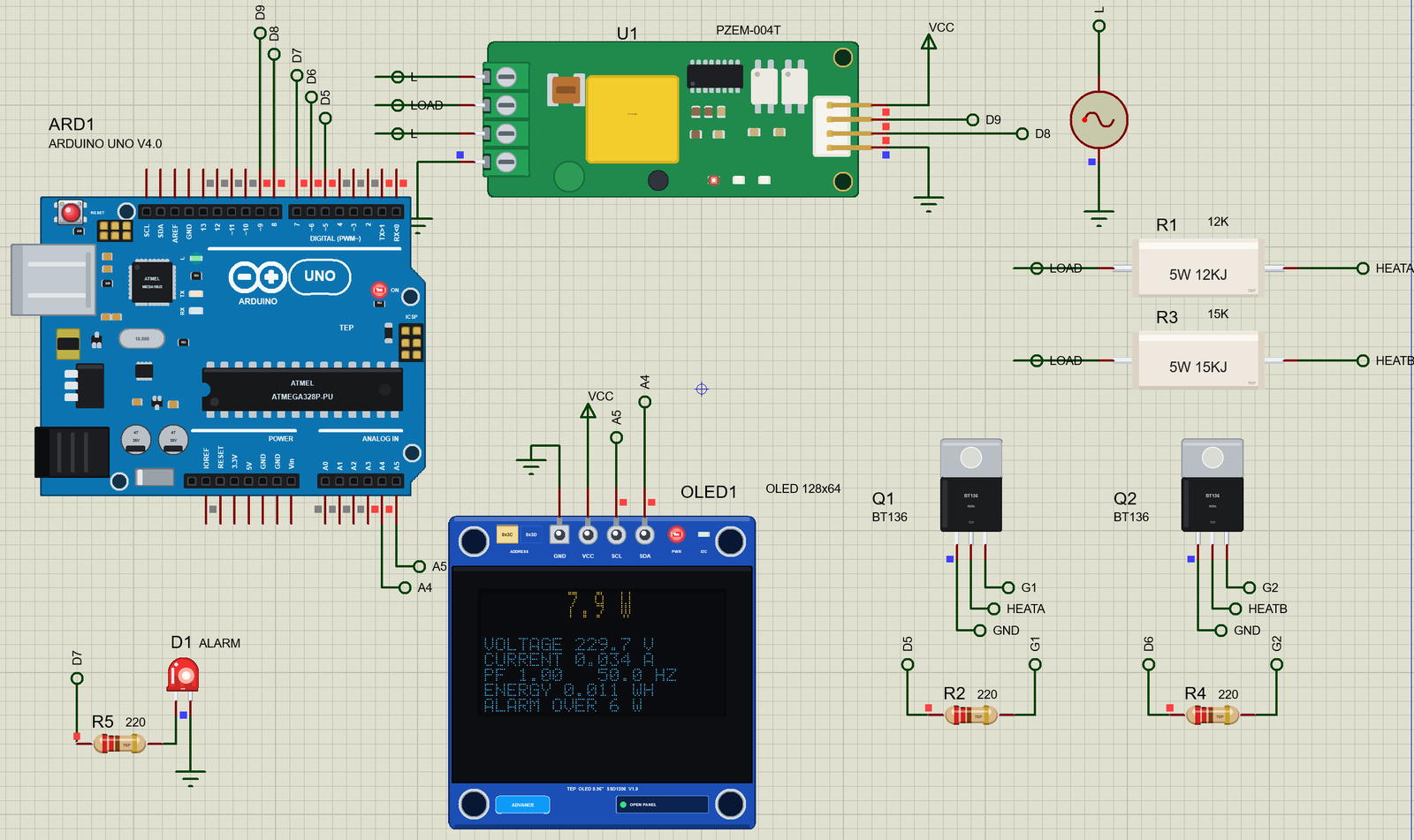
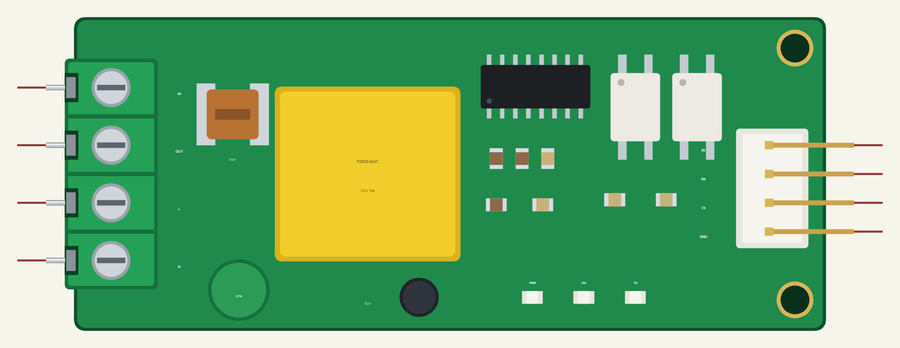
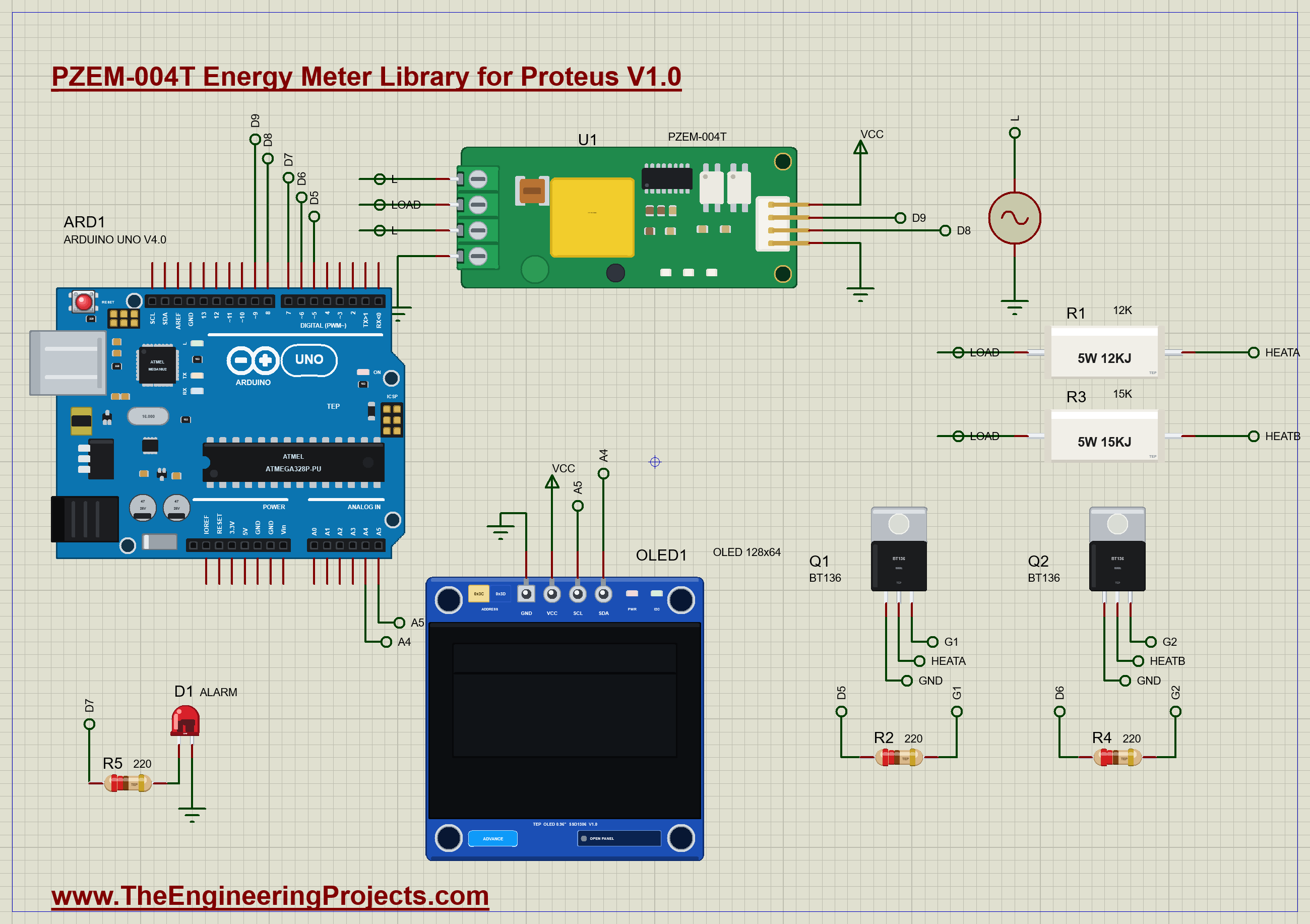
The circuit, the board and the results as they appear in PZEM-004T Energy Meter Library for Proteus Simulation. Open an image for its full size.
README
 README
PZEM-004T ENERGY METER LIBRARY FOR PROTEUS SIMULATION - V1.0 (volts, amps, watts and kWh over Modbus, a pop-up)
Designed by The Engineering Projects
www.TheEngineeringProjects.com

IMPORTANT LINKS
Article (read it first - pictures, step by step, every feature explained):
  https://www.theengineeringprojects.com/2026/11/pzem-004t-energy-meter-library-for-proteus.html
Report a bug or suggest a feature (our forum):
  https://www.theengineeringprojects.com/forum/category/scr-triac-proteus-library
The demo runs on our Arduino UNO V4.0 (included) - working LEDs, RESET and a
built-in serial monitor, no Virtual Terminal to wire - its own article:
  https://www.theengineeringprojects.com/2026/10/arduino-uno-library-for-proteus-v40.html
The readings are drawn on our SSD1306 OLED (in this zip; its article):
  https://www.theengineeringprojects.com/2026/10/oled-ssd1306-library-for-proteus-v1-0.html
Support us (the libraries are free):
  https://www.theengineeringprojects.com/donate

FILE STRUCTURE
PZEM-004T-Energy-Meter-TEP-v1.0/
|-- Proteus Library Files/
|   |-- ArduinoV4TEP.LIB                              201.9 KB   TEP Arduino boards V4.0 (UNO) -> LIBRARY
|   |-- TEPLED5MM.LIB                                  21.8 KB   a part the demo uses -> LIBRARY folder
|   |-- TEPOLED12864.LIB                              112.4 KB   a part the demo uses -> LIBRARY folder
|   |-- TEPPOWERRES.LIB                               157.2 KB   a part the demo uses -> LIBRARY folder
|   |-- TEPPZEM004T.LIB                                21.5 KB   the library -> LIBRARY folder
|   |-- TEPRESISTOR.LIB                               306.9 KB   a part the demo uses -> LIBRARY folder
|   |-- TEPTHYR.LIB                                    15.1 KB   a part the demo uses -> LIBRARY folder
|-- Proteus Model Files/
|   |-- TEPARDUINO.DLL                                883.5 KB   the Arduino board model -> MODELS folder
|   |-- TEPLED5MM.DLL                                 289.5 KB   its model -> MODELS folder
|   |-- TEPOLED.DLL                                   342.5 KB   its model -> MODELS folder
|   |-- TEPPOWERRES.DLL                               304.5 KB   its model -> MODELS folder
|   |-- TEPPZEM004T.DLL                               318.5 KB   the model -> MODELS folder
|   |-- TEPRESISTOR.DLL                               311.0 KB   its model -> MODELS folder
|   |-- TEPTHYR.DLL                                   306.5 KB   its model -> MODELS folder
|-- Proteus Simulation/
|   |-- PZEM004T_Demo.hex                              33.2 KB   the demo firmware
|   |-- PZEM004T-Energy-ArduinoUnoV4.pdsprj            30.9 KB   the demo project
|   |-- TEPARDUINO.DLL                                883.5 KB   copy of the board model
|   |-- TEPLED5MM.DLL                                 289.5 KB   copy of its model
|   |-- TEPOLED.DLL                                   342.5 KB   copy of its model
|   |-- TEPPOWERRES.DLL                               304.5 KB   copy of its model
|   |-- TEPPZEM004T.DLL                               318.5 KB   copy of the model
|   |-- TEPRESISTOR.DLL                               311.0 KB   copy of its model
|   |-- TEPTHYR.DLL                                   306.5 KB   copy of its model
|-- Arduino Code/
|   |-- PZEM004T_Demo/PZEM004T_Demo.ino                 9.5 KB   the demo sketch (source of the .hex)
|-- README.txt                                        ~17.2 KB   this file
Total: 6.29 MB (unzipped). The C++ source code of the models is not included.

WHAT IS IT?
A PZEM-004T V3.0 (10 A) AC energy meter module, drawn compact (0.85 of its 73 x 30 mm) from above:
the green board, the green 4-way
screw terminal, the shunt, the yellow power transformer, the metering chip, two optocouplers, the
varistor, three LEDs (PWR, RX, TX - a TEP
addition) and the white 4-pin header 5V, RX, TX, GND. The module is our own drawing (no maker's
mark); the behaviour follows the maker's
manual and Modbus register map:
  * IN THE SIMULATION THE METER IS PART OF YOUR CIRCUIT: the current flows from IN to OUT through
    its 1 mOhm shunt (put it in the live
    wire to your load), and L / N take the voltage. It measures what your circuit really does: the
    RMS voltage and current, the active
    power (the mean of v x i), the power factor, the frequency, and it counts the energy.
  * The metering side is powered by the mains it measures: WITHOUT AC ON L / N IT DOES NOT ANSWER -
    the classic "no reply" trap. The TTL
    side is isolated and powered by your board's 5 V.
  * Modbus-RTU over the TTL UART at 9600 8N1, address 0x01 (0xF8 = the general address for a single
    meter, 0x00 = broadcast), CRC16.
    Function 0x04 reads the input registers: 0x0000 voltage (0.1 V), 0x0001-02 current (0.001 A),
    0x0003-04 power (0.1 W), 0x0005-06
    energy (1 Wh) - the two-register values LOW word first -, 0x0007 frequency (0.1 Hz), 0x0008
    power factor (0.01), 0x0009 the alarm
    (0xFFFF / 0x0000). Function 0x03 / 0x06 read / write the holding registers 0x0001 (the power
    alarm, W) and 0x0002 (the address);
    0x42 resets the energy. Wrong requests get the Modbus exception replies.
  * On the sheet the module comes alive at Run: PWR lights with the mains, RX blinks with each
    request and TX with each reply, and the
    shunt glows with the current. Click it at Run for the pop-up: the voltage and current waveforms,
    the Modbus traffic in hex (requests
    and replies), the readings with their registers, an energy-reset and alarm chips; graphs, an
    event log and a check page.
The body is drawn as on the real part and to true scale against our Arduino.
The TEP signature and the pop-up are TEP additions.

ONE DEVICE (search "PZEM" or "energy" in Pick Devices):
  PZEM004TTEP  "PZEM-004T Energy Meter V1.0" in TEPPZEM004T.LIB (Sensors > Energy), prefix U, model
  TEPPZEM004T.DLL (mixed: analog
            and digital). Four pins on the left (the screw terminal): IN, OUT (the current through
            the shunt), L, N (the voltage).
            Four on the right (the header): 5V, RX (the meter's input), TX (its output), GND.

THE POP-UP
Click the part at Run. Tabs:
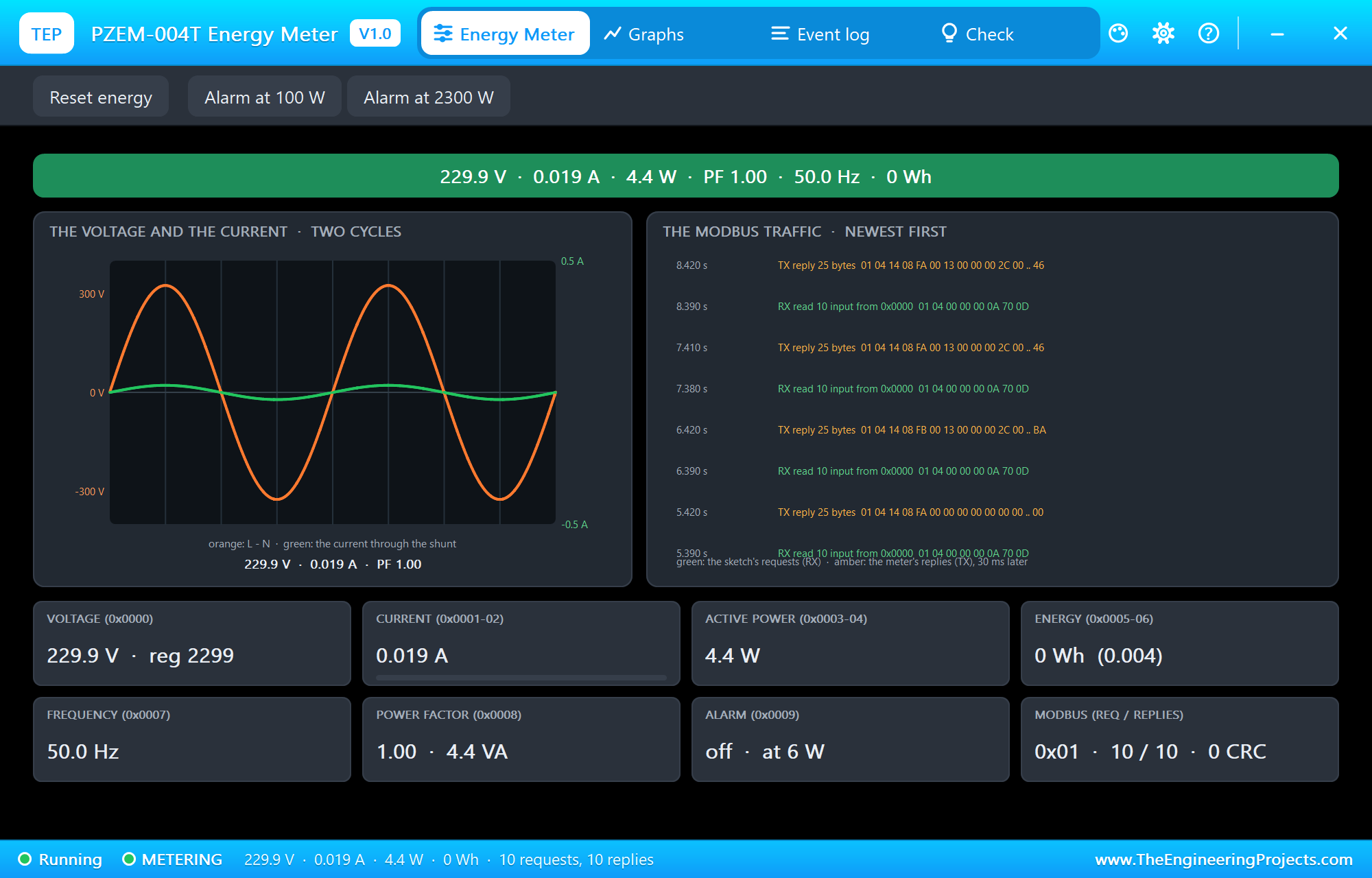
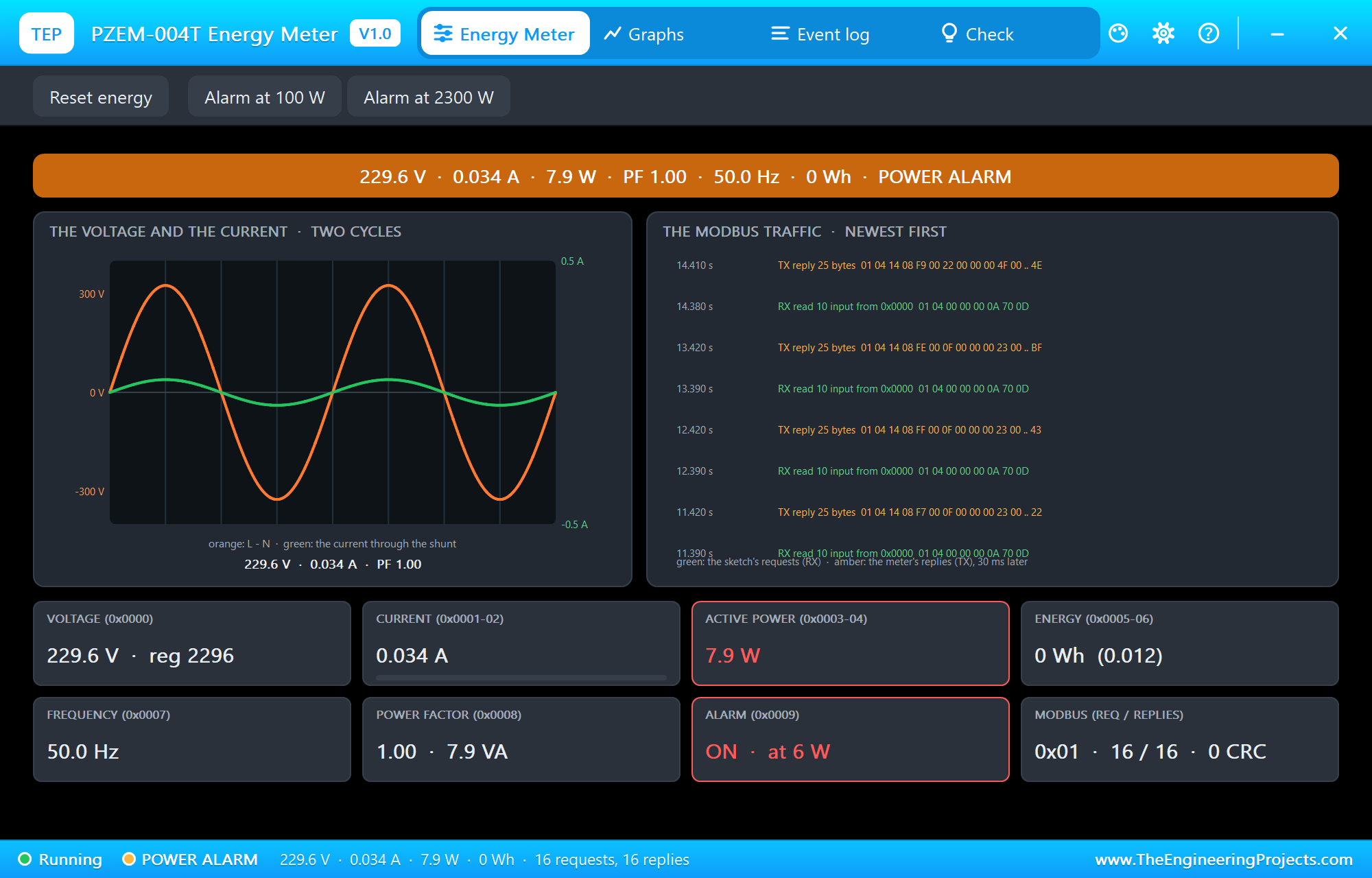
    Energy Meter  chips: Reset energy; Alarm at 100 W / Alarm at 2300 W.
                The voltage and the current over two cycles; the Modbus traffic, newest first (the
                sketch's requests in green, the
                meter's replies in amber, in hex); eight tiles: the voltage, current, power and
                energy with their registers, the
                frequency, the power factor, the alarm and the Modbus counters.
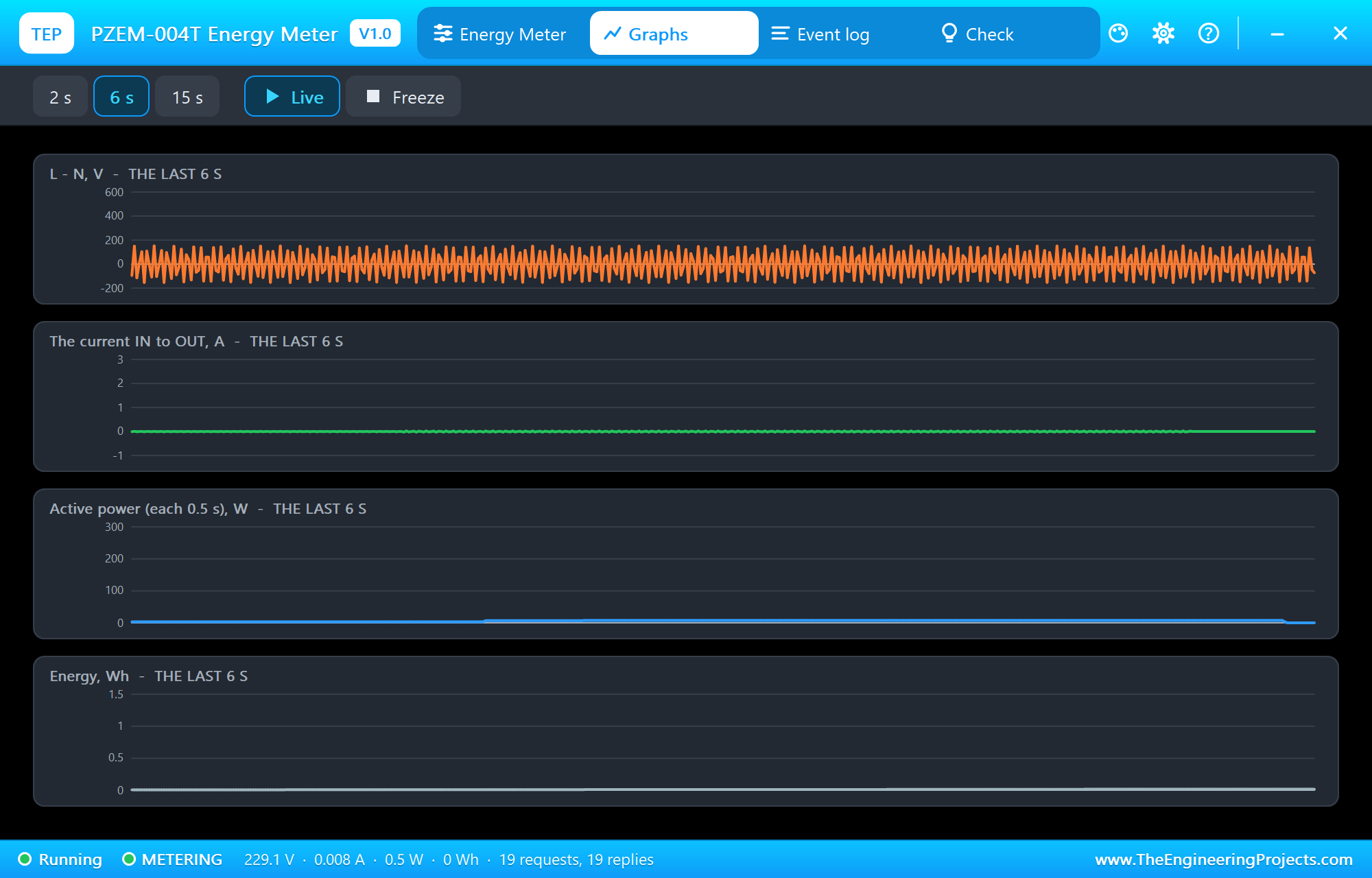
    Graphs     the live values over the last 2, 6 or 15 s. Live / Freeze.
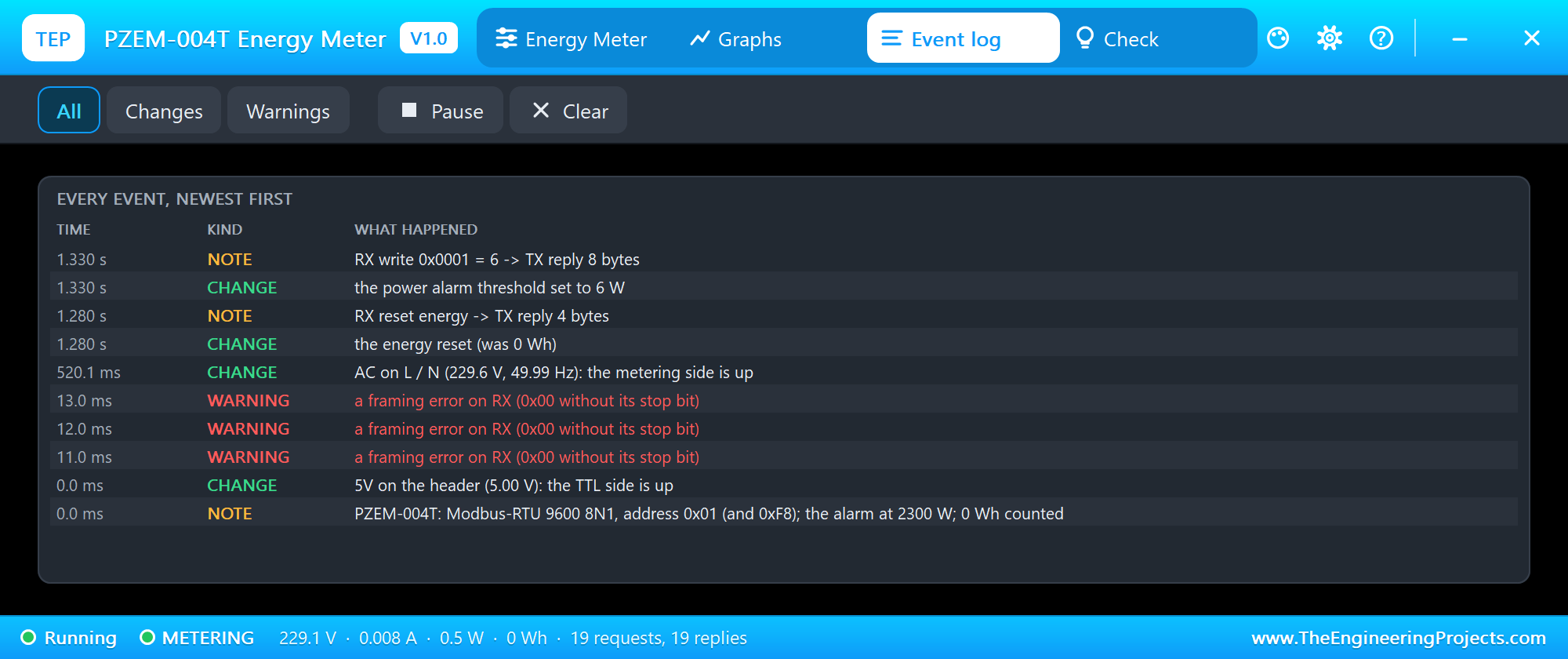
    Event log  every change and warning; filters All / Changes / Warnings, Pause, Clear
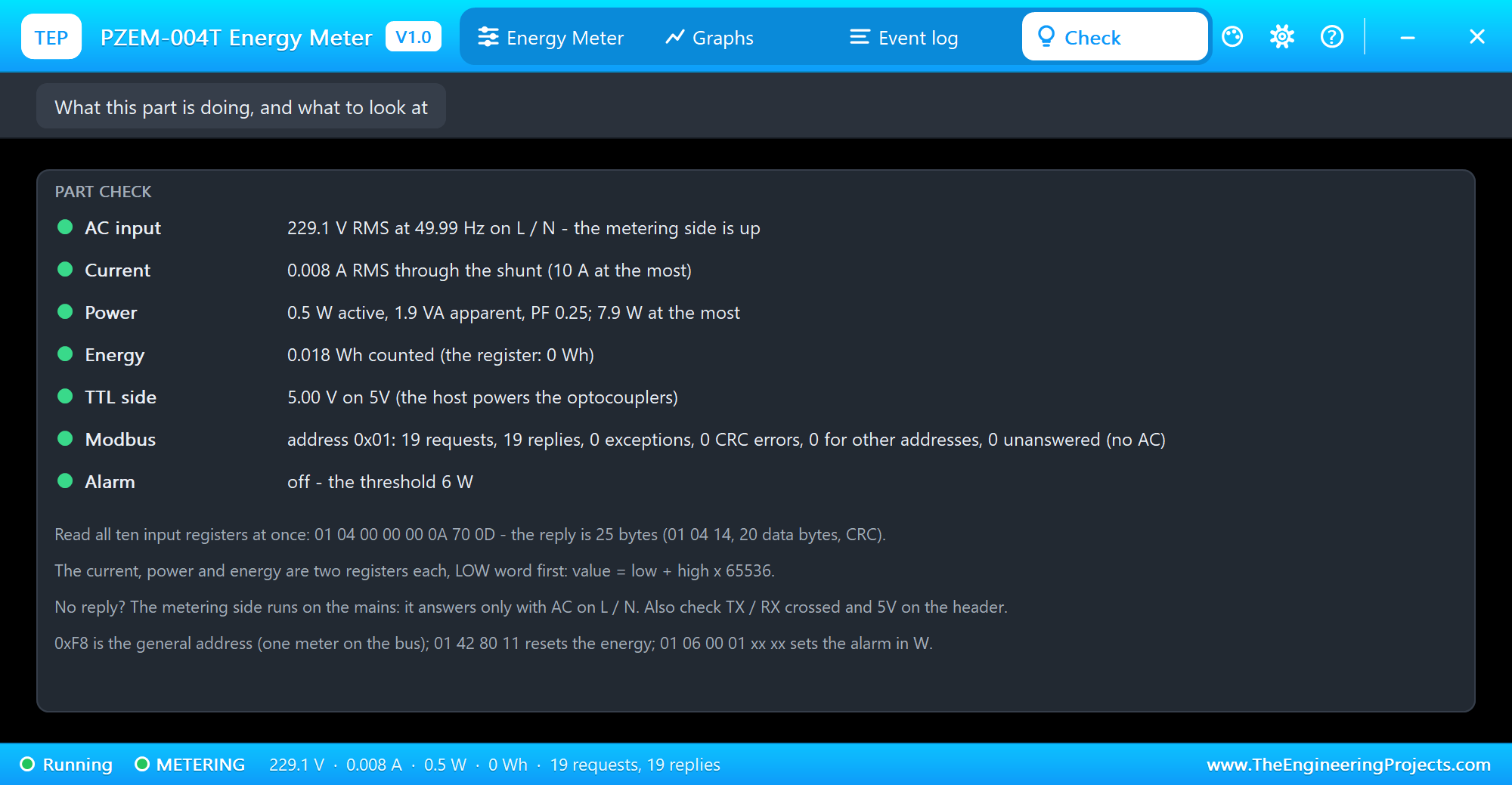
    Check      what the part is doing and what to look at, each with a verdict (green = fine, amber
    = check, red = wrong)
    Settings   theme, text size, open at Run, window size
    Help       report a bug, suggest a feature, article, updates, donate, forum; Copy diagnostics
    for a bug report

TEST STATUS
V1.0: verified in Proteus 8.5 on 20 Nov 2026 (the demo project as shipped: an A4 sheet, an Arduino UNO V4.0).
What the runs showed (the model's own numbers and the sketch's monitor):
  * The project loads and starts cleanly; the demo ran 18 simulated seconds in 316 s on our PC with
    the pop-up open and the pictures
    being taken (the model takes 0.1 ms steps to follow the 50 Hz wave, the UART at 9600 baud).
  * The sketch reset the energy (0x42) and set the alarm to 6 W (0x06, register 0x0001) - both
    replies echoed; then it read the ten
    input registers every second (0x04, 25-byte replies): 19 requests, 19 replies, 0 CRC errors, 0
    exceptions.
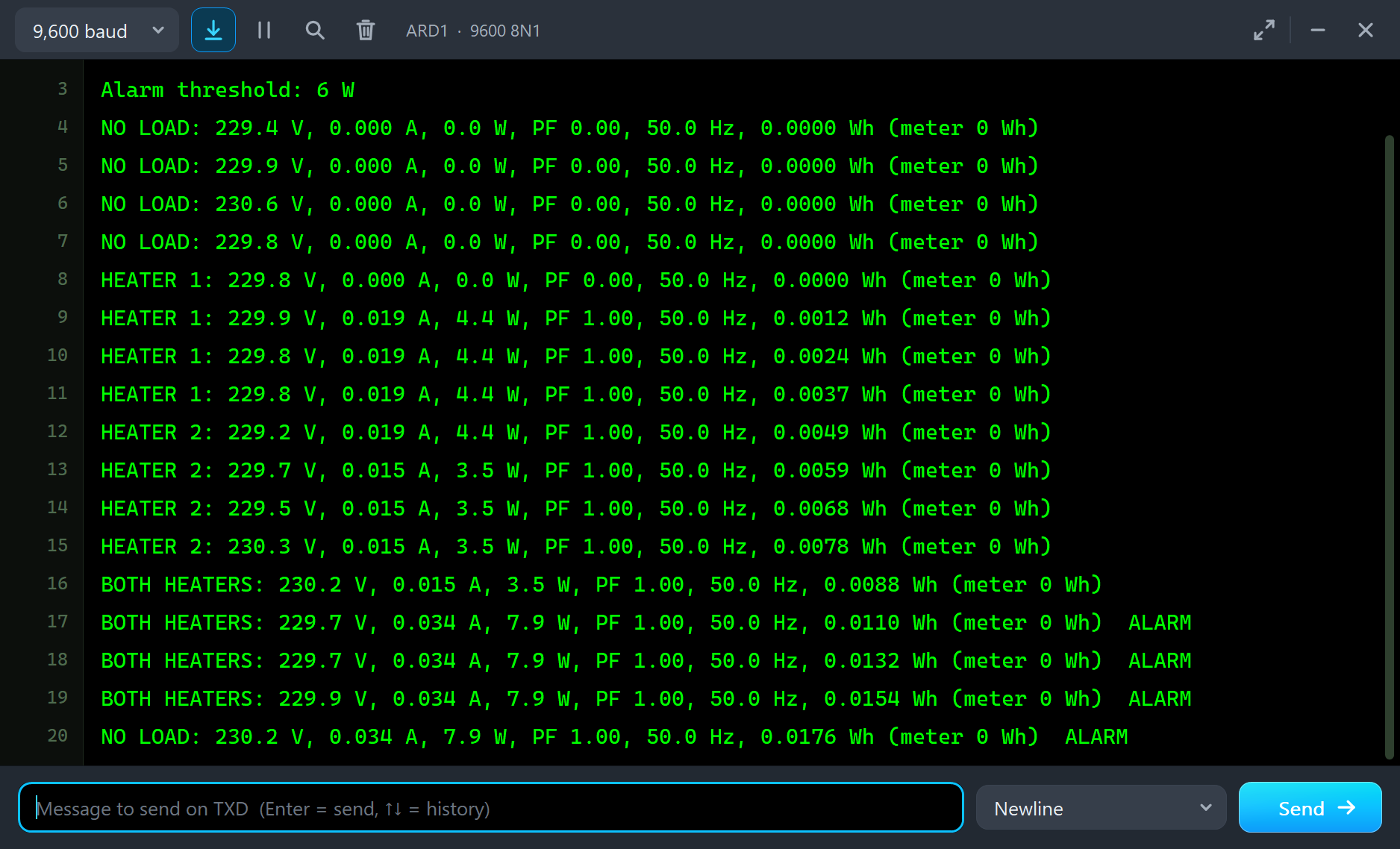
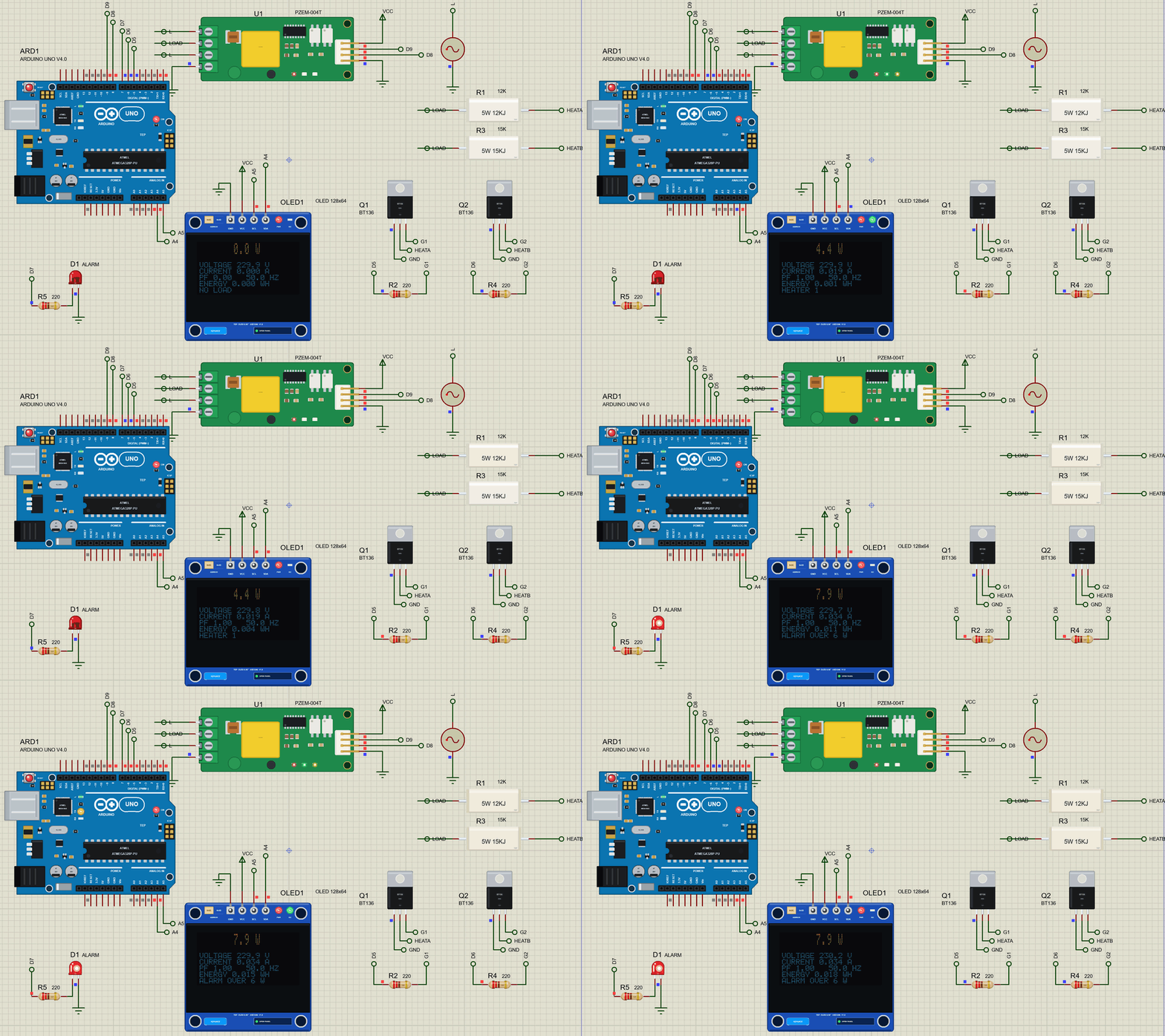
  * No load: 229.4 - 230.6 V, 0.000 A, 0.0 W, PF 0.00, 50.0 Hz.
  * Heater 1 (12 kohm): 0.0191 A, 4.38 W, PF 1.000 - the monitor "0.019 A, 4.4 W, PF 1.00". Heater 2
    (15 kohm): 0.0153 A, 3.52 W, PF
    1.000. Both: 0.0343 A, 7.88 W - over the 6 W threshold: the alarm register 0xFFFF, the ALARM LED
    on.
  * The energy: 0.018 Wh over the run, so the meter's register (1 Wh steps) stayed at 0 Wh while the
    sketch's own count reached
    0.0176 Wh. A reading taken just after a switch shows a window of mixed cycles (the power factor
    below 1 for one reading).
  * The pop-up (Energy Meter with the waveforms and the Modbus traffic, Graphs, Event log, Check)
    followed the run.

INSTALLATION (about 2 minutes)
1. Close Proteus. Extract the WHOLE ZIP to a normal folder (e.g. Desktop).
2. Copy everything in "Proteus Library Files" (TEPPZEM004T.LIB, TEPOLED12864.LIB, TEPTHYR.LIB,
TEPPOWERRES.LIB, TEPLED5MM.LIB, TEPRESISTOR.LIB and our Arduino library V4.0, ArduinoV4TEP.LIB, with
the ARDUINO UNO V4.0 used by the demo) to the LIBRARY folder of Proteus, for example:
     C:\Program Files (x86)\Labcenter Electronics\Proteus 8 Professional\LIBRARY
   (use the folder that already holds Proteus's own .LIB files).
3. Copy TEPPZEM004T.DLL, TEPOLED.DLL, TEPTHYR.DLL, TEPPOWERRES.DLL, TEPLED5MM.DLL, TEPRESISTOR.DLL
and TEPARDUINO.DLL from "Proteus Model Files" to the MODELS folder (...\Proteus 8
Professional\MODELS).
4. Delete TEPPZEM004T.IDX from the LIBRARY folder if it is there (Proteus makes a new index).
5. Start Proteus. In Pick Devices (P) search "PZEM".

RUN THE DEMO
"Proteus Simulation\PZEM004T-Energy-ArduinoUnoV4.pdsprj" (an A4 sheet) - keep the .hex file and the
DLLs beside the project.
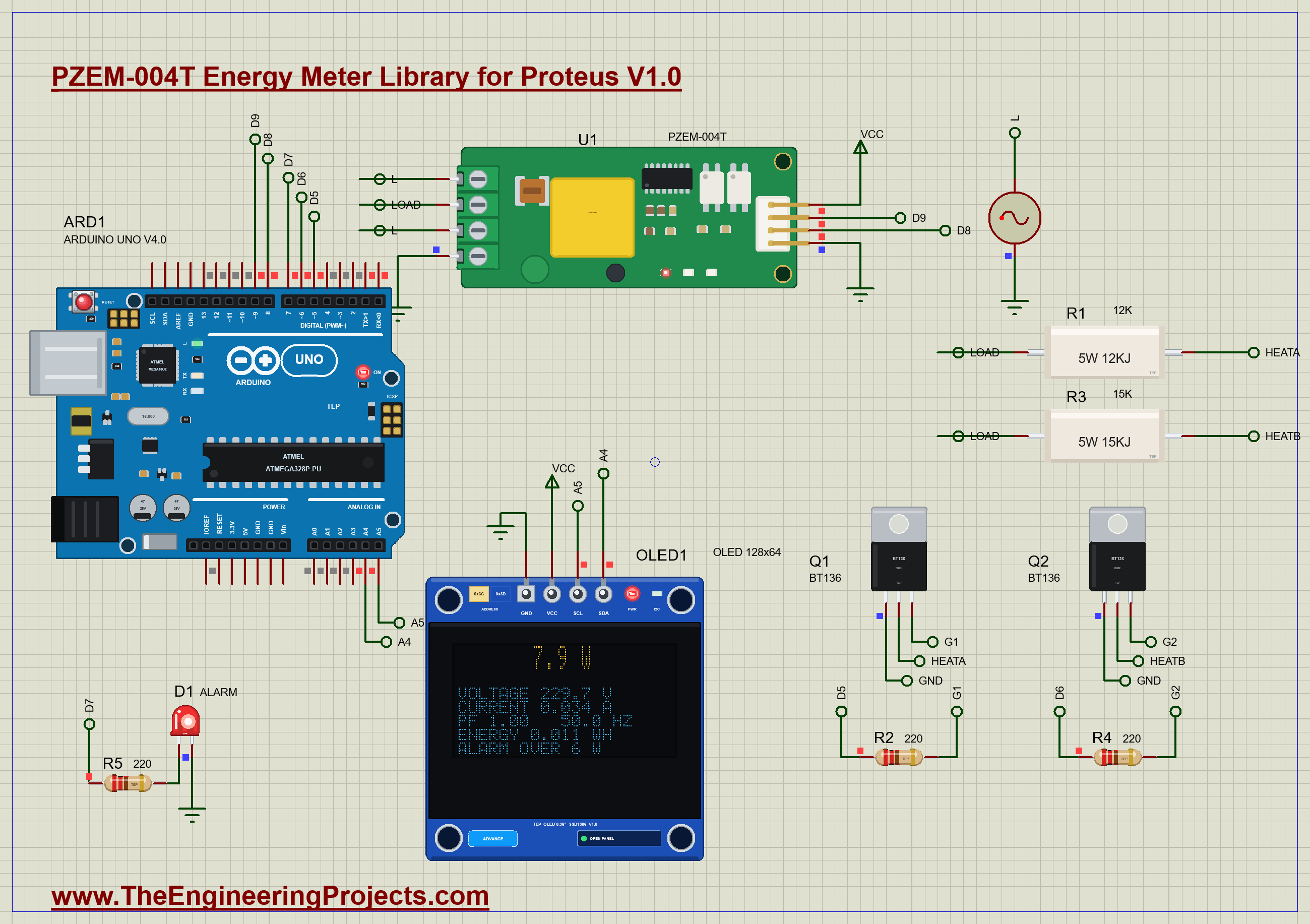
  A 230 V heater energy monitor:
  ARD1:   Arduino UNO V4.0 running PZEM004T_Demo.hex, its serial monitor built in (window "TEP
  Arduino UNO - ARD1").
  V1:     Proteus's own ALTERNATOR: 325 V peak (230 V RMS), 50 Hz; its - side on the ground (the
  supply's earthed neutral).
  U1:     the PZEM-004T: IN on L, OUT to the heaters (the net LOAD), L on L, N on the ground; 5V, RX
  on D9, TX on D8, GND.
  H1, H2: two heater elements - our 5 W power resistors, 12 kohm (4.4 W at 230 V) and 15 kohm (3.5
  W) - from LOAD through BT136
          triacs (our SCR and TRIAC library: Q1 on D5, Q2 on D6, each gate through 220 ohm, T1 on
          the ground) to the ground.
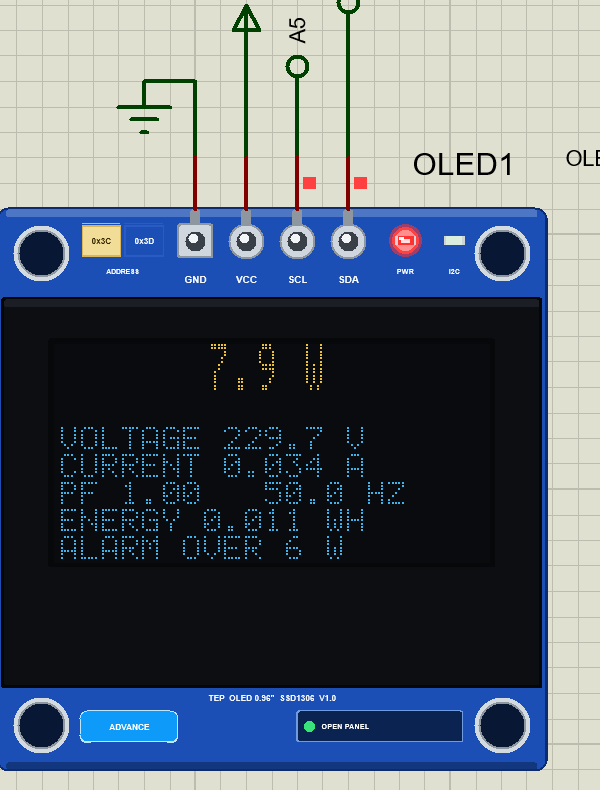
  OLED1:  our SSD1306 OLED, 128 x 64, yellow and blue (0x3C, I2C on A4 / A5): the power in its
  yellow band; the voltage, the current,
          the power factor with the frequency, the energy (added up by the sketch, to 0.001 Wh) and
          the load below.
  D1:     ALARM (red, D7, through 220 ohm): on while the meter's alarm register says so.
          The sketch talks to the meter through AltSoftSerial (RX D8, TX D9) at 9600, with the
          Modbus frames and the CRC written out
          in the sketch: it resets the energy (0x42), sets the alarm to 6 W (0x06, register 0x0001),
          then reads the ten input
          registers every second (0x04). It switches the heaters - none, heater 1, heater 2, both -
          four seconds each; both pass
          6 W. The meter counts energy in whole Wh, so over a short run its register stays at 0 -
          the sketch also adds the energy
          up from the power readings. (A real build drives the triacs through an optotriac such as
          the MOC3021.)
Closed the monitor? Click the UNO's USB port.

WIRING (the same in Proteus and on a real board)
  The mains: L to IN and to L, OUT to the load, the load's other side and N to the neutral (see the
  warning below).
  The TTL side: 5V to the board's 5 V, GND to its ground, the meter's TX to the board's RX (D8 for
  AltSoftSerial), its RX to the board's
  TX (D9) - crossed.
REAL HARDWARE:
 * MAINS VOLTAGE CAN KILL. The screw terminal and the shunt carry the full mains voltage and the
   load current: build it in a closed box,
   never touch the board while it is plugged in, and get help if you are not trained for mains work.
 * No reply? The meter needs AC on L / N; check also TX / RX crossed and 5V on the header.
 * The 10 A version carries the current through its shunt: keep within 10 A and use wire for the
   current. The 100 A version uses an
   external current transformer instead (the same registers).
 * SoftwareSerial is fine on a real UNO; this demo uses AltSoftSerial because it also works in
   Proteus (SoftwareSerial cannot receive there).

THE DEMO SKETCH ON THE SERIAL MONITOR (PZEM004T_Demo V1.0, 9600 baud)
The sketch prints the set-up and a line every second. EXPECTED MONITOR OUTPUT
  PZEM-004T 230 V energy monitor - The Engineering Projects
  Energy reset
  Alarm threshold: 6 W
  NO LOAD: 2...  V, 0.000 A, 0.0 W, PF 0.00, 50.0 Hz, 0.0000 Wh (meter 0 Wh)
  HEATER 1: 2...  V, 0.019 A, 4.4 W, PF 1.00, 50.0 Hz, 0.00.. Wh (meter 0 Wh)

PROPERTIES (double-click the part > Edit Properties)
  The Modbus address (ADDRESS)          1 - 247 (1)
  The power alarm (ALARM_W)             1 - 23000 W (2300)
  The energy already counted (ENERGY)   0 - 9999999 Wh (0)
Every run starts again from the properties.

LINKS.INI (OPTIONAL)
The Help page cards of the pop-up open web pages. To point them somewhere else without a new DLL,
put a text file named links.ini next to TEPPZEM004T.DLL with lines KEY=URL, for example:
  ARTICLE=https://www.theengineeringprojects.com/...
Keys: WEBSITE, FORUM, BUG_REPORT, FEATURE_REQUEST, ARTICLE, USER_GUIDE,
UPDATE_CHECK, DONATE. Only http:// and https:// links are used; lines starting
with # are comments.

TROUBLESHOOTING
* No reply at all: no AC on L / N (the meter is powered by it), TX / RX not crossed, or no 5V on the
  header.
* CRC errors: the baud rate is not 9600, or two meters answer at once - give each its own address
  (function 0x06, register 0x0002).
* The current reads 0 with the load on: the load's current does not go through IN / OUT.
* The power is right but the current is huge: the two-register values are LOW word first.
* The part is not simulated: TEPPZEM004T.DLL is missing from MODELS and from the project folder.
* The part is not simulated: TEPPZEM004T.DLL is missing from MODELS and from the project folder. No
  UNO / no monitor window: TEPARDUINO.DLL is missing, or click the UNO's USB port.

BUG REPORTS AND FEATURE REQUESTS
Please post them in our forum with a screenshot, the Serial Monitor text, the
simulation log and the pop-up's Copy diagnostics text:
  https://www.theengineeringprojects.com/forum/category/scr-triac-proteus-library

SUPPORT US
This library is free. If it saves you time, please support our work:
  https://www.theengineeringprojects.com/donate

WEBSITE
  https://www.theengineeringprojects.com/

LICENCES AND THIRD-PARTY NOTES
* The model (TEPPZEM004T.DLL), the symbols and artwork, the other parts of ours in the demo and the
  Arduino Library V4.0 (ArduinoV4TEP.LIB / TEPARDUINO.DLL, with its built-in TEP Serial Monitor
  Advance) are made by The Engineering Projects. The models use only standard Windows libraries; no
  Visual C++ redistributable is needed.
  The C++ source code is not included.
* Arduino UNO V4.0 (ArduinoV4TEP.LIB / TEPARDUINO.DLL, our Arduino Library V4.0 - its
  microcontroller is Proteus's own AVR model): The Engineering Projects,
  https://www.theengineeringprojects.com/2026/10/arduino-uno-library-for-proteus-v40.html
* The .hex file is built from the demo sketch and the Arduino AVR core 1.8.6, which includes
  LGPL-licensed code; its source code is available at
  https://github.com/arduino/ArduinoCore-avr/tree/1.8.6
* Proteus is a product of Labcenter Electronics and is not included. Arduino is a trademark of Arduino SA.
  This library is not made or endorsed by Arduino or Labcenter.

REBUILDING THE FIRMWARE (OPTIONAL)
The HEX file is supplied; Arduino IDE is not needed to run the demo. To edit the sketch, open
Arduino Code\PZEM004T_Demo\PZEM004T_Demo.ino, select Arduino Uno and use Sketch > Export Compiled
Binary. Replace the simulation's .hex with the exported HEX. The sketch needs 12,072 bytes of flash
and 791 bytes of RAM.

MODEL SCOPE AND LIMITS
Modelled: the shunt between IN and OUT and the voltage input on L / N in your circuit; the RMS
voltage and current, the active power,
the power factor and the frequency from whole cycles; the energy; the alarm; the Modbus-RTU slave
(functions 0x03, 0x04, 0x06, 0x41,
0x42, the exceptions, the general and broadcast addresses, CRC16) at 9600; the metering side off
without AC; the LEDs; the pop-up chips.
Our choices: the shunt 1 mOhm, the voltage input 100 kOhm, the metering side alive above 70 V RMS,
the readings refreshed every 0.5 s,
the reply 30 ms after the request, 0.2 % of noise, the alarm 2300 W from the factory. Not modelled:
the 100 A version's current
transformer, the meter's own accuracy curve, the calibration function's effect, and the alarm's
hysteresis.

VERSION
TEP PZEM-004T Energy Meter library V1.0 (Nov 2026). Device PZEM004TTEP (TEPPZEM004T.LIB /
TEPPZEM004T.DLL). Demo sketch PZEM004T_Demo V1.0 (AltSoftSerial 1.4 by Paul Stoffregen for the UART
- install it from the Library Manager - with our own Modbus frames, and plain Wire for the OLED).
The demo also uses Proteus's own ALTERNATOR, our SSD1306 OLED library (TEPOLED12864:
OLED12864YELLOWBLUEADVTEP, TEPOLED.DLL), our SCR and TRIAC library (TEPTHYR), our power resistor
library (TEPPOWERRES), our 5 mm LED library (TEPLED5MM) and our resistor library (TEPRESISTOR),
shipped in this package. Demo board: ARDUINO UNO V4.0 (TEP Arduino Library V4.0) with its built-in
serial monitor.Development1 release
 Development1 release
-
V1.0PZEM-004T Energy Meter Library for Proteus V1.0this page
V1.0 is the only release in the Download Center so far. When a newer version is published, it appears above with its own download page.
Installation8 steps
 Installation8 steps
From the download to a working project, in order. The steps follow what the package contains.
You will need
- Proteus Design SuiteProteus 8 or newer (Labcenter), on Windows
- Arduino IDE1.8 or 2.x, with the board of the tutorial chosen under Tools → Board
- Any archive toolWindows, macOS and Linux extract ZIP files on their own
Steps
- 1
Extract the archive
Right-click 9f96a55189b74993b4b2d46685732d36.zip and choose Extract All (or open it with 7-Zip or WinRAR) into a folder you can find again. Keep its folder structure (PZEM-004T-Energy-Meter-TEP-v1.0) as it is.
- 2
Copy the library files into Proteus
Move ArduinoV4TEP.LIB, TEPLED5MM.LIB and TEPOLED12864.LIB and 4 more and the files into the LIBRARY folder of your Proteus installation: C:\Program Files (x86)\Labcenter Electronics\Proteus 8 Professional\LIBRARY for Proteus 8, or the matching Proteus 7 folder. Older versions keep it under ProgramData\Labcenter Electronics. If Proteus is open, close it first.
- 3
Add the simulation model
Copy TEPARDUINO.DLL, TEPLED5MM.DLL and TEPOLED.DLL and 4 more into the MODELS folder next to LIBRARY, so the component can run, not only be drawn.
- 4
Restart Proteus and place the component
Start Proteus, open a schematic, press P (Pick Devices) and search for the component by the name used in the tutorial. It appears with its pins ready to wire.
- 5
Open the sketch in the Arduino IDE
Open PZEM004T_Demo.ino, select your board and port under Tools, then Verify. Sketch → Export Compiled Binary writes the HEX file a simulation needs.
- 6
Load the HEX file
In Proteus double-click the microcontroller, set Program File to PZEM004T_Demo.hex and run the simulation. For real hardware, flash the same file with your programmer.
- 7
Open the example simulation
Open PZEM004T-Energy-ArduinoUnoV4.pdsprj in Proteus to see the wiring exactly as in the tutorial. Check the controller's Program File path, then press Play.
- 8
Follow the tutorial
PZEM-004T Energy Meter Library for Proteus Simulation explains every connection and setting in order; keep it open beside the files while you build.
FAQs9 questionsContact TEP
 FAQs9 questions
How do I download PZEM-004T Energy Meter Library for Proteus V1.0?
Wait for the 30-second guest countdown on this page, then press the download button; the file comes straight from our storage. Members who are logged in skip the wait. If the browser opens the file instead of saving it, use its Save as option. The download link is made for you when the countdown ends and works for 15 minutes; a saved or shared link stops working, so share this page instead.
What is inside the archive?
PZEM-004T Energy Meter Library for Proteus V1.0 comes as a ZIP archive of 25 files (2.8 MB, 6.3 MB unpacked) holding Proteus library files, simulation model DLLs, a Proteus simulation, an Arduino sketch and compiled HEX firmware. Open the File Structure tab for the full list of 25 files.
What should I do if the download does not start?
Check the browser's download list first; an ad blocker or a company firewall can also hold it back, so try another browser or network. If the file arrives incomplete, download it again. For an installation problem, read the Install tab or tell us in the comments with your software version and the exact error message.
Is this file free?
Yes. Every file in the TEP Download Center is free for learning, personal and student projects. If you share it, link back to this page or the tutorial so others find the latest version.
How do I check that the file arrived complete?
Compare its SHA-256 with the one on this page, e58ac56a0578def29792eacf7013a168363149632690890bae4513fba0a7ce51. In PowerShell run Get-FileHash "9f96a55189b74993b4b2d46685732d36.zip"; on macOS or Linux run shasum -a 256 "9f96a55189b74993b4b2d46685732d36.zip". The same value means the file is exactly the one in our storage; a different one means the download broke off, so download it again.
Do I need WinRAR to open the ZIP file?
No. Windows, macOS and Linux open ZIP archives on their own (Extract All, or double-click). WinRAR and 7-Zip work too. Extract the whole archive before using the files.
Where do I put the LIB and IDX files?
Both files go into the LIBRARY folder of your Proteus installation (Proteus 8: C:\Program Files (x86)\Labcenter Electronics\Proteus 8 Professional\LIBRARY; Proteus 7 has the same folder under its own name). Restart Proteus afterwards and search for the component with P.
Which Proteus version does the library need?
The tutorial names the Proteus version the library was made and tested with. Most TEP libraries work in Proteus 7 and Proteus 8; if the component does not appear after a restart, check that both the LIB and the IDX file were copied and that Proteus was fully closed while copying.
How do I get the HEX file into the simulation?
Compile the sketch in the Arduino IDE (Sketch → Export Compiled Binary gives you the HEX next to the sketch), then in Proteus double-click the board, set Program File to that HEX and run.
Members skip the wait. Log in or join TEP.

- 0Total downloads
- 4%Popularity
- ProteusCategory
- 0Comments
- ssyedzainnasirUploaded by
- 26 Nov 2026Uploaded at


 SHA-256
e58ac56a0578def29792eacf7013a168363149632690890bae4513fba0a7ce51


 Need help with this file?
 Tags
Related Proteus
All Proteus tutorials




Comments
0