


Project Files of IoT Smart Dustbin with ESP32 - Proteus Simulation
 Libraries
 Code
 Projects
 Simulation
esp32-smart-dustbin-tep-v1-0-b7b6bfdda26f4dabba017f5b0ed69986.zip

IoT Smart Dustbin with ESP32 - Proteus Simulation V1.0
IoT Smart Dustbin with ESP32 - Proteus Simulation V1.0 comes as a ZIP archive of 27 files (4.7 MB, 10.4 MB unpacked) holding Proteus library files, simulation model DLLs, a Proteus simulation, an Arduino sketch and compiled HEX firmware.
- LIBProteus library
- DLLProteus model
- DSNProteus simulation
- INOArduino sketch
- HEXHEX firmware
Description
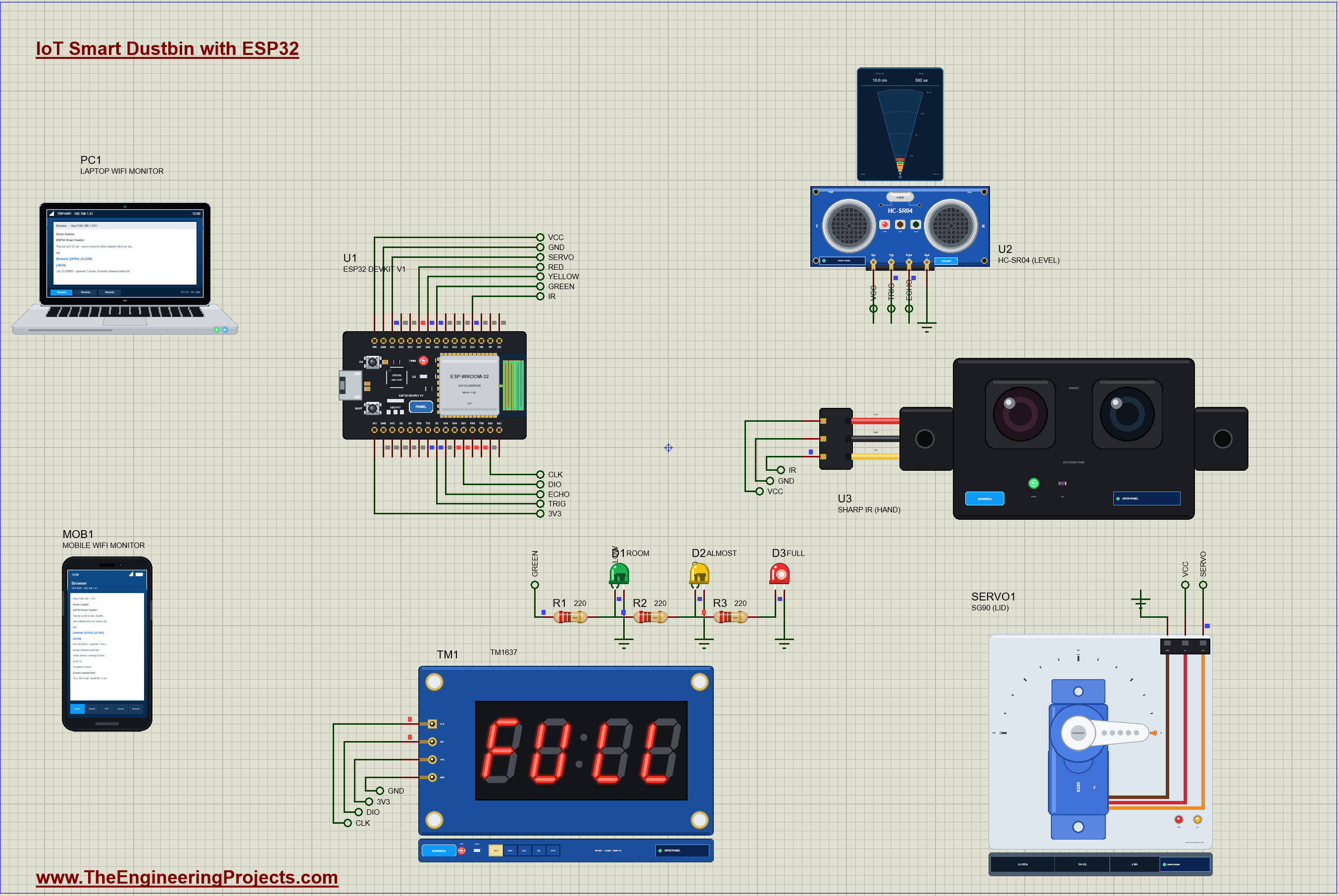
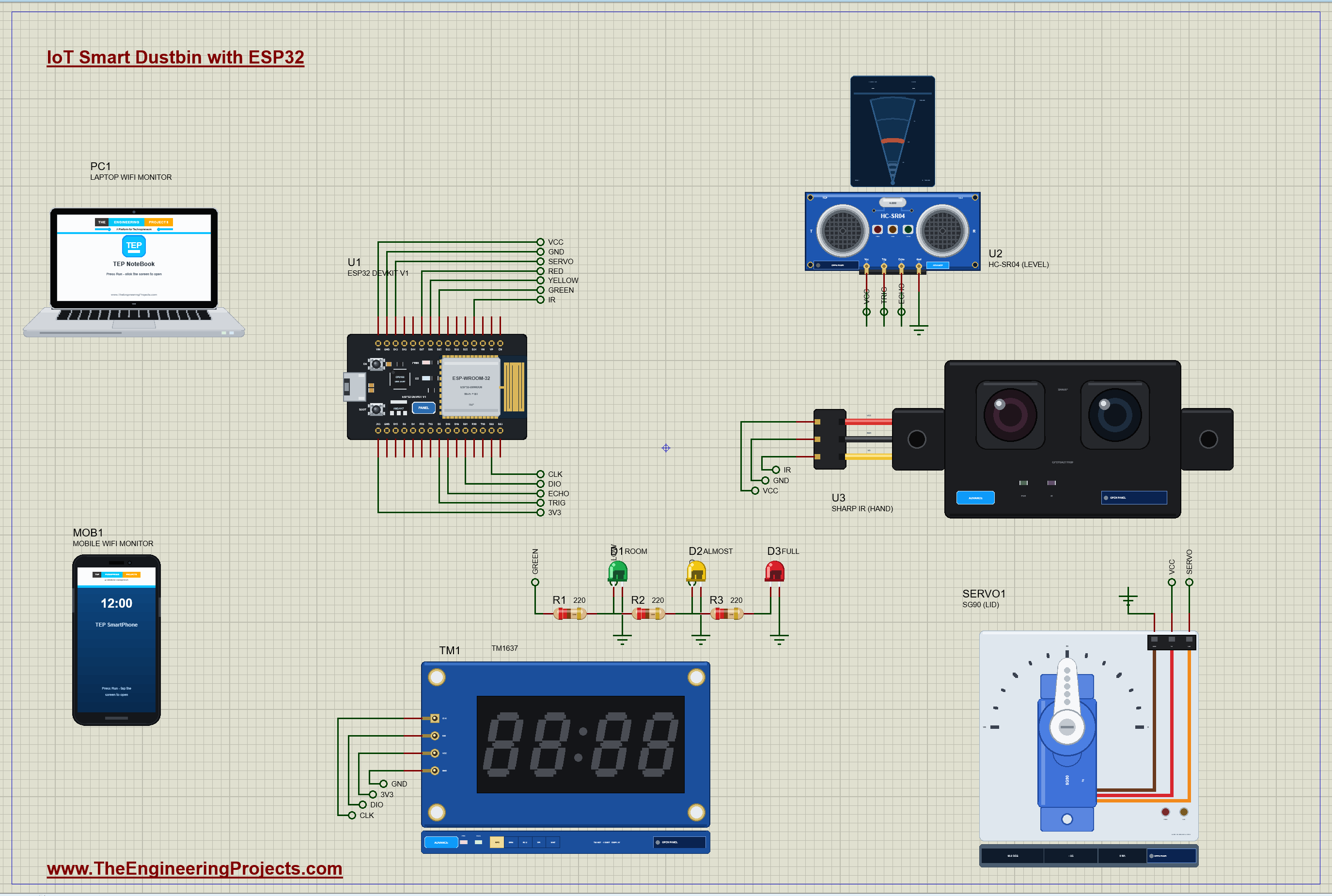
IoT-Smart-Dustbin-ESP32-Proteus-Simulation-v1.0.zip: the complete Proteus simulation project (ESP32 DevKit V1, HC-SR04, Sharp GP2Y0A21 IR sensor, TM1637 display, SG90 servo, LEDs, the Laptop and Mobile WiFi Monitors), the Arduino sketch and its .hex, every LIB and DLL the simulation needs and a README.

File Structure
 File Structure
13.2 KB36.6 KB170.1 KB39.5 KB21.8 KB13.1 KB306.9 KB24.5 KB62.6 KB84.8 KB382.5 KB289.5 KB2.9 MB311 KB294.5 KB325 KB284 KB40.6 KB77.4 KB382.5 KB289.5 KB2.9 MB311 KB294.5 KB325 KB284 KB11.2 KBGallery12 images from the tutorialOpen the tutorial
 Gallery12 images from the tutorial
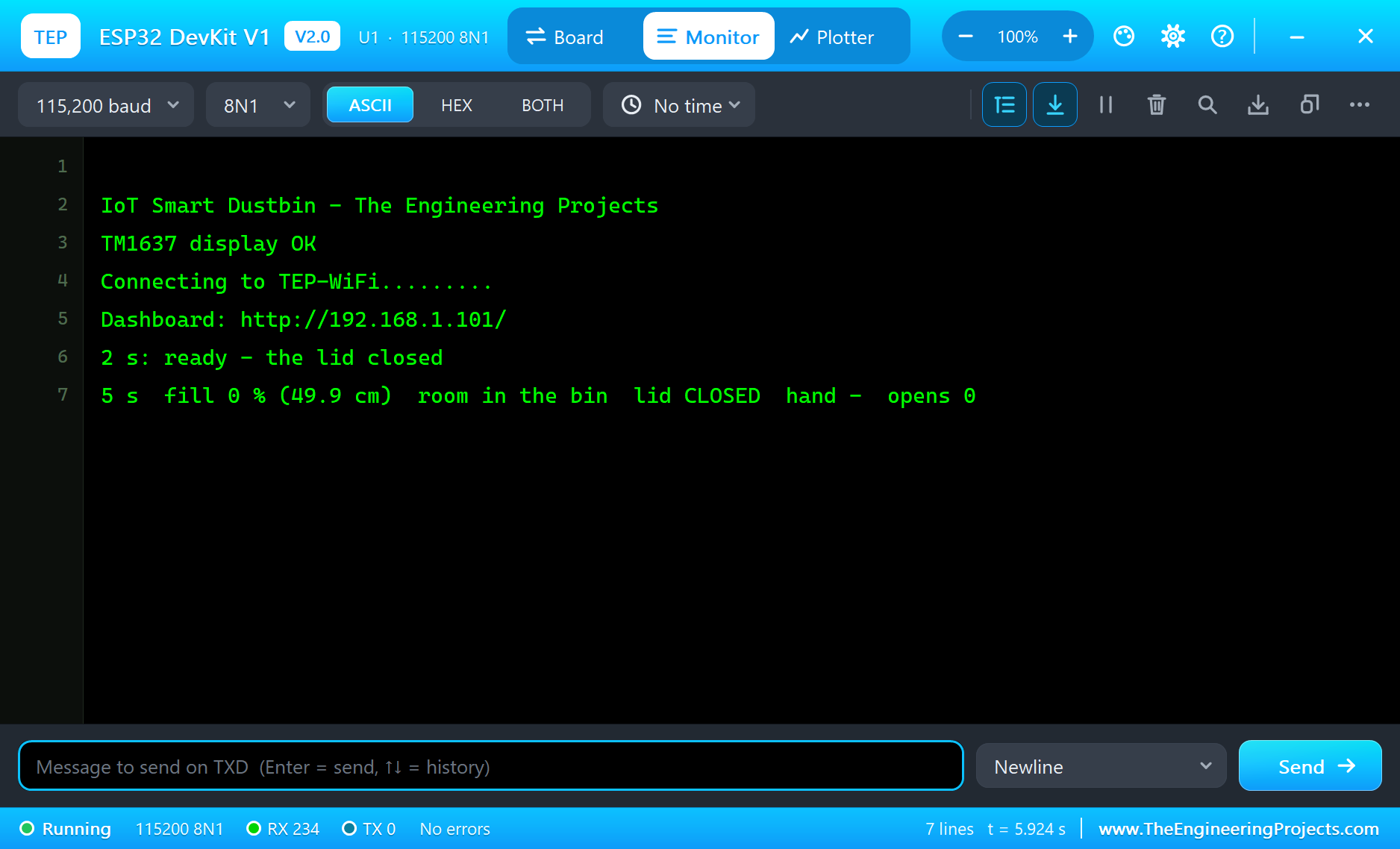
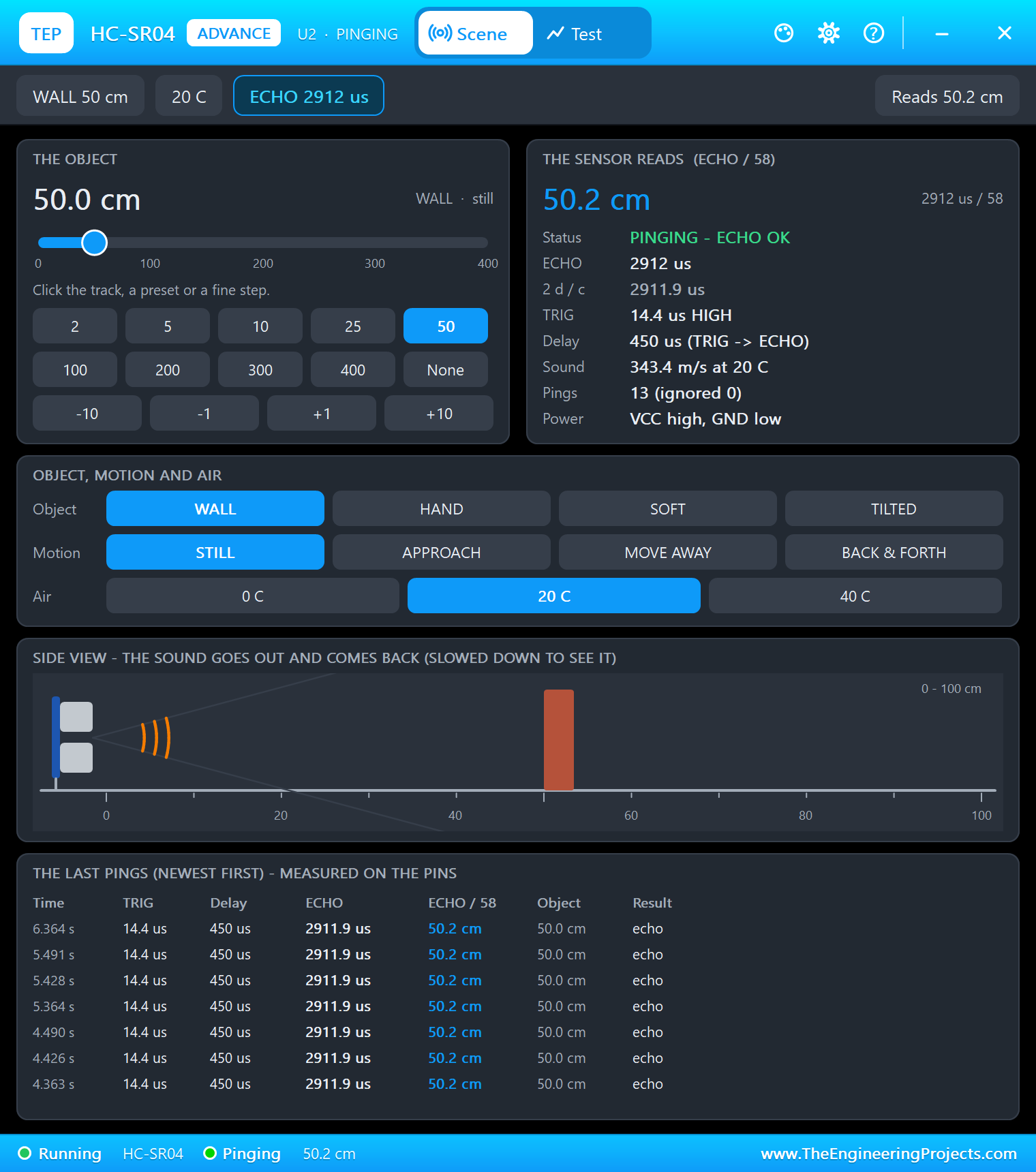
The circuit, the board and the results as they appear in IoT Smart Dustbin with ESP32 - Proteus Simulation. Open an image for its full size.
README
 README
===============================================================================================================
  IoT Smart Dustbin with ESP32 - Proteus Simulation Project V1.0
  The Engineering Projects - www.TheEngineeringProjects.com
===============================================================================================================

IMPORTANT LINKS
  The project tutorial (circuit, code, simulation results):
    https://www.theengineeringprojects.com/2026/11/iot-smart-dustbin-esp32-proteus-simulation.html
  The libraries this project is built from (each post has its own full download and tutorial):
    ESP32 DevKit V1 board (and the TEP Boards for Proteus Arduino add-on):
      https://www.theengineeringprojects.com/2026/10/esp32-devkit-v1-library-for-proteus-v2-0.html
    HC-SR04 ultrasonic sensor:
      https://www.theengineeringprojects.com/2026/10/ultrasonic-sensor-library-for-proteus-v2-0.html
    Sharp GP2Y0A21YK0F IR distance sensor:
      https://www.theengineeringprojects.com/2026/10/sharp-ir-distance-sensor-library-for-proteus-v1-0.html
    TM1637 4-digit 7-segment display:
      https://www.theengineeringprojects.com/2026/10/tm1637-7-segment-display-library-for-proteus-v1-0.html
    SG90 servo motor:
      https://www.theengineeringprojects.com/2026/10/sg90-servo-motor-library-for-proteus-v1-0.html
    5mm LED:
      https://www.theengineeringprojects.com/2026/11/5mm-led-library-for-proteus.html
    Resistor:
      https://www.theengineeringprojects.com/2026/11/resistor-library-for-proteus.html
    Laptop WiFi Monitor:
      https://www.theengineeringprojects.com/2026/10/laptop-wifi-monitor-library-for-proteus.html
    Mobile WiFi Monitor:
      https://www.theengineeringprojects.com/2026/10/mobile-wifi-monitor-library-for-proteus.html
  Support our free work: https://www.theengineeringprojects.com/donate

FILE STRUCTURE
ESP32-Smart-Dustbin-TEP-v1.0/
|-- Proteus Library Files/
|   |-- TEPESP32V1.LIB                                 36.6 KB   a part of the project -> LIBRARY folder
|   |-- TEPHCSR04.LIB                                 170.1 KB   a part of the project -> LIBRARY folder
|   |-- TEPLAPTOP.LIB                                  39.5 KB   a part of the project -> LIBRARY folder
|   |-- TEPLED5MM.LIB                                  21.8 KB   a part of the project -> LIBRARY folder
|   |-- TEPMOBILE.LIB                                  13.1 KB   a part of the project -> LIBRARY folder
|   |-- TEPRESISTOR.LIB                               306.9 KB   a part of the project -> LIBRARY folder
|   |-- TEPSG90.LIB                                    24.5 KB   a part of the project -> LIBRARY folder
|   |-- TEPSHARPIR.LIB                                 62.6 KB   a part of the project -> LIBRARY folder
|   |-- TEPTM1637.LIB                                  84.8 KB   a part of the project -> LIBRARY folder
|-- Proteus Model Files/
|   |-- TEPHCSR04.DLL                                 382.5 KB   a model -> MODELS folder
|   |-- TEPLED5MM.DLL                                 289.5 KB   a model -> MODELS folder
|   |-- TEPNET.DLL                                     2.89 MB   a model -> MODELS folder
|   |-- TEPRESISTOR.DLL                               311.0 KB   a model -> MODELS folder
|   |-- TEPSG90.DLL                                   294.5 KB   a model -> MODELS folder
|   |-- TEPSHARPIR.DLL                                325.0 KB   a model -> MODELS folder
|   |-- TEPTM1637.DLL                                 284.0 KB   a model -> MODELS folder
|-- Proteus Simulation/
|   |-- ESP32_Smart_Dustbin.hex                        77.4 KB   the firmware
|   |-- ESP32-Smart-Dustbin.pdsprj                     40.6 KB   the project simulation
|   |-- TEPHCSR04.DLL                                 382.5 KB   copy of the model
|   |-- TEPLED5MM.DLL                                 289.5 KB   copy of the model
|   |-- TEPNET.DLL                                     2.89 MB   copy of the model
|   |-- TEPRESISTOR.DLL                               311.0 KB   copy of the model
|   |-- TEPSG90.DLL                                   294.5 KB   copy of the model
|   |-- TEPSHARPIR.DLL                                325.0 KB   copy of the model
|   |-- TEPTM1637.DLL                                 284.0 KB   copy of the model
|-- Arduino Code/
|   |-- ESP32_Smart_Dustbin/ESP32_Smart_Dustbin.ino    13.2 KB   the sketch (source of the .hex)
|-- README.txt                                        ~10.9 KB   this file
Total: 10.35 MB (unzipped). The C++ source code of the models is not included.

WHAT IS IT?
  A touch-free dustbin you can run in Proteus: an ESP32 opens the lid when a hand comes near, measures how full the
  bin is, shows it on a 4-digit display and LEDs, and reports it to any laptop or phone on the Wi-Fi.
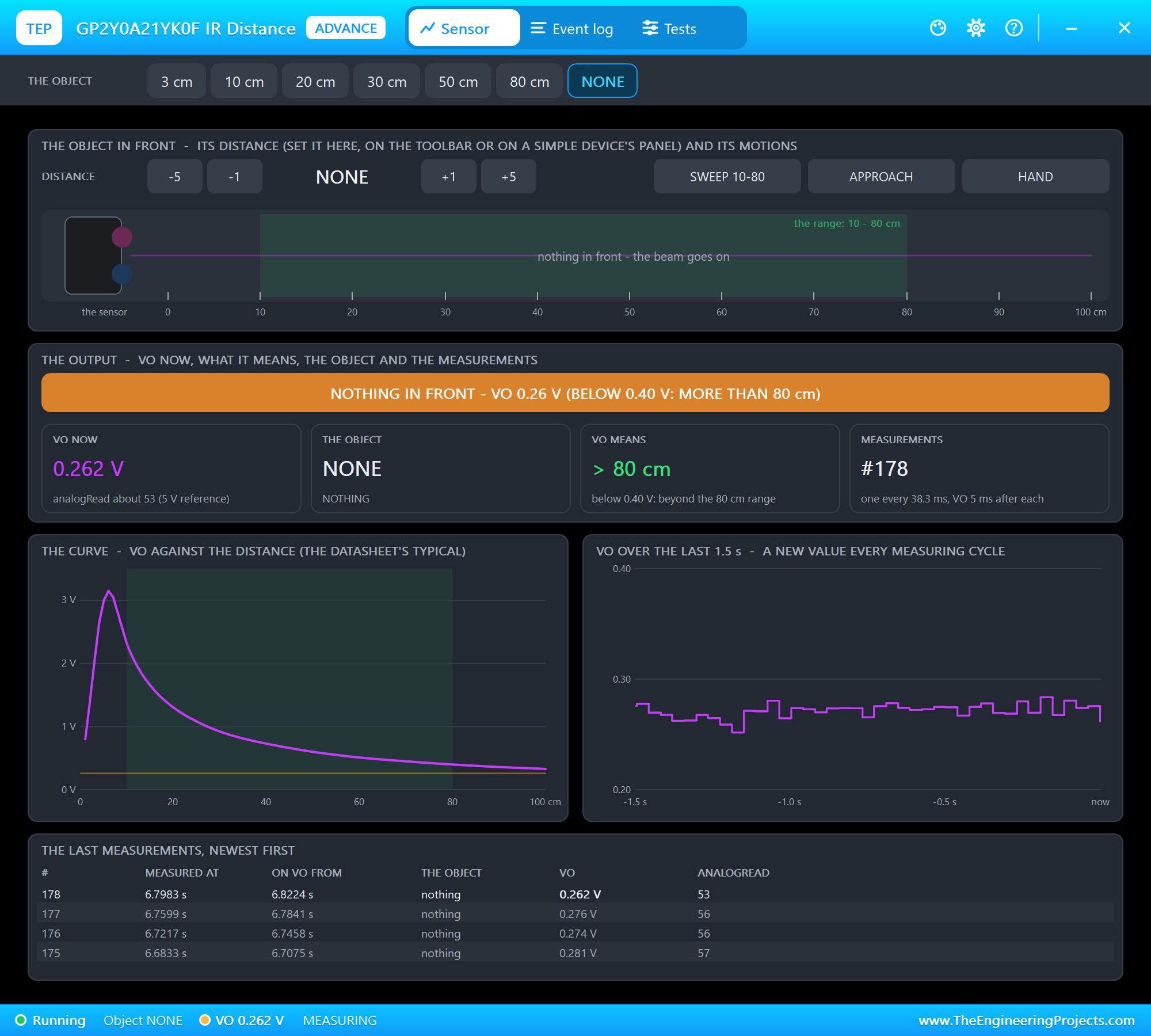
    * Sharp GP2Y0A21YK0F IR distance sensor (GP2Y0A21ADVTEP, U3) on the front of the lid, 5 V: VO on D34 (ADC).
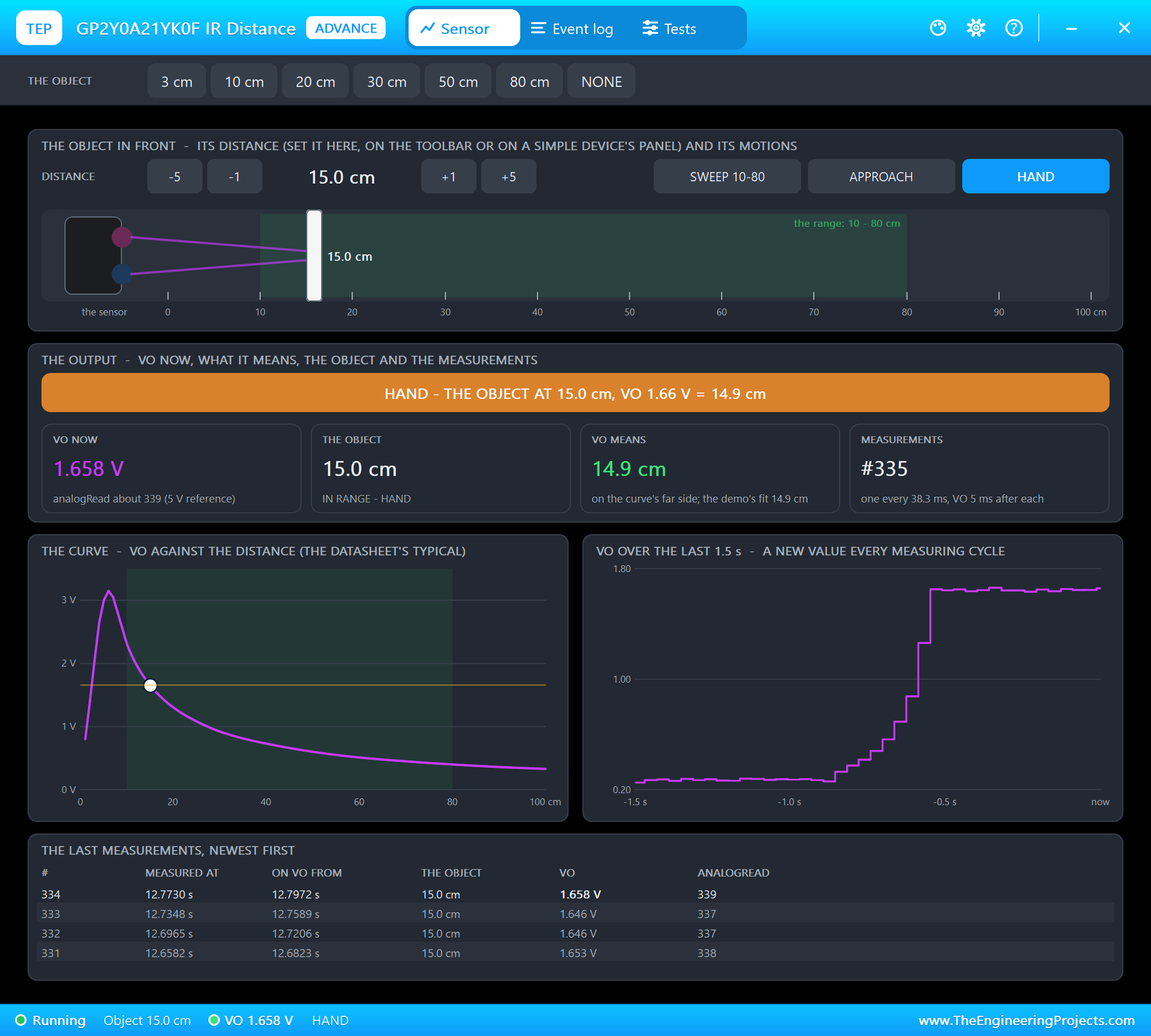
      A hand within 20 cm opens the lid. DISTANCE=0: nothing in front at the start.
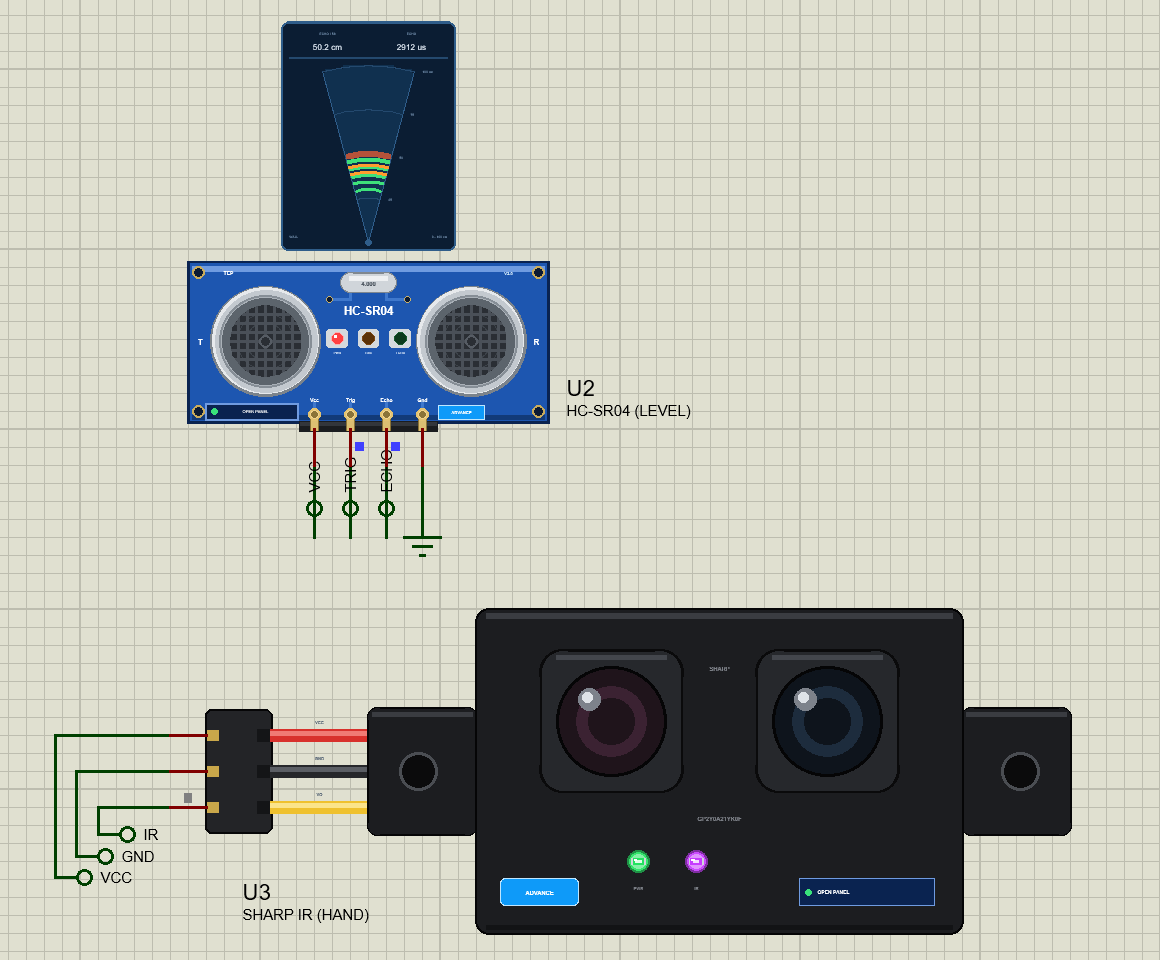
    * HC-SR04 ultrasonic sensor (HCSR04ADVTEP, U2) under the lid looking down, 5 V: TRIG on D5, ECHO on D18. The
      distance to the rubbish; the bin is 50 cm deep (0 %), 5 cm below the sensor is 100 %.
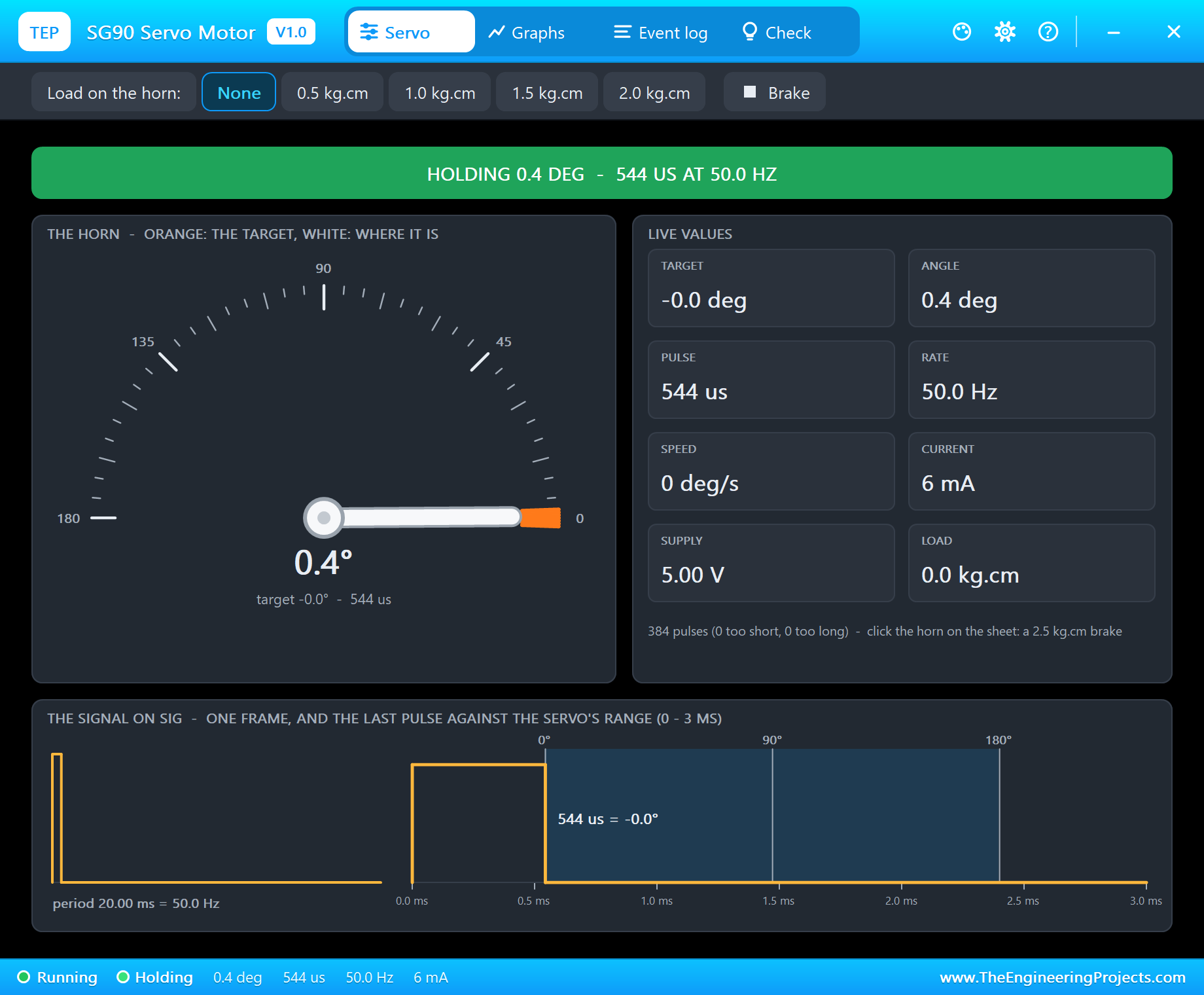
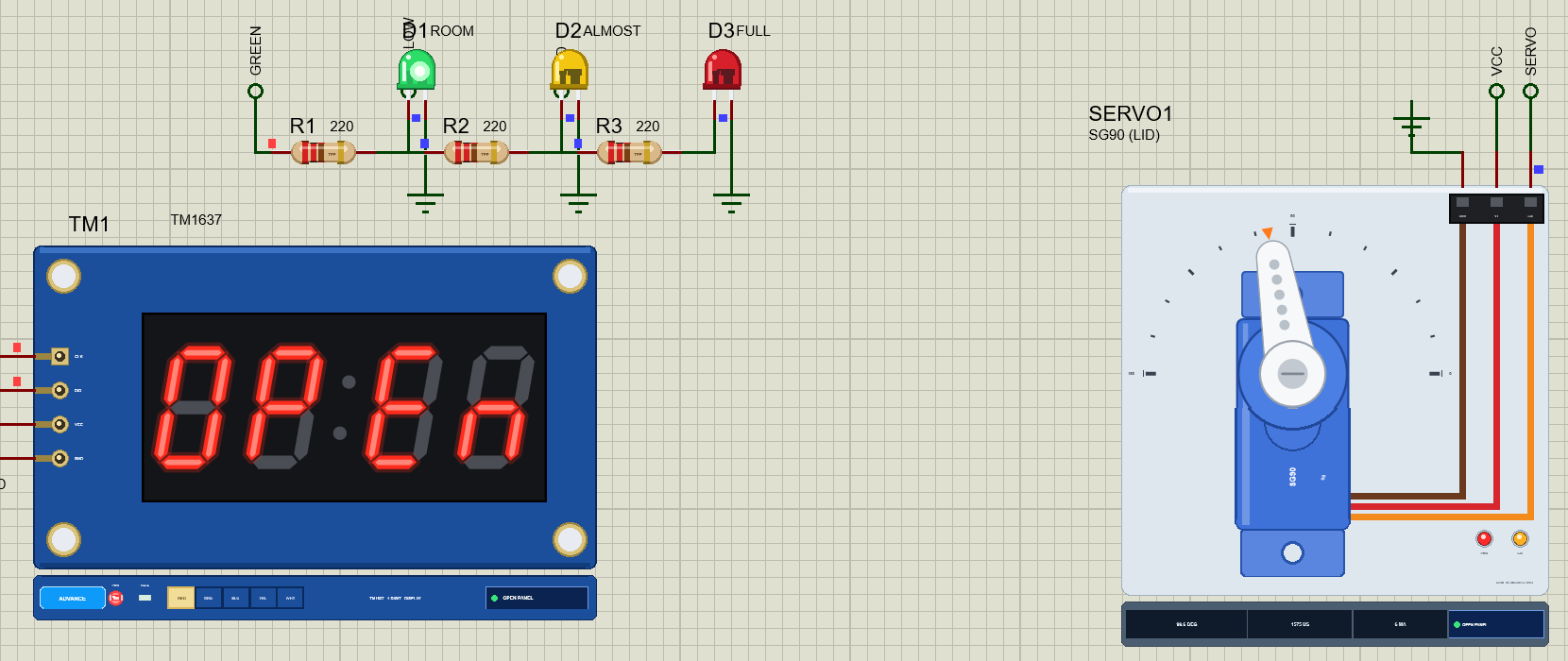
    * SG90 servo (SG90SERVOTEP, SERVO1), 5 V: SIG on D13 (50 Hz, 544 - 2400 us): the lid, 0 deg closed, 100 deg
      open.
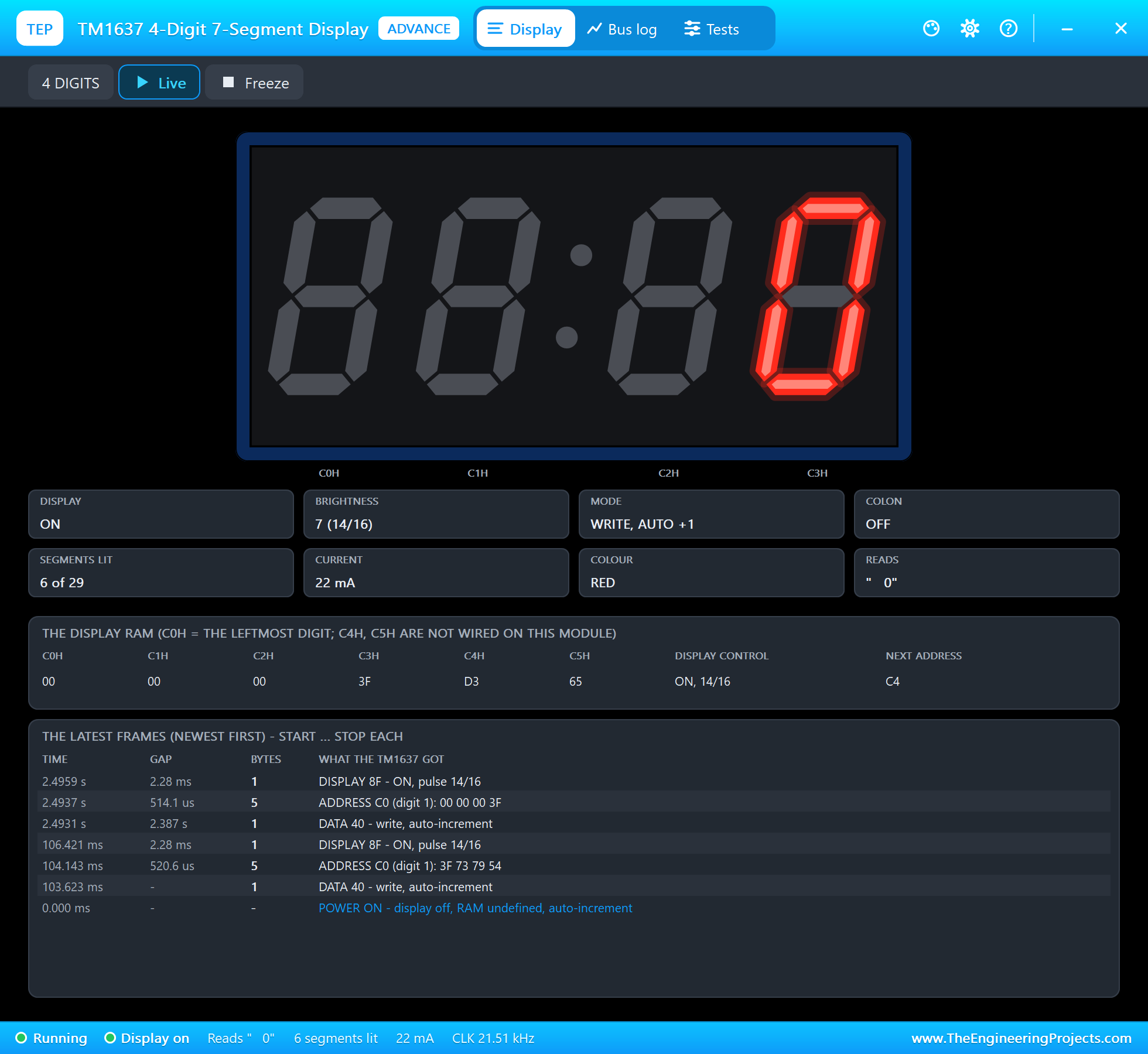
    * TM1637 4-digit display (TM1637ADVTEP, TM1), 3.3 V: CLK on D22, DIO on D21: the fill in %, OPEn while the lid is
      open, FULL when the bin is full. The sketch drives it with its own code (two wires, open drain).
    * LEDs (LED5MMGREENTEP / LED5MMYELLOWTEP / LED5MMREDTEP) on D25 / D26 / D27 through 220 ohm: room in the bin /
      almost full / full (the red LED flashes when a hand is refused).
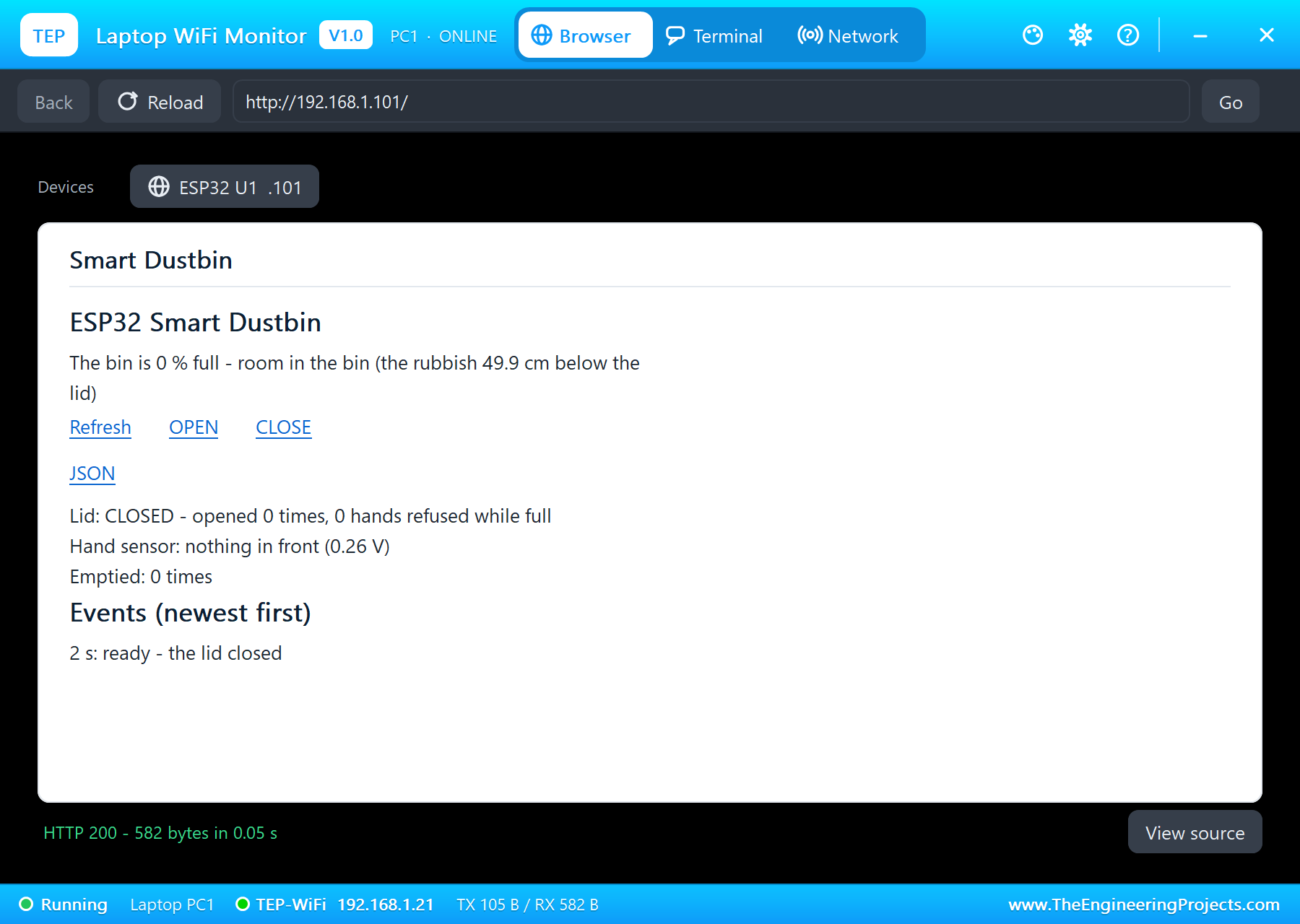
    * ESP32 DEVKIT V1 (U1) runs ESP32_Smart_Dustbin.hex on TEP-WiFi at 192.168.1.101; the dashboard is on port 80.
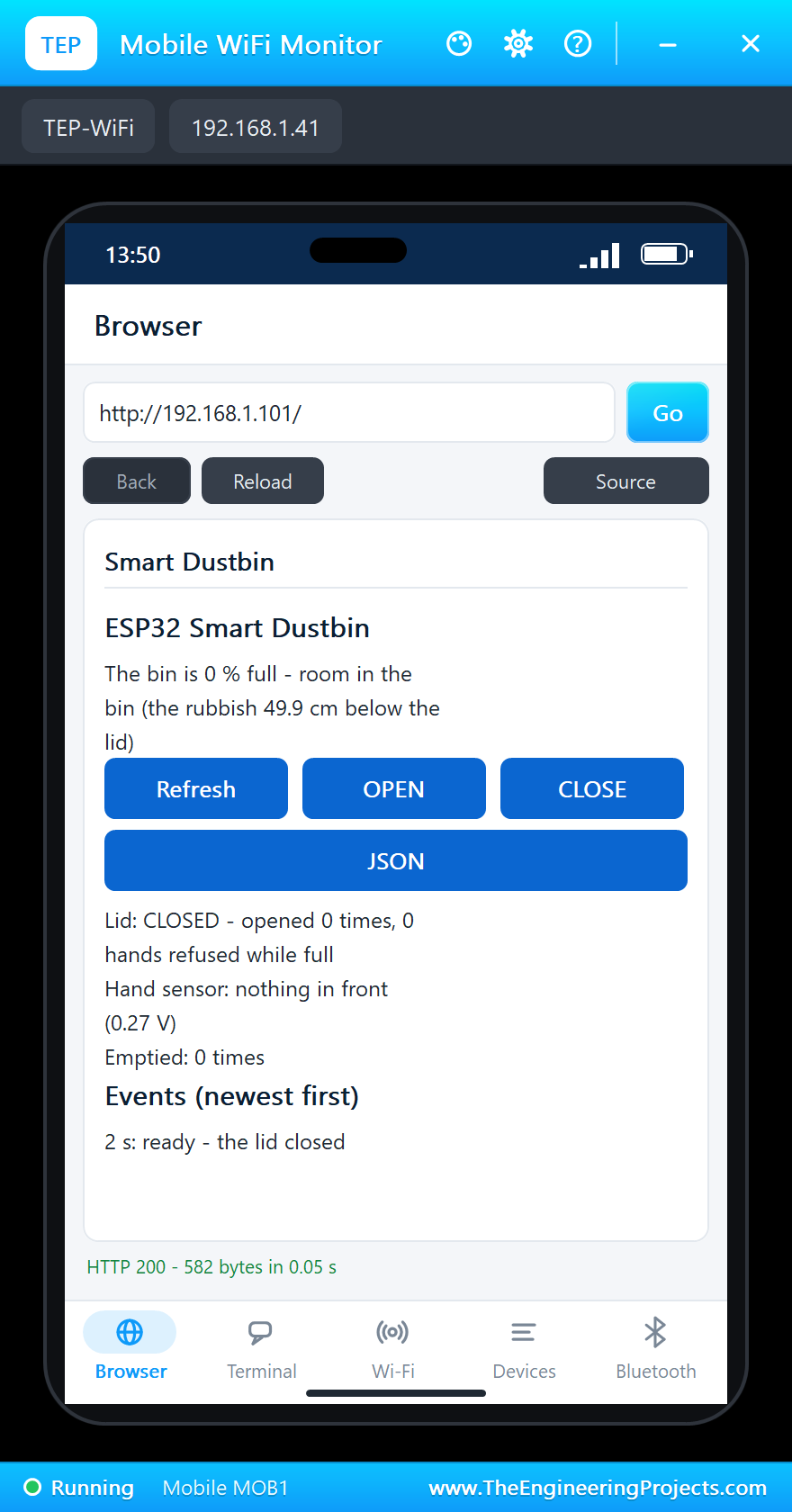
    * Laptop WiFi Monitor (PC1) and Mobile WiFi Monitor (MOB1) open http://192.168.1.101/.
  The 5 V parts and the board's VIN share the VCC net (the simulation's 5 V rail).
  The rules (at the top of the sketch):
    * a hand within 20 cm opens the lid; it closes 3 s after the hand has gone;
    * the level is measured only while the lid is closed and still (1.5 s after closing), the median of 3 pings;
    * almost full from 50 %, full from 85 % (each clears 5 % lower); a full bin keeps its lid closed;
    * a bin that was at least 50 % full and reads below 20 % has been emptied (counted).
  Its pages:
    /            the dashboard: the fill, the lid, the hand sensor, the counts, the events
    /open        open the lid for 15 s to empty the bin (also when full)
    /close       close the lid now
    /data        everything as JSON

TEST STATUS
  Tested in Proteus 8 Professional on Windows 11, the run that made the tutorial's screenshots (simulation times):
    * Start: "TM1637 display OK", "ready - the lid closed" at 2 s; the bin 0 % (49.9 cm; the HC-SR04's ECHO 2911.9 us).
    * HAND on the Sharp sensor (15 cm, VO 1.658 V): "lid OPEN (a hand at 15 cm)" at 12 s (the servo 1575 us = 100 deg,
      OPEn on the display); "lid CLOSED (the hand has gone)" at 16 s.
    * 25 cm on the HC-SR04 (ECHO 1455.9 us): "56 % full - ALMOST FULL" at 19 s (the display 00 00 6D 7D).
    * 10 cm: "89 % full - FULL - please empty it" at 23 s (FULL: 71 3E 38 38, the red LED).
    * HAND again: "a hand, but the bin is FULL - the lid stays closed" at 26 s.
    * OPEN from the laptop: "lid OPEN for emptying" at 30 s; 50 cm on the HC-SR04; CLOSE from the phone at 33 s;
      "the bin was emptied (89 % to 0 %) - collection 1" at 35 s.
  39 s of simulation took about 7 minutes on our PC with all the captures.

INSTALLATION
  1. Close Proteus. Extract the WHOLE zip file, for example to your Desktop.
  2. Copy the files from "Proteus Library Files" into the LIBRARY folder of Proteus, for example
     C:\Program Files (x86)\Labcenter Electronics\Proteus 8 Professional\LIBRARY
  3. Copy the files from "Proteus Model Files" into the MODELS folder (next to LIBRARY).
  4. Start Proteus. Press P in the schematic and search for ESP32 DEVKIT V1, HCSR04ADVTEP or GP2Y0A21ADVTEP to check
     that the parts are there.

RUN THE SIMULATION
  1. Open "Proteus Simulation\ESP32-Smart-Dustbin.pdsprj". Keep the .hex and .DLL files beside it.
  2. Press Play. The ESP32 joins TEP-WiFi; the display shows 0 (an empty bin) and the green LED is on.
  3. Open the Laptop WiFi Monitor (PC1) or the Mobile WiFi Monitor (MOB1) and press Go. Press Refresh to update it.
  4. In the Sharp sensor's pop-up (U3) press HAND: the lid opens, and closes 3 s after the hand has gone.
  5. In the HC-SR04's pop-up (U2) press 25 (cm): ALMOST FULL; 10: FULL. HAND again: the lid stays closed.
  6. OPEN on the page opens the lid to empty the bin; set U2 back to 50 and press CLOSE: the bin was emptied.
  Your own sketch: the source is in "Arduino Code". Install the TEP Boards for Proteus add-on from the ESP32 DevKit V1
  post and the ESP32Servo library from the Arduino Library Manager (for a real board); choose Tools > Board > ESP32
  DevKit V1 (TEP Proteus), export the compiled binary and set the board's PROGRAM property to the new .hex file. The
  same sketch runs on a real ESP32 Dev Module.

PROPERTIES USED IN THIS PROJECT
  U1 ESP32 DEVKIT V1          PROGRAM=ESP32_Smart_Dustbin.hex
  U2 HCSR04ADVTEP             (no changes: a WALL at 50 cm, 20 C)
  U3 GP2Y0A21ADVTEP           DISTANCE=0 (nothing in front)
  TM1 TM1637ADVTEP            (no changes)
  SERVO1 SG90SERVOTEP         (no changes: PULSE_MIN 544, PULSE_MAX 2400)
  PC1, MOB1                   HOMEPAGE=http://192.168.1.101/

TROUBLESHOOTING
  * The level never changes: the lid is open (the level is read only with the lid closed), or TRIG / ECHO are swapped.
  * The HC-SR04's pop-up says NO POWER: its VCC must be on the 5 V rail (VCC) and its GND on ground.
  * The lid opens by itself: something stands within 20 cm of the Sharp sensor - press NONE in its pop-up.
  * The lid never opens: the bin is FULL (empty it with OPEN on the page), or VO is not on D34.
  * The display stays dark: CLK and DIO are swapped, or the display has no 3.3 V.
  * "Connecting to TEP-WiFi......" never ends: the .hex file is missing beside the project, or TEPNET.DLL is not in
    MODELS. Copy the files again and restart Proteus.

LICENCES
  * The project, the sketch, the parts (LIB files) and the models (DLL files) are made by The Engineering Projects
    and are free for learning and for your own projects. The models use only standard Windows libraries.
    The C++ source code of the models is not included; the source code is not included for any model.
  * The .hex file is built from the sketch with TEP Boards for Proteus, the Arduino add-on in the ESP32 DevKit V1
    download (its licences are listed in that download); its ESP32Servo is the add-on's own (MIT). No third-party
    library is compiled into it.
  * Proteus is a product of Labcenter Electronics and is not included. ESP32 (Espressif Systems), Sharp and TM1637
    (Titan Micro Electronics) are names of their owners; this project is not made or endorsed by them.

VERSION
  V1.0 - the first release of the project.
===============================================================================================================Development1 release
 Development1 release
-
V1.0IoT Smart Dustbin with ESP32 - Proteus Simulation V1.0this page
V1.0 is the only release in the Download Center so far. When a newer version is published, it appears above with its own download page.
Installation8 steps
 Installation8 steps
From the download to a working project, in order. The steps follow what the package contains.
You will need
- Proteus Design SuiteProteus 8 or newer (Labcenter), on Windows
- Arduino IDE1.8 or 2.x, with the board of the tutorial chosen under Tools → Board
- Any archive toolWindows, macOS and Linux extract ZIP files on their own
Steps
- 1
Extract the archive
Right-click esp32-smart-dustbin-tep-v1-0-b7b6bfdda26f4dabba017f5b0ed69986.zip and choose Extract All (or open it with 7-Zip or WinRAR) into a folder you can find again. Keep its folder structure (ESP32-Smart-Dustbin-TEP-v1.0) as it is.
- 2
Copy the library files into Proteus
Move TEPESP32V1.LIB, TEPHCSR04.LIB and TEPLAPTOP.LIB and 6 more and the files into the LIBRARY folder of your Proteus installation: C:\Program Files (x86)\Labcenter Electronics\Proteus 8 Professional\LIBRARY for Proteus 8, or the matching Proteus 7 folder. Older versions keep it under ProgramData\Labcenter Electronics. If Proteus is open, close it first.
- 3
Add the simulation model
Copy TEPHCSR04.DLL, TEPLED5MM.DLL and TEPNET.DLL and 4 more into the MODELS folder next to LIBRARY, so the component can run, not only be drawn.
- 4
Restart Proteus and place the component
Start Proteus, open a schematic, press P (Pick Devices) and search for the component by the name used in the tutorial. It appears with its pins ready to wire.
- 5
Open the sketch in the Arduino IDE
Open ESP32_Smart_Dustbin.ino, select your board and port under Tools, then Verify. Sketch → Export Compiled Binary writes the HEX file a simulation needs.
- 6
Load the HEX file
In Proteus double-click the microcontroller, set Program File to ESP32_Smart_Dustbin.hex and run the simulation. For real hardware, flash the same file with your programmer.
- 7
Open the example simulation
Open ESP32-Smart-Dustbin.pdsprj in Proteus to see the wiring exactly as in the tutorial. Check the controller's Program File path, then press Play.
- 8
Follow the tutorial
IoT Smart Dustbin with ESP32 - Proteus Simulation explains every connection and setting in order; keep it open beside the files while you build.
FAQs9 questionsContact TEP
 FAQs9 questions
How do I download IoT Smart Dustbin with ESP32 - Proteus Simulation V1.0?
Wait for the 30-second guest countdown on this page, then press the download button; the file comes straight from our storage. Members who are logged in skip the wait. If the browser opens the file instead of saving it, use its Save as option. The download link is made for you when the countdown ends and works for 15 minutes; a saved or shared link stops working, so share this page instead.
What is inside the archive?
IoT Smart Dustbin with ESP32 - Proteus Simulation V1.0 comes as a ZIP archive of 27 files (4.7 MB, 10.4 MB unpacked) holding Proteus library files, simulation model DLLs, a Proteus simulation, an Arduino sketch and compiled HEX firmware. Open the File Structure tab for the full list of 27 files.
What should I do if the download does not start?
Check the browser's download list first; an ad blocker or a company firewall can also hold it back, so try another browser or network. If the file arrives incomplete, download it again. For an installation problem, read the Install tab or tell us in the comments with your software version and the exact error message.
Is this file free?
Yes. Every file in the TEP Download Center is free for learning, personal and student projects. If you share it, link back to this page or the tutorial so others find the latest version.
How do I check that the file arrived complete?
Compare its SHA-256 with the one on this page, c4f82e7c71b57f2d7f1d5da98ce5416e06573f5987b817af9ea97f0d013f2501. In PowerShell run Get-FileHash "esp32-smart-dustbin-tep-v1-0-b7b6bfdda26f4dabba017f5b0ed69986.zip"; on macOS or Linux run shasum -a 256 "esp32-smart-dustbin-tep-v1-0-b7b6bfdda26f4dabba017f5b0ed69986.zip". The same value means the file is exactly the one in our storage; a different one means the download broke off, so download it again.
Do I need WinRAR to open the ZIP file?
No. Windows, macOS and Linux open ZIP archives on their own (Extract All, or double-click). WinRAR and 7-Zip work too. Extract the whole archive before using the files.
Where do I put the LIB and IDX files?
Both files go into the LIBRARY folder of your Proteus installation (Proteus 8: C:\Program Files (x86)\Labcenter Electronics\Proteus 8 Professional\LIBRARY; Proteus 7 has the same folder under its own name). Restart Proteus afterwards and search for the component with P.
Which Proteus version does the library need?
The tutorial names the Proteus version the library was made and tested with. Most TEP libraries work in Proteus 7 and Proteus 8; if the component does not appear after a restart, check that both the LIB and the IDX file were copied and that Proteus was fully closed while copying.
How do I get the HEX file into the simulation?
Compile the sketch in the Arduino IDE (Sketch → Export Compiled Binary gives you the HEX next to the sketch), then in Proteus double-click the board, set Program File to that HEX and run.
Members skip the wait. Log in or join TEP.

- 0Total downloads
- 4%Popularity
- ProteusCategory
- 0Comments
- ssyedzainnasirUploaded by
- 13 Nov 2026Uploaded at


 SHA-256
c4f82e7c71b57f2d7f1d5da98ce5416e06573f5987b817af9ea97f0d013f2501


 Need help with this file?
 Tags
Related Proteus
All Proteus tutorials


More ESP32 project files
All ESP32 tutorials



Comments
0