


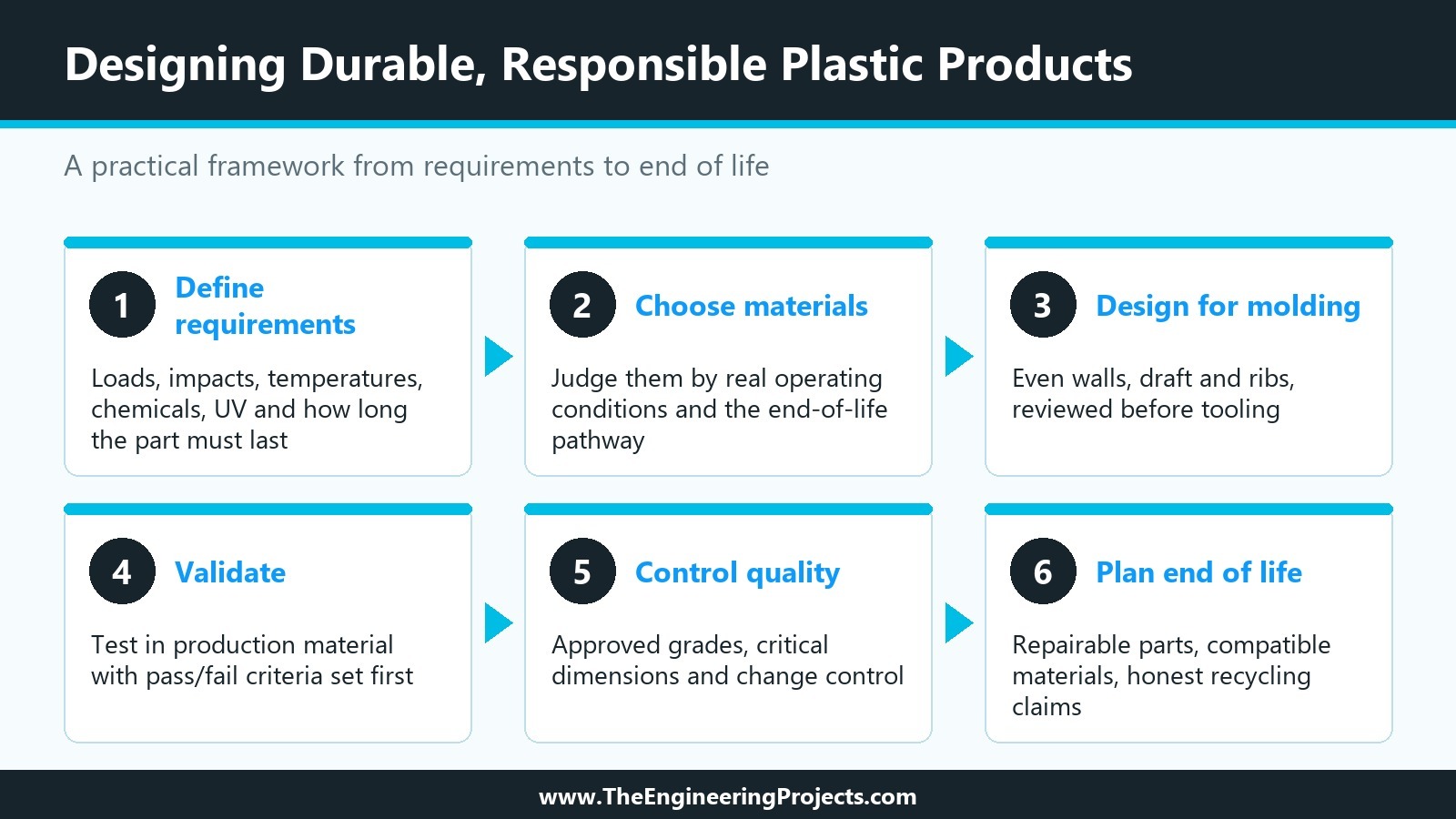
Designing Durable, Responsible Plastic Products


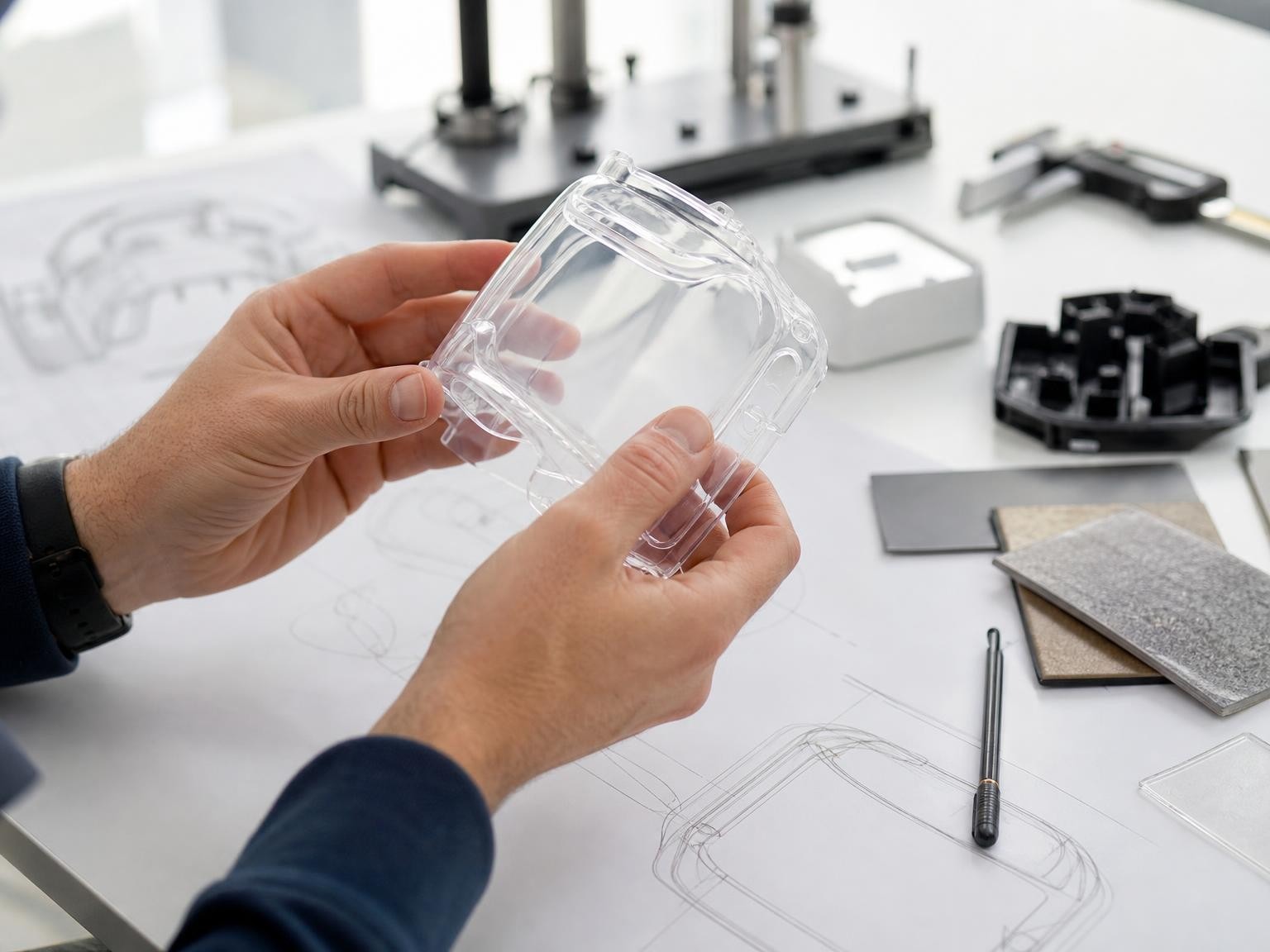
Why Plastic Product Design Requires More Than Appearance
A well-designed plastic product has to do more than look good sitting on a shelf. It needs to perform safely, hold up in its intended environment, go together efficiently on the assembly line, and eventually be disposed of or recovered without generating needless waste. Early in development, designers typically weigh several manufacturing routes, and custom plastic injection molding is one option that comes up often when a product calls for detailed, repeatable parts made at scale. The choice of process—much like the choice of material—should be driven by what the product actually needs, not by convenience or habit. Decisions made at the earliest design stages have a way of rippling forward, shaping reliability, production efficiency, repairability, and how much waste a product generates over its lifetime. This article lays out a practical framework: define requirements, select materials, design for production, validate performance, and plan for the product's eventual end of life.
Start With the Product's Real-World Requirements
Vague goals like "strong," "lightweight," or "weather-resistant" don't mean much until they're translated into measurable requirements. Designers should ask what loads, impacts, temperatures, chemicals, moisture, or UV exposure the product will realistically face, and how long it needs to hold up under those conditions. Will users wipe it down with solvents? Drop it? Take it apart for repairs? Leave it sitting outside? Some products also come with regulatory obligations tied to food contact, electrical safety, or medical use, and those need to be identified before any material gets chosen.
It helps to separate must-have performance criteria from preferences like color or surface texture. Material properties should be judged against the product's actual operating conditions rather than headline datasheet numbers, since many of those figures come from idealized lab conditions that rarely match real-world use. Taking the time to review supplier documentation, test methods, and operating ranges before committing to a material builds a sturdier foundation for everything that follows.
Choose Materials Based on Performance and Life-Cycle Needs
Plastics generally fall into a few broad categories: thermoplastics, which can usually be softened and reshaped with heat; thermosets, which form permanent chemical networks during curing; and reinforced or filled plastics, which can boost stiffness, strength, or dimensional stability. Each category comes with its own trade-offs—impact resistance, flexibility, heat tolerance, chemical resistance, moisture absorption, appearance, cost—and no single material wins on every front.
It's worth pointing out that recycled content, recyclability, and biodegradability are three distinct concepts and shouldn't be used interchangeably. Additives, coatings, labels, adhesives, and mixed materials can all quietly affect whether a product ends up being realistically recyclable down the road.
Material-selection checklist:
- Operating environment and exposure conditions
- Required mechanical and chemical performance
- Regulatory or compliance obligations
- Material availability and consistency
- Realistic end-of-life pathway
Design the Part for Reliable Manufacturing
Part geometry has a direct bearing on consistency, waste, and cost. Practical principles include keeping wall thickness consistent, adding draft for mold release, and using ribs or gussets to add stiffness rather than simply bulking up the walls. Designers also need to account for shrinkage, warpage, weld lines, sink marks, and trapped air, while steering clear of unnecessary undercuts or abrupt thickness transitions.
In injection molding, flow patterns, cooling rates, venting, and gate placement all shape both appearance and structural performance. A common real-world scenario involves a plastic housing that warps after molding because one wall section is noticeably thicker than its neighbors, leading to uneven cooling and residual stress. Problems like this are exactly why design for manufacturing review should happen before tooling or production commitments are locked in—not after defects start showing up on the production floor.
Validate the Design Before Scaling Production
A staged validation process—running from concept review through prototype evaluation, functional testing, environmental testing, pilot production, and final approval—helps catch problems while they're still cheap to fix. It's worth distinguishing between prototypes built simply to check form and fit and those built in final production material to test how the part actually performs.
Key takeaway: A design isn't validated just because a prototype looks right; it has to prove itself under the conditions it will actually face, including repeated use, drops, temperature swings, chemical exposure, or UV aging. Setting pass/fail criteria before testing begins, and keeping a record of revisions and failures along the way, cuts down on subjective decision-making later.
Design for Durability, Repair, and End of Life
The most sustainable product isn't automatically the one made from the lowest-impact material in isolation—service life, repairability, and maintenance all factor into the bigger picture. Trimming unnecessary material without compromising safety, designing components that can be swapped out, limiting permanent bonding where disassembly is practical, and avoiding incompatible material combinations all support better repairability and end-of-life outcomes.
Recyclability depends heavily on local collection, sorting, and processing systems—not simply on whether a material is technically recyclable somewhere in theory. Before making claims about packaging, colorants, closures, or additives, it's worth checking established recycling-design guidance from recognized standards organizations rather than leaning on marketing claims alone.
Manage Quality and Supply-Chain Risk
Material substitutions, recycled-content variation, and tooling changes can quietly shift dimensions and performance without anyone noticing right away. Documenting approved material grades, critical dimensions, tolerances, and inspection methods—paired with a clear change-control process—helps prevent unpleasant surprises. Even a seemingly minor resin substitution can alter shrinkage or stiffness enough to cause assembly headaches downstream. Risk-based inspection, rather than treating every characteristic as equally important, lets teams focus attention where defects are most likely to affect safety or function.
Common Mistakes to Avoid
- Choosing a material based only on price or a single strength value
- Designing a part without considering how it will be molded, assembled, or recycled
- Treating prototype results as proof of production readiness
- Ignoring environmental exposure and repeated-use conditions
- Making unsupported claims such as "eco-friendly" or "fully recyclable"
- Failing to document approved materials and process changes
- Assuming a recycling symbol guarantees local recyclability
A Practical Decision Framework
Good plastic product design follows a logical sequence: define use conditions and measurable requirements, let material selection be guided by performance and life-cycle criteria, shape geometry around the chosen production process, confirm performance through validation testing, document quality controls, and plan for durability and end-of-life handling from the outset. The strongest outcomes show up when engineering performance, manufacturing realities, user needs, and environmental considerations are weighed together rather than tackled in isolation. Before finalizing materials, tooling, or production quantities, it's worth putting together a clear requirements and validation plan—a modest step early on that often saves far costlier revisions later.

Comments
0