Welcome to chapter 8 of our python tutorial. In the previous chapter, we learned about Python numbers and how to use them in expressions. Throughout this chapter, you'll look at frequent examples of incorrect Python syntax and learn how to fix them.
At the end of this tutorial, you will:
Distinguish incorrect syntax in Python
Get familiar with SyntaxError tracebacks
Fix improper syntax or avoid it altogether
In Python, what is an invalid syntax?
Before transforming your Python code to Python byte code, the interpreter parses it. The parsing stage is where the interpreter searches for any instances of improper syntax in the program. Using the wrong syntax in your Python code will lead the interpreter to be unable to decipher it. The inter ...
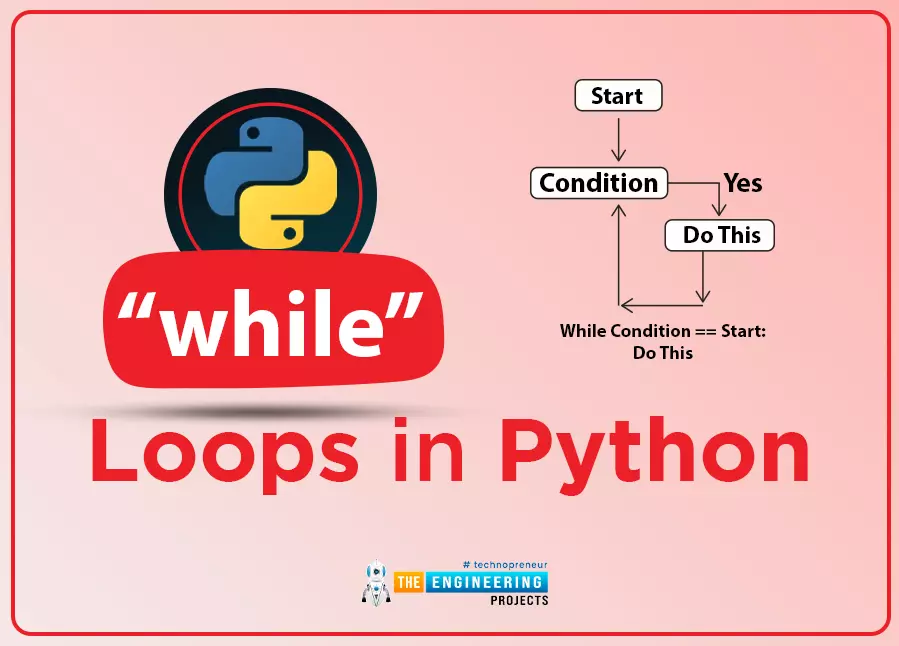
Welcome to the next lesson of our python programming class. In the last session, we looked at the use of If-else statements and created simple programs to demonstrate the concept. While loops are another type of conditional statement, and in this tutorial, we'll look at how they're used.
What will you learn?
In this article, you'll learn how to prematurely exit a while loop, a Python control structure for endless iteration. You will also learn how to write conditions in a single line to produce short and readable code.
Iteration in while loop
The term "iteration" refers to the practice of repeatedly running the same piece of code. A loop is a type of programming structure that implements iteration.
Bo ...
Hey pupils! Welcome to the new tutorial on deep learning, where we are in the section on Python learning. In the previous lecture, we were discussing the tuple data type, which is a sub-class of sequences. In the present lecture, the discussion will be about the byte sequence and byte array. The whole discussion is cleared with the help of practical implementation in TensorFlow by using simple and easy codes. If you understand the concepts of list and tuple, then this lecture will be easy for you. Yet, before going into the details of this topic, you must know the highlights of the content discussed in this lecture:
What is the byte method in Python?
How can you use byte in TensorFlow?
What are some examples of bytes?
Give examples of error handling in bytes.
How can you convert in ...
Hello friends, I hope you all are doing great. This is the 7th lesson of our Python tutorial. We were introduced to Python numbers in the previous chapter and learned how they are utilized with expressions, so we have a good understanding of math operations.
We'll go over a couple more arithmetic functions and complex numbers in this lesson. I will try my best to keep it simple. Let's get started!
Python round function
You can work with numbers in Python using a few built-in functions. Three of the most common will be discussed in this section:
Rounding to a specific number of decimal places can be done with round().
abs(), which returns a number's absolute value.
pow(), which raises a number to a ...
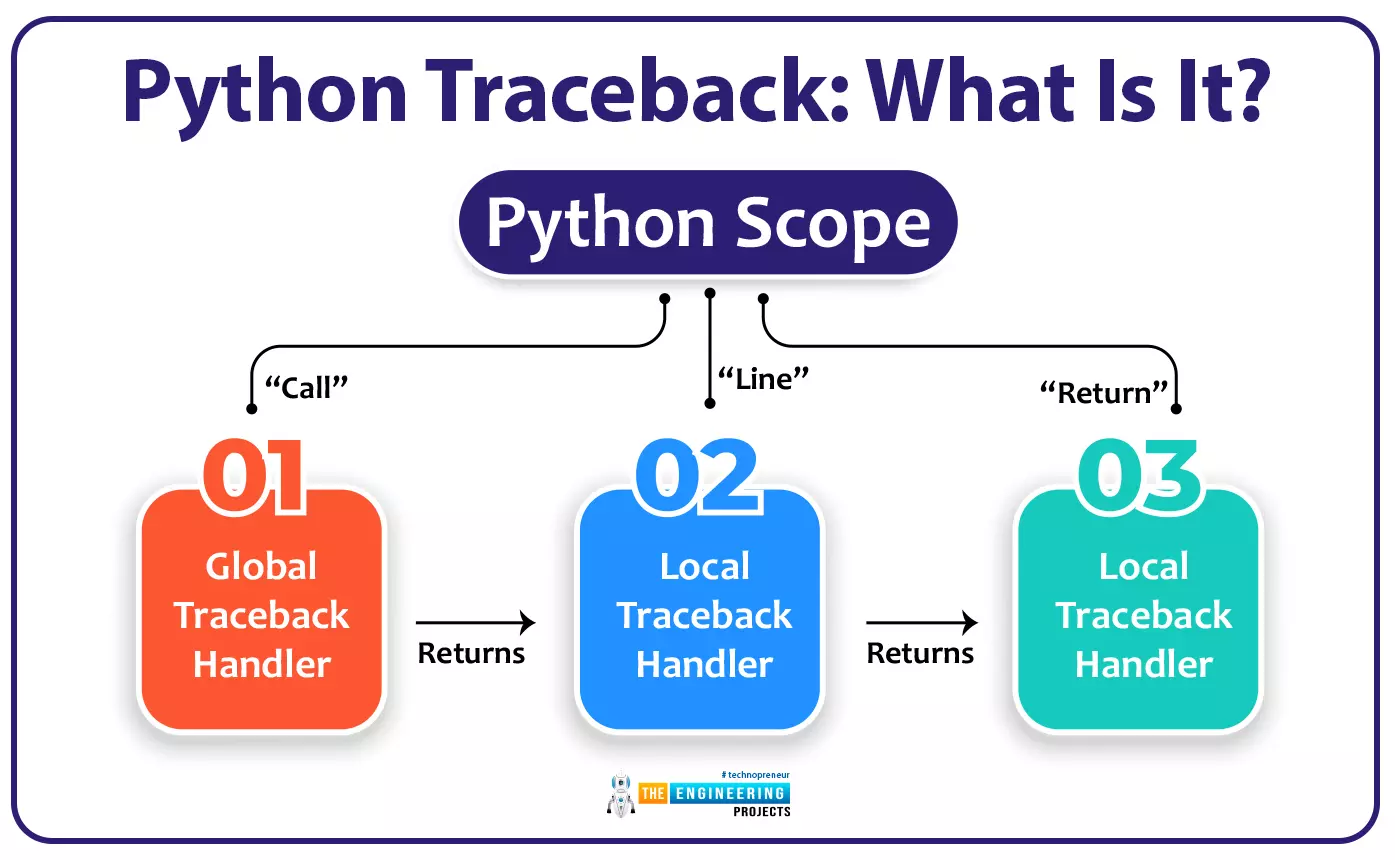
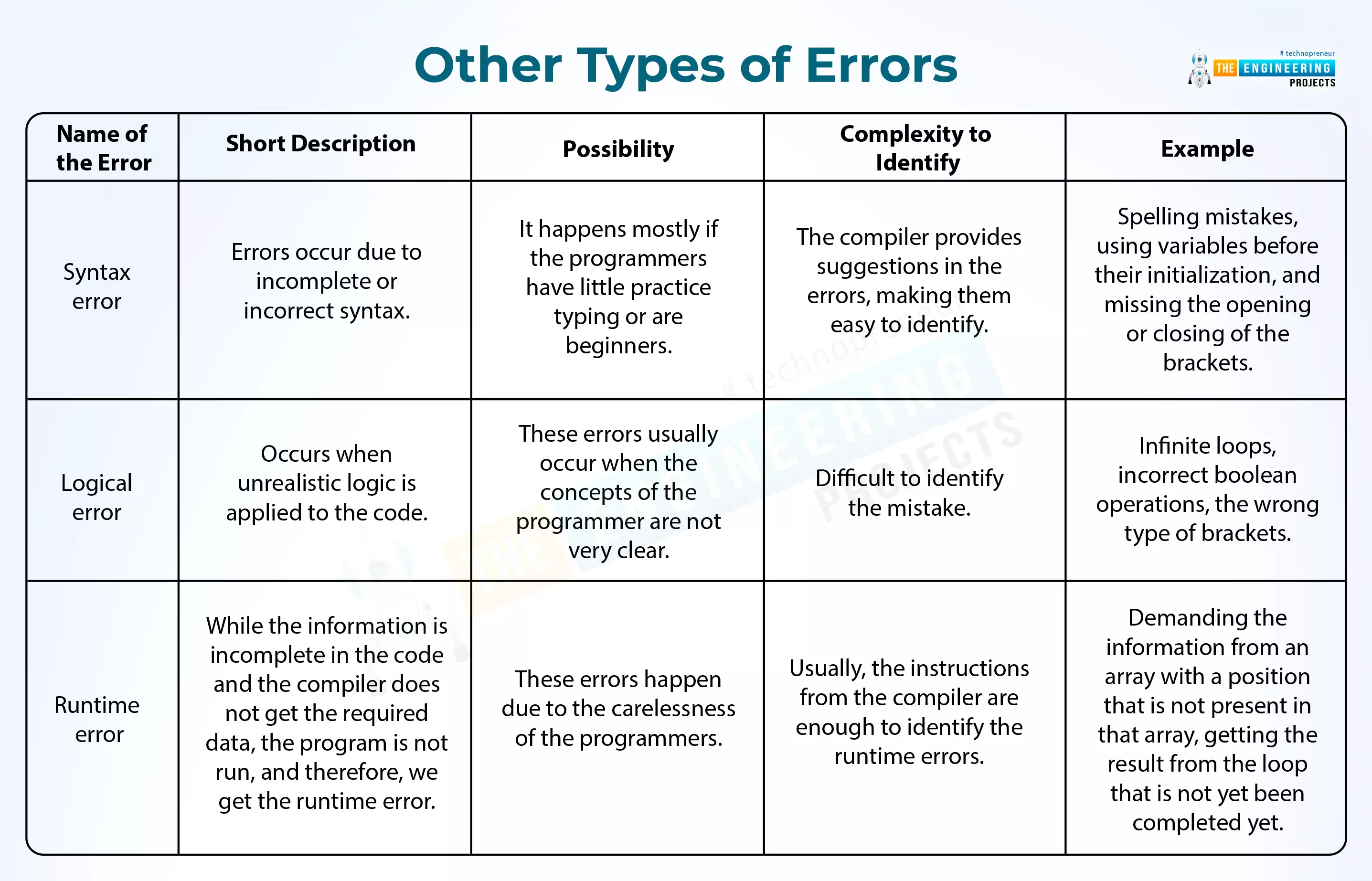
Welcome to the tenth lesson of our python course. In the previous tutorial, you learned about syntax errors in Python, and in this lesson, we will look at one more error notice that is given by Python when there is an error in your code. So, without further ado, let's get started.
Any time an exception is thrown in your code, Python shows you the stack trace. If you don't know what the traceback output is showing you, it can be a little overwhelming. Python's traceback, on the other hand, provides a goldmine of information that can assist you in figuring out why an exception was triggered in your code and fix it. It's essential to learn how to use Python traceback to become a better coder.
After completi ...
Greetings! I sincerely hope everything is going well for you all. In this course, we are going to learn step-by-step how to program in Python. The course covers all you need to know about the Python language, from installation to advanced topics. In addition, we'll talk about Python career jobs and do a few projects to strengthen your skills. According to my research, Python is among the top programming languages in use today. (I mean, no offense). Since I am also a Python programmer, I may sound a little prejudiced, but I can certainly declare that I am a huge fan of the language. This tutorial series is meant for absolute beginners with no prior knowledge of python programming, it is also of great help for experienced python programmers looking to brush up on their knowledge. Anyway, le ...
Hello friends, I hope you all are doing great. In today's tutorial, we will have a look at How to use String in Python. It's our 3rd tutorial in Python series. We have discussed strings in our previous lecture How to use Data Types in Python.
String is a most commonly used data type in python that's why I have created a separate lecture on it. Python has many built-in string operations, which we will discuss today in detail. So, let's get started with String in Python:
How to use String in Python
String Data Type is used to store or collect one or more characters or sequence of characters, we can place any alphanumerical or special character in a string.
Let's create a string in python, it has a simple syntax, as shown below:
first_var = "He ...
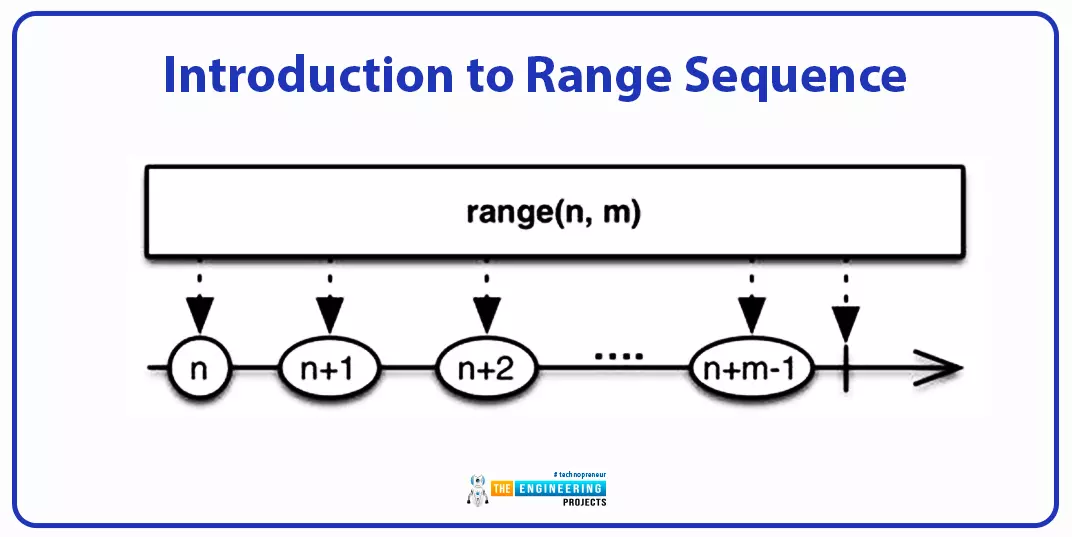
Hey peeps! Welcome to the new lecture on the sequence data type, where we are discussing the range data type. We are interested in working on deep learning, and for this, we are learning the Python programming language from scratch. If we talk about the previous episode, we saw the byte and byte array methods that were amazing for converting the different data types into bytes. The current lecture will discuss the range data type, which is slightly different from the other types of sequences, so students will learn new and interesting concepts in the lecture; however, before we get into the details of our topic, take a look at today's highlights:
What is the range function?
How can you elaborate on the syntax of the range function in detail?
What are the three types of range functions ...
Hey learners! Welcome to another deep learning tutorial, in which we are beginning the practical implementation of Python on the TensorFlow library. We installed and checked TensorFlow in detail while we were in the previous lecture, and today we are going to use it for our practice. We have checked the presence of a perfectly installed library of TensorFlow in our tutorials and seen the basic structure of this library. As a result, we will skip the details and jump right into learning Python. In this tutorial, the main focus will be on Python instead of learning the workings of TensorFlow. You have to remember one thing: all the discussion will be from the point of view of deep learning, and it is not a general tutorial in which you will learn to develop apps or have a discussion about th ...
Hey learners! Welcome to the following lecture on Python, where all the examples are practically explained with the help of the Jupyter notebook. We have been working with the data types for a long time, and now we know all the basics about them. There are certain concepts that are applicable to almost all sequences, but there are some rules for performing this function. Python has many concepts that are unique and simple, and if we talk about the slicing of the data type, other high-level languages such as C++ have the same concept, but Python gives the easiest way to do so. How we will work on different data types to check whether they support the slicing or not. In this way, we can revise the concept that we have been working on so far. Nevertheless, before that, you have to check the l ...