Hello Folks! Hope you’re well today. Happy to see you around. In this post today, I’ll walk you through the Introduction to IRF2807.
The IRF2807 is an N-channel MOSFET made up using advanced process technology to obtain extremely low on-resistance. This device is fully avalanche and is mainly used in fast switching applications. It comes in TO-package which is universally accepted for commercial-industrial applications.
I suggest you buckle up as I’ll detail the complete Introduction to IRF2807 covering datasheet, pinout, features, and applications.
Let’s dive in.
Introduction to IRF2807
The IRF2807 is an N-channel MOSFET that comes with a power dissipation of around 200W.
This device is mainly used for fast switching applications and low thermal resistance and low packag ...
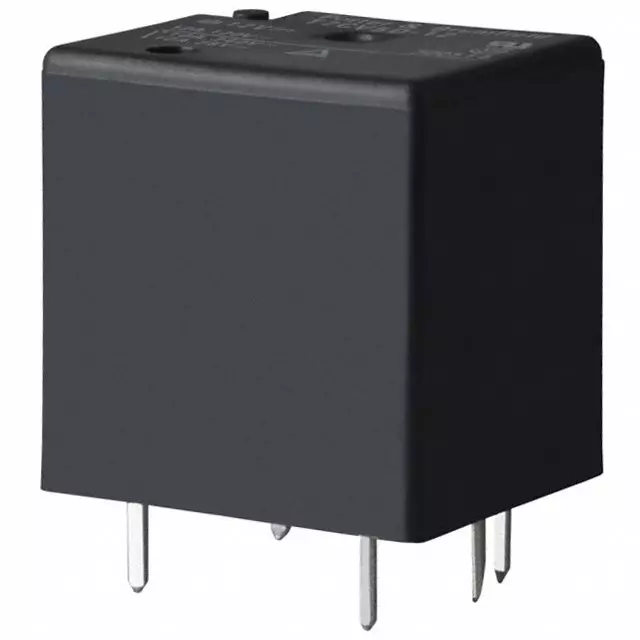
Hello friends, I hope you all are doing great. In today's tutorial, I am going to explain the Relay Interfacing with Microcontroller using ULN2003A. In the previous lecture, we have discussed the detailed Introduction to Relay along with its working. Now we are going to practically interface the relay with a microcontroller to design an automatic switch. Relay is a key component in almost every electronic circuit. It can be
used as a switch and can also be used as a voltage regulator.The microcontroller I am going to use here is PIC18F4552 but you can use any other Microcontroller. You just need to change the syntax of coding but the logic will remain the same. Here, I am using ULN2003A to control the relay and from this relay, we can control anything.So, let's get started:
Relay Inte ...
Hello Geeks, I hope you all are doing great and enjoying your festive seasons. This time, we have come up with a new project which will make your festival a bit brighter so here comes a Christmas tree.
It is said that Christmas is the center of all the celebrations. Did you guys know the scientist who discovered the light bulb, Thomas Edison and his friends were the first to put up the light bulbs on the Christmas tree, and here we are going to keep that tradition forward? Well, it’s time to gear up for the next season of Christmas being tech-savvy. Hence we have decided to brighten up a Christmas tree with the usage of Arduino Uno and LEDs in real life.
Software to Install:
To make our festival a little safer, we will first make our Christmas tree in the simulation and for that, we will ...
Hey Guys! Hope you are doing great. I always try to fill your appetite with relevant information you can excel and grow in your field. Today, I am going to unlock the details on the Introduction to 2n2907. It is basically a PNP bipolar junction transistor (BJT) which is mainly designed for switching and low power general purpose amplification applications. It has an ability to operate at very high speed and moderate temperature. I'll try to cover every aspect related to this transistor, so you don't have to go anywhere else for finding the information regarding this transistor. You can also check Introduction to 2n2222 which is complementary NPN transistor of this PNP transistor. Let's hop on the board and explore what it does and what are its mai ...
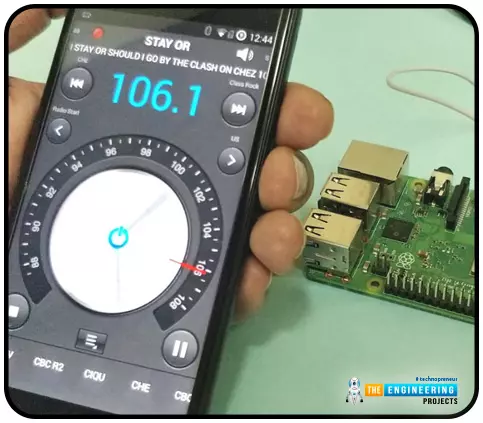
Throughout our lives, we've relied on Radio and tv stations to keep us engaged. While we're on the subject of contradictions, it's also fair to say that these Stations can become tedious at times due to the RJ rambling on about nothing or annoying advertisements, and this may have left you wondering why you can't own a Radio station to broadcast your data over short distances.
Almost any electronics technician uses coils and other hardware to make an FM transmitter, although the tuning process is time-consuming and difficult. Setting up your FM station and going live in your neighborhood shouldn't take more than 30 minutes using an RPi. If you use the right antenna, you must be able to transmit to your school or community within 50 meters. Wow, th ...
Hey Fellas! I always come with unique topics to whet your appetite with valuable information so you can excel in your relevant field. Today, I am going to unlock the details on the Introduction to 2n2646. It is a uni-junction transistor which is mainly used in thyristor triggering circuits, sensing circuits, and pulse and timing circuits. It features low peak point current of about 5µA, and low emitter reverse current of 0.005µA and passivated surface for uniformity. Let's dive in the details of this transistor and explore what it does and what are its main applications? Let's get started.
Introduction to 2n2646
2n2646 is a three terminal semiconductor device that contains only one junction that behaves like an electrically controlled switch.
...
Hello friends! I hope you all will be absolutely fine and having fun. Today, I am going to share my knowledge with all of you about how to make a simple program for DC Motor Direction Control in LabVIEW. In my previous tutorials, I have also worked on DC Motor Direction Control using Arduino. You should go through these tutorials they will be helpful in better understanding of the tutorial DC Motor Direction control using NI LabVIEW. The word DC is basically an abbreviation of Direct current. So, a direct current motor is commonly used motor having two input terminals, one is positive and the other one is negative. If we connect these terminals with the voltage supply the motor will rotate. If you change the polarity then motor will rotate in oppo ...
Hello everyone, I hope you all are fine and having fun with your lives. In today's tutorial, I am going to share How to do Arduino Serial Communication in detail. Recently, I have shared a lot of tutorial on Arduino Serial Communication which contains everything you need for Arduino Serial Communication. So, in today's tutorial, I am actually gonna combine them all and give you a whole picture of How you can easily do the Arduino Serial Communication. I hope you guys are gonna enjoy this. You should also have a look at DC Motor Speed Control using Arduino in which I have controlled the DC Motor via Arduino Serial Communication.
I will also share some more tutorials on Arduino Serial Communication in the near future so I will also add their links i ...
Hi Friends! Hope you’re well today. I welcome you on board. In this post today, I’ll describe the Introduction to 74LS74.
74LS74A flip-flop IC carries the Schottky TTL circuitry to generate high-speed D-type flip-flops. Every flip-flop in this chip comes with individual inputs, and also complementary Q and Q`(bar) outputs.
Flip-Flops are normally considered as the basic building blocks of modern digital electronics. These flip-flops are used to store the binary data where stored data can be varied by applying the different inputs.
I suggest you buckle up as in this post I’ll walk you through the complete introduction to 74LS74 covering datasheet, pinout, features, and applications.
Let’s get started.
Introduction to 74LS74
74LS74A flip-flop ...
Hey Guys! Welcome you onboard. Today, I'll discuss the details on the Introduction to IRF4905. It is a P-Channel HEXFET Power MOSFET available in a TO-220AB package and is based on Advanced Process Technology. It is mainly used for fast switching purpose, capable of providing ultra-low on-resistance.
This tiny device comes with three terminals called gate, drain and source where the gate terminal is used to control the current on remaining two terminals. The area between source and drain is known as a channel that is widely dependent on the voltage applied to the gate terminal.
In this post, I'll cover each and everything related to this P channel MOSFET, its main features, working, pinout and applications. Let's jump right in and explore everyt ...