Hi readers! Wishing you the best day. Where the power and precision meet in PCB designing, Electrostatic Spraying Technology comes in as the savior of thick copper boards. Today, the topic of our discourse is Electrostatic Spraying Technology (EST) and its use in thick-copper PCBs.
The Electrostatic Spraying Technology (EST) is an enhanced coating technique that has become a necessity in the production of thick copper PCBs, whereby the copper layers are much thicker than normal ones to support high current and heat dissipation. Conventional processes such as screen printing or curtain coating cannot be reliably used to cover the tall copper traces and deep grooves of such boards and expose sidewalls to shorts, corrosion, and dielectric breakdown.
In EST, solder mask or epoxy is atomized ...
Hello friends, Hope you are doing good and having fun. I am here with another article on the blockchain. Previously, we have discussed the blockchain, some of its concepts, and its characteristics, and today I will talk about transactions. We would also explore the concept of gas in this tutorial. So let’s start by defining a transaction.
What is Ethereum Transaction?
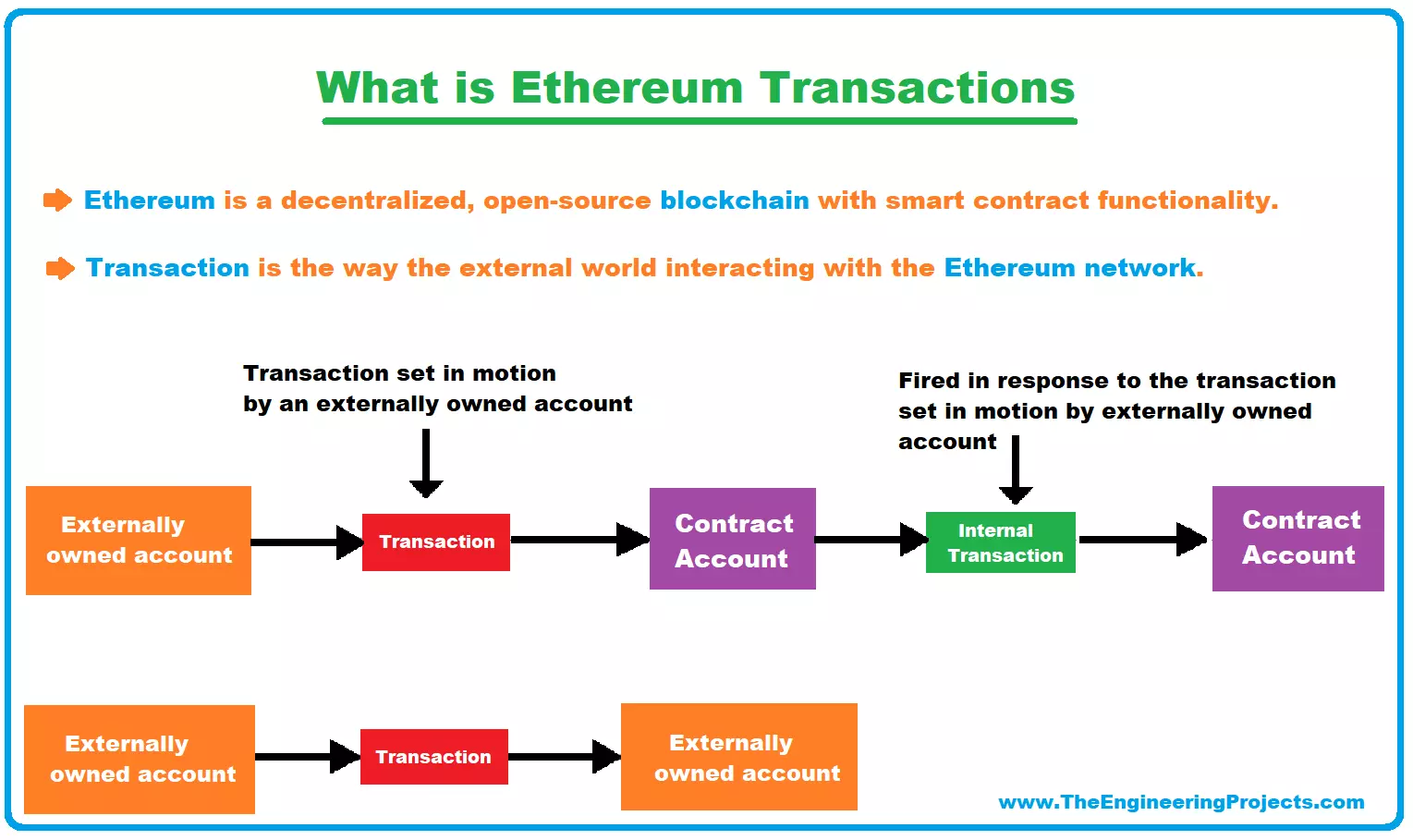
A transaction is a message signed by an account owner that is added to a block and recorded in the blockchain.
A transaction is initiated by an externally owned account and then it gets transmitted to the Ethereum network.
It can be originated only by an externally owned account (an account owned by a human) and not by a contract account.
Through transactions, one can inter ...
Hello Friends! Hope you’re well today. I welcome you on board. In this post today, I’ll be discussing the Introduction to 1n5408.
The 1n5408 is a component where current flows in one direction only. It comes with two pins named anode and cathode. The Anode side is positive from where the current enters the diode and the cathode is negative from where the current leaves the diode. The colored band side is the indication that the side is the cathode and the other side without the colored band is the anode of the diode.
Just stay with me for a little while as I’ll walk you through the 1n5408 power diode pinout, datasheet, features, equivalents, and applications.
Let’s get started.
Introduction to 1N5408
The 1n5408 is a power diode where current ...
Hello friends, I hope you all are happy, healthy and content! Today, we will be discussing the types of embedded systems. But, Before jumping to the types of embedded systems, let's first revise what is an Embedded System? I hope you have a clear idea about the embedded systems, if not, there is always a solution!
Definition of an embedded system
"An embedded system is a unique combination of computer hardware and a software designed for performing a specific function or set of functions from a certain input"
For a detailed overview of the embedded system and its components, you can refer to the complete article on our website about embedded systems.
Types of Embedded Systems
Presuming that you are well aware of the embedded systems and its compon ...
Hello friends, welcome back to our tutorials on PLC ladder logic programming. Today we will talk about batch process control and take one project from our factory to understand, implement, and simulate. So without any further delay, let’s jump into the tutorial by asking what is batch process is if it is different from other online processes. Well! The batch process is defined as a process that starts by operating continuously till the end of the cycle without any interaction with the users. For you guys, it’s cool to know that most of the processes you might meet in the industry of batch-type processing. Do you like me to give an example? Well! The Silo cement process is a batch process, and food and beverages manufacturing are also good examples of batch processes. So what do we have tod ...
Hello friends, I hope you all are doing great. In today's tutorial, we are gonna have a look at detailed Introduction to 2sa1943. The 2sa1943 is a high power consuming PNP transistor, firstly it was created by a famous company Toshiba. As it has a high gain of current and consumes higher current at collector it is mostly used for such audio circuits which consume higher power or in AF amplifiers.
Nonetheless, currently the Transistor is outright from Toshiba and it has been swapped with TTA1943. We can also found old 2sa1943 in marketplaces because still it is replicated by other assemblers in China. In today’s post, we will have a look at its fortification, wreckages, implication, proposals, etc. I will also share some links where I have connecte ...
Hi Friends! I welcome you on board. Thank you for clicking this read. In this post today, I’ll detail the Introduction to IRF740.The IRF740 is an N-channel power MOSFET used for extremely fast switching applications. It comes with a power dissipation of around 125W and can support loads up to 400V. The maximum drain current of this device is 10A and the drain-source capacitance is 1450pF.
I suggest you read this post till the end as I’ll describe the complete Introduction to IRF740 covering datasheet, pinout, features, and applications.
Introduction to IRF740
The IRF740 is an N-channel MOSFET that comes with 125W power dissipation. This is the power device that dissipates during the working of this component.
This device is mainly used for fast switching applications and comes ...
Hello friends, hope you all are fine and having fun with your lives. Today, I am going to share on How to measure Frequency using Arduino board. Its quite a simple tutorial but is an essential one especially when you are working on some power related project. Because in Power projects, you have to measure the frequency of AC voltages. I was working on a project in which I have to do dimming of AC Lamp so in that project I have to measure the frequency of AC signal.
I have designed this project using Arduino UNO and have simulated in the Proteus software, which you all know is my favorite simulating software. :) The code is also quite simple which I have given below for download. The simulation is also included in download package but again I sugge ...
Y-type strainers are devices used to separate unwanted solid particles from gas, liquid or steam flowing in a pipe. They derive their name from their shape. The Y-type strainer is commonly applied in pressurized fluid lines as well as in vacuums and suction conditions. It is used where small solid particles are expected within the fluid and there is a less frequent clean out. They make use of a filtering element, which is basically a perforated wire mesh. In instances where the material to be cleaned out from the flow is small, hence a long duration before screen cleaning, the line is shut down and the strainer cap is removed to allow for manual cleaning of the strainer screen. In applications with high dirt density, a blowing system is fitt ...
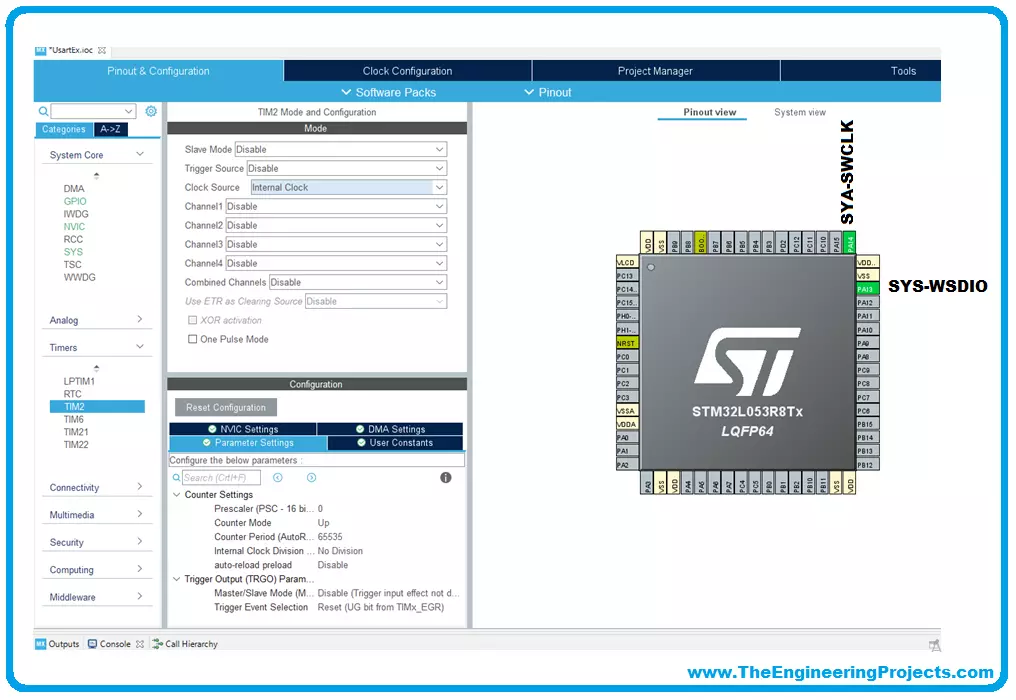
We will use for our examples STM32CubeIDE released by ST and completely free. STM32CubeIDE is a development tool and supports multi operative system (SO), which is part of the STM32Cube software ecosystem. STM32CubeIDE allows using a single platform to configure peripherals, to generate/compile/debug the code for STM32 microcontrollers and microprocessors. The framework used is Eclipse®/CDT, as tool-chain for the development is used GCC toolchain and GDB for the debugging.
To start the project, you must first select the MCU and then initialize and configure the peripherals the user wants to use. At this point, the initialization code is generated. At any time, the user can go back and change initializations and configurations, without affecting t ...