Good day peeps! Welcome to another episode of the MQ gas sensor series and today, the topic is the MQ214 natural gas sensor. We know that natural gas is inflammable and is utilised widely for cooking and other purpose in domestic areas as well as a fuel in multiple industries. The leakage of natural gas can be the reason for the accidents and its accumulation may even result in the explosion. Moreover, continuous inhalation of this gas can cause health issues such as nausea, dizziness, and headaches therefore, instant detection of its leakage is crucial. For this, one of the best options is MQ214 because it has a fast response time, low power consumption and is easily available.
In this article, we are discussing the fundamental points about this sensor. We’ll see its basic introduction ...
Hello friends, I hope you all are doing great. In today's tutorial, we are gonna have a look at detailed Introduction to MPR121. MPR121 is a touch sensor controller, its working is like the capacitor's working principle. This module has twelve electrodes points, it communicates via I2C protocol. When any objects come closer to an electrode point, we can observe the presence of an object by variation in capacitance of an electrode. It's working voltage should be between 2.5 to 3.6 VDC.
MPR121 is used in different industrial projects and electronic devices such as mobile phone and remote control systems. In today's post, we will have a look at its working, pinout, protocol, applications, etc. I will also share some links where I have interfaced it with other microcontrollers. If you have ...
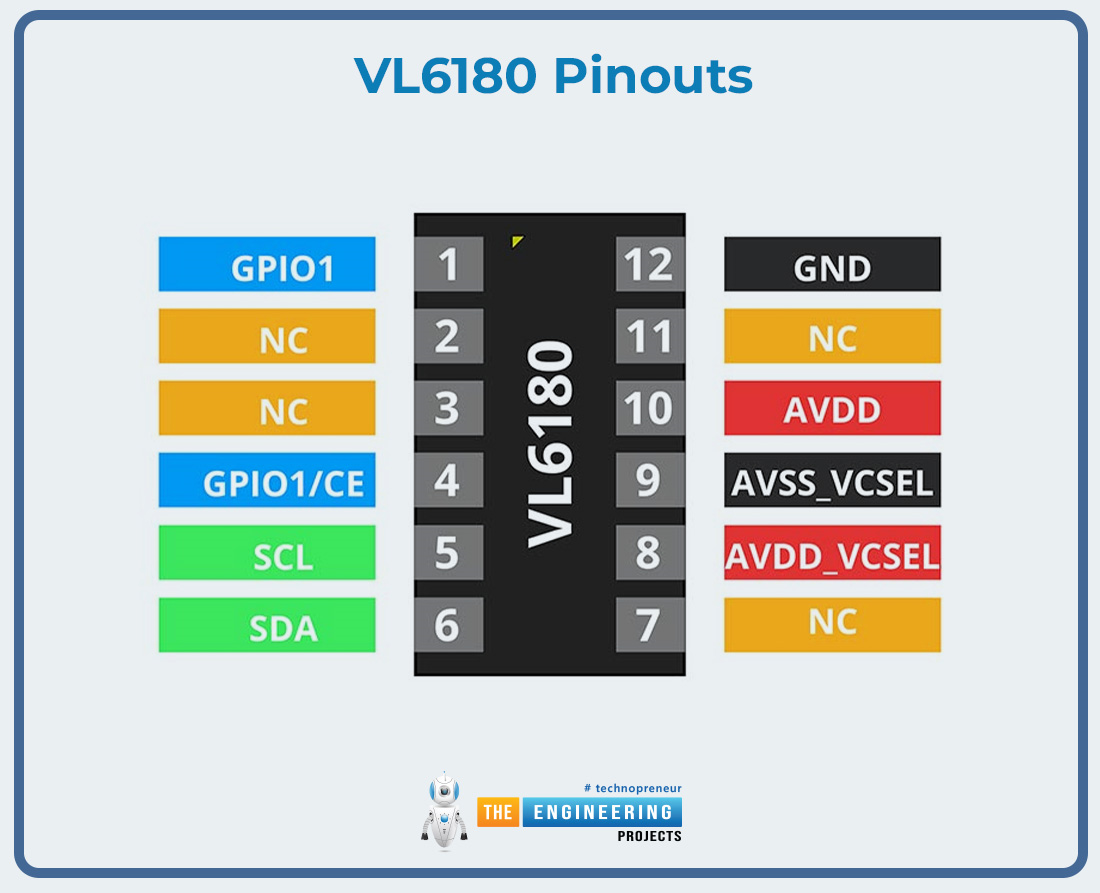
Hi readers! Hopefully, you are well and exploring technology daily. Today, the topic of our discourse is the VL6180 Time-of-Flight (ToF) Proximity Sensor. You might already know about it or something new and different.
It is a Time-of-Flight (ToF) proximity sensor, VL6180 from STMicroelectronics. It was built specifically to accurately measure the distance of IR light. This device is actually working based on infrared emission towards an object, the reflection of that emission will travel back to the sensor for it to compute distance; and due to the time-of-flight principle applied to this kind of computation, accuracy to measurement could be well given.
One of the key features of the VL6180 is its compact form factor, which makes it ideal for integration into space-constrained applicat ...
Hi readers! Hopefully, you are well and exploring technology daily. Today, the topic of our discourse is the FMCW Radar Sensor Optimized for IoT Applications and Health Care Devices. You might already know about it or something new and different.
FMCW radar sensors are becoming one of the leading technologies in non-contact sensing and are very widely used nowadays in IoT and healthcare devices. In general, they have more accuracy, lower power consumption, and good performance on different surfaces. Hence, they can be highly versatile by emitting a continuous wave signal with frequency modulation, capable of detecting motions, measuring distance, and monitoring the presence of people with exceptional accuracy. This non-contact capability is an important feature for applications wher ...
Hi Friends! I hope you are doing well. Welcome you onboard. Today, I'll discuss the basic Introduction to HC-SR04 Ultrasonic Sensor. It is an ultrasonic sensor, also known as an ultrasonic transducer that is based on a transmitter and receiver and mainly used to determine the distance from the target object.
The amount of time it takes to send and receive waves will determine how far the object is placed from the sensor. It mainly depends on the sound waves working on “non-contact” technology. The required distance of the target object is measured without any damage, giving you accurate and precise details.
This sensor comes with a range between 2cm to 400cm and is used in a wide range of applications including speed and direction measurement, wireless charging, humidifiers, medical ...
Hi readers! Welcome to the next article on the MQ series gas sensors. Today, our motto is to learn about the basic information of the MQ137 ammonia gas sensor. We know that ammonia gas is extensively used in industries, agricultural lands, Environmental Monitoring, Health and Public Safety, etc. In such areas, there are great chances of leakage that can be harmful and here, sensors like MQ137 are used for the instant detection of the Ammonia gas. It is a colorless gas with a distinct pungent smell and its inhalation may cause eyes, lungs, nose, and throat infections and irritation. So, the MQ137 is specialized for its detection and acts as a life savior in such cases.
In this article, we’ll commence our discussion with the basic introduction of the MQ137 ammonia gas sensor and will ...
Hi readers! I believe you are doing fine and continuing to learn something new every day. This day marks the discussion about the diagnosis of a faulty MAP (Manifold Absolute Pressure). A MAP sensor is an important component in the engine management system of a vehicle, functioning to determine the absolute pressure inside the intake manifold and reporting back the real-time pressure to the Engine Control Unit (ECU), which then does the math to achieve an exact air-fuel mixture and timing of injection, allowing combustion to be smoother with all the variables at play and reduced emissions.
The MAP sensor detects the changes in air pressure inside the inlet manifold. The data relative to this pressure is used by the ECU to calculate fuel injection and ignition timing. The MAP sensor en ...
Hello friends, I hope you all are doing great. In today's tutorial, we are gonna have a look at detailed Introduction to ACS712. ACS712 is an AC or DC current sensor, which is used to measure AC or DC current. You should also have a look at Difference between AC & DC Power, that will help. The maximum value of AC and DC which can be measured is 30A, its output current signal can be read via analog I/O port of Arduino. It is also available in 5A and 20A version which provides precise and economical solutions for AC or DC current sensing in industrial and commercial systems.
ACS712 consists of a precise and low offset linear Hall sensor circuit with a copper conduction path located near the surface of the die. ACS712 is used in different industrial projects and commercial electr ...
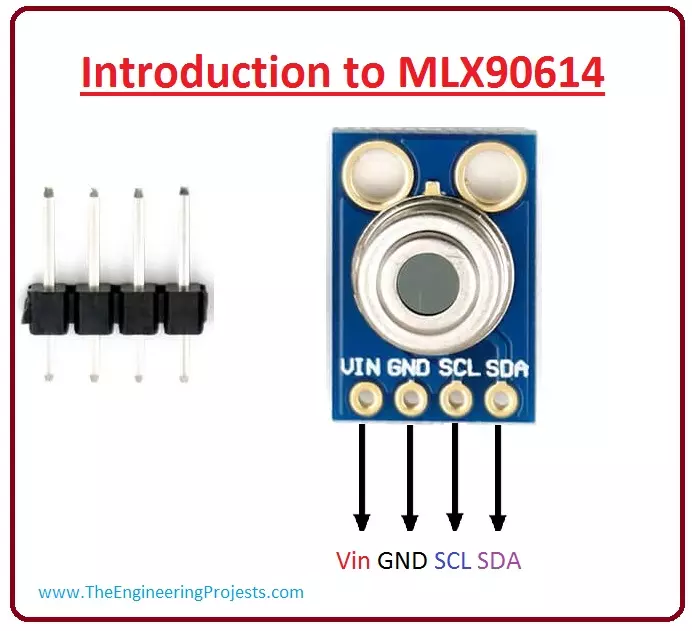
Hello friends, I hope you all are doing great. In today's tutorial, we are gonna have a look at detailed Introduction to MLX90614. MLX90614 is a temperature measurement device works on infrared radiations. It is the best choice for such applications where we can not easily reach to measure temperature because it provides non-contact measurement of temperature. It has Infra Red radiation receptive thermopile and ASSP (Acoustics Speech and Signal Processing) on same TO-39 cascading.
This temperature measuring device is surfaced with the digital Pulse width Modulation and System Managing Bus. It is used in different industries to measure and control the temperature of moving components of machines and it also used to remove the fog on the window of vehicles. In today's post, we will have a ...
Hi readers! I hope you are doing well and learning new things daily. Today, we have a detailed overview of the MAP(Manifold Absolute Pressure) Sensor, its working principle, types, structure, and features. The Manifold Absolute Pressure (MAP) sensor is a crucial element in a vehicle's engine to control pressure. The MAP sensor measures the pressure inside the intake manifold and transmits this data to the ECU so that fuel injection, ignition timing, and air-fuel mixture can be optimized. The MAP sensor is used to ensure engine efficiency, performance, and fuel economy.
The MAP sensor functions by the transformation of manifold pressure variations into an electrical signal, which is then interpreted by the ECU to calculate engine load. It is complemented by other sensors, including the M ...