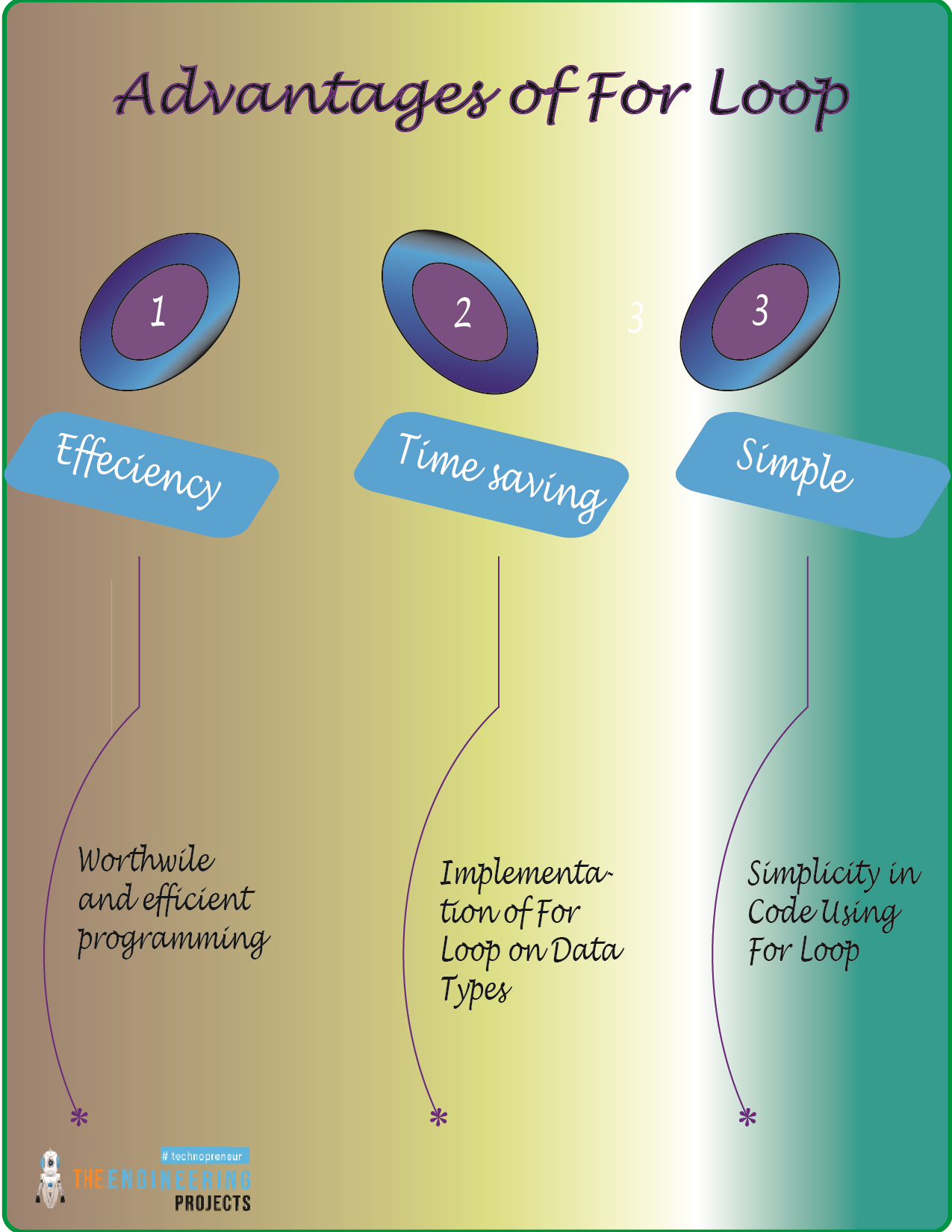
Hey peeps! Welcome to the new tutorial for the Python programming language, where we are at the point where we are going to learn about the loops. Loops are fundamental concepts in programming, and if we talk about Python, there is a smaller variety of loops in it, but the most important ones are available to practice in Python. In the last session, there was a long discussion about the while loop in detail. We had seen some examples and the details of the statements that can be used within the while loop. In the present lecture, we are going to discuss the second type of loop in Python, that is, the for loop. You will go through the training of every important and basic step about this loop, but first of all, you have to look at the basic list:
Why do we prefer for loop over some other c ...
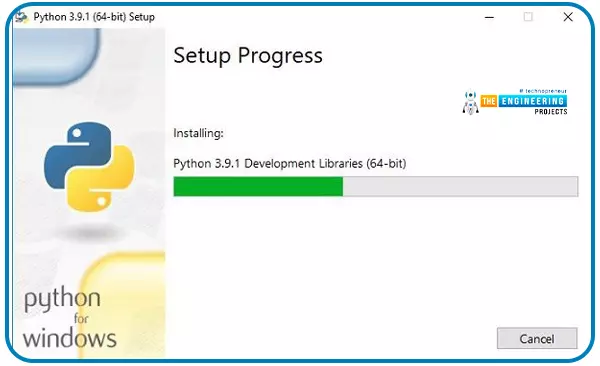
The first step to becoming a Python coder is to install or update Python on your computer. Python can be installed in a variety of ways, including through the official Python.org distribution, a software package manager, the IoT (Internet of Things) and scientific computing, just to name a few.
In this article, we'll be using official Python distributions, which are often the best option for beginners.
What will you learn from this?
How to check if you have the right Python release installed on your computer before proceeding.
Installation of Python3 on Windows pc and Linux machine.
How to use Python on the web with the help of online interpreters.
INSTALLING REQUIRED PYTHON ENVIRONMENTS
Installing the most recent versions of Python and ...
Hello friends, I hope you all are doing great. This is the 7th lesson of our Python tutorial. We were introduced to Python numbers in the previous chapter and learned how they are utilized with expressions, so we have a good understanding of math operations.
We'll go over a couple more arithmetic functions and complex numbers in this lesson. I will try my best to keep it simple. Let's get started!
Python round function
You can work with numbers in Python using a few built-in functions. Three of the most common will be discussed in this section:
Rounding to a specific number of decimal places can be done with round().
abs(), which returns a number's absolute value.
pow(), which raises a number to a ...
Hey peeps! Are you excited to begin with the new chapter in Python? Till now, we have been learning the data types and their related concepts. Now, we are starting a new chapter where you will learn the details of Object Oriented Programming or OOP. We are moving towards the advanced level of programming in Python, and here, you will go through the complex but interesting concepts that will show us the fascinating results on the screen. This will be more clear when you will know the basic information about the OOP, but before going deep, we will go through the headlines of the lecture:
How do you classify the programming languages?
How do you introduce the OOP?
Why object-oriented programming is important in Python?
How do you define class and objects in OOP and how are they connected? ...
Hey, peps! Welcome to the new tutorial on the Jupyter notebook. As we are moving towards a higher level of Python, therefore, it is important to understand other ways of doing the same task. As we read in the previous lecture about 2D arrays, this time it is going to be done with the help of a famous library in Python. This time, you are going to learn different, engaging, and advanced-level concepts that not only help you deal with the 2D array but also the installation and working of the unique library of Python, which is NumPy. This lecture is going to be very useful and interesting, and therefore, we suggest you have a glance at all the goals of this lecture.
Getting the introduction to NumPy
Successfully installation of NumPy and knowing different methods for it
Using the arrays wi ...
Hey learners! Welcome to the new lecture on deep learning, where we are using TensorFlow to learn it with the help of Python. Previously, we worked on the syntax of Python, and now it's time to discuss the variables in detail. There are some variables that you will learn about as well as get hands-on experience within TensorFlow. These are important concepts that will help you throughout your coding career. If you are new to programming, this is a crucial concept for you, and if you know it already, you can use this tutorial to polish your concepts. We will move forward after looking at the list of content for this lecture:
What are the variables in Python?
How do you assign the value to the name of the variable in Python?
What are some rules to define the name of the variables?
How ...
Hi learners! Welcome to the next episode of learning the arrays using string data. We have been working with the arrays and in the previous lecture, we saw the interesting characteristics of the string arrays. In the present lecture, our target is to get knowledge about the built-in functions and we will take the strings in the array so that we may know about both of them together. String arrays are used in many officials uses and therefore, we want to use the built-in functions that every Python programmer must know. Here is the list of the concepts that will be polished in this lecture:
What are the built-in methods?
How do you differentiate between methods and functions in programming?
Give different examples to understand different built-in methods to be used in the same code.
How ...
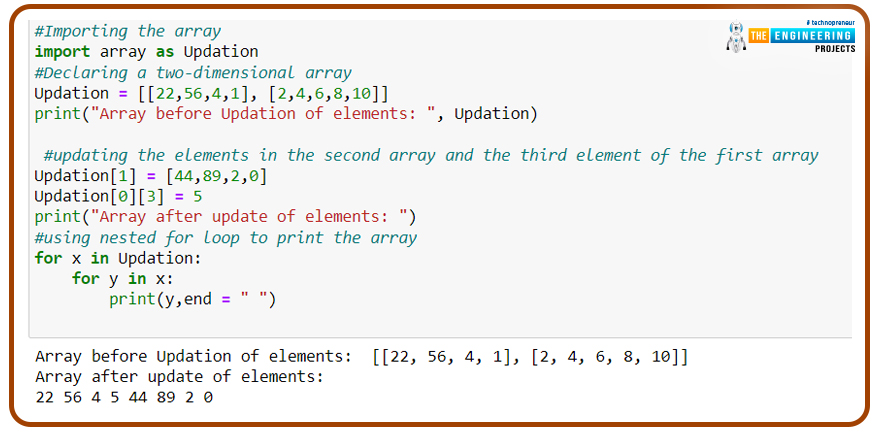
Hello learners! Welcome to the next episode of the arrays, in which we are moving towards the details of the arrays at an advanced level. In the previous lecture, we covered the introductions and fundamentals of arrays, dimensional arrays, and array operations. One must know that the working of the arrays does not end with simple operations, and there is a lot to learn about them. Arrays and their types are important topics in programming, and if we talk about Python, the working and concepts of the array in Python are relatively simple and more effective. The details of the advanced types of arrays will prove this statement. We have a lot of data to share with you, and for this reason, we have arranged this lecture. It is important to understand the reasons behind the reading of this lect ...
Greetings Learners! Welcome to the new lecture on Python. Today we are moving towards an interesting and important concept. If you have come from a programming background, then you must know about the workings of loops. To make the repetition of the same sequence, we use loops. We are familiar with the sequences in detail as we have learned them in the previous lectures and have received the concept in the recent lecture. If you want to be a programmer, then you can not move forward without a solid base of loops; therefore, in this lecture, we will learn the concept of loops from scratch and then go on to a deep understanding of each loop in the next episodes. So have a look at the concepts that you will learn today.
What are the loops?
How do we understand the concept of loops from scra ...
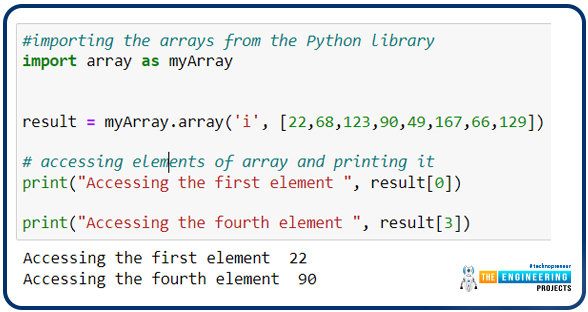
Hello Python programmers! Welcome to the engineering projects where you will find the best learning data in a precise way. We are dealing with Python nowadays, and today, the topic of discussion is the arrays in the language. We have seen different data types in Python and discussed a lot about them in detail till now. In the previous lecture, we saw the details of the procedures in dictionaries. There are certain ways to store the data in the different types of sequences, and we have highlighted a lot about almost all of them. It is time to discuss the arrays, but before this, it is better to understand the objectives of this lecture:
Introduction to arrays
Difference between contiguous and non-contiguous memory locations
One-dimensional arrays
Functions in arrays
What are Arra ...