Welcome to the fifteenth chapter of this python course. Python lists and tuples were studied extensively in the last session, and we learned how to manipulate the data contained in these types of structures. You've only experienced sequential execution up to this point, where each statement is performed sequentially in the order they appear in the code. However, the real world is frequently more nuanced. Sometimes, a program must skip over certain statements, run a set of statements repetitively, or pick between other sets of statements to execute. This is called "conditional branching." That's when control structures come into play, which controls the sequence in which statements in a program are executed. What will you learn? The if statement is the first control structure you'll encount ...
Welcome to the fourteenth chapter of our python tutorial course. In the last lesson, we looked at sets and operations done to sets, including union and intersection. In this tutorial, we'll take a closer look at lists and tuples to see how they're used. Python's most versatile and useful data types are lists and tuples. A non-trivial Python application will nearly always have these. What will you learn? Lists and tuples have a number of significant features that you'll learn about. In this course, you'll understand the definitions and applications of these terms. By the time you're done, you'll know when and how to employ different Python object kinds. What are lists? In other words, Lists are similar to arrays in many other programming languages because they allow you to store any number ...
This is the next lesson in our Python course. Previously, we looked at an overview of the different data types in python such as dictionaries, Boolean and sets. This tutorial will focus on Python sets to get a deeper understanding of this data type, so let's get started. During your schooling, there is a good chance you learned about sets and set theory. Venn diagrams may even be familiar to you: Don't worry if you don't recognize this! You should still be able to access this tutorial without any problems. Rigidly defining a set in mathematics can be both abstract and difficult to understand. A set is thought of as a well-defined group of unique objects, which are sometimes called "elements." Python's built-in set type facilitates the grouping of items into sets, which is important in prog ...
Welcome to the next tutorial of our python course. We learned about python numbers in the last tutorial, and in this tutorial, Data types in Python include, dictionaries, sets, and Boolean, among others. We'll give a quick overview of the above data types in this section but later in this course, we'll go over each of them in-depth. Introduction In the Python programming language, data types are a necessary concept. Python assigns a data type to each value. Data Types are used to classify data objects or to assign a value to a data category. It aids in comprehending the many operations that can be applied to a value. Python considers everything to be an object. Classes are represented by data types in Python. Variables are the names given to the objects or instances of these classes. Let's ...
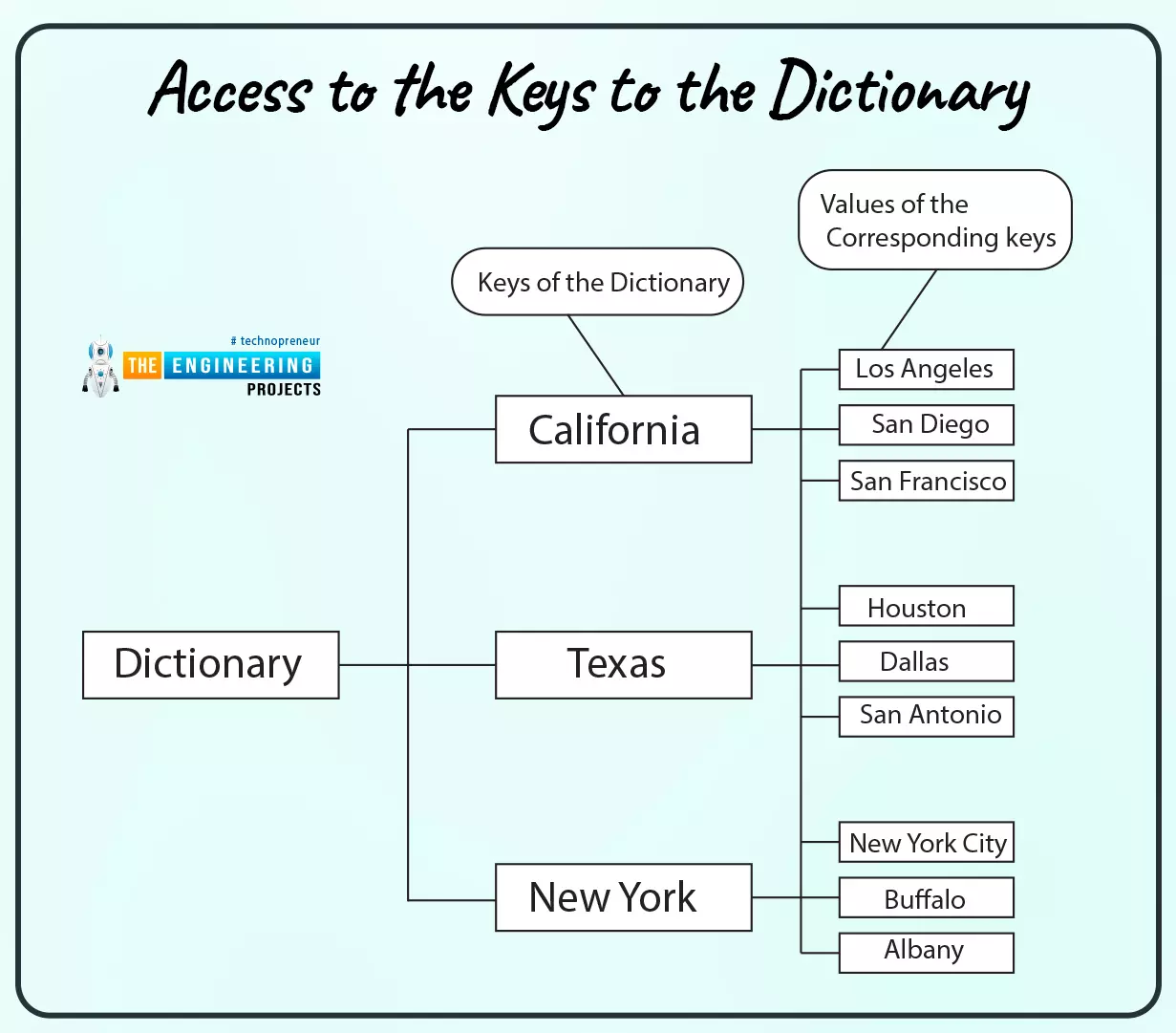
Hello! Welcome to the next lesson in this Python course. In the last session, we learned about python tracebacks and how to deal with them. A dictionary, like a list, is a collection of items, and we'll look at that in this tutorial as well. What will you learn? This tutorial introduces you to the fundamentals of dictionaries in Python and teaches you how to work with dictionary data. After reading this article, you should be able to tell when and how to utilize a dictionary as a data type. Characteristics of Dictionaries and lists Both can be changed (mutability). A dynamic relationship exists between them. When needed, they're able to expand and contract. Both are nestable. Another list can be contained within one. It is possible to have a dictionary inside of a dictionary. A list can be ...
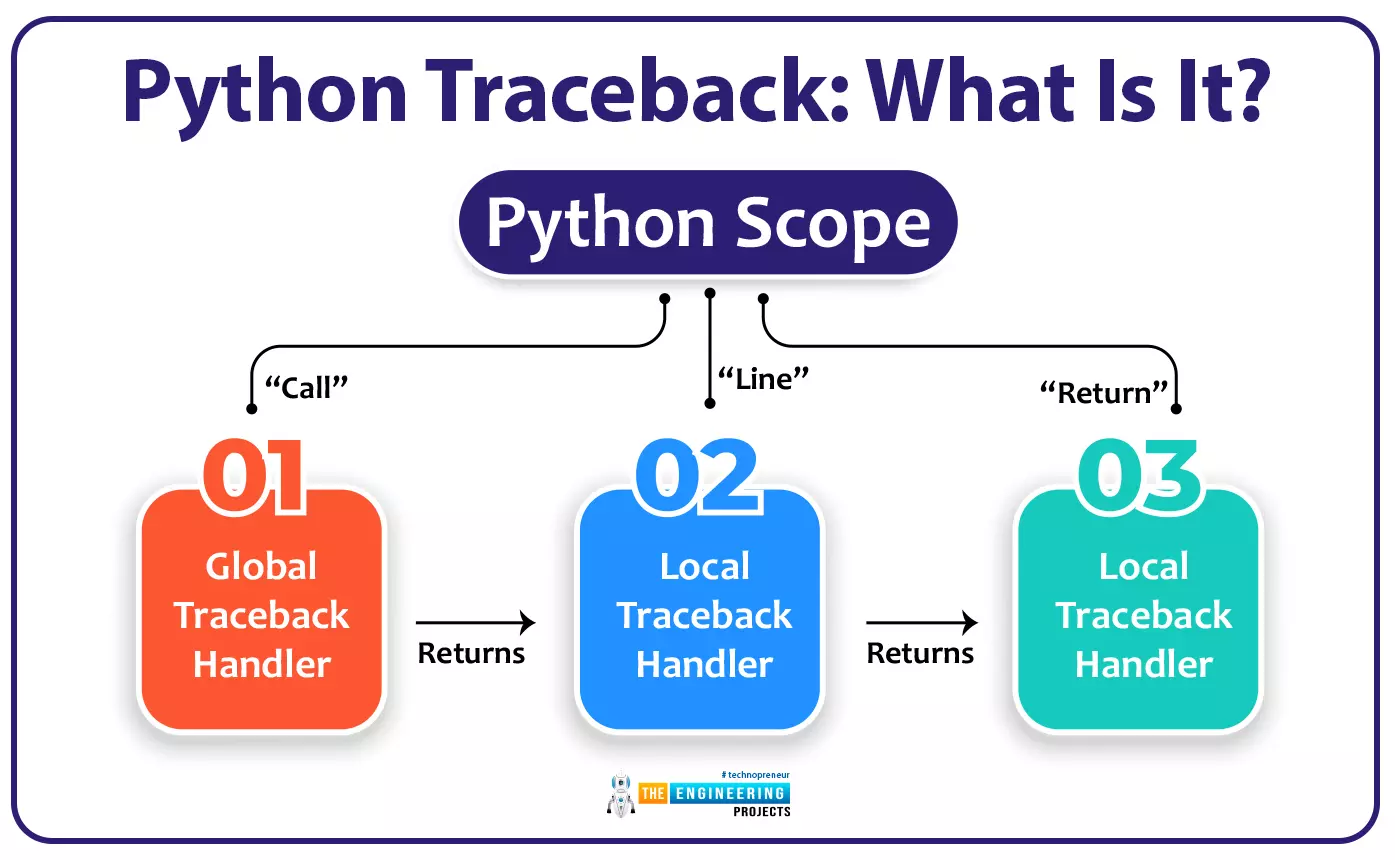
Welcome to the tenth lesson of our python course. In the previous tutorial, you learned about syntax errors in Python, and in this lesson, we will look at one more error notice that is given by Python when there is an error in your code. So, without further ado, let's get started. Any time an exception is thrown in your code, Python shows you the stack trace. If you don't know what the traceback output is showing you, it can be a little overwhelming. Python's traceback, on the other hand, provides a goldmine of information that can assist you in figuring out why an exception was triggered in your code and fix it. It's essential to learn how to use Python traceback to become a better coder. After completing this session, you will be able to do the following: Interpret the next error message ...
Welcome to chapter 9 of our python tutorial. In the previous chapter, we looked at frequent examples of invalid Python syntax and learned how to fix them. Up to this point, you are well aware of errors that may occur in your Python program and how you can solve them easily and quickly. Therefore, in this tutorial, we will look at a few more causes of syntax errors and zero-error divisions. Mistaking Dictionary Syntax As you learned before, omitting the comma from a dictionary element can result in a syntax error. In Python dictionaries, the equals symbol (=) is used instead of a colon to separate key and value pairs. This error message is once again useless. In this case, the repeated line and caret come in handy! All signs lead to the main antagonist. In addition, if you mistakenly believ ...
Welcome to chapter 8 of our python tutorial. In the previous chapter, we learned about Python numbers and how to use them in expressions. Throughout this chapter, you'll look at frequent examples of incorrect Python syntax and learn how to fix them. At the end of this tutorial, you will: Distinguish incorrect syntax in Python Get familiar with SyntaxError tracebacks Fix improper syntax or avoid it altogether In Python, what is an invalid syntax? Before transforming your Python code to Python byte code, the interpreter parses it. The parsing stage is where the interpreter searches for any instances of improper syntax in the program. Using the wrong syntax in your Python code will lead the interpreter to be unable to decipher it. The interpreter will try to show you exactly where the issue o ...
Hello friends, I hope you all are doing great. This is the 7th lesson of our Python tutorial. We were introduced to Python numbers in the previous chapter and learned how they are utilized with expressions, so we have a good understanding of math operations. We'll go over a couple more arithmetic functions and complex numbers in this lesson. I will try my best to keep it simple. Let's get started! Python round function You can work with numbers in Python using a few built-in functions. Three of the most common will be discussed in this section: Rounding to a specific number of decimal places can be done with round(). abs(), which returns a number's absolute value. pow(), which raises a number to a certain power As an added bonus, you'll discover how to test for the existence of an integer ...
Welcome to chapter 6 of our python course. Previously, we introduced integers and saw how they may be combined with strings and stored in variables. Today, we'll take a closer look at the python number types and how they're stored in variables to see what actions are possible. What you'll learn in this tutorial is how to: Add, subtract, multiply, and divide numbers. Work with modular. Use exponents. Use expressions. Use a predetermined number of decimal places to round numbers Use strings to format and show numeric data. With this in mind, let`s start. How are integers created? Integers can be created by simply inputting a number. For example, the tutorial variable is assigned the integer 6 in the following way: >>>Tutorial = 6 In this case, the integer literal is 6 since it is written int ...