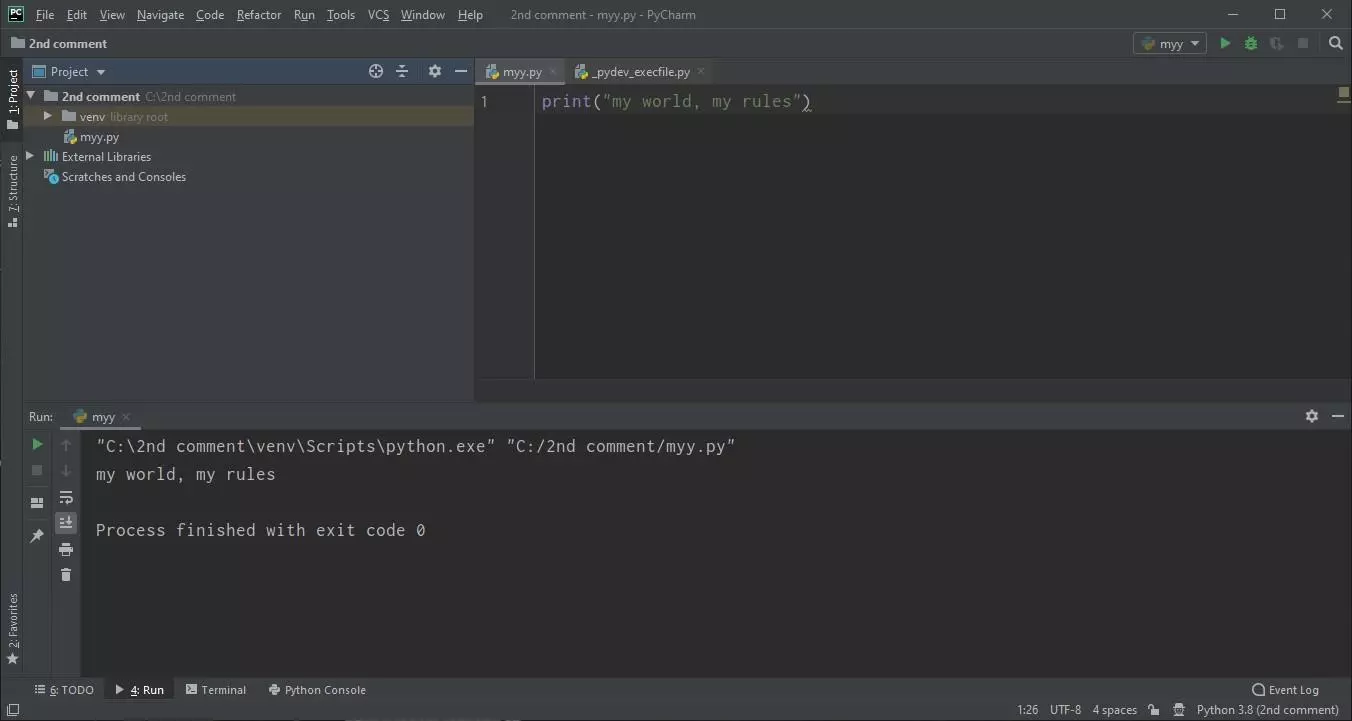
Hello Engineers! Hope you all are doing great. In today's tutorial, I am giving you a detailed lecture on Python programming language . As I am writing this tutorial for beginners, that's why I will discuss each & everything in detail, so it's going to be a very lengthy tutorial and I have divided it in parts. We will start from basic concepts in Python and will slowly move towards advanced concepts. It's going to be a quite long bumpy ride but I will try my best to make it as smooth as I can. So, let's get started with basic Introduction to Python Language: Introduction to python Python is a multi-purpose, object-oriented High-Level Programming language, with applications in multiple areas, including scripting, machine learning, data sciences, scientific learning, cloud computing and arti ...
Hello friends, I hope you all are doing great. In today's tutorial, we will have a look at what is DbContext Class in Entity Framework Core. It's our 17th tutorial in ASP.NET Core series. In our previous tutorial, we have discussed Entity Framework Core in detail and have also installed it in our web application. So, now we need understand how to work with Entity Framework Core and for that we have to look at its classes & functions. So, today we will discuss one of its class named DBContext in detail: DbContext Class in Entity Framework Core EF Core contains an important class named DbContext , which is mainly responsible for communication between Database & software objects. We communicate with our database using this DbContext class and we can also map our fetched data to software objec ...
Hello friends, I hope you all are doing great. In today's tutorial, we will have a look at detailed Introduction to Entity Framework Core. It's our 16th tutorial in ASP.NET Core series. So far, we have covered the the MVC architecture and few concepts related to object oriented programming and now we are ready to get our hands on Databases. So, today we will cover data handling in detail, which is done by Entity Framework Core in .NET Core applications. So, let's first understand this Entity Framework Core: Introduction to Entity Framework Core Entity Framework Core ( normally called EF Core ), designed by Microsoft , is an open source, flexible, extensible, lightweight and cross-platform framework, which is used for storing & retrieving data from database. EF Core creates a bridge between ...
Hello friends, I hope you all are doing great. In today's tutorial, we will have a look at Form Validation in ASP.NET Core. It's our 15th tutorial in ASP.NET Core series. In our previous lecture, we have created a Registration Form for our engineering website. But we haven't added any validations on the submitted data. So, even if users don't fill any boxes and just hit the Register Button, a new user will be created without any personal info. So, today we will place some checks on these text boxes to validate the user submitted data. So, let's get started with it: Form Validation in ASP.NET Core Validations in ASP.NET Core are available in the form of attributes & Tag Helpers. Validation Attributes are applied on Properties in Model classes and validate the user submitted data. Validation ...
Hello friends, I hope you all are doing great. In today's tutorial, we will have a look at How to Create a Registration Form in ASP.NET Core. It's our 13th tutorial in ASP.NET Core series. In our previous lecture, we have seen How to use Tag Helpers in ASP.NET Core and have also discussed link, image & environment Tag Helpers. Today, we will have a look at Form Tag Helpers and with their help we will design a simple Registration Form in ASP.NET Core. It will be a quite lengthy tutorial so if you got into any trouble, then ask in comments. So, let's create our Registration Form: Create a Registration Form in ASP.NET Core Let's create a new action method named Registration , in our Home Controller class, as shown in figure on right side. I have also returned a View, so let's create a new Raz ...
Hello friends, I hope you all are doing great. In today's lecture, we will have a look at HTML Tag Helpers in ASP.NET Core. It's our 12th tutorial in ASP.NET Core series. If you have worked on ASP.NET then you must have been familiar with HTML Helpers. Tag Helpers are quite similar to HTML Helpers with slightest difference in its syntax. Tag Helpers are new in ASP.NET Core and were not part of ASP.NET. So, let's first understand what are Tag Helpers & why we need to use them and at the end we will also discuss few common tag helpers in detail. So, let's get started with HTML Tag Helpers in ASP.NET Core: HTML Tag Helpers in ASP.NET Core HTML Tag Helpers in ASP.NET Core are server side components and thus executed on the server to create HTML elements of the webpage. ASP.NET Core has a lot o ...
Hello friends, I hope you all are doing great. In today's tutorial, we will have a look at How to include & use Bootstrap in ASP.NET Core. It's our 12th tutorial in ASP.NET Core series. As it's ASP.NET Core tutorial so I am not going to explain bootstrap much. But you must have the basic idea of Bootstrap, its a client side package of CSS libraries, designed by twitter and these days you can't design a responsive site with Bootstrap as it follows symmetry and is too easy to use. So, let's get started with How to include Bootstrap in ASP.NET Core: How to include Bootstrap in ASP.NET Core There are many third party tools ( Bower, NPM, WebPack etc. ) available in Visual Studio for installing client side applications like Bootstrap, JavaScript, Jquery etc. But we are going to use builtin tool ...
Hello friends, I hope you all are doing great. In today's tutorial, we will have a look at URL Routing in ASP.NET Core . It's our 11th tutorial in ASP.NET Core series and it's an important but quite easy concept to understand. You must be wondering how we are routing rite now as we haven't added any routing codes yet. But if you remember, we have used MVC with default route middleware in our pipeline and this middleware automatically sets up this default URL routing for our web application. So, let's understand how this URL Routing works in ASP.NET Core: URL Routing in ASP.NET Core URL Routing in ASP.NET Core is used to provide the controller's action method to the incoming HTTP request. In simple words, when a user enters an HTTP URL in its browser, then it is greeted by the respective co ...
Hello friends, I hope you all are doing great. In today's tutorial, we will have a look at different Razor Layout Views in ASP.NET Core . It's our 10th tutorial in ASP.NET Core series. You must have noticed in websites that they have common sections, which remains the same throughout the website i.e. Header Section, Footer Section, Sidebar etc. In today's lecture, we will have a look at how to design these default layouts of a website. We have already discussed the MVC architecture in detail so now it's time to start building our site's layout or basic structure. Today we will just discuss different files available in ASP.NET Core for default layout designing. So, let's get started with Layout View in ASP.NET Core: Razor Layout View in ASP.NET Core Razor Layout View in ASP.NET Core is a Ra ...
Hello friends, I hope you all are doing great. In today's tutorial, we will have a look at How to Create ViewModels in ASP.NET Core. It's our 9th tutorial in ASP.Net Core series. We have already covered Controllers, Models & Views in our previous lectures and now it's time to understand this fourth pillar of MVC architecture. ViewModel is not an integral part of MVC architecture and can be ignored in simple projects but in complex applications, we have to use ViewModel as it adds flexibility in the project. So, let's have a look at ViewModels in ASP.NET Core: ViewModels in ASP.NET Core ViewModels in ASP.NET Core ( also called Data Transfer Objects [DTO] ) are used to send Models data from Controller to View. Normally in complex cloud based applications, data from multiple Model classes nee ...