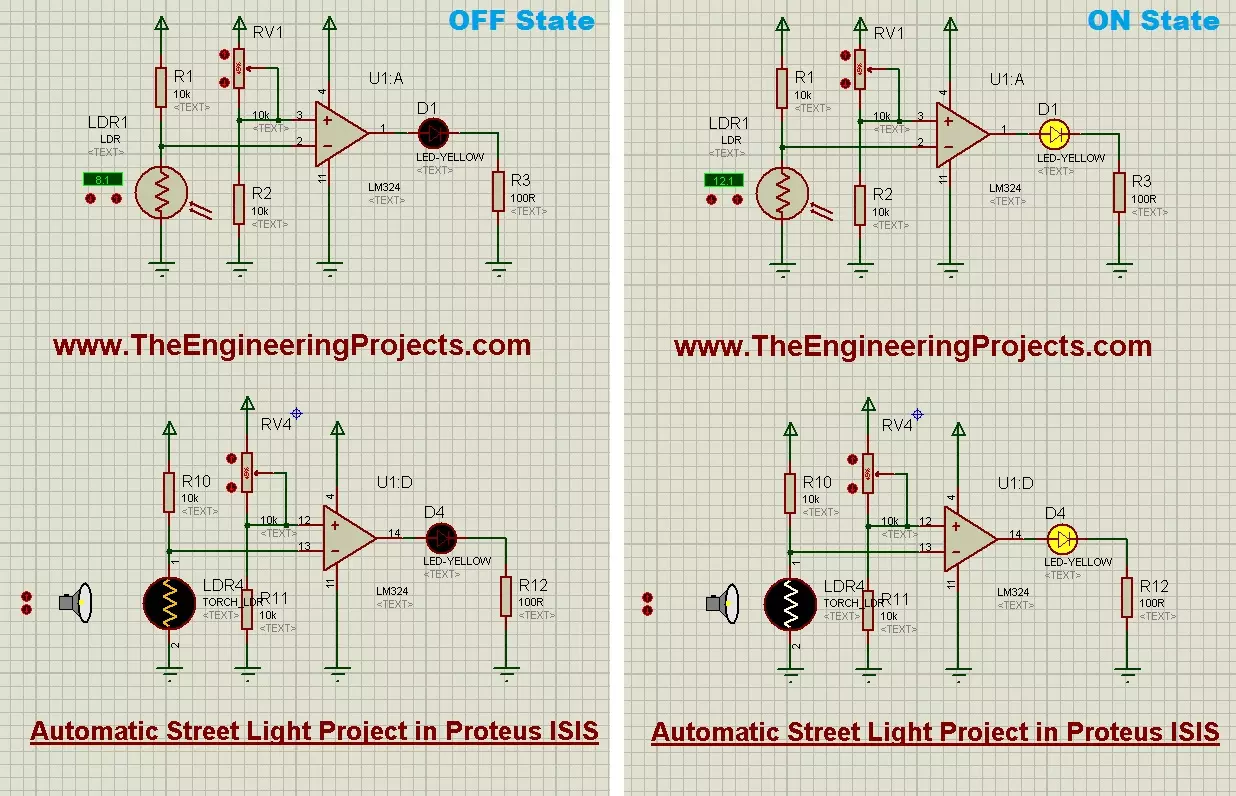
Hello everyone, I hope you all are fine and having fun with your lives. Today, I am going to share a semester project which is named as Automatic Street Light Project. I have designed this project in Proteus ISIS and the simulation is also given below for download. Btw this was my first project during my engineering course. :D I had really enjoyed while working on this project as I was new to electronics then.
This project is about Automatic Street Light. You must have examined on your streets that the street lights turn ON at night while they turn OFF in the day. When I was a child then I think that someone turns ON the switch in the day and then turns it OFF at night but that's really not the case. :P
In fact, these lights are automatic and have ...
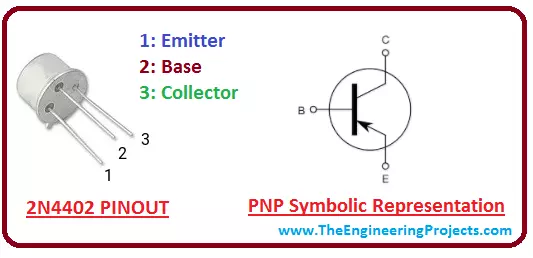
Hey guys! I aspire you a prosperous life filled with joy and happiness. Today, I am going to uncover the details on the Introduction to 2n4402. It is basically a PNP (Positive-Negative-Positive) silicon transistor where N doped layer lies between the two P doped layer. It consists of three terminals i.e. emitter, base, collector. Here N represents the base of the transistor and two P layers represents the emitter and collector respectively. I'm going to cover all aspects related to this transistor. Let's hop on the board and dive in the details of this silicon transistor.
Introduction to 2n4402
2n4402 is a bipolar silicon transistor, where one layer of N doped semiconductor is sand-witched between the two layers of P doped semiconductor.
It w ...
Hello everyone! I hope you all will be absolutely fine and having fun. Today, I am going to explain you about Introduction to TL431. TL 431 are programmable shunt regulator diodes having three terminals. Its a low temperature coefficient diode and can be programmed from reference voltage (Vref) up to 36V when it is attached to 2 external resistors.
TL 431 has an impedance of 0.22 ohms and has a current range from 1mA to 100mA. In several different applications zener diodes can be replaced with TL 431 diode due to its efficiency. These applications include power supplies, Operational Amplifier (Op-amp) circuitry and digital voltmeters. TL-431 can either be used as positive or as negative voltage reference because it operates as shunt regulator. T ...
Hello friends, I hope you all are doing great. In today's tutorial, we will simulate our First Electronics Project in Proteus ISIS. It's our 2nd tutorial in Proteus series. In our previous tutorial, we have seen a basic Introduction to Proteus and today, we will design a simple electronics circuit in it and will also simulate it.
If you want to work on Proteus, then you must have some prior knowledge about electronics. Proteus doesn't provide any suggestion about circuit designing so if you don't have electronics knowledge then you can't work with Proteus. Throughout this series, I will keep on explaining electronics circuits as well and will also embedded related components' links. So, if you are new to electronics then no need to worry and just ...
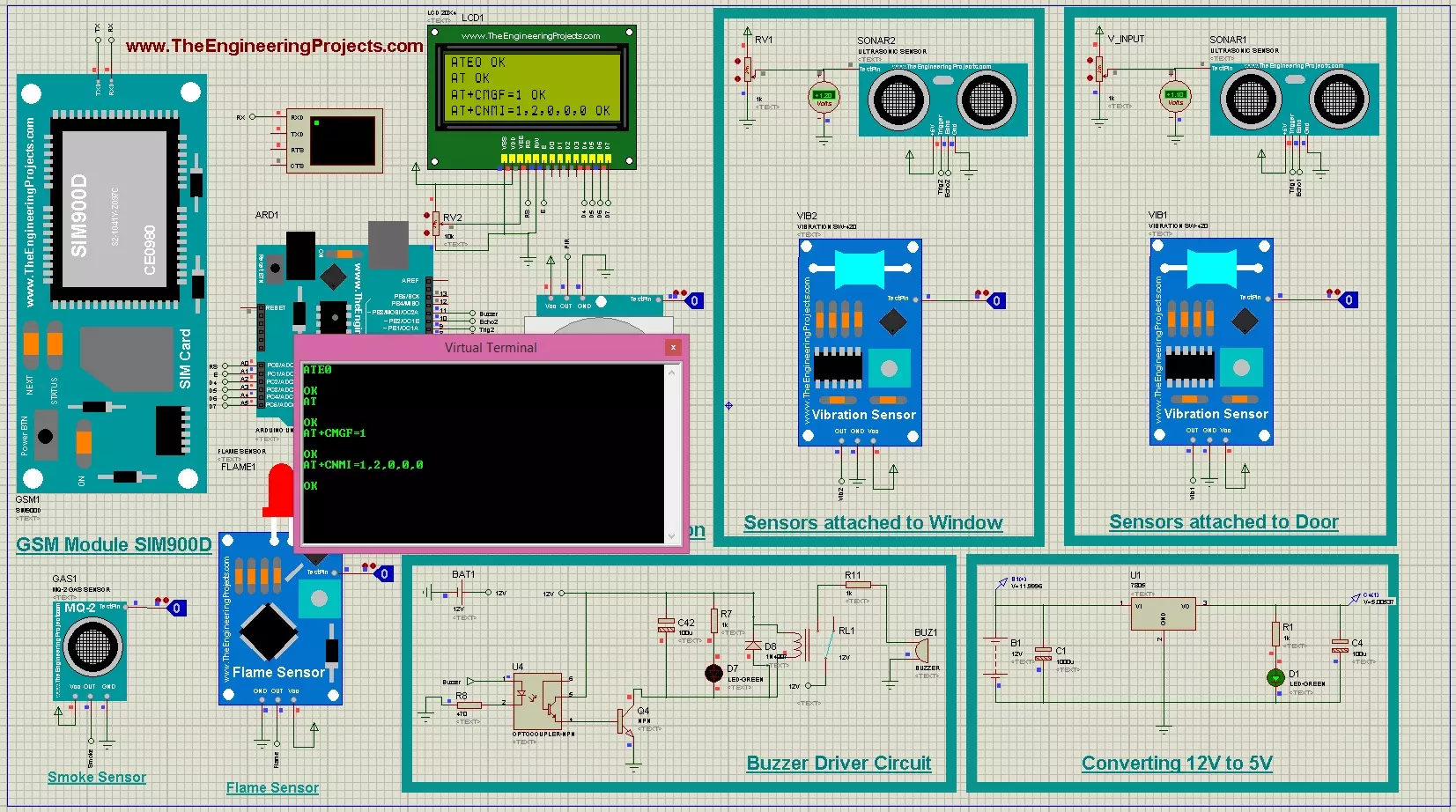
Hello friends, I hope you all are fine and having fun with your lives. Today, I am going to share a complete project named as GSM Based Home Security System. I have designed its complete working simulation in Proteus and have used different libraries which you can also download from our blog. In the previous post, I have posted Home Automation Project using XBee & Arduino and today we are gonna work on Home Security System.
We have designed this simulation after a lot of efforts that's why we have placed a very small amount of $50 on it so that engineering students can download it and get knowledge from it. Moreover, as its a complex project so when you buy it then there's a chance that you can't run it by yourself so we also offer a free serv ...
Hello friends, hope you all are fine and enjoying life. Today's post is about removing a small error named as Recognition Failed in EasyVR, which I encountered while working with EasyVR shield with Arduino UNO. I have posted a complete project on EasyVR shield around a year ago in which I haven't mentioned this error because at that time I didn't encountered it. But today while working with EasyVR shield, I encountered this problem so I thought to share it with you guys.
EasyVR shield is a voice recognition module which is used for recognizing voices and operating accordingly. Using this module, one ca quite easily control anything using voice. In the previous project, I have controlled a robot using voice commands like when I say Forward then it ...
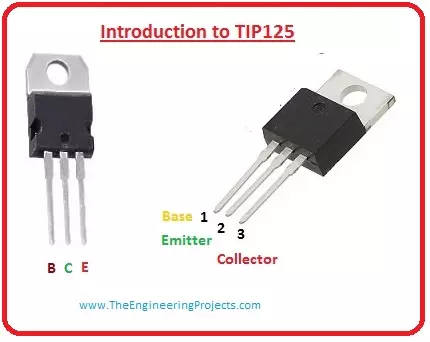
Hello friends, I hope you all are doing great. In today's tutorial, we are gonna have a look at detailed Introduction to TIP125. It is a bipolar PNP transistor, which is created for swapping and intensification submissions. It is the corresponding of transistor TIP121. The transistor is such a constituent which shows a very significant imperative on diverse electrical and electronic constituents and circuits.
There is no electronic expedient which doesn't have a transistor in its circuitry. The transistor is available in NPN and PNP configuration according to their uses. These instruments also show a significant regulation in the adaptation of current and intensification of an input signal. In today’s post, we will have a look at its protection, d ...
Hello everyone! I hope you all will be absolutely fine and having fun. Today, I will give an elaboration about Introduction to LF351. LF-351 is basically JFET (Junction Field Effect Transistor). It is a very high speed input Op-amp (Operational Amplifier). This device is most common in the market due to its low cost and good performance characteristics. LF-351 provides a high gain bandwidth product even though it needs a very low current supply.
LM 351 also provides higher slew rates. This device is most of the times known on the basis of its applications. LM-351 is the most popular device due to its unique features. These features include low input bias current, high gain bandwidth product, loww current supply, high input impedance, internal tr ...
Hello friends, I hope you all are doing great. In today’s tutorial, we will have a look at Introduction to STM32 Microcontroller. This microcontroller is a new category of a microcontroller family it is a thirty-two-bit microcontroller also compatible with the ARM and Cortex M processor. Due to thirty-two bits compatibility, this module provides good performance, processing of digital signal and consumes less power and voltage. The modules used in most of the industries due to their compatibility with the cortex M0, M0+, M3, M4.
In today's post, we will have a look at its working, features, pinouts, applications and some other related parameters. So lets with the Introduction to STM32 Microcontroller.
Introduction to STM32 Microcontroller
The STM32 is a type of microcontrolle ...
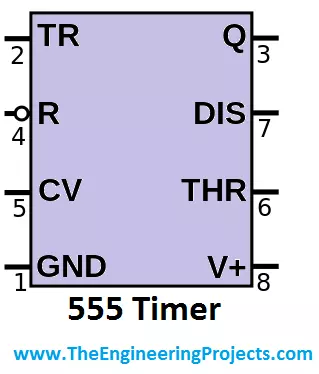
Hello friends, i hope you all are fine and enjoying. Today i am going to share a new tutorial in which I am gonna explain What is 555 timer? We all know about 555 timer, which is an 8-pin IC (integrated circuit), most commonly used in electronic projects, built now a days. As you can see fron its name that it is a timer and designed to generate PWM.
In today's tutorial i am going to explain, what's hidden inside this 555 timer IC and what is 555 timer. A 555 timer is a much compatible electronic device and the biggest feature of this IC is that it able to work on both analogue and digital techniques. Now if we simply consider the output of the 555 timer then, at any particular time, this timer has only 1 definite state. Which means at any time, it ...