Hi mentees, we are here with a new tutorial. I hope you all are fine. So far, we have been designing combinational circuits i.e. Adder, Subtractor, Multiplexer etc. using logic gates. But from today onward, we will design sequential circuits using logic gates i.e. Latches, Flip Flops etc. Let's quickly recall what's the difference between combinational & Sequential Circuits:
Combinational Circuits:
Combinational circuits only use the current state of the input values to generate the output.Examples of DLD Combinational Circuits are: Adders, Subtractors, Multiplexers etc.
Sequential Circuits
Sequential Circuits use both the current & previous states of the inputs to generate the output.Examples of DLD Sequential Circuits are: Latches, Flip Flops, Timers, Counters etc.
Digital M ...
Hello Mentees!, I hope you have a productive day. Welcome to The Engineering Projects. In the previous lecture, we discussed the XOR Logic Gate and designed its circuit using basic logic gates i.e. AND, OR and NOT. Today, I am going to explain another Logic Gate named XNOR Gate in detail.We are going to discuss these concepts in today's lecture:
What are Exclusive NOR Gates
Experimental Proof in Proteus ISIS.
How Truth Table of Exclusive NOR Gate is designed.
How is its Timing Diagram?
Circuit of Exclusive NOR Gate in Proteus Simulation
Applications of Exclusive NOR Gates
XNOR Gate
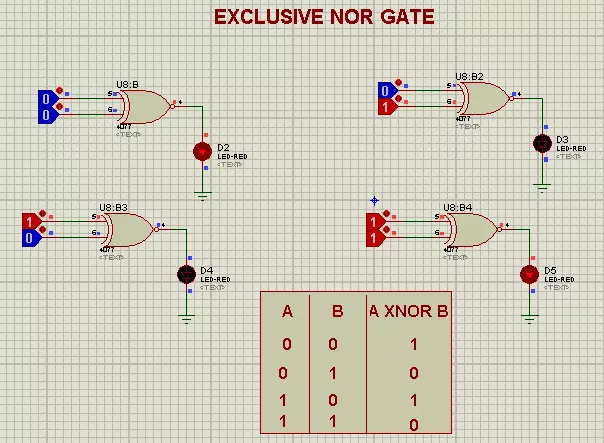
The exclusive NOR Gate(also called XNOR Gate) simply inverts the output of the XOR Gate(we discussed in the last lecture).So, if we simply place a NOT Gate in front of the XOR Gate, we wi ...
Hey pals! I wish you are doing great. Welcome to a new lesson about the Digital Logic Circuits in The Engineering Projects. In the past tutorials, we Designed the Basic JK Flip Flop. Today, we'll talk about the following Points:
What are JK Flip Flops?
What are the Master Slave Flip Flops?
How does the Circuit of Master Slave Flip Flop looks?
How types of JK Flip Flop different from each other?
How does the simulation of Master JK Flip Flip take place in Proteus ISIS?
Moreover, we'll also learn some key concepts in DID YOU KNOW portions. Yet Let's recall some points about the topic. Flip Flops are the building block of a huge number of electronic systems and devices. A Flip Flop is a Digital circuit that can take the bits as input, wor ...
Hey Mentees! Welcome from the team of The Engineering Projects. We hope You are having a reproductive day. To add more reproduction, let's learn another Logical Circuit from scratch.
In this Tutorial, we'll grasp the following topics:
What are D-Type Flip Flop?
Which is the IC of D Flip Flop in Proteus ISIS?
How is the working of D Flip Flop?
How can we design the Truth Table of D Flip Flop?
How can we Perform the formation of D Flip Flops in Proteus ISIS?
Moreover, we'll have small chunks of information in DID YOU KNOW Sections. At this instance, Let's start the learning.
D-Type Flip Flops
D-Type Flip Flops are important Logical Circuits and we Introduce it as:
"The D-Type Flip Flop is a type of Flip Flop that captures the value of D ...
Hi Learners! I hope you are having a productive Day. Welcome from the Team of The Engineering Projects. The digital logic circuit that we are learning today is 4-Bit Full Adder. In our previous tutorial, we designed 2-Bit Full Adder using Logic Gates in Proteus software. Today, we are going to design & simulate 4-Bit Full Adder using Logic Gates in Proteus.
We will discuss the following topics in today's lecture:
What is Adder?
What is Full Adder?
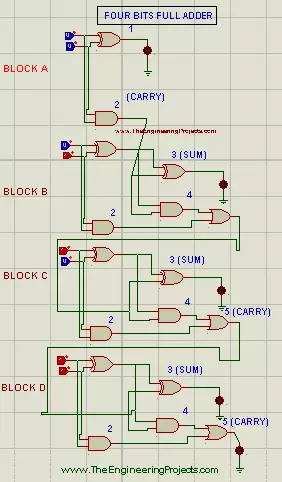
Working Principle of 4-bit Full Adder.
Simulation of four-bit full Adder in Proteus ISIS.
What is Adder?
Let's recall the Adder Definition from our previous lectures:
Adders are Digital Logical Circuits, specially designed to add two or more binary numbers or bits.In the world o ...
Hello Learners! I hope you are doing great. Welcome to The Engineering Projects. In our previous lecture, we discussed How to design Half Adder with Universal Gates. In today's tutorial, we are going to design Full Adder with Logical Gates.
In today's tutorial, we will learn the complete information about:
What is Adder?
What is Full Adder?
How is the Truth Table of Full Adder?
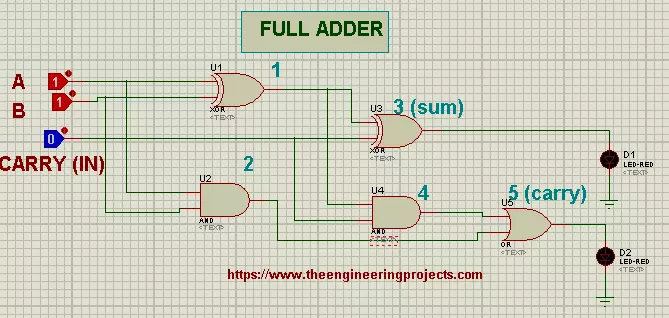
How can we design Full Adder in Proteus ISIS?
What are the uses of Full Adder?
What is Adder?
Recalling from our previous lectures:The Adders are simple Logical Circuits that take the bits in as the input, sum the bits together and generate the sum and the carry at the output.Adders are present in computer architecture, mainly to control the ...
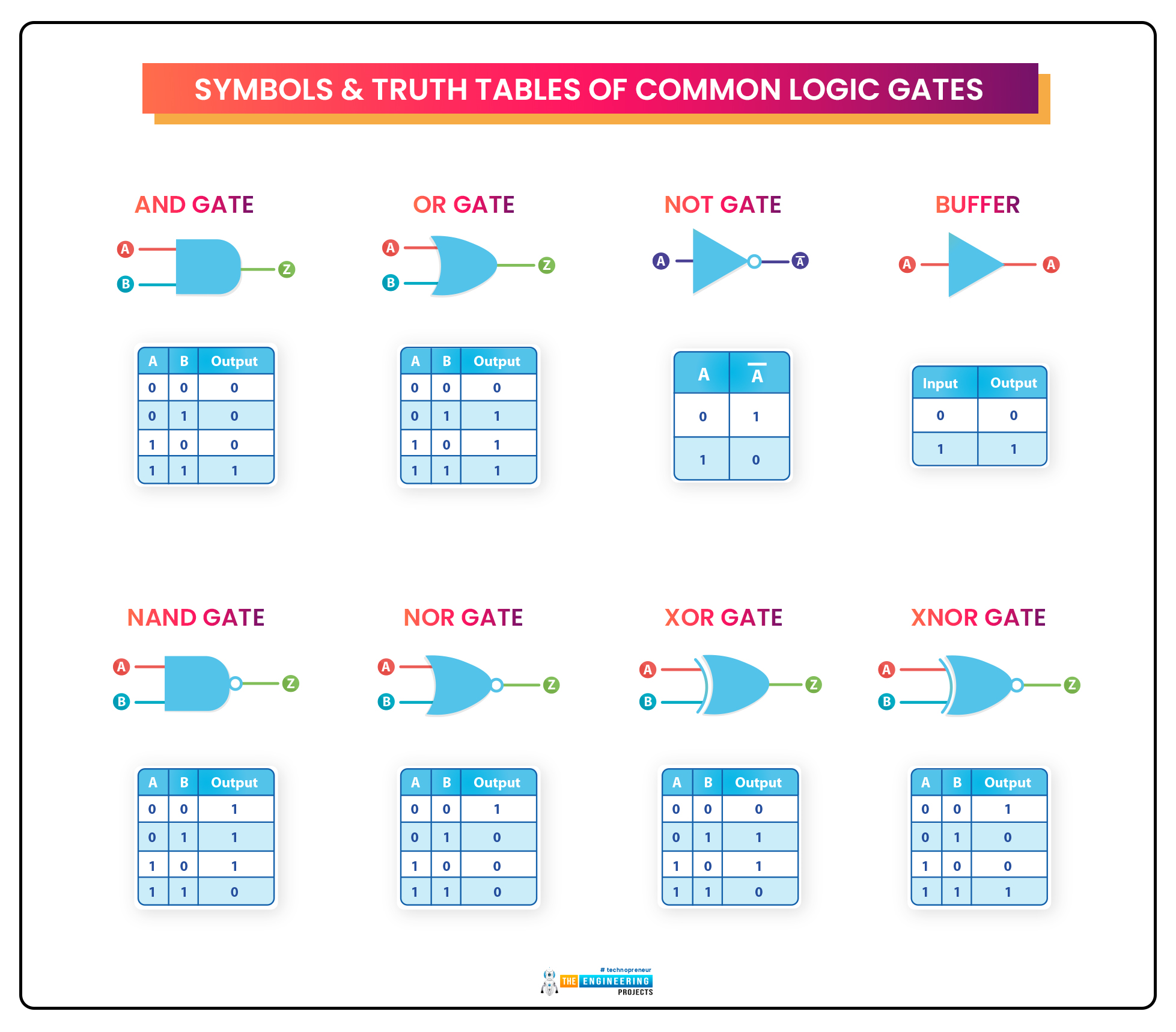
Hello Mentees! I hope you all are doing well. In today's article, we'll learn about the very basic pillar of Digital Logic Circuits i.e. Logic Gates. As we know, the digital world depends on Boolean digits either 0 or 1. So, there's always a need to perform different operations on these boolean numbers i.e. addition, subtraction, multiplication, shifting etc. In order to perform these operations on the binary signals, we use Digital Logic Gates in DLD circuits.So, let's have a look at What is a Logic Gate:What is a Logic Gate?
Logic Gates are designed to perform a specified operation(i.e. addition, bit shift etc.) on the input signals and generate the output signal.
For example, a simple NOT gate takes a single binary input and returns its inverse in the output, i.e.If Input is 0, the Ou ...
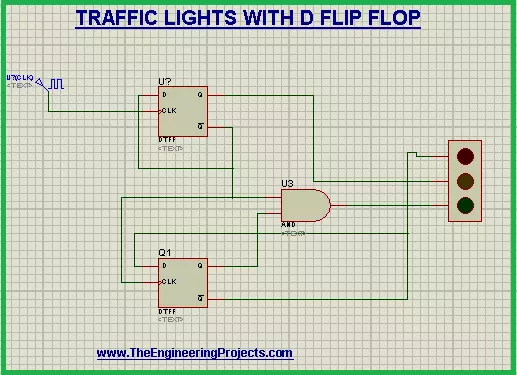
Hi Mentees! we hope you are doing great. Welcome to a super easy yet useful project based upon the simulation in Proteus. We are working on the Traffic Lights project that will work with the help of D Flip Flop. In this simple tutorial, you will be aware of the following concepts:
What are the Traffic Lights using D Flip Flop?
What is the role of D Flip Flop?
How does the circuit of D Flip Flop work in the Traffic Lights?
How can you simulate the circuit of Traffic Lights with D Flip Flop in Proteus?
In addition, you will find some important information about the Traffic Lights circuit in the DID YOU KNOW Sections. Let's start learning.
Traffic Lights with D Flip Flop
Who is not aware of the traffic lights? we all observe and use the Traf ...
Hey Pals! We hope you are doing Great. Today, we are going to design another application of DLD Logical Gates i.e. Half Subtractor. In our previous lectures, we covered Adders in detail, where we studied both Half Adders & Full Adders. Now its time to discuss its reciprocal i.e. Subtractors.
In this session, we'll seek the answers to the following topics:
What is Half Subtractor?
Working Principle of Half Subtractor.
Truth-table of Half Subtractor.
Simulation of Half Subtractor in Proteus using three Logic Gates.
Designing of Half Subtractor with NOR gate.
So, let's get started:
What is Subtractor?The functionality of Subtractors is exactly the opposite of Adders(we discussed in previous lectures) and defined as:A Subtractor is a simple DLD Electronic circuit, d ...
Hey Learners! I welcome you on the behalf of The Engineering Projects. I hope you are doing Great. If you are seeking for the best information about the T Flip Flop along with some small concepts and the Practical Performance, then you are at the right article. In this session you will get the following topics:
What are T Flip Flops?
What are the Functions of Preset and Clear Input in T Flip Flop?
How can we Design the Truth Table of T Flip Flop?
How can you perform the T Flip Flop simulation in very simple and useful way?
Moreover, you will also get some pieces of information in DID YOU KNOW sections. so without wasting time, lets Jump into the answer of 1st Question.
T Flip Flop
T Flip Flop belongs to the family of Flip Flops and Latche ...