


Project Files of nRF9160 Feather Library for Proteus: Cellular SMS Simulation
 Libraries
 Code
 Projects
 Simulation
1bbe1476a120409dba57e9e6a2f73c6c.zip
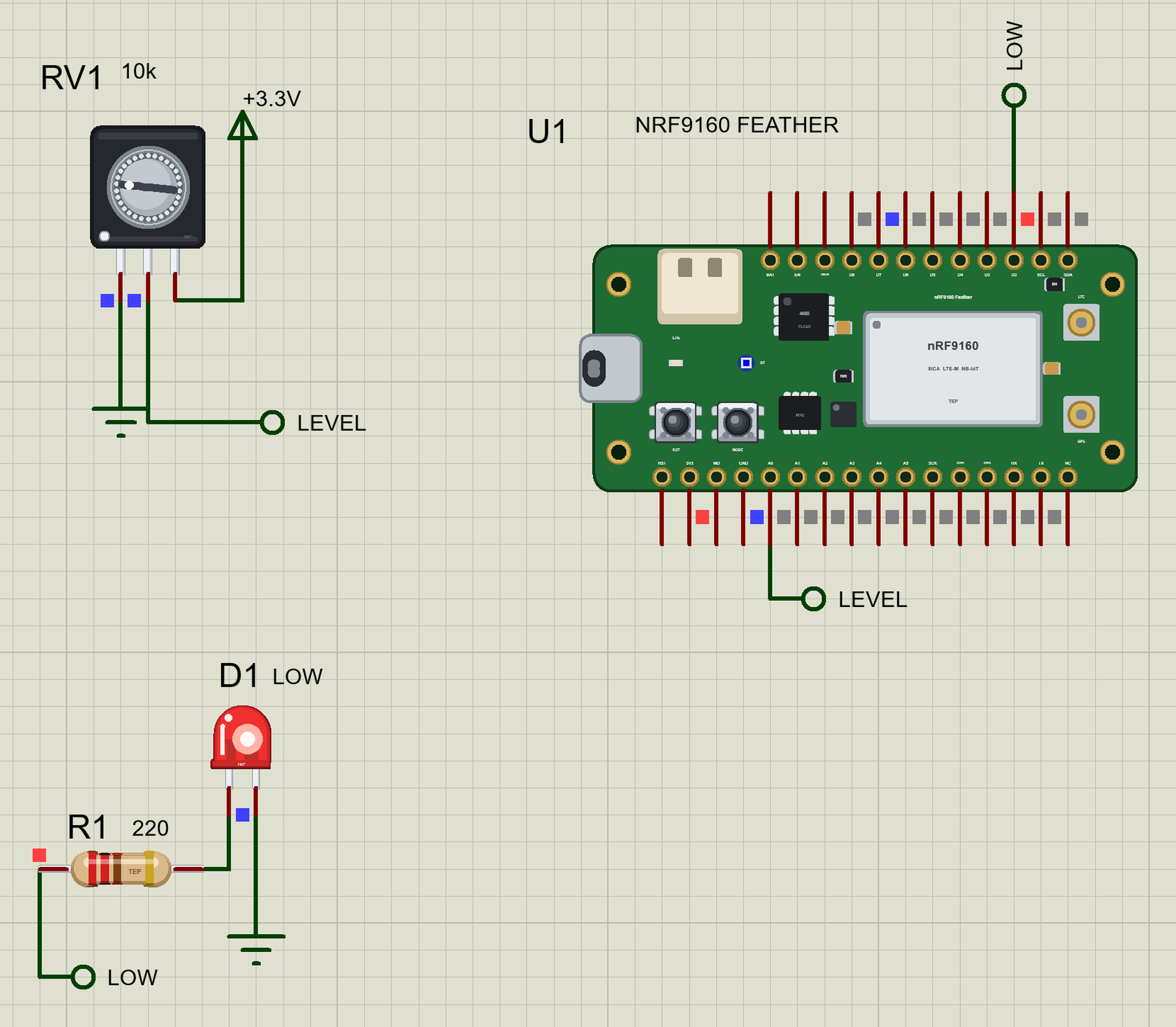
nRF9160 Feather Library for Proteus V1.0
nRF9160 Feather Library for Proteus V1.0 comes as a ZIP archive of 338 files (4.2 MB, 9.8 MB unpacked) holding Proteus library files, simulation model DLLs, a Proteus simulation, an Arduino sketch, an Arduino library, compiled HEX firmware and source code.
- LIBProteus library
- DLLProteus model
- DSNProteus simulation
- INOArduino sketch
- LIBArduino library
- HEXHEX firmware
- SRCSource code
Description
nRF9160-Feather-Library-for-Proteus-v1.0.zip with Circuit Dojo's nRF9160 Feather in Proteus (your sketch with the LTE-M / NB-IoT modem on SerialModem: SMS and GNSS, the blue LED, the MODE button and a serial monitor; TEPFEATHER9160.LIB, TEPNET.DLL and the TEP Boards for Proteus add-on 1.97.0), the cellular tank level alarm demo and a README.

File Structure
 File Structure
8.2 KB1.1 KB7.7 KB11 KB8.5 KB1.5 KB1.7 KB1.9 KB5.7 KB4.9 KB1.1 KB5.8 KB9.6 KB7.2 KB2.5 KB2.1 KB1.9 KB2.1 KB4.4 KB1.1 KB3 KB3 KB1.8 KB2.5 KB3.5 KB149 B2.7 KB2 KB6.4 KB3.2 KB1.3 KB963 B8.6 KB5.9 KB6 KB12 KB1.6 KB1.3 KB14.7 KB4.3 KB6.1 KB20.1 KB8.2 KB2 KB4.5 KB311 B12.8 KB6.7 KB6.1 KB2.2 KB3.4 KB5.9 KB1.5 KB1.6 KB16.6 KB9.7 KB6.9 KB2.1 KB533 B5.7 KB7.4 KB514 B1.7 KB896 B481 B1.4 KB1012 B482 B936 B559 B467 B3.6 KB3.8 KB504 B956 B575 B455 B8.3 KB10.9 KB522 B79 B5.5 KB3.1 KB79 B442 B918 B1.4 KB1.8 KB1 KB1.3 KB1.4 KB1.8 KB1.4 KB5.7 KB502 B463 B5 KB6.5 KB3.4 KB3.4 KB500 B1.6 KB368 B406 B466 B404 B444 B460 B477 B739 B448 B1.3 KB350 B5.7 KB4 KB562 B1.5 KB2 KB550 B7.2 KB4.1 KB371 B4.5 KB3.5 KB492 B390 B478 B6.6 KB2.4 KB479 B1.1 KB497 B5.1 KB1.9 KB1.3 KB1.3 KB750 B1.3 KB490 B2.2 KB1.9 KB498 B1.2 KB1.2 KB487 B5.1 KB4.6 KB371 B3.6 KB2.5 KB534 B1.5 KB1.2 KB478 B6.2 KB3 KB1.5 KB1.7 KB469 B1 KB1.7 KB433 B294 B358 B1.3 KB2.5 KB13.2 KB3.8 KB659 B510 B4.4 KB1.9 KB5.8 KB11 KB835 B518 B308 B1.3 KB3.3 KB568 B6.4 KB2.3 KB29 B436 B9.2 KB4.9 KB439 B4.2 KB1.5 KB9.3 KB7.1 KB4.7 KB2.4 KB388 B5.1 KB893 B667 B1.3 KB5.5 KB2.3 KB1.8 KB468 B882 B530 B791 B487 B894 B2 KB730 B646 B2.6 KB977 B702 B20.6 KB1.8 KB11.8 KB3.2 KB596 B406 B6.3 KB5.7 KB9.3 KB7.7 KB7.7 KB6.1 KB6.5 KB6.8 KB5.8 KB5.9 KB6.4 KB6.4 KB5.3 KB5.6 KB5.7 KB7.9 KB7.7 KB6.5 KB6.3 KB6.2 KB6.4 KB5.9 KB10.3 KB7 KB8.5 KB6.2 KB6.6 KB7.6 KB6.7 KB6.1 KB6.7 KB8.3 KB6.2 KB7.2 KB6.2 KB5.9 KB5.6 KB5.7 KB6.7 KB5.9 KB6.2 KB6 KB6 KB6.1 KB6.3 KB6 KB6.1 KB6.2 KB6 KB5.8 KB6.4 KB6.4 KB6.4 KB3.8 KB6.4 KB7.3 KB6.4 KB4 KB6.9 KB7.7 KB6 KB6.8 KB6.9 KB7 KB7 KB6.3 KB6.4 KB6.5 KB6.5 KB6.6 KB6.5 KB5.9 KB6.1 KB5.6 KB6.6 KB5.9 KB5.9 KB7.5 KB3.9 KB3.8 KB4.5 KB4.4 KB5.4 KB7.7 KB7.1 KB5.8 KB5.9 KB5.9 KB6.9 KB5.7 KB5.9 KB5.8 KB5.5 KB5.5 KB7.1 KB5.2 KB5.1 KB48.1 KB25.9 KB1.3 KB8.5 KB38.5 KB32.4 KB39.5 KB21.8 KB13.1 KB208.6 KB306.9 KB289.5 KB3.0 MB310 KB311 KB39.6 KB25.7 KB289.5 KB3.0 MB310 KB311 KB13.4 KBGallery12 images from the tutorialOpen the tutorial
 Gallery12 images from the tutorial
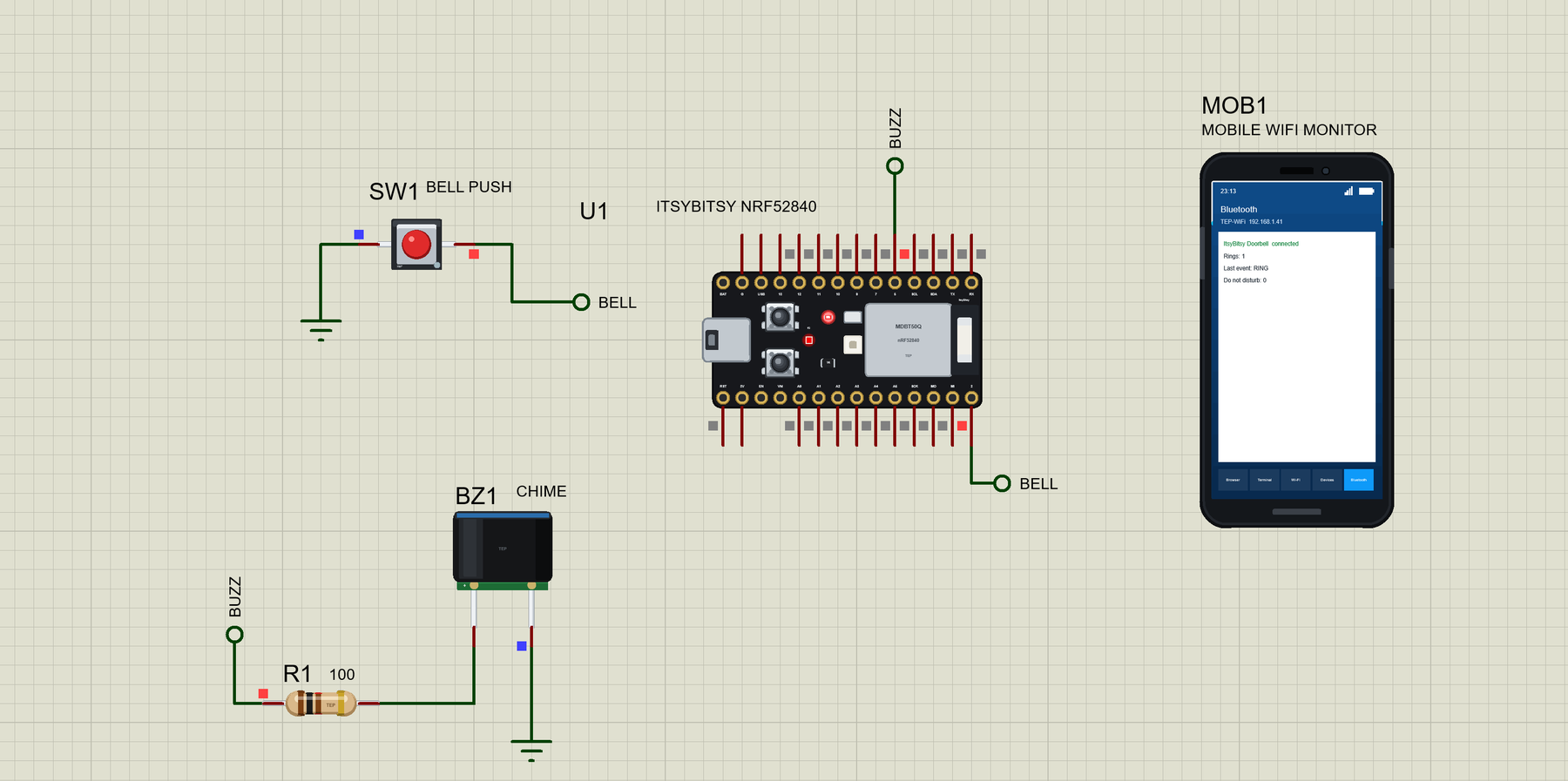
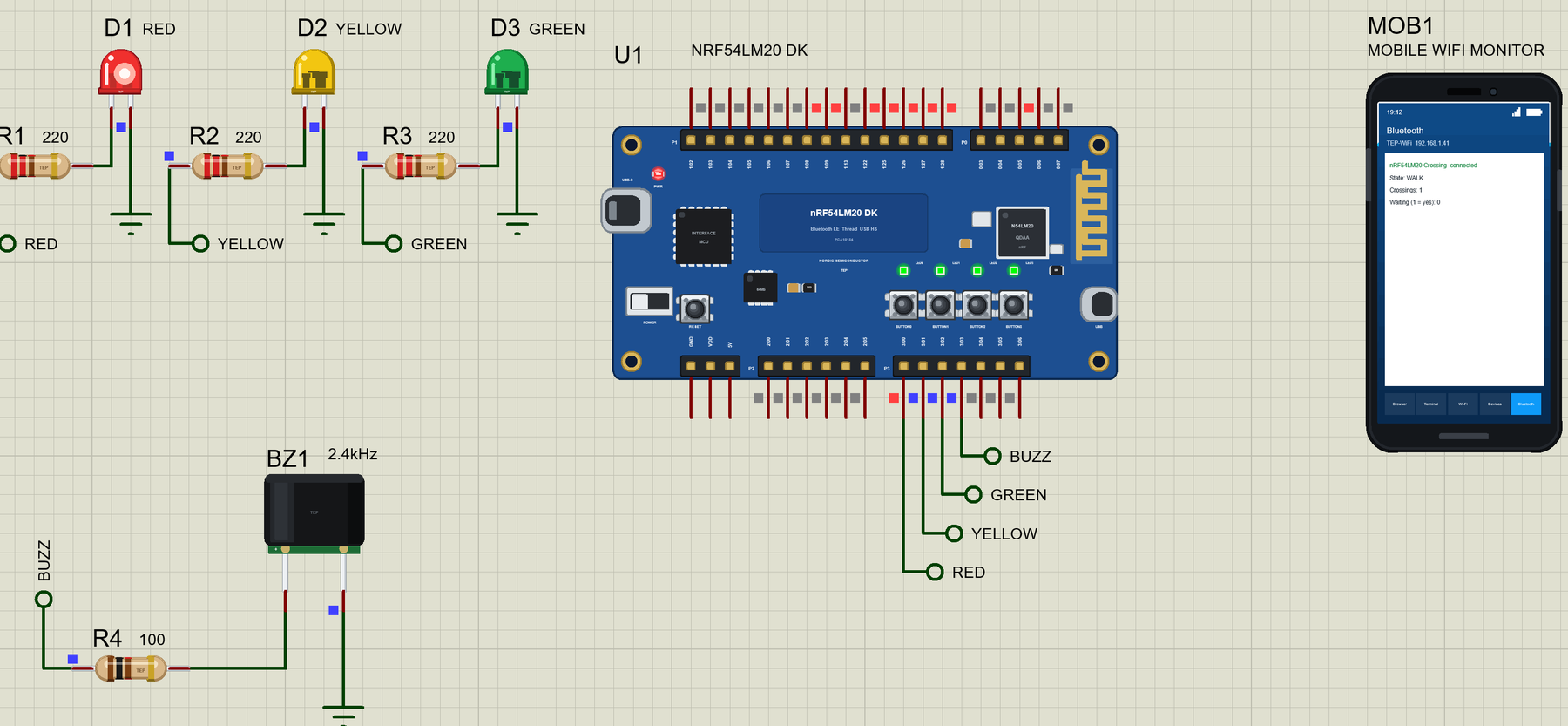
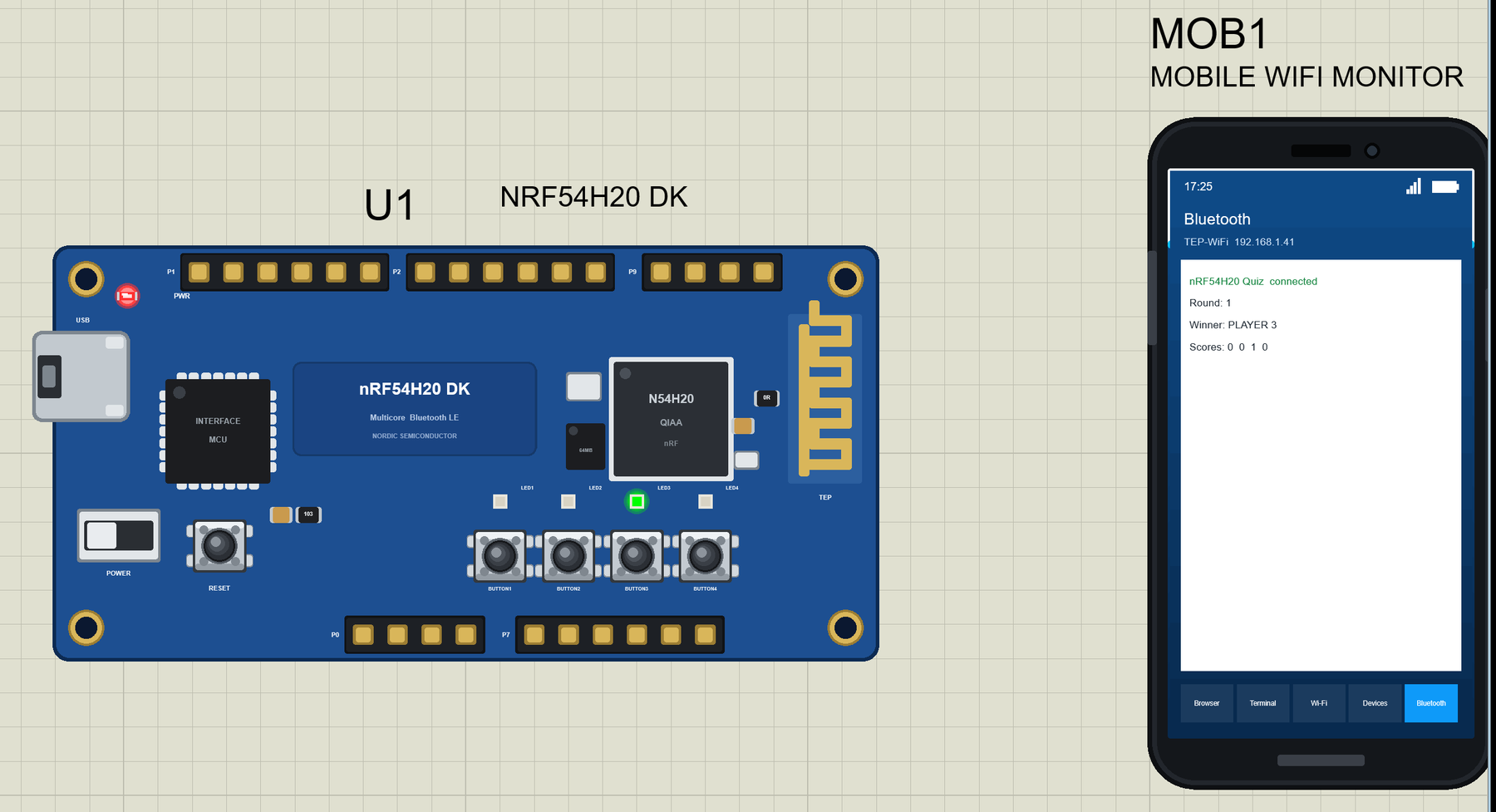
The circuit, the board and the results as they appear in nRF9160 Feather Library for Proteus: Cellular SMS Simulation. Open an image for its full size.
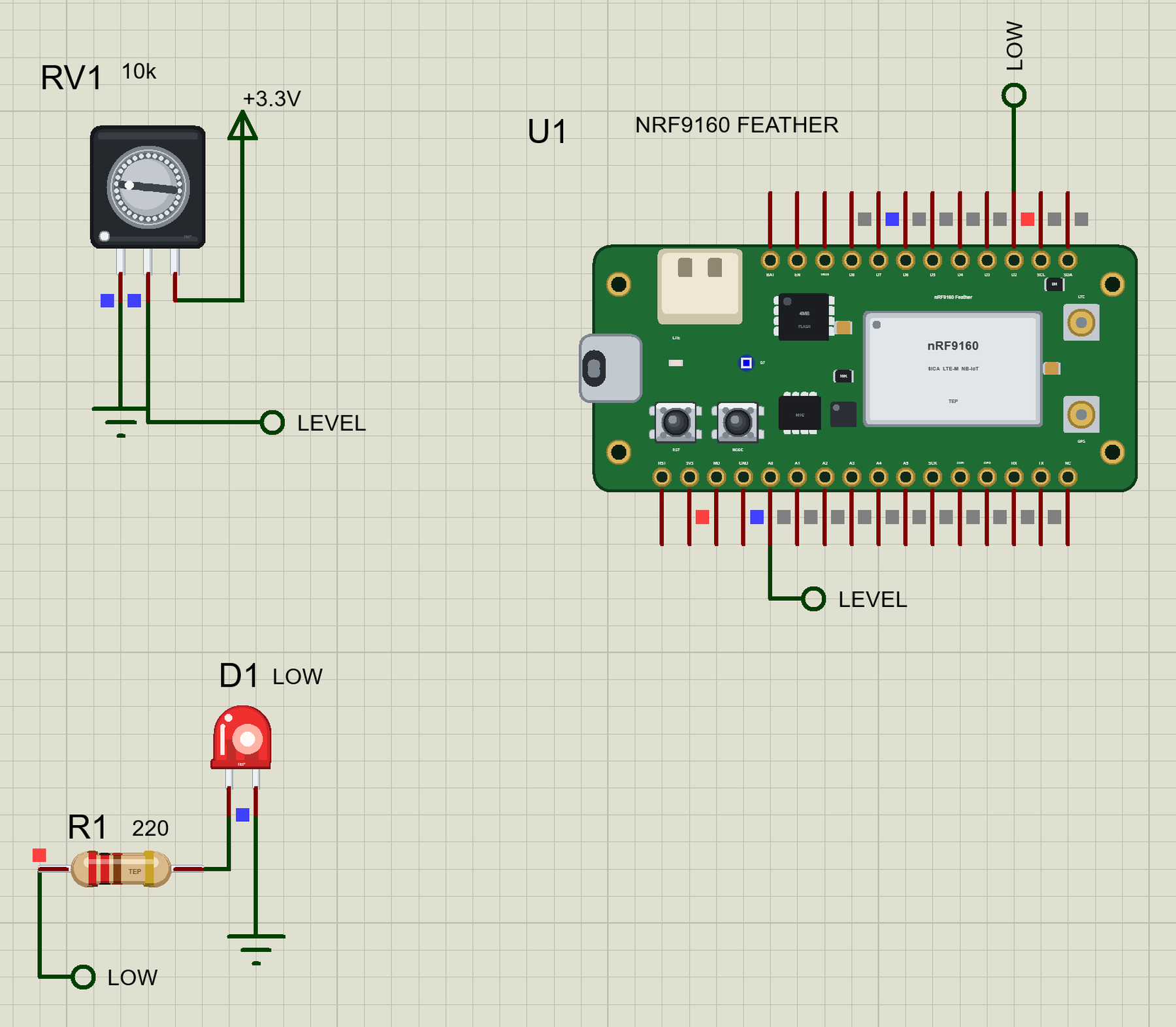
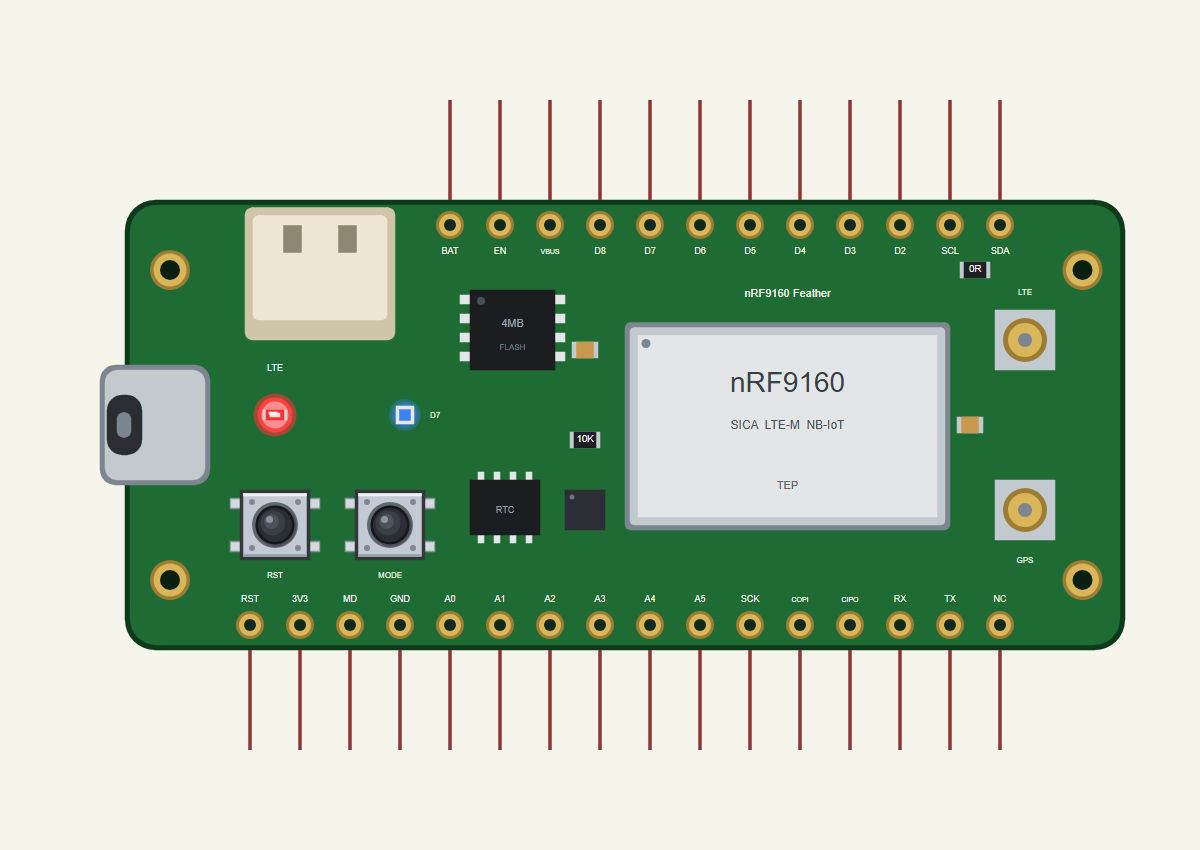
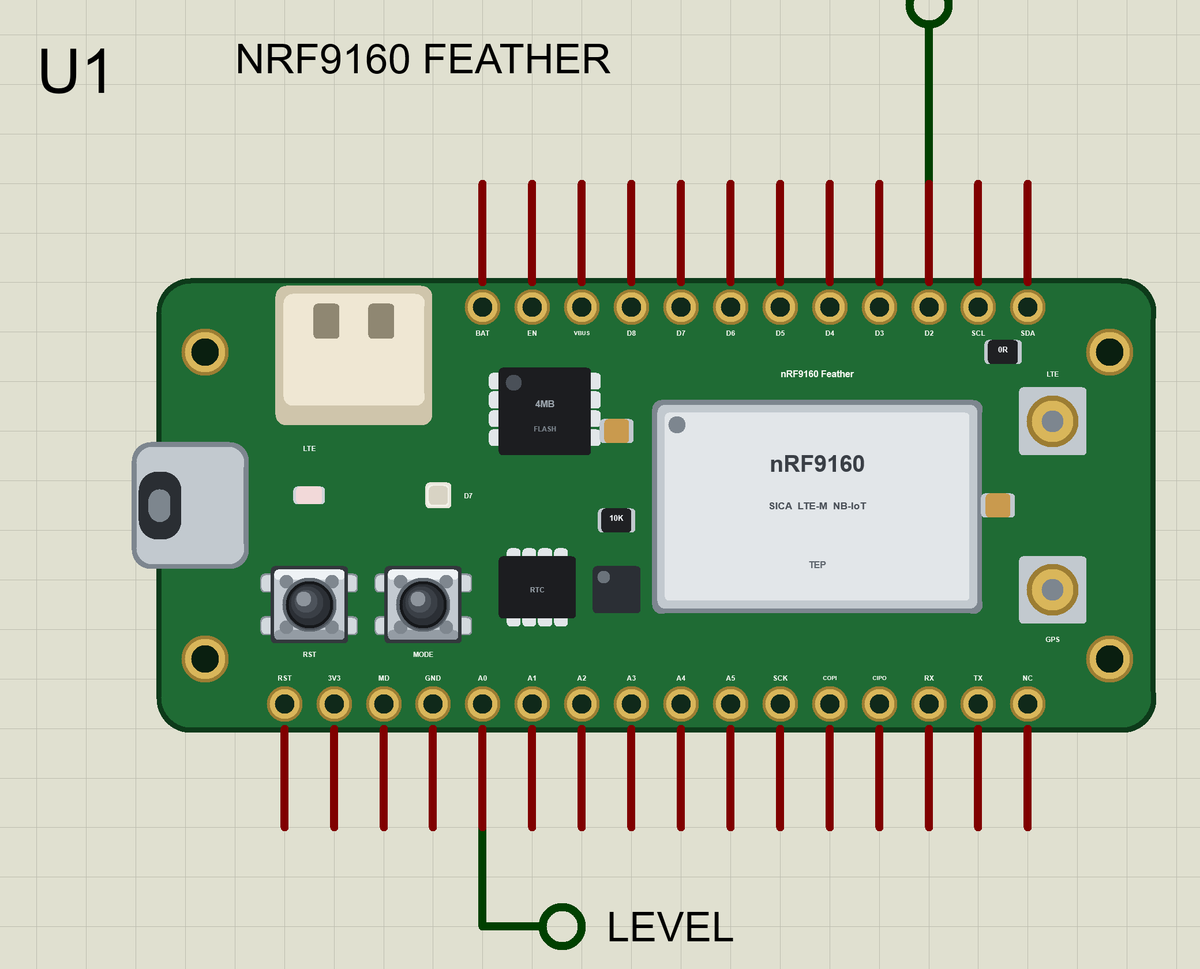
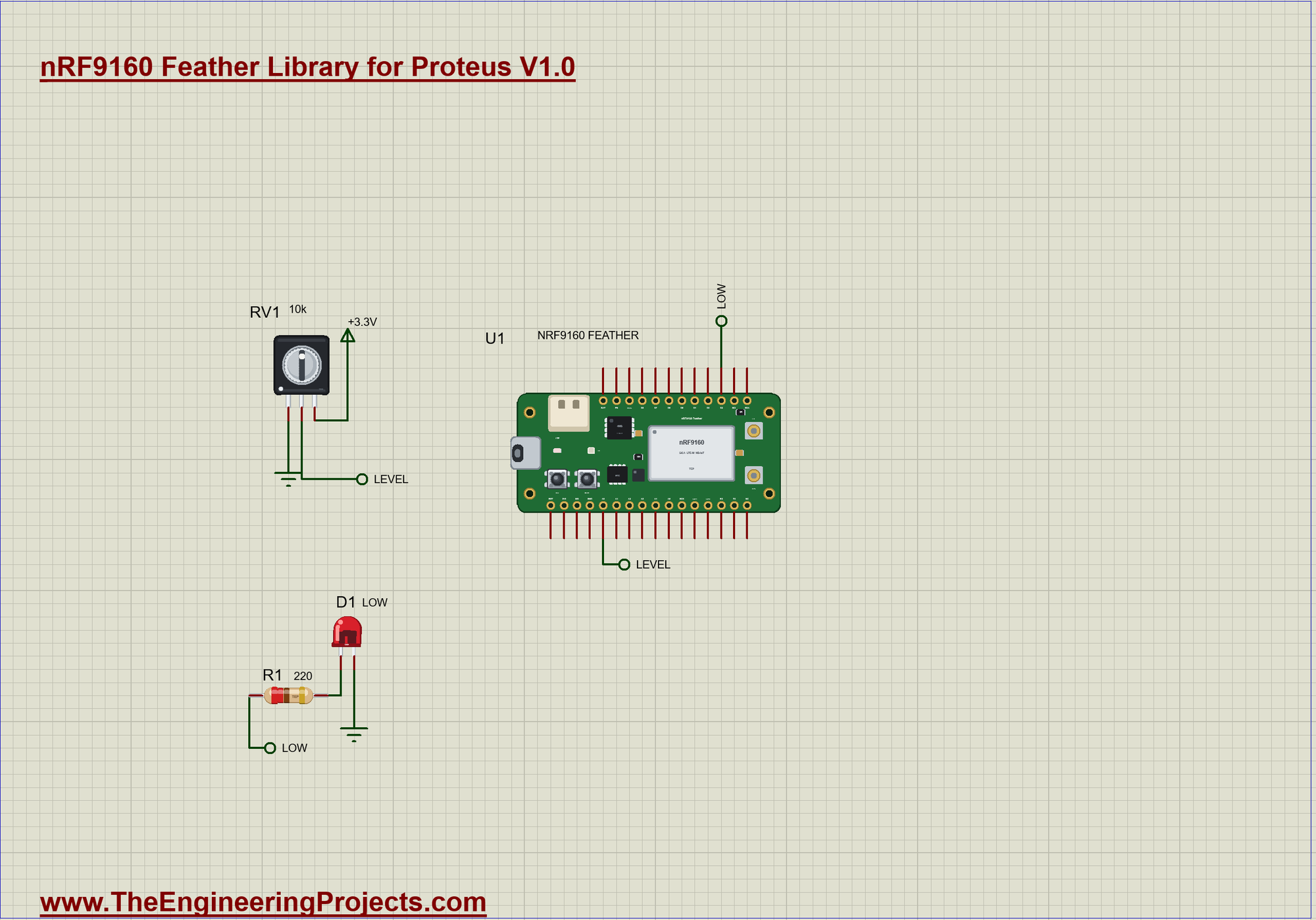
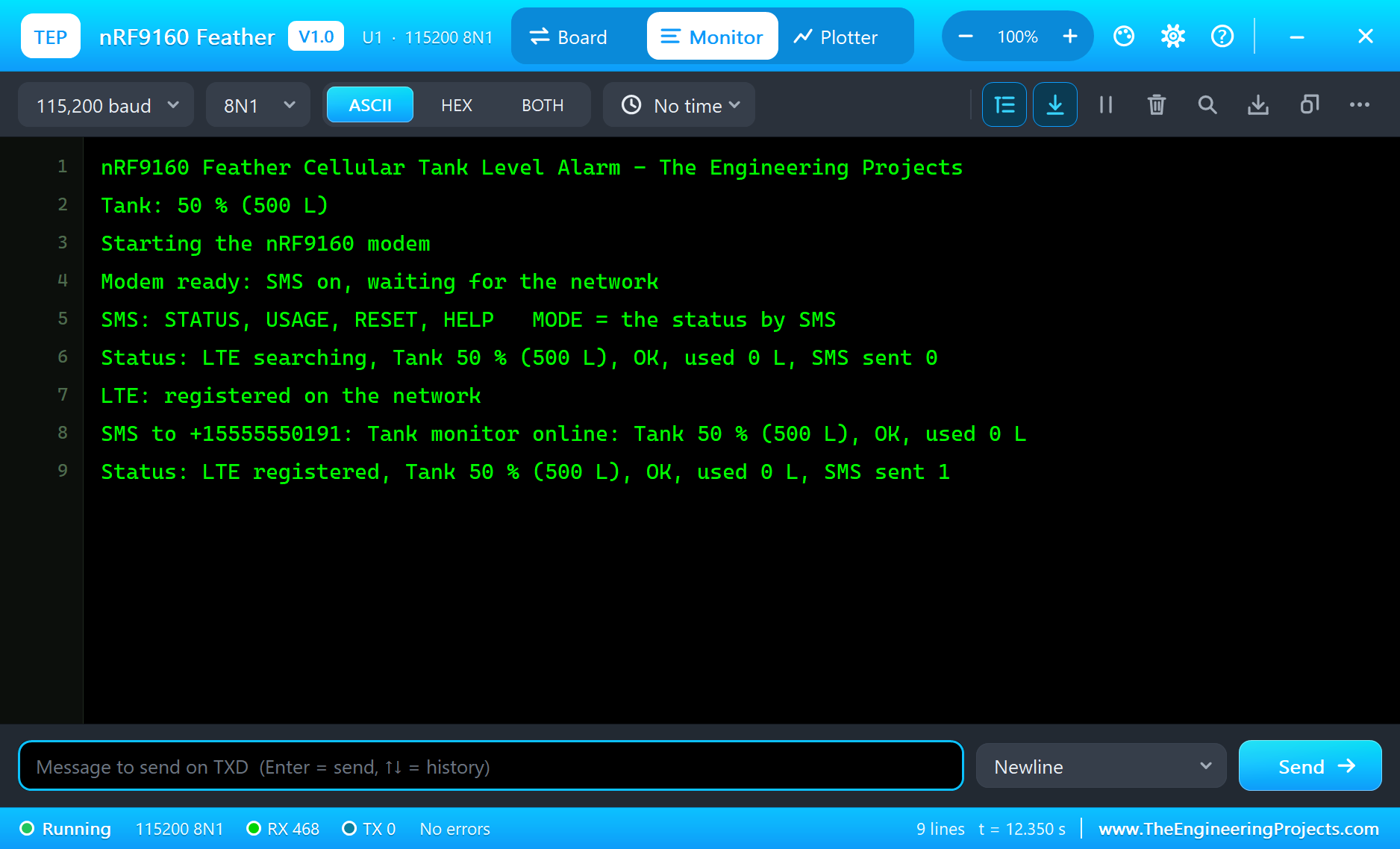
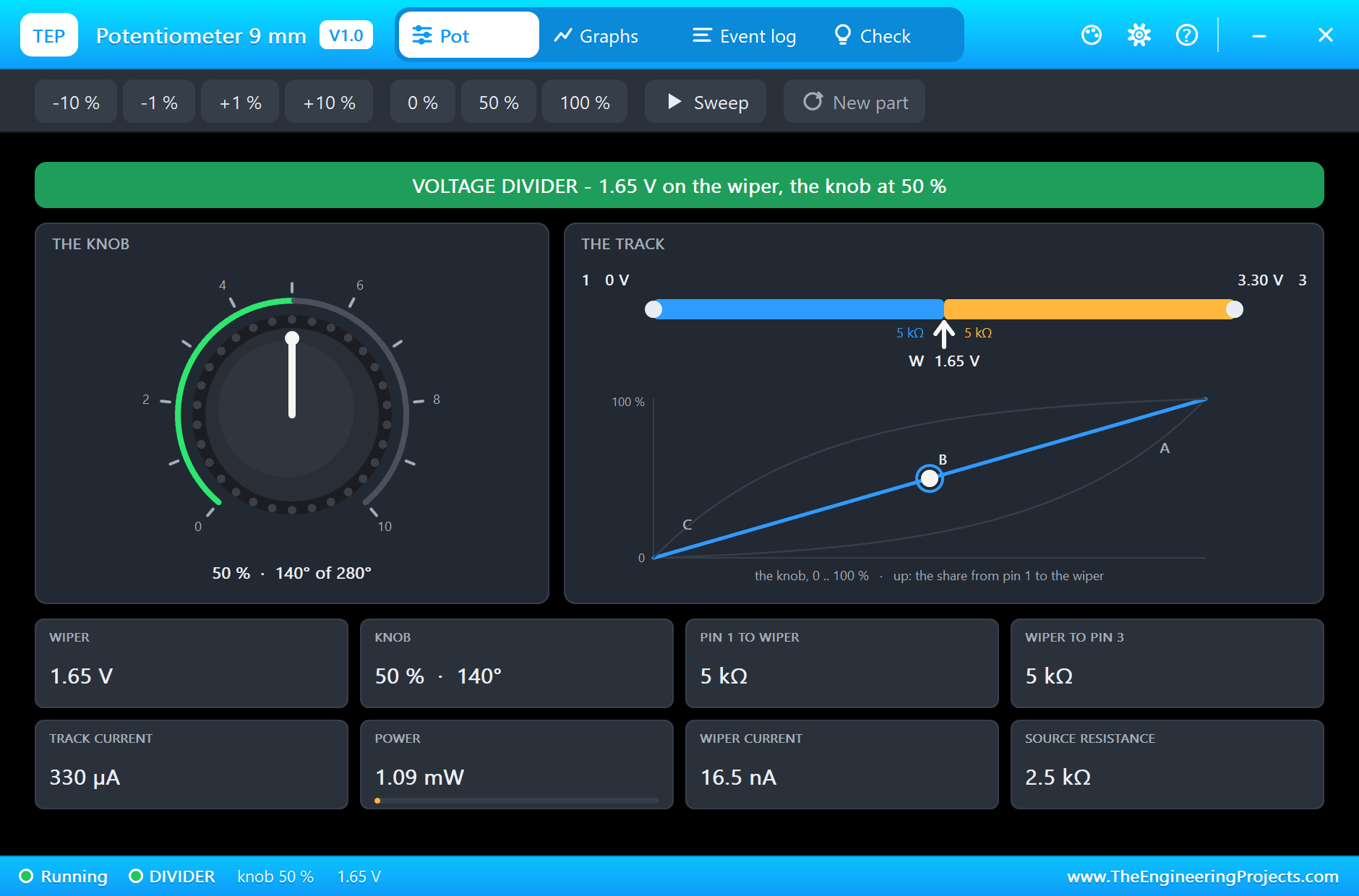
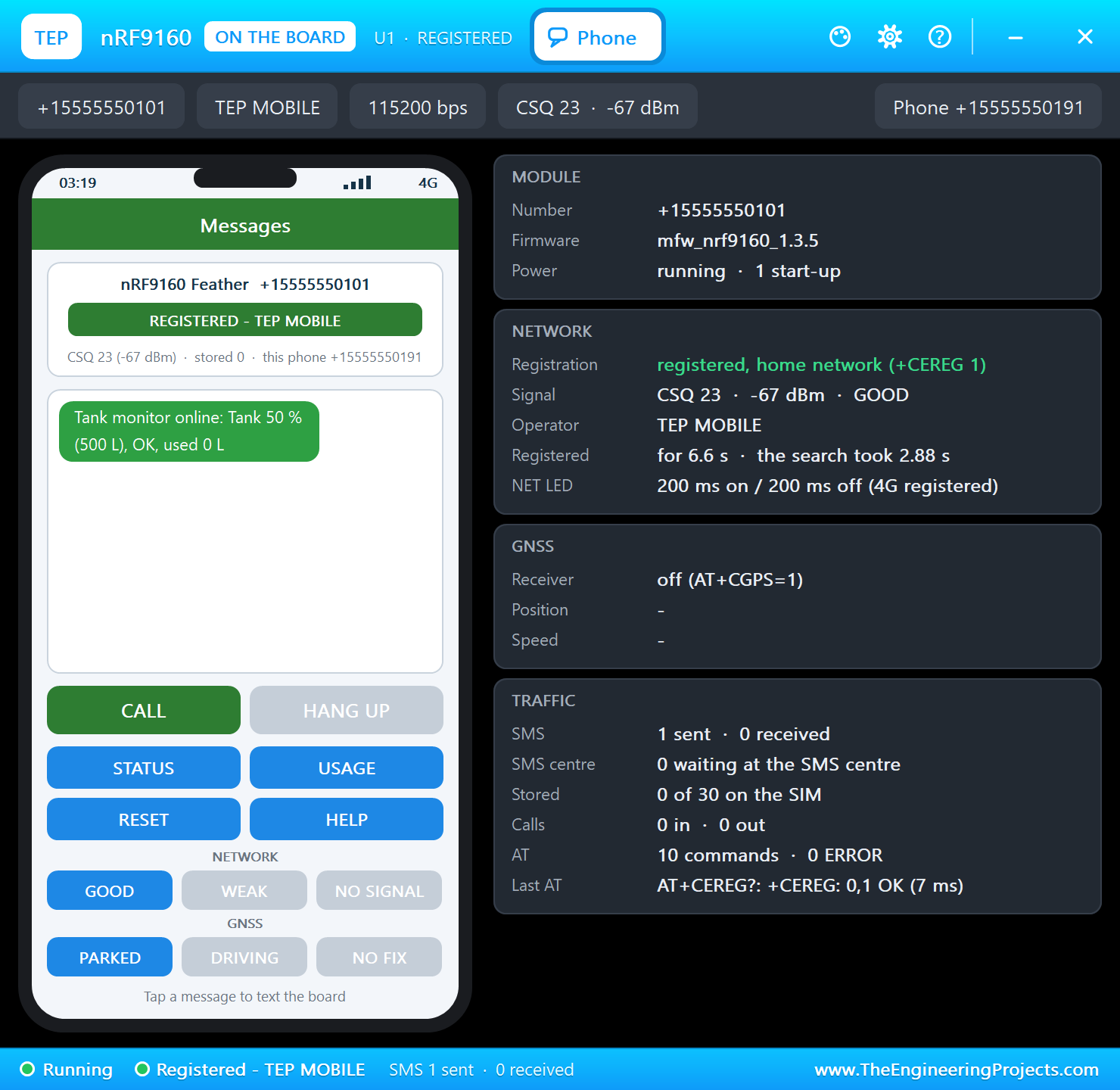
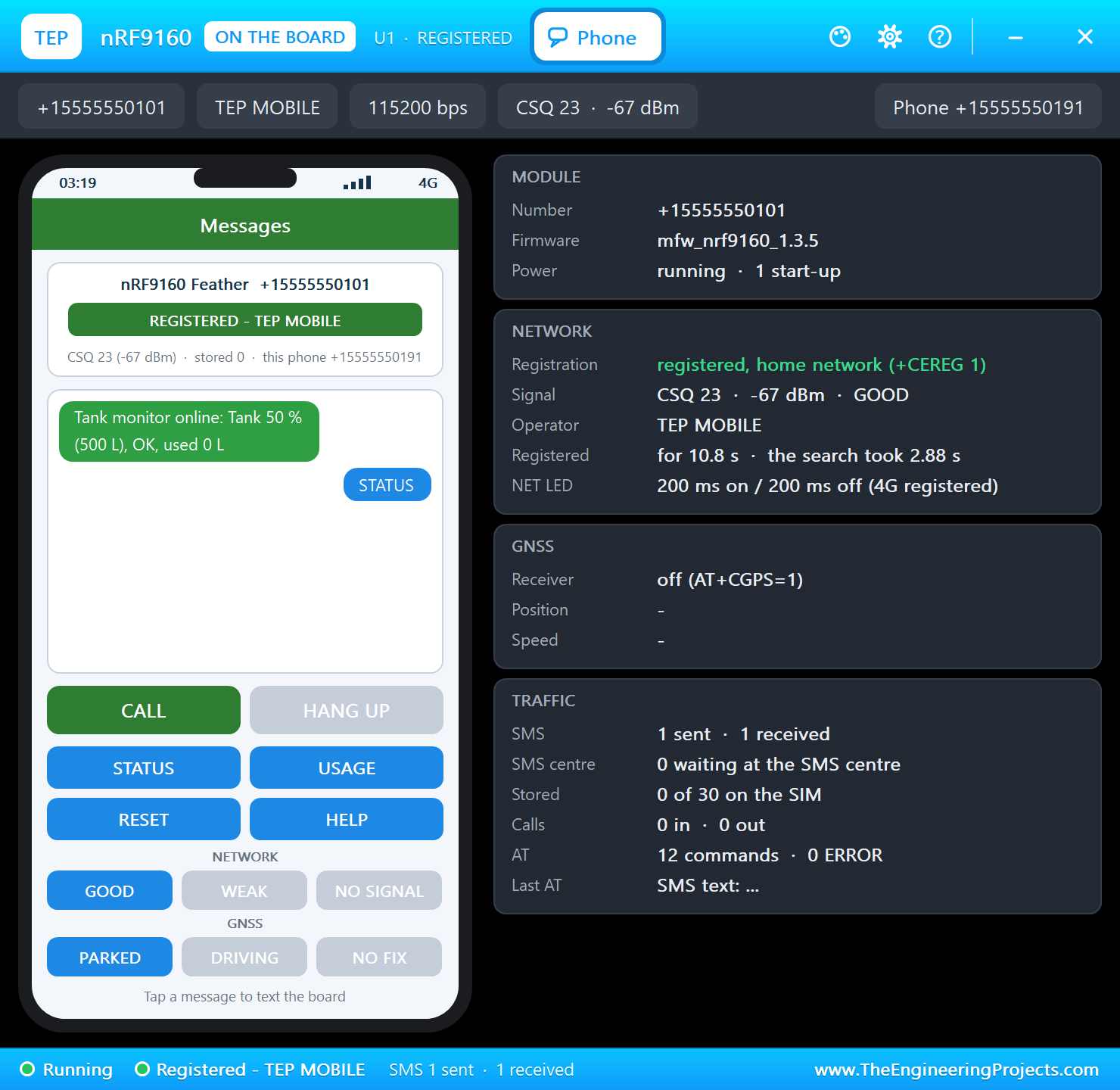
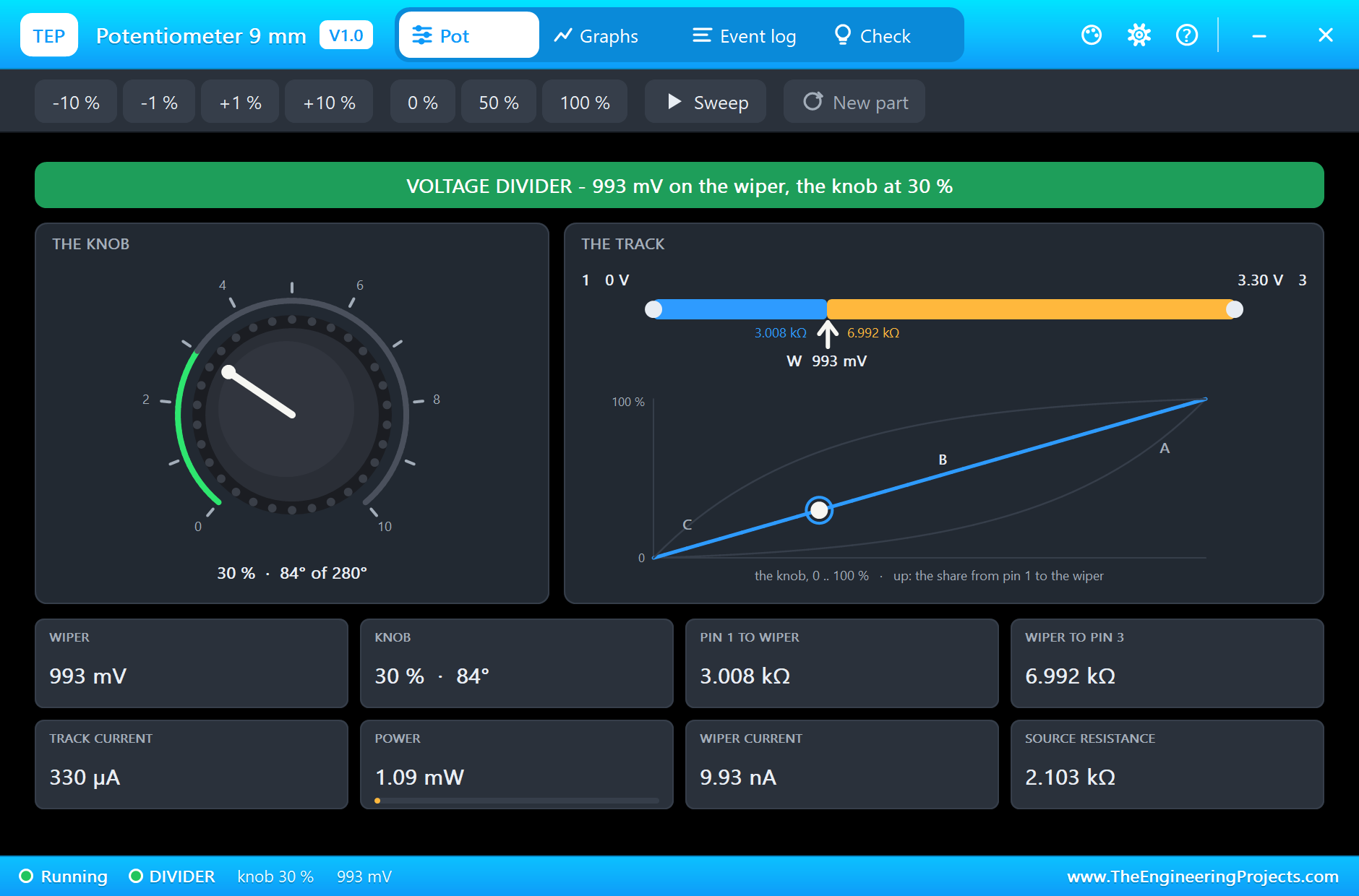
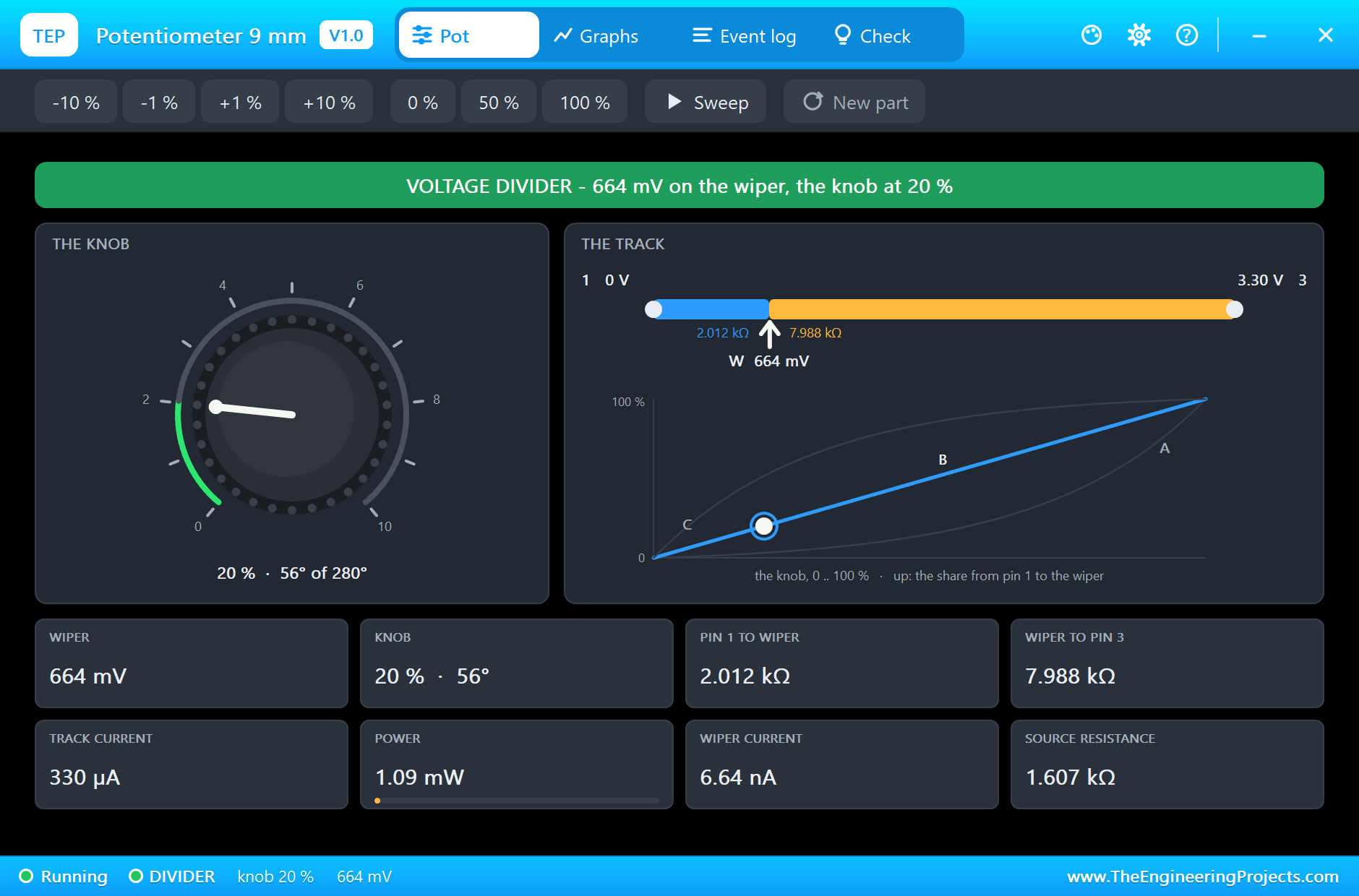
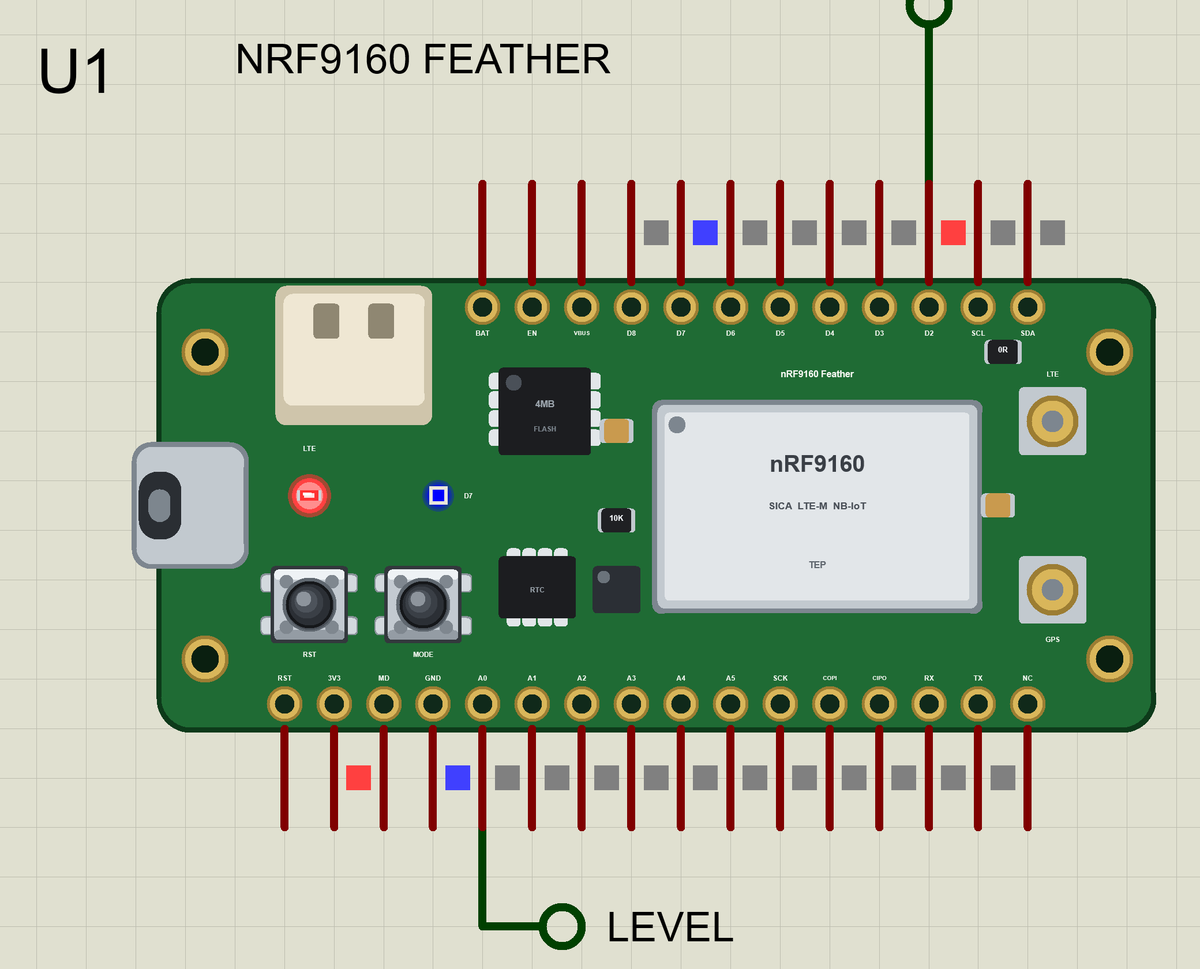
README
 README
NRF9160 FEATHER LIBRARY FOR PROTEUS - V1.0 (YOUR ARDUINO SKETCH, THE LTE-M / NB-IOT MODEM WITH SMS, THE FEATHER PINS)
Designed by The Engineering Projects
www.TheEngineeringProjects.com

IMPORTANT LINKS
Article (read it first - pictures, step by step, every feature explained):
  https://www.theengineeringprojects.com/2026/11/nrf9160-feather-library-for-proteus.html
Report a bug or suggest a feature (our forum):
  https://www.theengineeringprojects.com/forum
The demo's other parts are our libraries (included) - their articles:
  https://www.theengineeringprojects.com/2026/11/potentiometer-library-for-proteus.html
  https://www.theengineeringprojects.com/2026/11/5mm-led-library-for-proteus.html
  https://www.theengineeringprojects.com/2026/11/resistor-library-for-proteus.html
Support us (the libraries are free):
  https://www.theengineeringprojects.com/donate

FILE STRUCTURE
nRF9160-Feather-TEP-v1.0/
|-- Proteus Library Files/
|   |-- TEPFEATHER9160.LIB                               32.4 KB   the nRF9160 Feather, to LIBRARY
|   |-- TEPLAPTOP.LIB                                    39.5 KB   the laptop (demo), to LIBRARY
|   |-- TEPLED5MM.LIB                                    21.8 KB   the 5 mm LED (demo), to LIBRARY
|   |-- TEPMOBILE.LIB                                    13.1 KB   the phone (demo), to LIBRARY
|   |-- TEPPOT.LIB                                      208.6 KB   the potentiometer (demo), to LIBRARY
|   |-- TEPRESISTOR.LIB                                 306.9 KB   the resistor (demo), to LIBRARY
|-- Proteus Model Files/
|   |-- TEPLED5MM.DLL                                   289.5 KB   the 5 mm LED, to MODELS
|   |-- TEPNET.DLL                                       2.99 MB   the board + monitors + network, to MODELS
|   |-- TEPPOT.DLL                                      310.0 KB   the potentiometer, to MODELS
|   |-- TEPRESISTOR.DLL                                 311.0 KB   the resistor, to MODELS
|-- Arduino Code/
|   |-- Feather9160_Tank_Alarm/Feather9160_Tank_Alarm.ino    8.2 KB   the demo sketch
|   |-- TEP Boards for Proteus/hardware/                 1.36 MB   the Arduino IDE add-on 1.97.0 (320 files)
|-- Proteus Simulation/
|   |-- Feather9160_Tank_Alarm.hex                       39.6 KB   the demo sketch (U1)
|   |-- nRF9160-Feather-Tank-Level-Alarm.pdsprj          25.7 KB   the demo: a cellular tank level alarm
|   |-- TEPLED5MM.DLL                                   289.5 KB   copy of the model
|   |-- TEPNET.DLL                                       2.99 MB   copy of the model
|   |-- TEPPOT.DLL                                      310.0 KB   copy of the model
|   |-- TEPRESISTOR.DLL                                 311.0 KB   copy of the model
|-- README.txt                                          ~12.7 KB   this file
Total: 9.81 MB (unzipped). The source code of the models is not included.

WHAT IS IT?
Proteus 8 has no nRF9160 processor model, so this is NOT a real nRF9160 chip. Our team has put a lot of effort into
building this board ourselves: it is Circuit Dojo's nRF9160 Feather - the green Feather board (50.80 x 22.86 mm) with
Nordic's nRF9160 SiP (the processor, the LTE-M / NB-IoT modem and GPS under one shield), the USB-C port, the JST
battery socket, RESET and MODE, the blue LED, the 4 MB SPI flash, the accelerometer, the real-time clock and the two
U.FL sockets for the LTE and GPS antennas - drawn at its real size, and it runs YOUR Arduino sketch in Proteus:
  * You write a normal sketch for the Feather pins (A0 .. A5, D2 .. D8, SDA, SCL, SCK, COPI, CIPO, RX, TX, MD;
    analogRead 0-1023, analogWrite, attachInterrupt, tone, Wire, SPI, Serial) and compile it in the Arduino IDE with our
    board package "TEP Boards for Proteus" 1.97.0 (in Arduino Code - see INSTALLATION).
  * The modem answers AT commands on SerialModem (115200 baud): registration (AT+CEREG?), SMS in text mode (AT+CMGF=1,
    AT+CMGS, AT+CNMI and +CMT), and GNSS (AT+CGPS=1,1, AT+CGPSINFO). MODEM_ON HIGH starts it. On the real chip the
    application starts the modem with Nordic's modem library and sends the same kind of AT commands through it.
  * The board's Phone window is the other end: the owner's phone receives the board's SMS, sends SMS (with four quick
    keys: STATUS, USAGE, RESET, HELP) and sets the network and the GNSS scene.
  * The blue LED is D7 and lights when LOW, as on the real board (LED_BUILTIN). MODE reads LOW while you hold it (it is
    also the MD pin): click it on the board in the running simulation.
TEP additions: the USB-C port opens the serial monitor (the same window as our TEP Serial Monitor Advance); the small
LTE LED shows the modem's network light (its blink changes when the modem registers); a click on the SiP opens the
modem's window.
Limits (say them before you start): there is no Bluetooth in the nRF9160. The accelerometer, the real-time clock, the
SPI flash, the battery charger and the nano-SIM holder (on the back of the real board) are drawn, not modelled. Voice
calls, data (IP, MQTT, CoAP), PSM and eDRX timers are not modelled; SMS is text mode only. Your sketch gets 8 KB of RAM
in the simulation, about 256 KB of flash, and int is 16 bits in the simulation (use long for big numbers). See MODEL
SCOPE AND LIMITS.

ONE DEVICE (search "NRF9160 FEATHER" in Pick Devices):
  NRF9160 FEATHER  "nRF9160 Feather" V1.0 (Microprocessor ICs > Cellular Boards), prefix U, model TEPNET.DLL.
  Its TEP windows have no Windows title bar: the serial monitor (the USB-C port, 115200 baud: Monitor, Plotter and Board
  tabs) and the modem's window (a click on the SiP).
The same TEPNET.DLL also runs our other sketch boards and the phone; it replaces any older TEPNET.DLL (keep only this
newest one in MODELS).

TEST STATUS
V1.0: verified in Proteus 8.5 on 19 Nov 2026 with the demo project as shipped. What the Proteus run showed:
* nRF9160-Feather-Tank-Level-Alarm: "Tank: 50 % (500 L)", "Modem ready", "LTE: registered on the network", the SMS
  "Tank monitor online: Tank 50 % (500 L), OK, used 0 L"; the phone's STATUS key: the report by SMS.
* RV1's -10 % chip three times: ">> Level: 40 % (400 L)", 30 %, 20 %: ">> LOW LEVEL: 20 % (200 L)", the SMS "LOW
  LEVEL ... - refill soon", the LOW lamp and the blue LED lit; the phone's USAGE key: "Used 300 L since the last reset".
* RV1's 100 % chip: ">> Refilled: +800 L", "Level OK again: 100 % (1000 L)" by SMS, the lamp dark; MODE on the board:
  the status by SMS; the phone's RESET key: ">> The usage counter is reset".
* about 45 s of simulation, no errors, with the phone, the pot's window and the monitor open.

INSTALLATION (about 3 minutes)
1. Close Proteus. Extract the WHOLE ZIP to a normal folder (e.g. Desktop).
2. Copy everything in "Proteus Library Files" to the LIBRARY folder of Proteus, for example:
     C:\Program Files (x86)\Labcenter Electronics\Proteus 8 Professional\LIBRARY
   (on some PCs: C:\ProgramData\Labcenter Electronics\Proteus 8 Professional\LIBRARY). TEPFEATHER9160.LIB is the
   board; TEPPOT.LIB, TEPLED5MM.LIB and TEPRESISTOR.LIB are the demo's potentiometer, LED and resistor; TEPMOBILE.LIB
   and TEPLAPTOP.LIB for your own designs.
3. Copy the DLLs from "Proteus Model Files" (TEPNET.DLL, TEPPOT.DLL, TEPLED5MM.DLL, TEPRESISTOR.DLL) to the MODELS
   folder (...\Proteus 8 Professional\MODELS) - replace an older TEPNET.DLL (this one is the first that knows this
   board).
4. Delete TEPFEATHER9160.IDX from the LIBRARY folder if it is there.
5. The Arduino IDE (only to compile your own sketches - the demo has its HEX file): copy the folder
   "Arduino Code\TEP Boards for Proteus\hardware" into your sketchbook folder (normally Documents\Arduino), so that
   Documents\Arduino\hardware\tep\avr\boards.txt exists (replace an older copy); restart the IDE. The Arduino AVR Boards
   platform must be installed (it comes with IDE 1.8.x; in IDE 2.x install "Arduino AVR Boards" from the Boards
   Manager once).
   Tools > Board > TEP Boards for Proteus > Circuit Dojo nRF9160 Feather (TEP Proteus). The demo needs no other library.
6. Start Proteus. In Pick Devices (P) search "NRF9160 FEATHER".

RUN THE DEMO
Keep the .hex file and the DLLs beside the project in "Proteus Simulation".
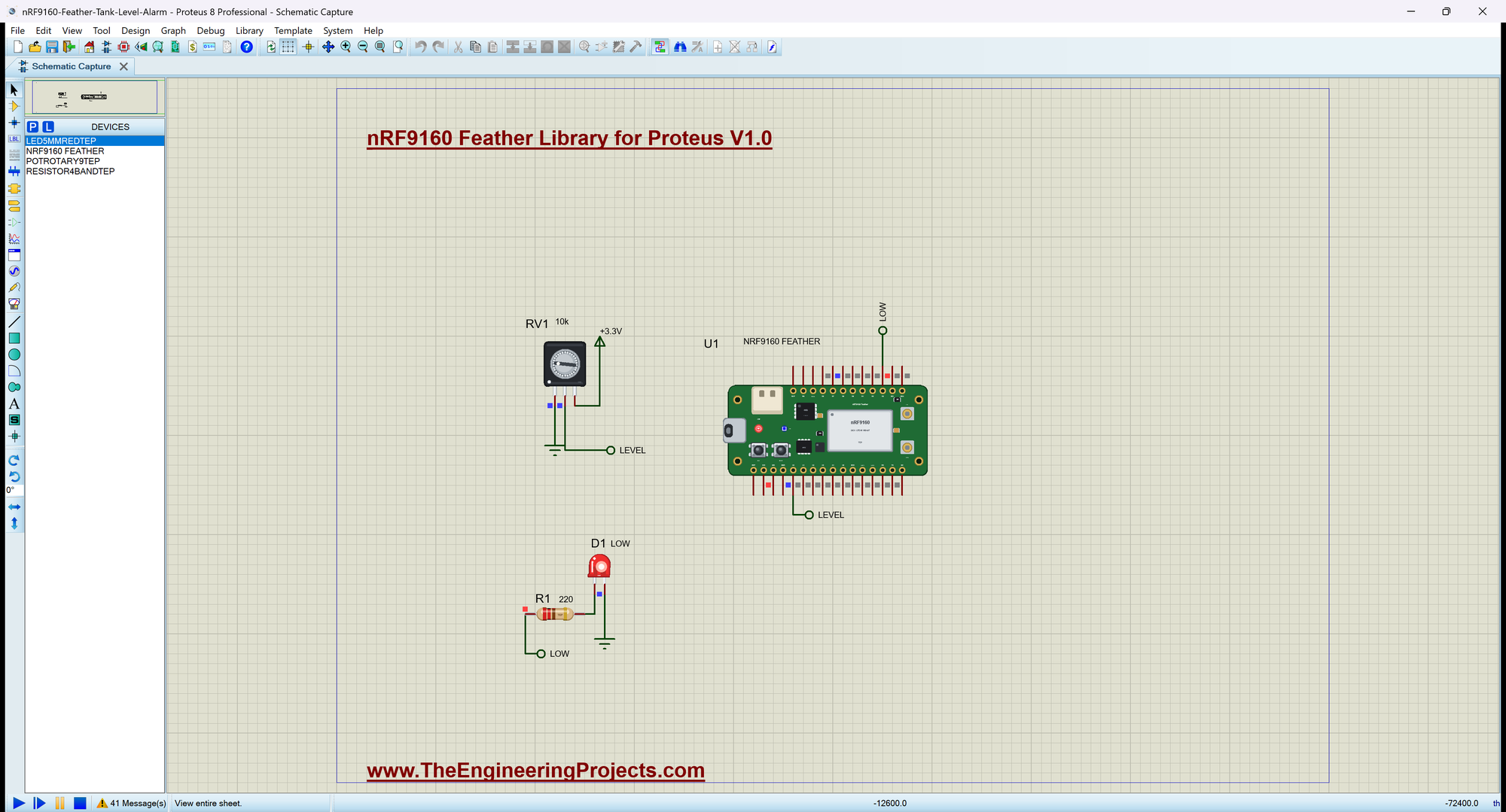
nRF9160-Feather-Tank-Level-Alarm.pdsprj - U1 the nRF9160 Feather (Feather9160_Tank_Alarm.hex) is a cellular tank level
alarm: RV1 (our 10k potentiometer, the tank's float sender) from +3.3V to GND with its wiper on A0; D1 (our red 5 mm
LED, the LOW lamp) through R1 (220 ohm) on D2; the owner's phone is the board's own Phone window.
Press Run. The monitor prints "Starting the nRF9160 modem", then "Modem ready"; the LTE LED blinks while the modem
searches. "LTE: registered on the network" - and the board sends "Tank monitor online" with the level (50 % of a 1000 L
tank at the start). In the pot's window click -10 % a few times (the water is used): below 25 % a LOW LEVEL SMS goes
out, the LOW lamp and the blue LED light. In the Phone window press STATUS for a report, USAGE for the litres used and
RESET to clear that counter. Click 100 % in the pot's window (a refill): "Refilled" and "Level OK again" by SMS. MODE on
the board sends the status.
Closed a window? The USB-C port opens the monitor, the SiP the Phone window, a click on the pot its window.

THE PINS (the label on the part, what it can do in the simulation)
  A0 .. A5         analogRead 0 .. 1023 for 0 .. 3.3 V, or GPIO (the core's numbers 13 .. 18)
  D2 .. D8         GPIO, PWM (analogWrite), interrupt (the core's numbers 29, 30, 0 .. 4); D7 is also the blue LED
  SCK, COPI, CIPO  SPI (19, 21, 22);   SDA, SCL  Wire (26, 27);   RX, TX  GPIO (23, 24)
  MD               the MODE button's pin (12): GPIO, LOW while MODE is held
  3V3, VBUS, GND   3.3 V (the logic), USB 5 V, ground;   RST  drawn (the RESET button resets the board)
  BAT, EN, NC      drawn, not modelled
The core's pin numbers are the nRF9160's own GPIO numbers (P0.n), as Zephyr's circuitdojo_feather board files: the blue
LED is P0.03, MODE is P0.12. LED_BUILTIN (3) lights when LOW, with LED_BUILTIN_ACTIVE and LED_BUILTIN_INACTIVE;
BUTTON_MODE (12) reads LOW when pressed (pinMode INPUT_PULLUP); BTN_BUILTIN is BUTTON_MODE. MODEM_ON (35) starts the
modem. Serial is the USB-C: the board's built-in monitor; Serial1 is the modem's AT interface (SerialModem).

PROPERTIES (double-click the part > Edit Properties)
  PROGRAM      the sketch's HEX (Arduino IDE: Sketch > Export Compiled Binary, board Circuit Dojo nRF9160 Feather
               (TEP Proteus))
  MONITOR      YES = the built-in serial monitor on Serial;  BAUD  its speed (115200, or AUTO)
  AUTOOPEN     YES = the monitor window opens at Run (the demo: YES)

TROUBLESHOOTING
* The modem never answers: set MODEM_ON HIGH and SerialModem.begin(115200) first; send AT until it answers OK.
* No SMS arrives: AT+CMGF=1 (text mode) and AT+CNMI=2,2,0,0,0 make a new SMS come straight to SerialModem as +CMT.
* The level reads 0 or 100 % all the time: the pot's ends go to +3.3V and GND, the wiper to A0.
* The blue LED does the opposite: it lights when the pin is LOW.
* An integer goes wrong above 32767: int is 16 bits in the simulation - use long.

BUG REPORTS AND FEATURE REQUESTS
Please post them in our forum with a screenshot and the Serial Monitor text:
  https://www.theengineeringprojects.com/forum

LICENCES AND THIRD-PARTY NOTES
* The board model (TEPNET.DLL, with its modem), the symbols and artwork (TEPFEATHER9160.LIB) and the potentiometer, LED
  and resistor models are made by The Engineering Projects. The source code of the models is not included.
* TEP Boards for Proteus (Arduino Code): its core, the variants and the EEPROM, SPI and Wire libraries are modified
  copies of the Arduino AVR core 1.8.6 - GNU Lesser General Public License 2.1 (LGPL 2.1, the text:
  LICENSE-LGPL-2.1.txt); its WiFi, WebServer, ArduinoBLE, the sensor libraries and the others and our core files are
  MIT (LICENSE-MIT.txt).
* Proteus is a product of Labcenter Electronics and is not included. nRF9160 and Nordic Semiconductor are names of
  Nordic Semiconductor ASA, Circuit Dojo of Circuit Dojo LLC, Feather of Adafruit Industries, Arduino of Arduino. This
  library is not made or endorsed by them or by Labcenter.

REBUILDING THE FIRMWARE (OPTIONAL)
The HEX file is supplied. Install TEP Boards for Proteus (INSTALLATION step 5), open Arduino
Code\Feather9160_Tank_Alarm, select Circuit Dojo nRF9160 Feather (TEP Proteus) and use Sketch > Export Compiled Binary.
For a real board use Nordic's nRF Connect SDK (Zephyr, the board circuitdojo_feather) with its modem library and SMS
library; a SIM with an LTE-M or NB-IoT plan is needed. Its pins work at 3.3 V.

MODEL SCOPE AND LIMITS
Modelled: the Feather pins; digital I/O, analogRead 0 .. 1023, PWM (analogWrite), tone and attachInterrupt through the
board model; Serial (the board's monitor), Wire and SPI; the blue LED, MODE and RESET; the modem's AT interface with
registration, SMS (text mode) and GNSS, with the phone as the other end.
Not modelled: the nRF9160 itself, the radio and its coverage, data connections (IP, MQTT, CoAP), voice, PSM and eDRX,
the SIM's PIN, the accelerometer, the RTC, the SPI flash, the battery and its charger. The simulation runs below real
time.

VERSION
TEP nRF9160 Feather library V1.0 (Nov 2026). Device NRF9160 FEATHER (TEPFEATHER9160.LIB / TEPNET.DLL), TEP Boards for
Proteus 1.97.0 (adds this board: the Feather pins, the blue LED, MODE, SerialModem, MODEM_ON).
Demo sketch Feather9160_Tank_Alarm V1.0. Demo parts: POTROTARY9TEP, LED5MMREDTEP and RESISTOR4BANDTEP.Development1 release
 Development1 release
-
V1.0nRF9160 Feather Library for Proteus V1.0this page
V1.0 is the only release in the Download Center so far. When a newer version is published, it appears above with its own download page.
Installation10 steps
 Installation10 steps
From the download to a working project, in order. The steps follow what the package contains.
You will need
- Proteus Design SuiteProteus 8 or newer (Labcenter), on Windows
- Arduino IDE1.8 or 2.x, with the board of the tutorial chosen under Tools → Board
- The compiler named in the tutorialto build the source files into firmware
- Any archive toolWindows, macOS and Linux extract ZIP files on their own

Steps
- 1
Extract the archive
Right-click 1bbe1476a120409dba57e9e6a2f73c6c.zip and choose Extract All (or open it with 7-Zip or WinRAR) into a folder you can find again. Keep its folder structure (nRF9160-Feather-TEP-v1.0) as it is.
- 2
Copy the library files into Proteus
Move TEPFEATHER9160.LIB, TEPLAPTOP.LIB and TEPLED5MM.LIB and 3 more and the files into the LIBRARY folder of your Proteus installation: C:\Program Files (x86)\Labcenter Electronics\Proteus 8 Professional\LIBRARY for Proteus 8, or the matching Proteus 7 folder. Older versions keep it under ProgramData\Labcenter Electronics. If Proteus is open, close it first.
- 3
Add the simulation model
Copy TEPLED5MM.DLL, TEPNET.DLL and TEPPOT.DLL and 1 more into the MODELS folder next to LIBRARY, so the component can run, not only be drawn.
- 4
Restart Proteus and place the component
Start Proteus, open a schematic, press P (Pick Devices) and search for the component by the name used in the tutorial. It appears with its pins ready to wire.
- 5
Install the Arduino library
In the Arduino IDE choose Sketch → Include Library → Add .ZIP Library and pick the library, or copy its folder into Documents\Arduino\libraries. Restart the IDE to see its examples.
- 6
Open the sketch in the Arduino IDE
Open Feather9160_Tank_Alarm.ino, eeprom_clear.ino and eeprom_crc.ino and 17 more, select your board and port under Tools, then Verify. Sketch → Export Compiled Binary writes the HEX file a simulation needs.
- 7
Build the source code
Open abi.cpp, Arduino.h and binary.h and 52 more in the compiler named in the tutorial (MikroC, Keil, MPLAB, Code Composer or the Arduino IDE) and build it to get the firmware.
- 8
Load the HEX file
In Proteus double-click the microcontroller, set Program File to Feather9160_Tank_Alarm.hex and run the simulation. For real hardware, flash the same file with your programmer.
- 9
Open the example simulation
Open nRF9160-Feather-Tank-Level-Alarm.pdsprj in Proteus to see the wiring exactly as in the tutorial. Check the controller's Program File path, then press Play.
- 10
Follow the tutorial
nRF9160 Feather Library for Proteus: Cellular SMS Simulation explains every connection and setting in order; keep it open beside the files while you build.
FAQs9 questionsContact TEP
 FAQs9 questions
How do I download nRF9160 Feather Library for Proteus V1.0?
Wait for the 30-second guest countdown on this page, then press the download button; the file comes straight from our storage. Members who are logged in skip the wait. If the browser opens the file instead of saving it, use its Save as option. The download link is made for you when the countdown ends and works for 15 minutes; a saved or shared link stops working, so share this page instead.
What is inside the archive?
nRF9160 Feather Library for Proteus V1.0 comes as a ZIP archive of 338 files (4.2 MB, 9.8 MB unpacked) holding Proteus library files, simulation model DLLs, a Proteus simulation, an Arduino sketch, an Arduino library, compiled HEX firmware and source code. Open the File Structure tab for the full list of 338 files.
What should I do if the download does not start?
Check the browser's download list first; an ad blocker or a company firewall can also hold it back, so try another browser or network. If the file arrives incomplete, download it again. For an installation problem, read the Install tab or tell us in the comments with your software version and the exact error message.
Is this file free?
Yes. Every file in the TEP Download Center is free for learning, personal and student projects. If you share it, link back to this page or the tutorial so others find the latest version.
How do I check that the file arrived complete?
Compare its SHA-256 with the one on this page, 6ed2da2cb6f5e960e4d33364fabb030a732e51935b85231d5d3ac8955fcd03dc. In PowerShell run Get-FileHash "1bbe1476a120409dba57e9e6a2f73c6c.zip"; on macOS or Linux run shasum -a 256 "1bbe1476a120409dba57e9e6a2f73c6c.zip". The same value means the file is exactly the one in our storage; a different one means the download broke off, so download it again.
Do I need WinRAR to open the ZIP file?
No. Windows, macOS and Linux open ZIP archives on their own (Extract All, or double-click). WinRAR and 7-Zip work too. Extract the whole archive before using the files.
Where do I put the LIB and IDX files?
Both files go into the LIBRARY folder of your Proteus installation (Proteus 8: C:\Program Files (x86)\Labcenter Electronics\Proteus 8 Professional\LIBRARY; Proteus 7 has the same folder under its own name). Restart Proteus afterwards and search for the component with P.
Which Proteus version does the library need?
The tutorial names the Proteus version the library was made and tested with. Most TEP libraries work in Proteus 7 and Proteus 8; if the component does not appear after a restart, check that both the LIB and the IDX file were copied and that Proteus was fully closed while copying.
How do I get the HEX file into the simulation?
Compile the sketch in the Arduino IDE (Sketch → Export Compiled Binary gives you the HEX next to the sketch), then in Proteus double-click the board, set Program File to that HEX and run.
Members skip the wait. Log in or join TEP.

- 0Total downloads
- 4%Popularity
- ProteusCategory
- 0Comments
- ssyedzainnasirUploaded by
- 23 Nov 2026Uploaded at


 SHA-256
6ed2da2cb6f5e960e4d33364fabb030a732e51935b85231d5d3ac8955fcd03dc


 Need help with this file?
 Tags
Related Proteus
All Proteus tutorials




Comments
0