


Project Files of Raspberry Pi 5 Hydrogen Fuel Cell Monitor: INA219 Proteus Simulation
 Libraries
 Code
 Projects
 Simulation
a5f311227c3f4e378951f144864ad324.zip

Raspberry Pi 5 Hydrogen Fuel Cell Monitor: INA219 Proteus Simulation V1.0
Raspberry Pi 5 Hydrogen Fuel Cell Monitor: INA219 Proteus Simulation V1.0 comes as a ZIP archive of 144 files (14.4 MB, 28.4 MB unpacked) holding Proteus library files, simulation model DLLs, a Proteus simulation, source code and a nested archive.
- LIBProteus library
- DLLProteus model
- DSNProteus simulation
- SRCSource code
- ZIPNested archive
Description
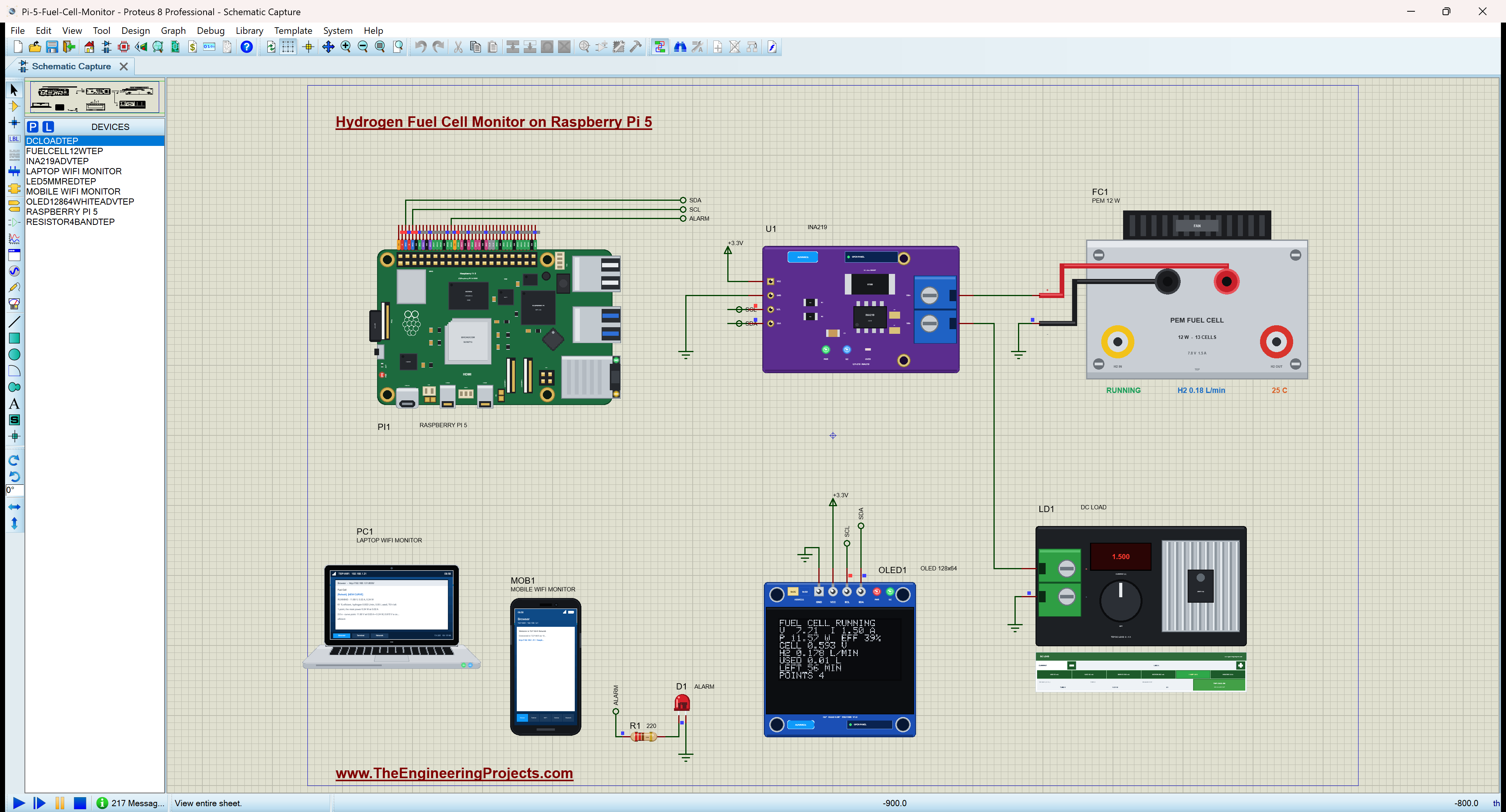
Raspberry-Pi-5-Hydrogen-Fuel-Cell-Monitor-INA219-Proteus-Simulation-v1.0.zip: the complete Proteus simulation project (Raspberry Pi 5, a 12 W PEM fuel cell stack, an INA219 with its DC electronic load, an SSD1306 OLED, an LED, a resistor, the Laptop and Mobile WiFi Monitors), the Python program fuel_monitor.py, every LIB and DLL, the TEPPi runtime and a README.

File Structure
 File Structure
13.9 KB62.6 KB39.5 KB21.8 KB13.1 KB112.4 KB306.9 KB60.5 KB3.3 MB34.3 KB620.8 KB36 KB169.8 KB628.1 KB99.3 KB65.3 KB4.8 MB4.1 MB80 B97.8 KB26.8 KB1.2 MB1.1 MB88.9 KB27.3 KB55.8 KB79.8 KB105.8 KB193.8 KB113.8 KB48.8 KB145.8 KB36.8 KB29.3 KB42.3 KB28.8 KB67.3 KB89.3 KB153.8 KB22.8 KB38.8 KB2.1 KB9.9 KB4.1 KB1.3 KB4.7 KB431 B2.5 KB17.5 KB283 B6.5 KB37.9 KB11.1 KB5.5 KB885 B13.6 KB9 KB878 B1.5 KB4 KB1004 B10 B110 B2.6 KB1.1 KB8.9 KB58.5 KB12.4 KB6.6 KB18.5 KB20.7 KB27.8 KB21.1 KB7.1 KB7.7 KB2.7 KB51.2 KB100.9 KB1.2 KB24.3 KB7.4 KB53.6 KB26.1 KB20.5 KB60.5 KB19.6 KB1.6 KB8.4 KB20.9 KB2.6 KB539 B1.4 KB9.7 KB2.8 KB21 B92 B7.9 KB264 B3.4 KB3.8 KB17.5 KB55.2 KB3.3 KB10.8 KB1.5 KB4.2 KB7.3 KB2.5 KB32.6 KB14.5 KB283 B17.4 KB257 B691 B14.5 KB12.8 KB3.6 KB1.7 KB37 KB418 B6.2 KB7 KB37.3 KB10.6 KB23.7 KB28.7 KB8.8 KB16.9 KB329.5 KB319.5 KB289.5 KB3.0 MB342.5 KB311 KB15.6 KB37.8 KB329.5 KB319.5 KB289.5 KB3.0 MB342.5 KB311 KB15.6 KB10.9 KBGallery12 images from the tutorialOpen the tutorial
 Gallery12 images from the tutorial
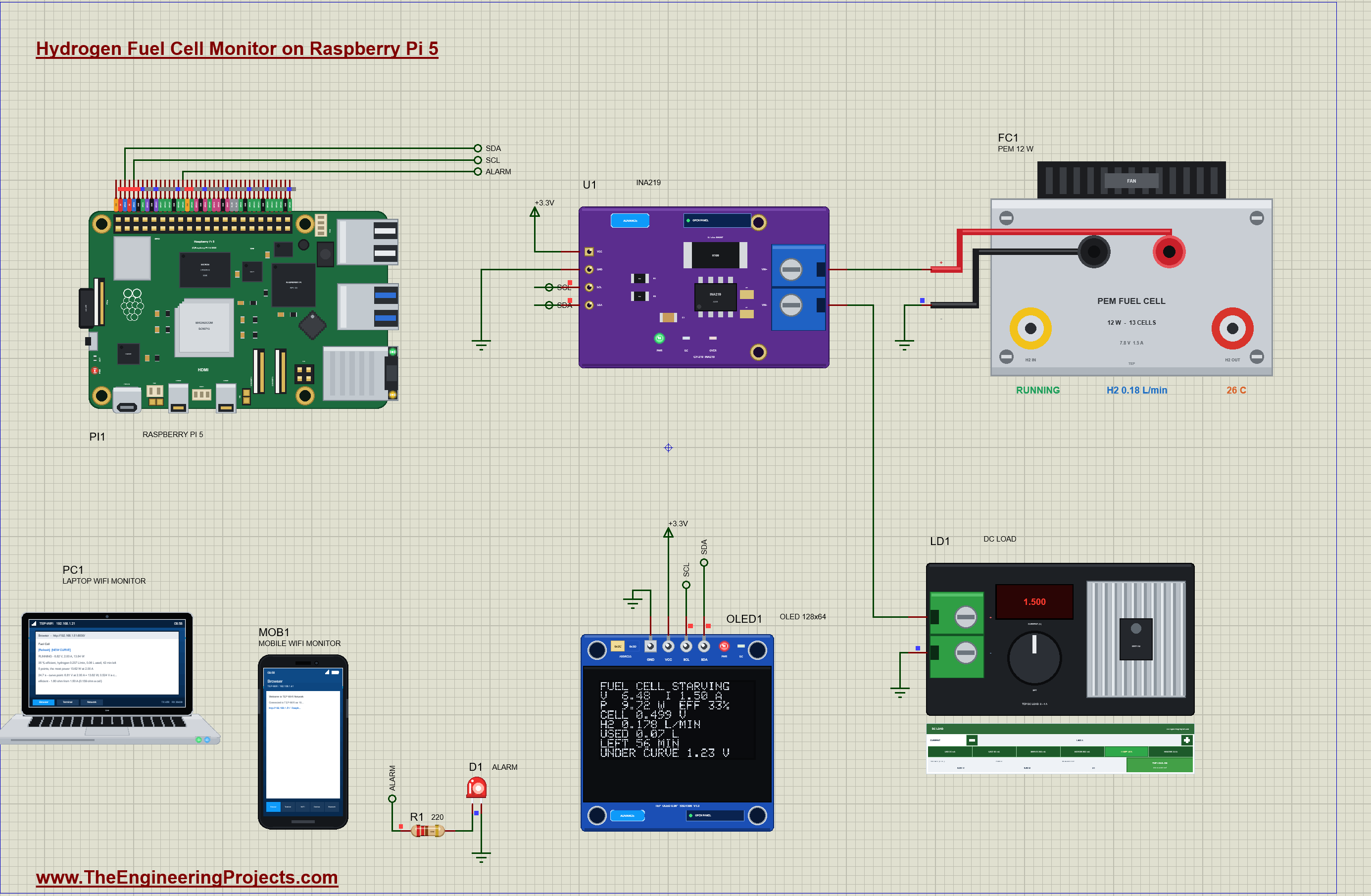
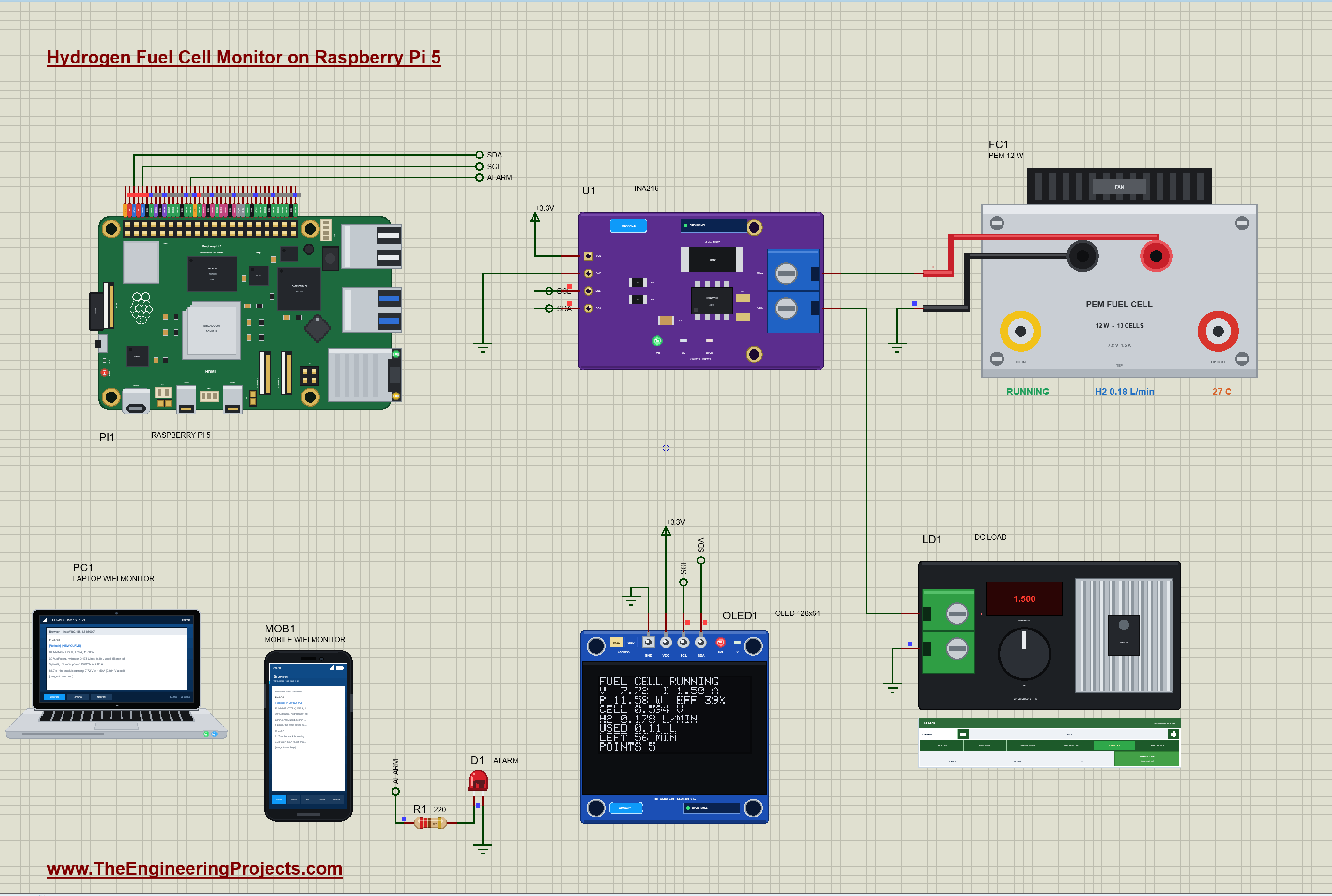
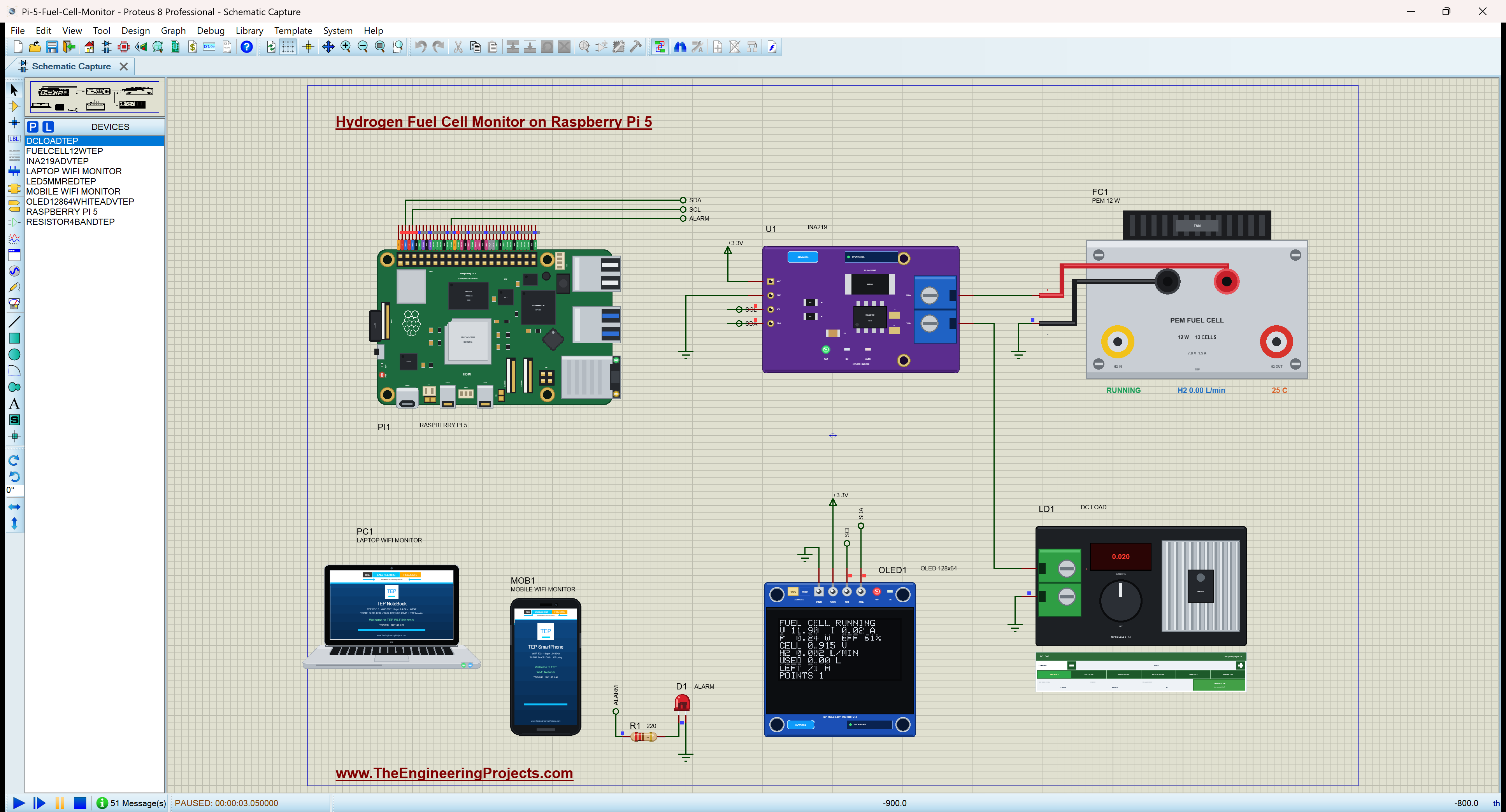
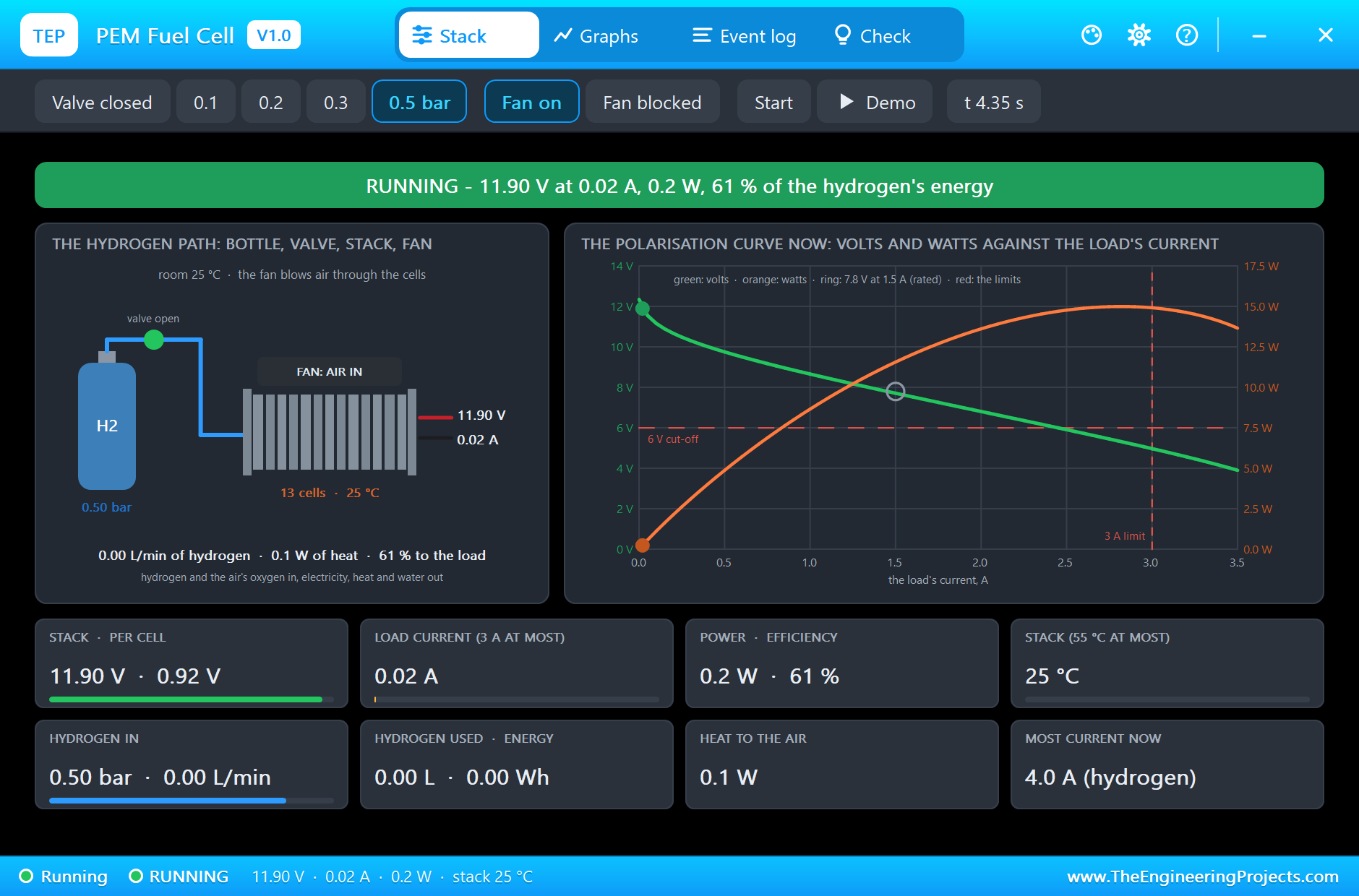
The circuit, the board and the results as they appear in Raspberry Pi 5 Hydrogen Fuel Cell Monitor: INA219 Proteus Simulation. Open an image for its full size.
README
 README
===============================================================================================================
  Raspberry Pi 5 Hydrogen Fuel Cell Monitor: INA219 Proteus Simulation - Project V1.0
  The Engineering Projects - www.TheEngineeringProjects.com
===============================================================================================================

IMPORTANT LINKS
  The project tutorial (circuit, code, simulation results):
 https://www.theengineeringprojects.com/2026/11/raspberry-pi-5-hydrogen-fuel-cell-monitor-ina219-proteus-simulation.html
  The libraries this project is built from (each post has its own full download and tutorial):
    Raspberry Pi 5 board:
      https://www.theengineeringprojects.com/2026/10/raspberry-pi-5-library-for-proteus.html
    PEM hydrogen fuel cell:
      https://www.theengineeringprojects.com/2026/11/pem-hydrogen-fuel-cell-library-for-proteus.html
    INA219 current sensor (and its DC electronic load):
      https://www.theengineeringprojects.com/2026/10/ina219-current-sensor-library-for-proteus-v1-0.html
    OLED SSD1306:
      https://www.theengineeringprojects.com/2026/10/oled-ssd1306-library-for-proteus-v1-0.html
    5mm LED:
      https://www.theengineeringprojects.com/2026/11/5mm-led-library-for-proteus.html
    Resistor:
      https://www.theengineeringprojects.com/2026/11/resistor-library-for-proteus.html
    Laptop WiFi Monitor:
      https://www.theengineeringprojects.com/2026/10/laptop-wifi-monitor-library-for-proteus.html
    Mobile WiFi Monitor:
      https://www.theengineeringprojects.com/2026/10/mobile-wifi-monitor-library-for-proteus.html
  Support our free work: https://www.theengineeringprojects.com/donate

FILE STRUCTURE
Pi-5-Fuel-Cell-Monitor-TEP-v1.0/
|-- Proteus Library Files/
|   |-- TEPFUELCELL.LIB                                13.9 KB   a part of the project -> LIBRARY folder
|   |-- TEPINA219.LIB                                  62.6 KB   a part of the project -> LIBRARY folder
|   |-- TEPLAPTOP.LIB                                  39.5 KB   a part of the project -> LIBRARY folder
|   |-- TEPLED5MM.LIB                                  21.8 KB   a part of the project -> LIBRARY folder
|   |-- TEPMOBILE.LIB                                  13.1 KB   a part of the project -> LIBRARY folder
|   |-- TEPOLED12864.LIB                              112.4 KB   a part of the project -> LIBRARY folder
|   |-- TEPRESISTOR.LIB                               306.9 KB   a part of the project -> LIBRARY folder
|   |-- TEPRPI5.LIB                                    60.5 KB   a part of the project -> LIBRARY folder
|-- Proteus Model Files/
|   |-- TEPFUELCELL.DLL                               329.5 KB   a model -> MODELS folder
|   |-- TEPINA219.DLL                                 319.5 KB   a model -> MODELS folder
|   |-- TEPLED5MM.DLL                                 289.5 KB   a model -> MODELS folder
|   |-- TEPNET.DLL                                     2.99 MB   a model -> MODELS folder
|   |-- TEPOLED.DLL                                   342.5 KB   a model -> MODELS folder
|   |-- TEPRESISTOR.DLL                               311.0 KB   a model -> MODELS folder
|   |-- TEPPi/python/                                 17.54 MB   Python 3.11 embeddable -> MODELS\TEPPi (33 files)
|   |-- TEPPi/runtime/                                 1.11 MB   TEP Pi runtime, gpiozero -> MODELS\TEPPi (87 files)
|-- Proteus Simulation/
|   |-- fuel_monitor.py                                15.6 KB   the program PI1 runs
|   |-- Pi-5-Fuel-Cell-Monitor.pdsprj                  37.8 KB   the project simulation
|   |-- TEPFUELCELL.DLL                               329.5 KB   copy of the model
|   |-- TEPINA219.DLL                                 319.5 KB   copy of the model
|   |-- TEPLED5MM.DLL                                 289.5 KB   copy of the model
|   |-- TEPNET.DLL                                     2.99 MB   copy of the model
|   |-- TEPOLED.DLL                                   342.5 KB   copy of the model
|   |-- TEPRESISTOR.DLL                               311.0 KB   copy of the model
|-- Python Code/
|   |-- fuel_monitor.py                                15.6 KB   the program (the same file)
|-- README.txt                                        ~10.6 KB   this file
Total: 28.43 MB (unzipped). The C++ source code of the models is not included.

WHAT IS IT?
  A test bench for a hydrogen fuel cell on a Raspberry Pi 5: the Pi measures the stack's polarisation curve as
  the load changes, works out the hydrogen and the efficiency, and then uses that curve to catch the stack
  starving for hydrogen before its own controller shuts it down.
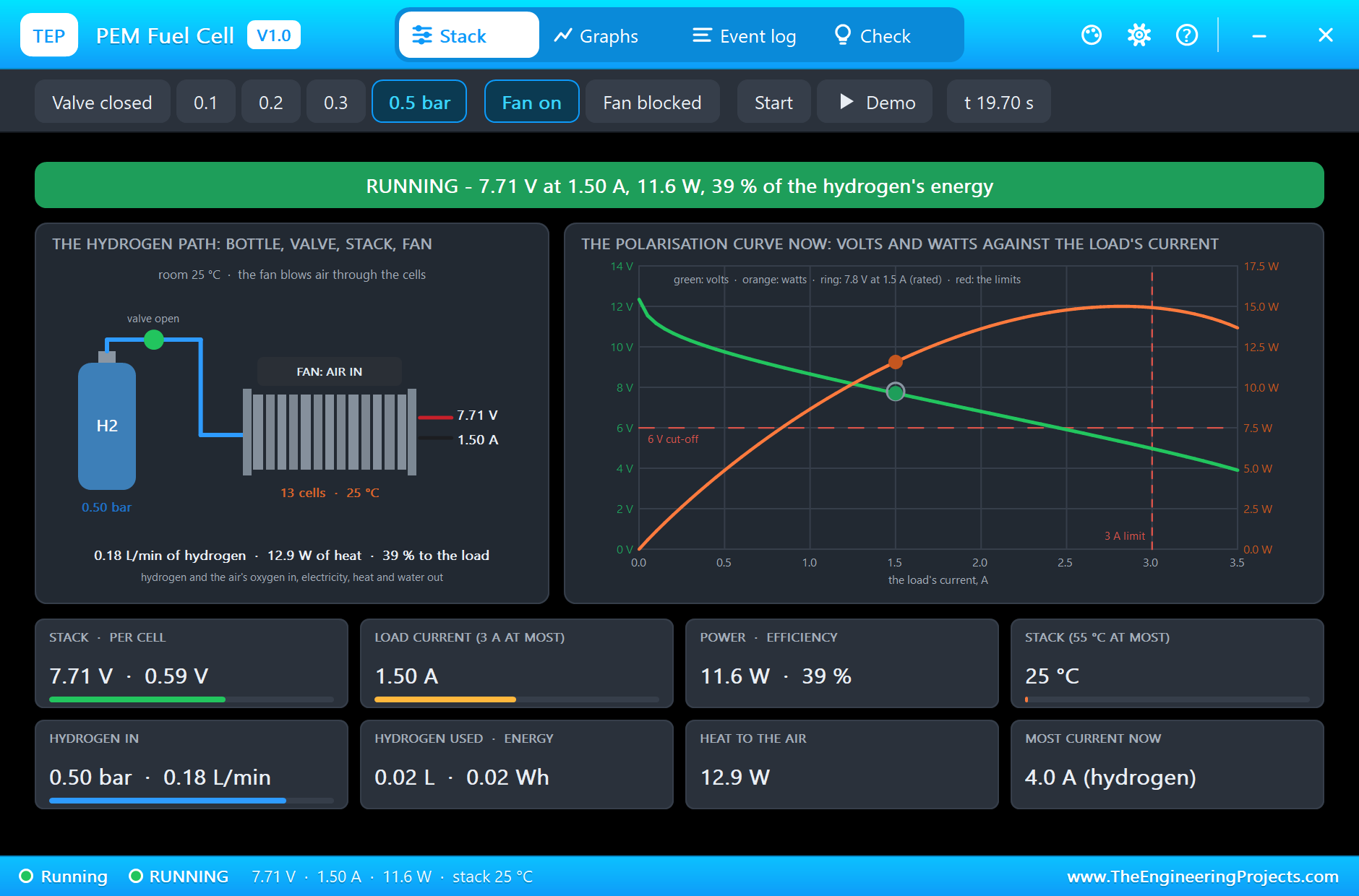
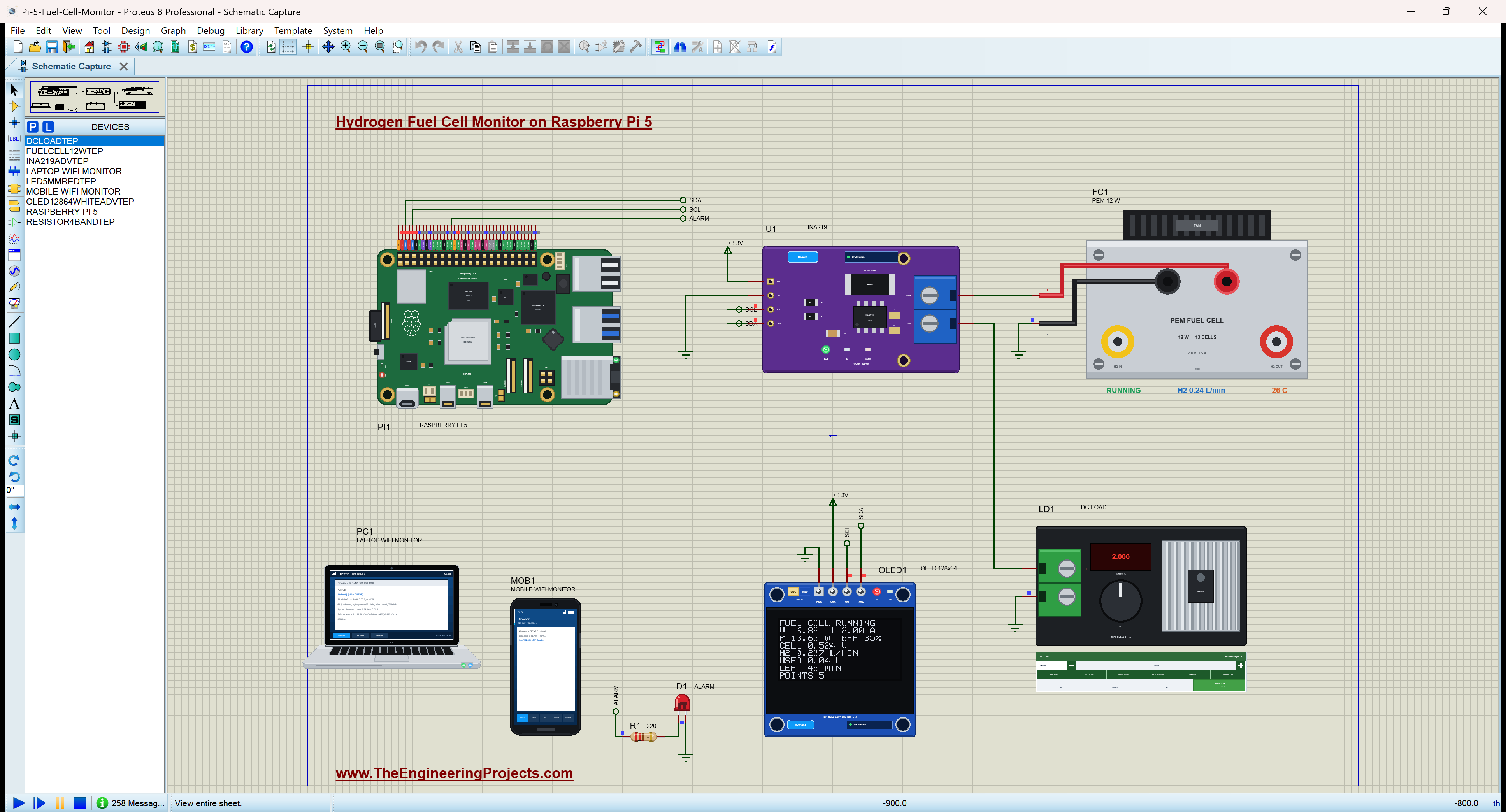
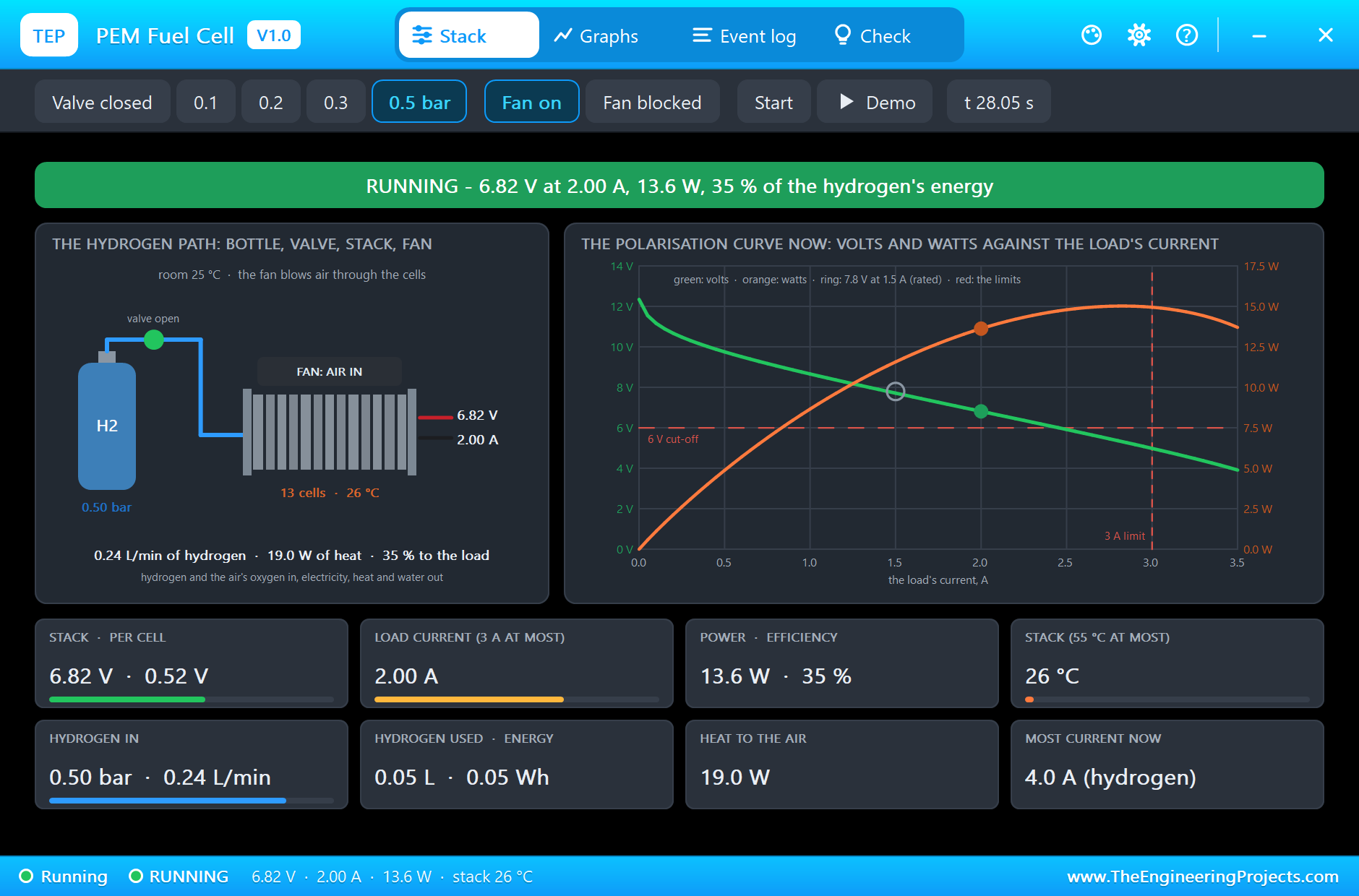
    * FC1 a 12 W PEM fuel cell stack (FUELCELL12WTEP, 13 cells, 7.8 V at 1.5 A): hydrogen at 0.5 bar (H2=0.5),
      the fan on. Its controller switches the output off under 6 V, over 3 A or over 55 C.
    * U1 an INA219 (INA219ADVTEP) on I2C1 (SDA GPIO2, SCL GPIO3, 0x40), VCC +3.3V, in the stack's + line: VIN+
      from the stack, its 0.1 ohm shunt, VIN- to the load. The Pi reads the shunt, the bus and the current.
    * LD1 the DC electronic load (DCLOADTEP, from the INA219 library), a constant-current sink: 20 mA at the
      start; its presets and the -100 / +100 mA steps are on U1's pop-up.
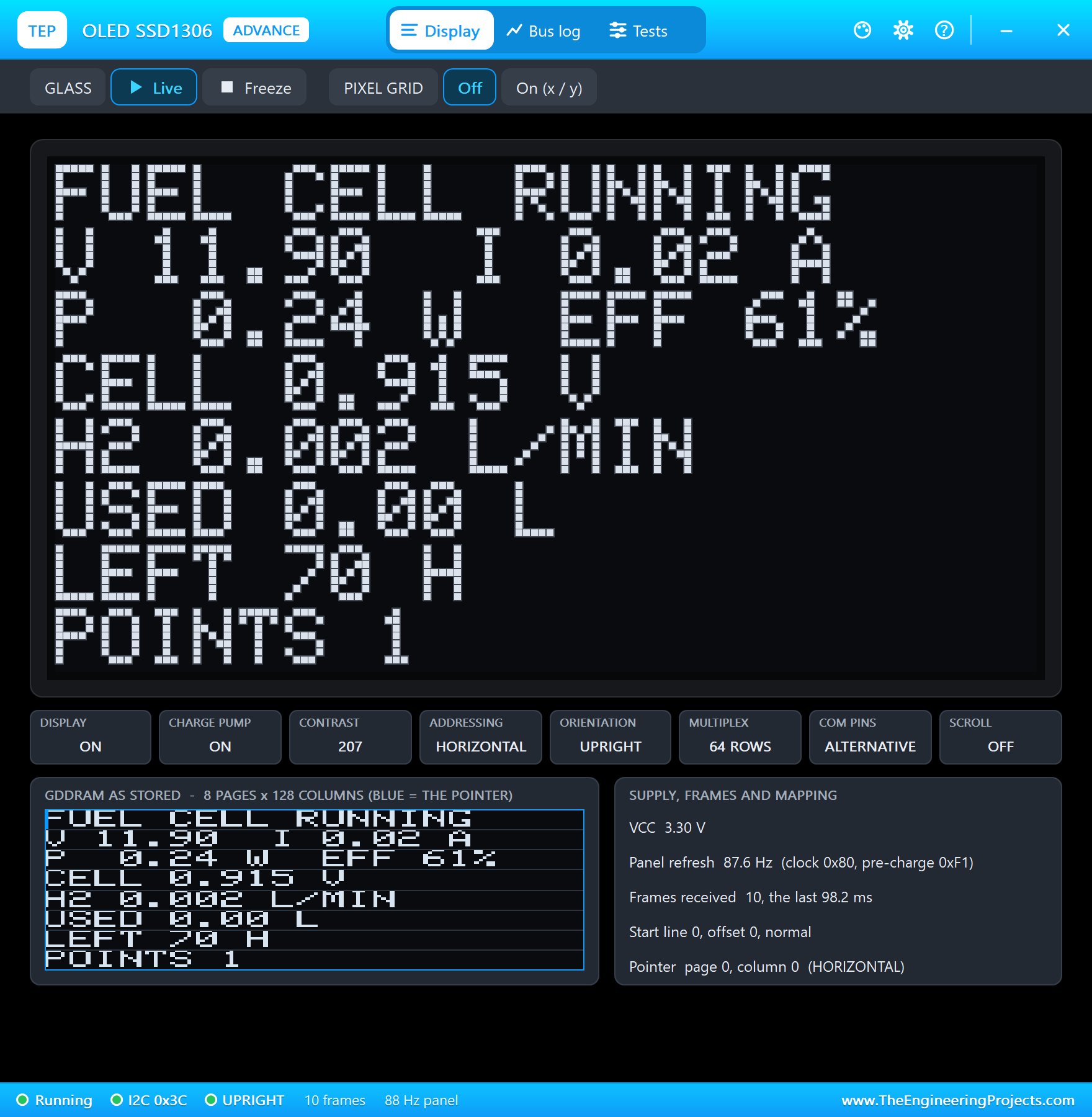
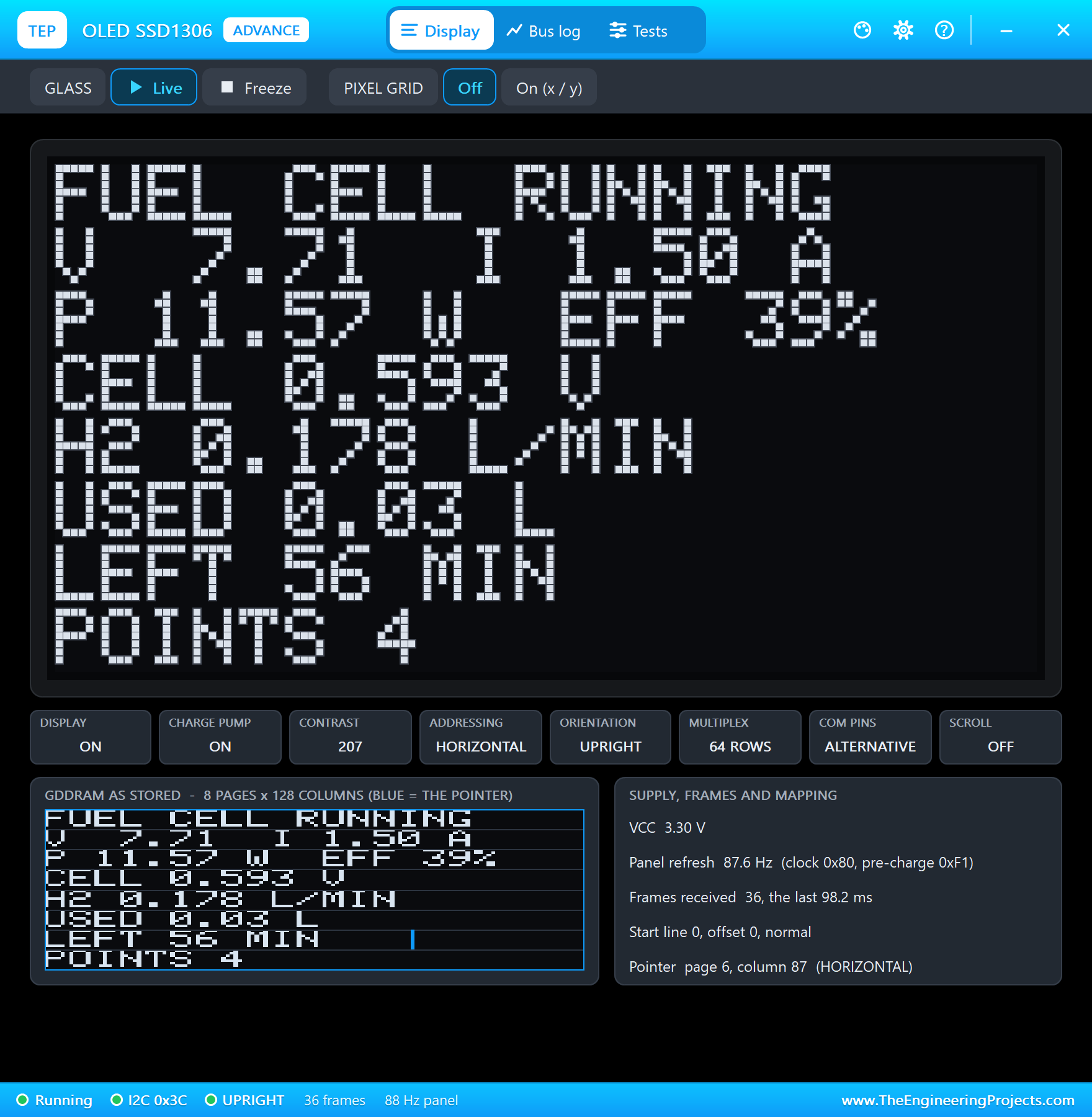
    * OLED1 an SSD1306 128x64 OLED (OLED12864WHITEADVTEP, 0x3C) on I2C1, VCC +3.3V: the state, volts, amps,
      watts, the efficiency, the hydrogen flow, what is used and what is left.
    * D1 the red ALARM LED on GPIO23 (pin 16) through R1 220 ohm: the stack starving, or shut down.
    * RASPBERRY PI 5 (PI1) runs fuel_monitor.py on Ethernet at 192.168.1.51 (port 8000).
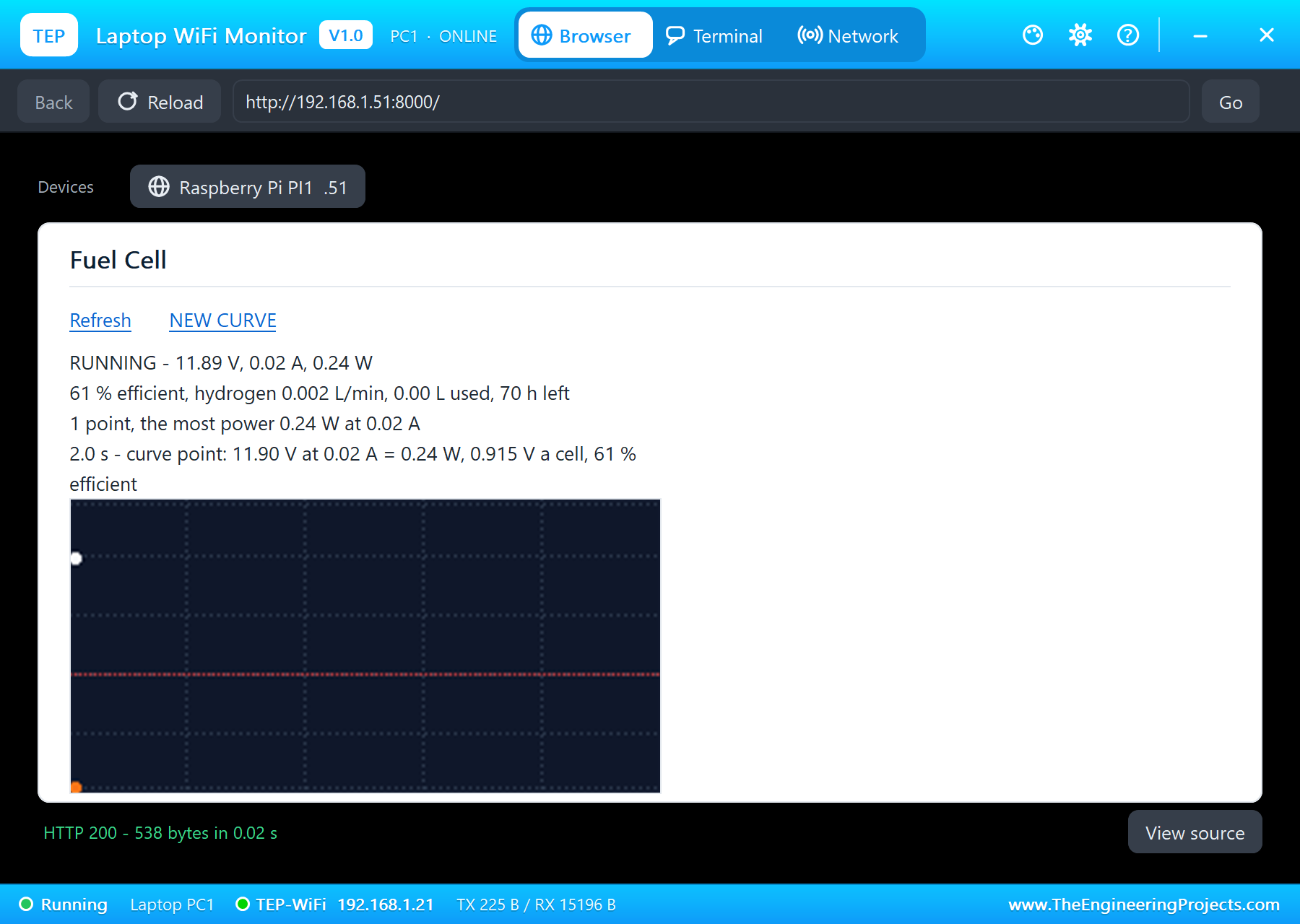
    * Laptop WiFi Monitor (PC1) and Mobile WiFi Monitor (MOB1) open http://192.168.1.51:8000/.
  What the program works out:
    the curve     a point (volts at a current) each time the current has been steady for 2 s, 50 mA from the
                  others, on a healthy stack; the stack's resistance between two points
    hydrogen      Faraday's law: 13 x I / (2 F) mol/s react, a fifth more is purged: 0.1187 L/min per amp
    efficiency    the mean cell voltage / 1.254 V (the hydrogen's energy, LHV) / 1.20 (the purge)
    STARVING      0.6 V under the stack's own curve at the same current for 1 s
    a canister    a 10 L metal-hydride canister: the minutes left at this load
  Its pages:
    /          the dashboard: the state, the power, the efficiency, the hydrogen, the curve as a picture
    /clear     a new curve           /curve.bmp   the curve the Pi measured           /data   JSON
  No extra Python library: lgpio (in the TEPPi runtime and on Raspberry Pi OS), threading, http.server.

TEST STATUS
  Tested in Proteus 8 Professional on Windows 11, the run that made the tutorial's screenshots (the program's times):
  - 0.0 s the stack running at 0.5 bar; 2.0 s the first point "11.90 V at 0.02 A = 0.24 W, 0.915 V a cell, 61 %".
  - The load from U1's pop-up: 11.0 s 10.48 V at 0.25 A (6.18 ohm from 0.02 A); 13.8 s 9.07 V at 0.80 A (2.56 ohm);
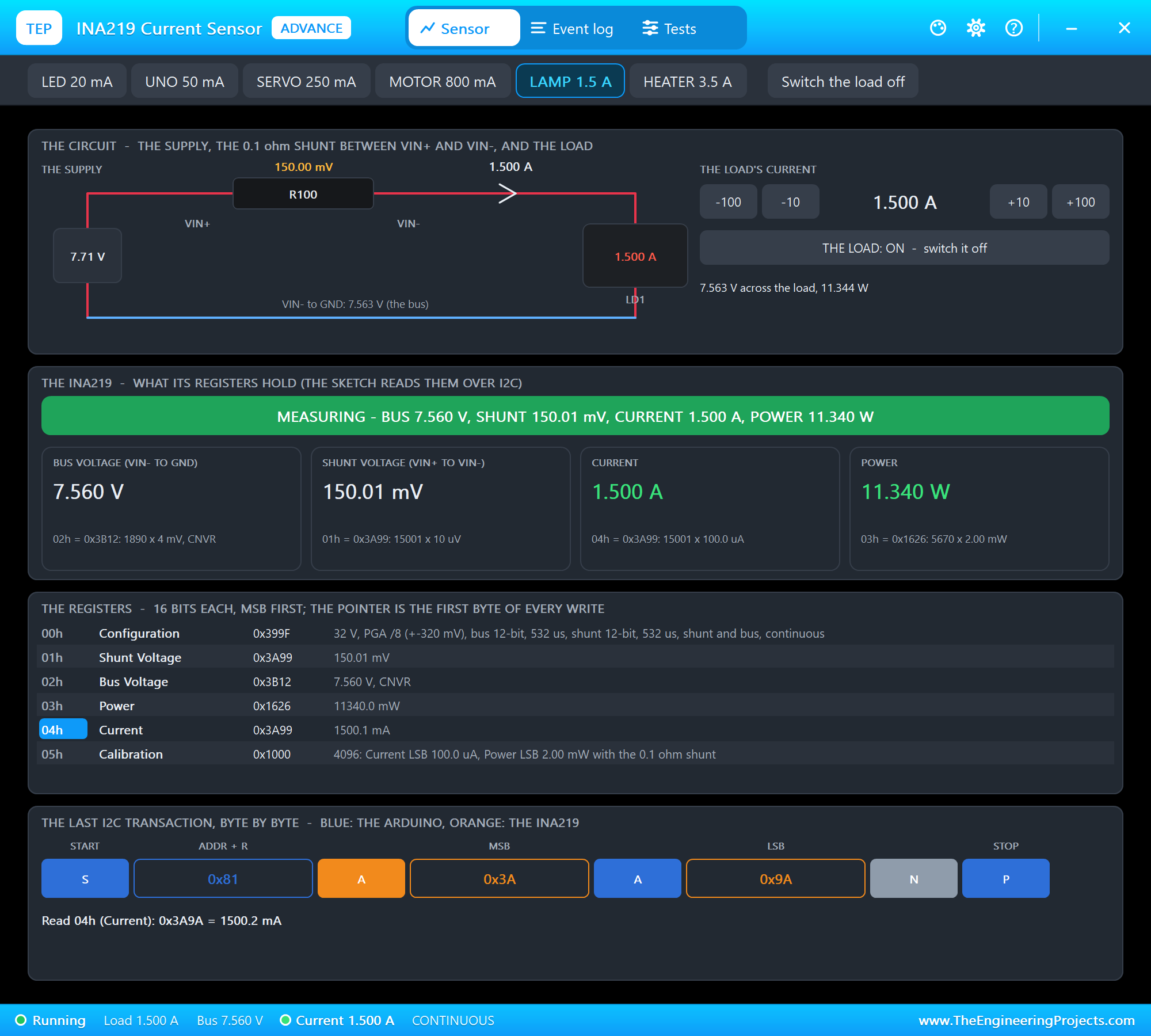
    16.6 s 7.71 V at 1.50 A = 11.57 W, 0.593 V a cell, 39 %, 0.178 L/min (1.94 ohm) - the fuel cell's pop-up: 7.71 V,
    39 %, 0.18 L/min; U1: 150.01 mV on the shunt, the bus 7.560 V, 1.500 A.
  - +100 mA x 5: 24.7 s 6.81 V at 2.00 A = 13.62 W, 35 %, 0.237 L/min (1.80 ohm from 1.50 A).
  - Back to 1.5 A, the hydrogen 0.2 bar: 34.4 s "STARVING: 6.48 V at 1.50 A, 1.23 V under its own curve (7.71 V)",
    the ALARM LED on; the fuel cell's pop-up: STARVING, 1.6 A at most.
  - 0.1 bar: 38.5 s "the stack SHUT DOWN" (one reading caught it falling: 2.65 V at 1.50 A); its pop-up: LOW VOLTAGE.
  - 0.5 bar and Start: 61.7 s "the stack is running: 7.72 V at 1.50 A"; 11.58 W, 39 %, 0.10 L of hydrogen used.
  - An earlier run: the same points within 0.01 V; it showed -0.00 V while the stack was off (fixed: the volts are
    clamped at 0).
  - 69 s of simulation in 470 s.

INSTALLATION
  1. Close Proteus. Extract the WHOLE zip file, for example to your Desktop.
  2. Copy the files from "Proteus Library Files" into the LIBRARY folder of Proteus, for example
     C:\Program Files (x86)\Labcenter Electronics\Proteus 8 Professional\LIBRARY
  3. Copy everything in "Proteus Model Files" - the DLL files and the TEPPi folder - into the MODELS folder (next
     to LIBRARY).
  4. Start Proteus. Press P in the schematic and search for RASPBERRY PI 5, FUELCELL12WTEP or INA219ADVTEP to
     check that the parts are there.

RUN THE SIMULATION
  1. Open "Proteus Simulation\Pi-5-Fuel-Cell-Monitor.pdsprj". Keep fuel_monitor.py and the DLL files beside it.
  2. Press Play. The stack gives 11.9 V at 20 mA; after 2 s the Pi records the first point of the curve.
  3. On the INA219's pop-up (U1) press SERVO 250 mA, MOTOR 800 mA and LAMP 1.5 A, 2 s apart: the curve grows.
  4. Click the stack (FC1) for its pop-up and press 0.2: the Pi says STARVING and the ALARM LED lights. Press 0.1:
     the stack shuts down. Press 0.5 bar and Start: it runs again after about 20 s.
  5. Open the Laptop WiFi Monitor (PC1) or the Mobile WiFi Monitor (MOB1) and press Go for the dashboard.
  Change H2 (0.5 = the rated hydrogen), FAN, AMBIENT or SPEED in FC1's properties, CURRENT (mA) in LD1's.

PROPERTIES USED IN THIS PROJECT
  PI1 RASPBERRY PI 5           PROGRAM=fuel_monitor.py, ETHERNET=IN (192.168.1.51)
  FC1 FUELCELL12WTEP           H2=0.5, FAN=ON, AMBIENT=25, SPEED=1
  U1 INA219ADVTEP;  LD1 DCLOADTEP (CURRENT=20, LOAD=ON);  OLED1 OLED12864WHITEADVTEP
  R1 220 (RESISTOR4BANDTEP);  D1 LED5MMREDTEP
  PC1, MOB1                    HOMEPAGE=http://192.168.1.51:8000/

TROUBLESHOOTING
  * The INA219 reads nothing: VCC must be on +3.3V (a supply, not a label); SDA / SCL on GPIO2 / GPIO3.
  * "No TEP DC load on VIN-" on U1's pop-up: VIN- must go straight to LD1's + pin.
  * The stack says OFF: H2 must be 0.05 bar or more (0.45 - 0.55 bar is right); after a shutdown press Start.
  * The stack shuts down above about 2.4 A: under 6 V its controller switches the output off (LOW VOLTAGE).
  * The terminal cannot start Python: the TEPPi folder is not in MODELS.

LICENCES
  * The project, the program, the parts (LIB files) and the models (DLL files) are made by The Engineering Projects
    and are free for learning and for your own projects. The models use only standard Windows libraries.
    The C++ source code of the models is not included; the source code is not included for any model.
  * TEPPi\python is the Python 3.11 Windows embeddable package (Python Software Foundation License); TEPPi\runtime
    holds our TEP Pi runtime with gpiozero and colorzero (BSD licences) - their licence files are inside the folders.
  * Proteus is a product of Labcenter Electronics and is not included. Raspberry Pi is a trademark of Raspberry Pi
    Ltd. This project is not made or endorsed by them. It is a teaching model of a fuel cell test bench.

VERSION
  V1.0 - the first release of the project.
===============================================================================================================Development1 release
 Development1 release
-
V1.0Raspberry Pi 5 Hydrogen Fuel Cell Monitor: INA219 Proteus Simulation V1.0this page
V1.0 is the only release in the Download Center so far. When a newer version is published, it appears above with its own download page.
Installation7 steps
 Installation7 steps
From the download to a working project, in order. The steps follow what the package contains.
You will need
- Proteus Design SuiteProteus 8 or newer (Labcenter), on Windows
- Pythonto build the source files into firmware
- Any archive toolWindows, macOS and Linux extract ZIP files on their own

Steps
- 1
Extract the archive
Right-click a5f311227c3f4e378951f144864ad324.zip and choose Extract All (or open it with 7-Zip or WinRAR) into a folder you can find again. Keep its folder structure (Pi-5-Fuel-Cell-Monitor-TEP-v1.0) as it is.
- 2
Copy the library files into Proteus
Move TEPFUELCELL.LIB, TEPINA219.LIB and TEPLAPTOP.LIB and 5 more and the files into the LIBRARY folder of your Proteus installation: C:\Program Files (x86)\Labcenter Electronics\Proteus 8 Professional\LIBRARY for Proteus 8, or the matching Proteus 7 folder. Older versions keep it under ProgramData\Labcenter Electronics. If Proteus is open, close it first.
- 3
Add the simulation model
Copy TEPFUELCELL.DLL, TEPINA219.DLL and TEPLED5MM.DLL and 10 more into the MODELS folder next to LIBRARY, so the component can run, not only be drawn.
- 4
Restart Proteus and place the component
Start Proteus, open a schematic, press P (Pick Devices) and search for the component by the name used in the tutorial. It appears with its pins ready to wire.
- 5
Build the source code
Open fuel_monitor.py, attr.py and color.py and 28 more in the compiler named in the tutorial (MikroC, Keil, MPLAB, Code Composer or the Arduino IDE) and build it to get the firmware.
- 6
Open the example simulation
Open Pi-5-Fuel-Cell-Monitor.pdsprj in Proteus to see the wiring exactly as in the tutorial. Check the controller's Program File path, then press Play.
- 7
Follow the tutorial
Raspberry Pi 5 Hydrogen Fuel Cell Monitor: INA219 Proteus Simulation explains every connection and setting in order; keep it open beside the files while you build.
FAQs8 questionsContact TEP
 FAQs8 questions
How do I download Raspberry Pi 5 Hydrogen Fuel Cell Monitor: INA219 Proteus Simulation V1.0?
Wait for the 30-second guest countdown on this page, then press the download button; the file comes straight from our storage. Members who are logged in skip the wait. If the browser opens the file instead of saving it, use its Save as option. The download link is made for you when the countdown ends and works for 15 minutes; a saved or shared link stops working, so share this page instead.
What is inside the archive?
Raspberry Pi 5 Hydrogen Fuel Cell Monitor: INA219 Proteus Simulation V1.0 comes as a ZIP archive of 144 files (14.4 MB, 28.4 MB unpacked) holding Proteus library files, simulation model DLLs, a Proteus simulation, source code and a nested archive. Open the File Structure tab for the full list of 144 files.
What should I do if the download does not start?
Check the browser's download list first; an ad blocker or a company firewall can also hold it back, so try another browser or network. If the file arrives incomplete, download it again. For an installation problem, read the Install tab or tell us in the comments with your software version and the exact error message.
Is this file free?
Yes. Every file in the TEP Download Center is free for learning, personal and student projects. If you share it, link back to this page or the tutorial so others find the latest version.
How do I check that the file arrived complete?
Compare its SHA-256 with the one on this page, f887e0bc431f6a952beac3316867153e62af7bf609cccf9088493b81d63e1e1b. In PowerShell run Get-FileHash "a5f311227c3f4e378951f144864ad324.zip"; on macOS or Linux run shasum -a 256 "a5f311227c3f4e378951f144864ad324.zip". The same value means the file is exactly the one in our storage; a different one means the download broke off, so download it again.
Do I need WinRAR to open the ZIP file?
No. Windows, macOS and Linux open ZIP archives on their own (Extract All, or double-click). WinRAR and 7-Zip work too. Extract the whole archive before using the files.
Where do I put the LIB and IDX files?
Both files go into the LIBRARY folder of your Proteus installation (Proteus 8: C:\Program Files (x86)\Labcenter Electronics\Proteus 8 Professional\LIBRARY; Proteus 7 has the same folder under its own name). Restart Proteus afterwards and search for the component with P.
Which Proteus version does the library need?
The tutorial names the Proteus version the library was made and tested with. Most TEP libraries work in Proteus 7 and Proteus 8; if the component does not appear after a restart, check that both the LIB and the IDX file were copied and that Proteus was fully closed while copying.
Members skip the wait. Log in or join TEP.

- 0Total downloads
- 4%Popularity
- Raspberry PiCategory
- 0Comments
- ssyedzainnasirUploaded by
- 24 Nov 2026Uploaded at


 SHA-256
f887e0bc431f6a952beac3316867153e62af7bf609cccf9088493b81d63e1e1b


 Need help with this file?
 Tags
Related Raspberry Pi
All Raspberry Pi tutorials



More Raspberry Pi project files
All Raspberry Pi tutorials


Comments
0