Hi Everyone! Hope you’re well today. Happy to see you around. In this post today, I’ll walk you through the Introduction to TDA2005.TDA2005 is a 20-watt Class B dual audio amplifier integrated chip. It comes in a Multiwatt11 package and is carefully designed for car radio applications. It can support the current up to 3.5A which is quite high which makes it a suitable pick for constructing power booster amplifiers.
I suggest you read this post all the way through as I’ll detail the complete Introduction to TDA2005 covering datasheet, pinout, features, and applications.
Let’s jump right in.
Introduction to TDA2005
TDA2005 is a 20-watt Class B dual audio amplifier integrated chip. It is particularly designed for car radio applications.
...
Hello friends, I hope you all are doing great. In today's tutorial, we are gonna have a look at detailed Introduction to 74ls04. 74LS04is a participant of 74XXYY integrated sequence. The seventy-four sequences are numerical logic incorporated circuitries. This integrated circuit consists of 6 not gates. These gats do the function of reversing of different functions. To the existence of six gates, it also is known as hex inverter.
This integrated circuit is offered in numerous suites. You can select a suitable suite dependent on conditions. This module has fourteen pinouts which perform different functions. It is used in different memory units. In today’s post, we will have a look at its protection, wreck, oddness, privileges, etc. I will also shar ...
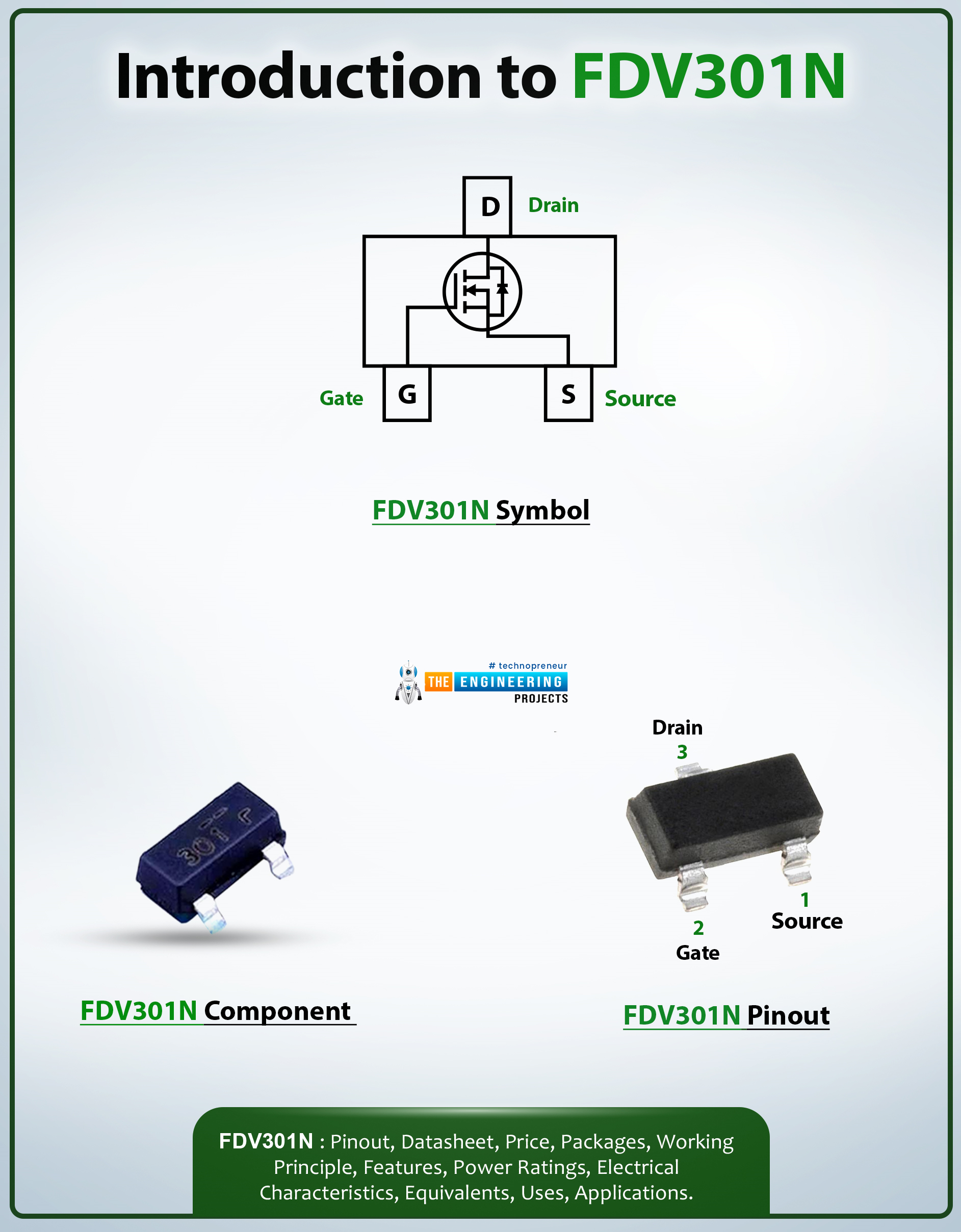
Hello Everyone! I welcome you on board. Happy to see you around. In this post today, I’ll walk you through the Introduction to FDB301N.The FDV301N is an N-channel MOSFET using Fairchild's proprietary and high cell density, DMOS technology. The cell’s high density helps to minimize the on-state resistance. This device is mainly developed for low-voltage applications. This N-channel MOSFET replaces different digital transistors and provides different bias resistor values.
I suggest you read this post all the way through as I’ll detail the complete Introduction to FDV301N covering datasheet, pinout, features and applications.
Let’s jump right in.
Introduction to FDV301N
The FDV301N is an N-channel MOSFET mainly used for switching and low-voltage applications.
It carries low on- ...
Hello everyone! I hope you all will be absolutely fine and having fun. Today, I am going to share my knowledge about Introduction to 1N4007. It is a PN junction diode. Diodes can be made by combining two different types of semiconductor e.g. P and N. PN junction is a junction formed between P and N types of semiconductors. You guys should also have a look at Introduction to 1N4148.
1N 4007 belongs to the series of 1NXXXX devices. Its an American standard numbering system standard used for semiconductor devices. This standard has been adopted globally now. In 1N 4007 the first part 1N indicates single junction semiconductor. 1N indicates 1 junction whereas N indicates the semiconductor diode. 4007 is the specific number to indicate the particular ...
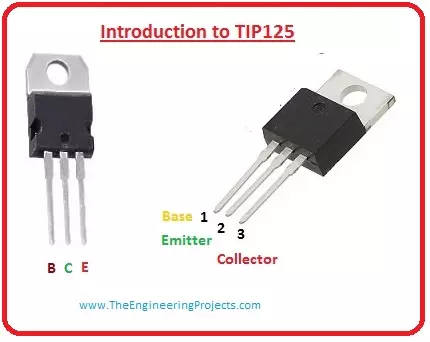
Hello friends, I hope you all are doing great. In today's tutorial, we are gonna have a look at detailed Introduction to TIP125. It is a bipolar PNP transistor, which is created for swapping and intensification submissions. It is the corresponding of transistor TIP121. The transistor is such a constituent which shows a very significant imperative on diverse electrical and electronic constituents and circuits.
There is no electronic expedient which doesn't have a transistor in its circuitry. The transistor is available in NPN and PNP configuration according to their uses. These instruments also show a significant regulation in the adaptation of current and intensification of an input signal. In today’s post, we will have a look at its protection, d ...
Hi Guys! Hope you are doing well. Welcome you onboard. Today, I'll unlock the detailed Introduction to 2sa1265 which is a PNP transistor mainly used for power amplifier applications and proves to be an ideal choice for 70W high fidelity audio frequency amplifier output stage applications.
This PNP transistor falls under the category of Bipolar Junction Transistors where two charge carriers i.e. electrons and holes take part in the conduction process, however, holes are major charge carriers in the PNP transistors, unlike NPN transistors where electrons are the major charge carriers.
BJTs are different than that unipolar transistors like JFETs as former is the current controlled device and later is a voltage controlled device. Both are used in ...
Hey Fellas! Hope you are enjoying life and getting most out of it. I am back to give you daily dose of information so you can excel and grow in your relevant field and keep coming back for what we have to offer. Today, I am going to uncover the details on the Introduction to 2n5457. It is an N Channel JFET (Junction Field Effect Transistor) which is mainly designed for audio and switching applications. It consists of drain, source and gate which are denoted by D, S and G respectively. I'll try to cover every aspect related to this transistor so you don't need to go any where and find all information in one place. Let's dive in and explore what is it about and what are its main applications.
Introduction to 2n5457
2n5457 is an N channel field ef ...
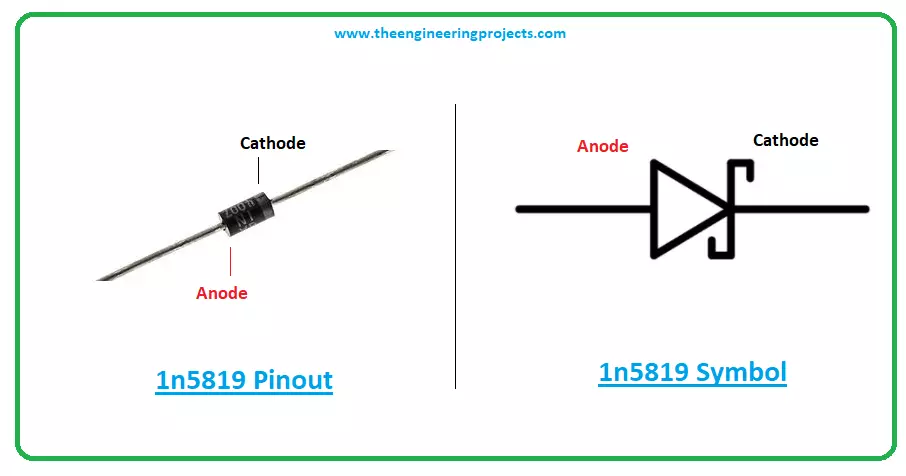
Hello Friends! Happy to see you around. Thank you for clicking this read. In this post today, I’ll document the Introduction to 1n5819.
The 1n5819 is a Schottky diode, also called hot-carrier diode, employed for extremely fast switching. This diode is formed when the metal material is combined with the semiconductor material. This combination results in the formation of a barrier that blocks the flow of electrons. The reason this is also called a hot-carrier diode.
I suggest you read this post all the way through, as I’ll walk you through the complete introduction to 1n5819 covering datasheet, pinout, features, equivalents, and applications.
Let’s get started.
Introduction to 1N5819
The 1n5819 is a Schottky diode used for fast switching appl ...
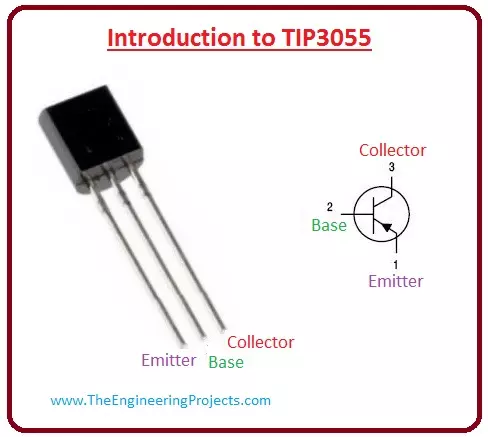
Hello friends, I hope you all are doing great. In today's tutorial, we are gonna have a look at detailed Introduction to TIP3055. TIP3055 is a silicon epitaxial-ignoble NPN transistor, which is assembled in TO-218 malleable parcels. It is the best device for power swapping circuits, parallel and series controllers (regulators), output phases and high power amplifiers. Its corresponding PNP transistor is TIP2955.
It is a universal device used in many industrial projects where audio amplification is required. Its structures are attractive much the identical excluding for the maximum power indulgence that is a slightly lesser. In today’s post, we will have a look at its fortification, smashup, prominence, proposals, etc. I will also share some links ...
Hello everyone! I hope you all will be absolutely fine and having fun. Today, I am going to give you detailed discussion on Introduction to LM2904. LM 2904 consists of two builtin amplifiers. These amplifiers have high gain and they are internally frequency compensated. These amplifiers are designed for the operation from a single power supply for a large range of voltages. We can also operate them from multiply power supplies as well.
LM-2904 operates on 3.3V power supply, it is the most common power supply in digital systems. LM 2904 is also available in small sizes i.e. they are available in the latest technology DSBGA. LM-2904 has a lot unique features in comparison to the other standard amplifiers. These features include large DC voltage ga ...