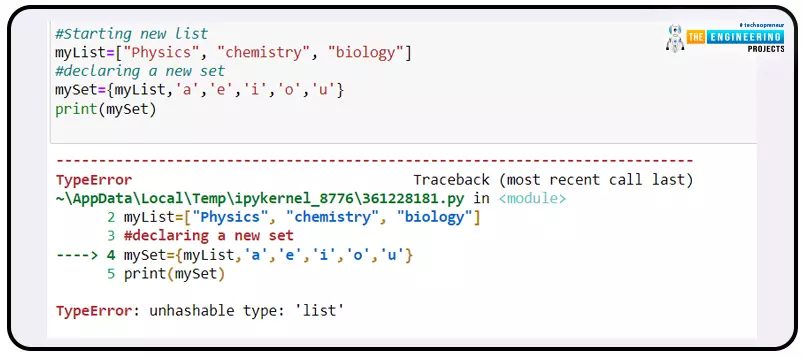
Hello students! Welcome to the new tutorial on Python. We all know that Python is one of the most popular programming languages, and there are hundreds or thousands of developers that are earning a handsome amount with the help of this easy programming language. In the previous lecture, we studied the range in the sequence, and in the present class, our concern is having the command on the sets in Python. We know you are curious about the set's details, but before this, I want to share the list of topics that will be covered in this class.
What is a set in the Python programming language?
What are some properties that distinguish the set from other data types?
What is the mutable data type, and how is it related to the set?
Introduction of the Jupyter notebook.
Can we have duplicate ...
Greetings Learners! Welcome to the new lecture on Python. Today we are moving towards an interesting and important concept. If you have come from a programming background, then you must know about the workings of loops. To make the repetition of the same sequence, we use loops. We are familiar with the sequences in detail as we have learned them in the previous lectures and have received the concept in the recent lecture. If you want to be a programmer, then you can not move forward without a solid base of loops; therefore, in this lecture, we will learn the concept of loops from scratch and then go on to a deep understanding of each loop in the next episodes. So have a look at the concepts that you will learn today.
What are the loops?
How do we understand the concept of loops from scra ...
Welcome to the fifteenth chapter of this python course. Python lists and tuples were studied extensively in the last session, and we learned how to manipulate the data contained in these types of structures. You've only experienced sequential execution up to this point, where each statement is performed sequentially in the order they appear in the code.
However, the real world is frequently more nuanced. Sometimes, a program must skip over certain statements, run a set of statements repetitively, or pick between other sets of statements to execute. This is called "conditional branching."
That's when control structures come into play, which controls the sequence in which statements in a program are executed.
What will you learn?
The if statement ...
Hola students! Welcome to the new Python tutorial, where we are learning about OOP. We all know why OOP is important in programming. In the previous lecture, a detailed overview of classes and objects was discussed. We are moving towards the next step of learning where our focus will be on inheritance. Yet, programming also contains inheritance. We have all read about inheritance in real life and are aware of the concepts surrounding it. This time, we will discuss these concepts according to the workings of the classes and related entities. The concept of inheritance is the same in both scenarios, and with the help of interesting examples, the practical implementation of inheritance will be shown to you, but first of all, it would be interesting to know about the main headings that will be ...
Hey peeps! Are you excited to begin with the new chapter in Python? Till now, we have been learning the data types and their related concepts. Now, we are starting a new chapter where you will learn the details of Object Oriented Programming or OOP. We are moving towards the advanced level of programming in Python, and here, you will go through the complex but interesting concepts that will show us the fascinating results on the screen. This will be more clear when you will know the basic information about the OOP, but before going deep, we will go through the headlines of the lecture:
How do you classify the programming languages?
How do you introduce the OOP?
Why object-oriented programming is important in Python?
How do you define class and objects in OOP and how are they connected? ...
Hello friends, I hope you all are doing great. In today's tutorial, we will have a look at How to use String in Python. It's our 3rd tutorial in Python series. We have discussed strings in our previous lecture How to use Data Types in Python.
String is a most commonly used data type in python that's why I have created a separate lecture on it. Python has many built-in string operations, which we will discuss today in detail. So, let's get started with String in Python:
How to use String in Python
String Data Type is used to store or collect one or more characters or sequence of characters, we can place any alphanumerical or special character in a string.
Let's create a string in python, it has a simple syntax, as shown below:
first_var = "He ...
Welcome to the next lesson of our python programming class. In the last session, we looked at the use of If-else statements and created simple programs to demonstrate the concept. While loops are another type of conditional statement, and in this tutorial, we'll look at how they're used.
What will you learn?
In this article, you'll learn how to prematurely exit a while loop, a Python control structure for endless iteration. You will also learn how to write conditions in a single line to produce short and readable code.
Iteration in while loop
The term "iteration" refers to the practice of repeatedly running the same piece of code. A loop is a type of programming structure that implements iteration.
Bo ...
Hello friends, I hope you all are ding great. In today's tutorial, I am going to show you How to use Arithmetic Operators in Python. It's our fourth tutorial in Python series. Arithmetic operators are required in mathematical problem solving.
We will first have a look at the arithmetic operators and after that, we also discuss different builtin arithmetic functions in Python Math module. So, let's get started:
Arithmetic Operators in Python
Arithmetic operators ( +, -, *, /, ^ etc. ) are used to perform simple arithmetic operations in python.
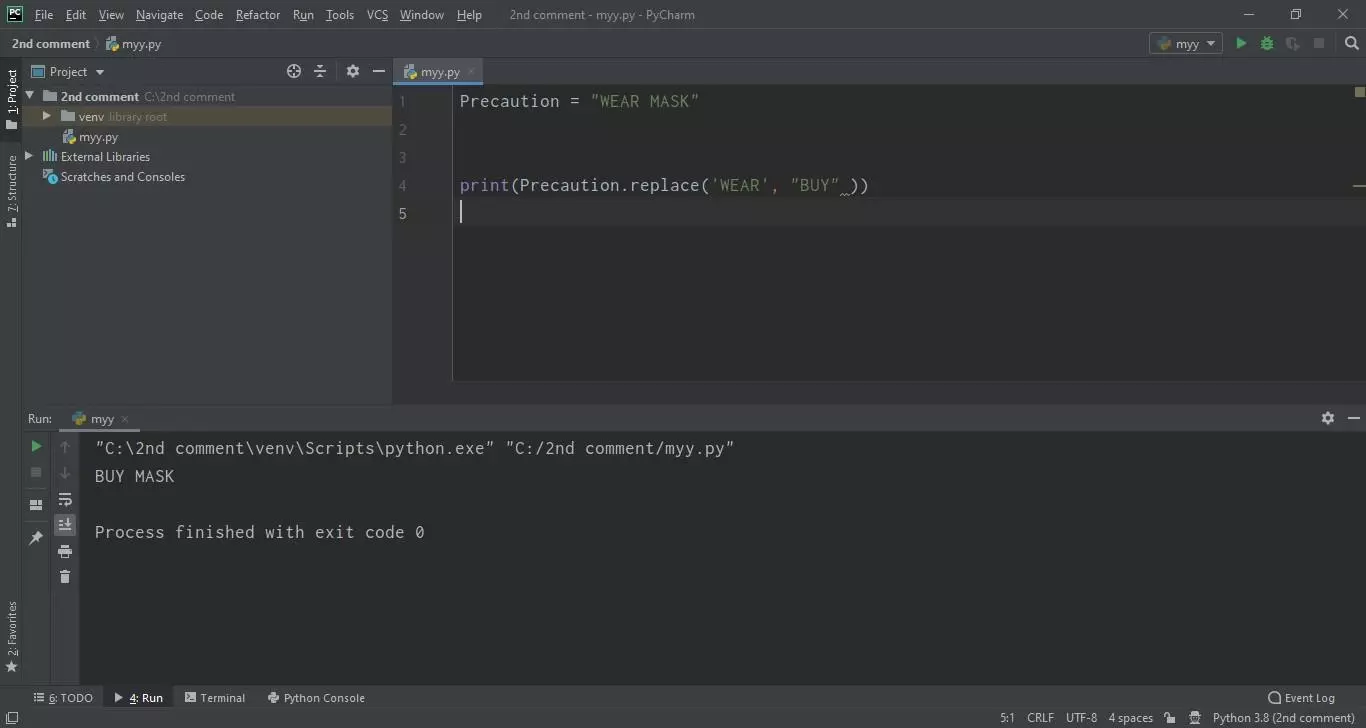
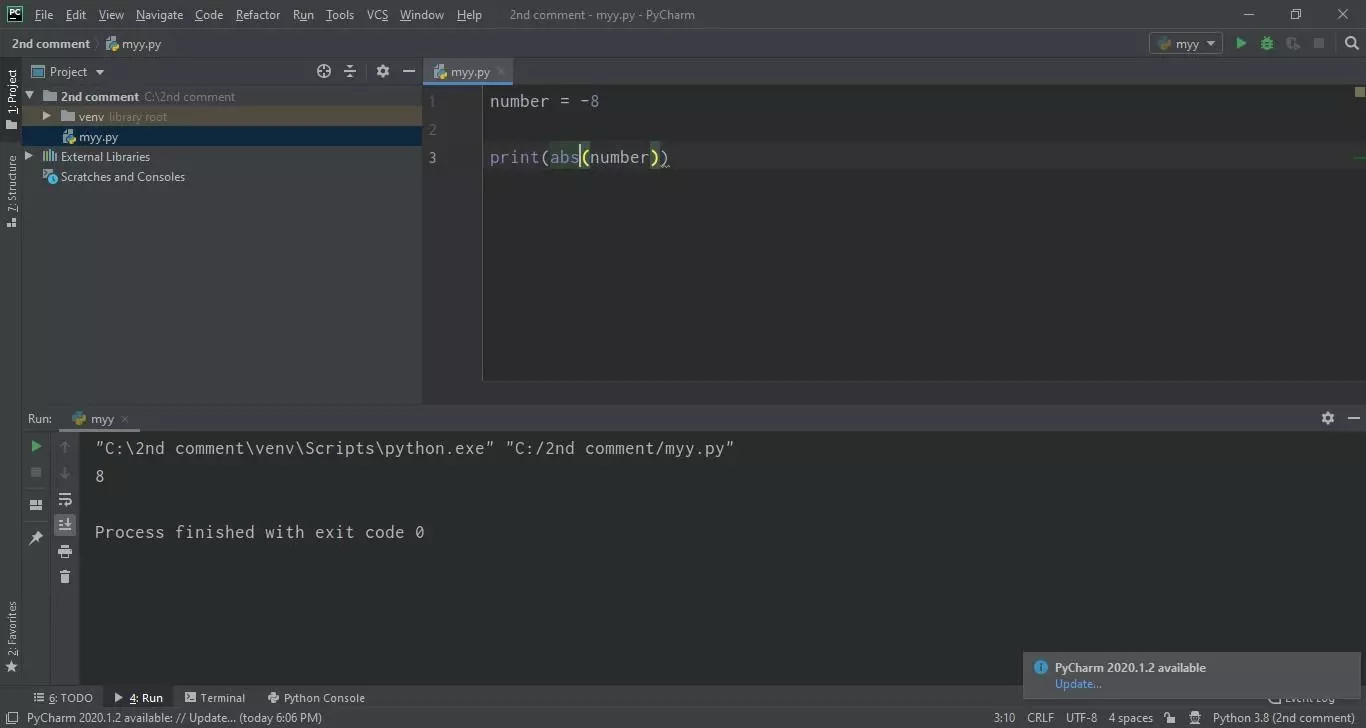
So, let's open up your PyCharm and perform a simple task using these operators, as shown in below figure:
I used a single star for multiplication and a doub ...
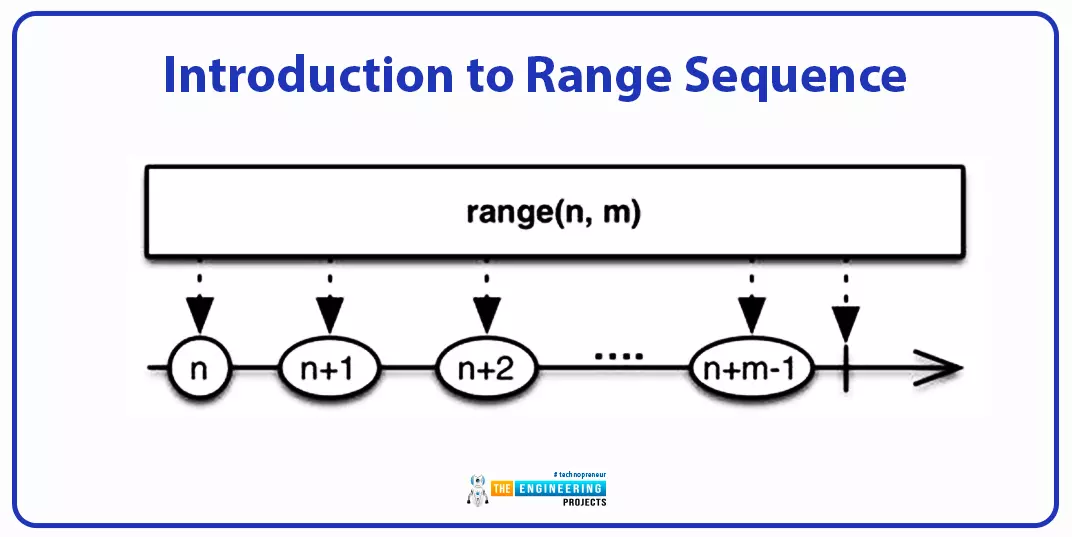
Hey peeps! Welcome to the new lecture on the sequence data type, where we are discussing the range data type. We are interested in working on deep learning, and for this, we are learning the Python programming language from scratch. If we talk about the previous episode, we saw the byte and byte array methods that were amazing for converting the different data types into bytes. The current lecture will discuss the range data type, which is slightly different from the other types of sequences, so students will learn new and interesting concepts in the lecture; however, before we get into the details of our topic, take a look at today's highlights:
What is the range function?
How can you elaborate on the syntax of the range function in detail?
What are the three types of range functions ...
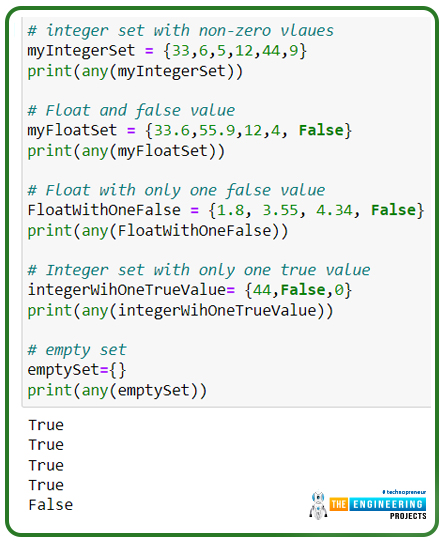
Hey people! Welcome to another tutorial on Python programming. We hope you are doing great in Python. Python is one of the most popular languages around the globe, and it is not surprising that you are interested in learning about the comparatively complex concepts of Python. In the previous class, our focus was to learn the basics of sets, and we saw the properties of sets in detail with the help of coding examples. We found it useful in many general cases, and in the present lecture, our interest is in the built-in functions that can be used with the sets. Still, before going deep into the topic, it is better to have a glance at the following headings:
What are the built-in functions?
How do we perform the all() function with examples?
What is the difference between any() and all()? ...