Hello friends! I hope you all will be absolutely fine and having fun. Today, I am going to give you an elaboration on Introduction to 2N3772. I have already shared basic knowledge about different IC's and transistors in my previous tutorials e.g. Introduction to IRF540, BC547, MMBD914, LM339, LM224 and LM386. You must have alook at these tutorials before going into the details of this tutorials. It will be quite helpful in the better understanding of this article. 2N-3772 is basically a type of central semiconductor. It is basically a Negative Positive Negative (NPN) semiconductor. This semiconductor is designed by the process named as epitiaxial process. The main purpose behind its designing is to provide the high power based amplification proce ...
Hello friends, I hope you all are doing great. In today's tutorial, we are gonna have a look at a detailed Introduction to nRF52840. nRF52840 is a low-power 2.4 GHz wireless system-on-chip (SoC). It integrates a multi-protocol 2.4 GHz transceiver, an Arm Cortex-M4F CPU and flash memory. It is the best system-on-chip (SoC) for any short-range wireless personal area network or IPv6-enabled automation applications.
nRF52840 supports low energy Bluetooth, 802.15.4, ANT™ and user proprietary 2.4 GHz protocols. nRF52840 is used in different industrial projects such as industrial mesh networks, advanced personal fitness devices, and smart city infrastructure. In today's post, we will have a look at its working, specifications, applications, pinout, etc. I will also share some links where I have ...
Hello readers, I hope you all are doing great. Welcome to Section 5 of the ESP32 Programming Series. In this section, we are going to interface different Embedded Sensors with the ESP32 Microcontroller Board. ESP32 development board is featured with some inbuilt sensors(i.e. hall effect sensor, capacitive touch sensor) so, in the initial tutorials of this section, we will explore these built-in ESP32 sensors and in the later lectures, we will interface third-party sensors with the ESP32.
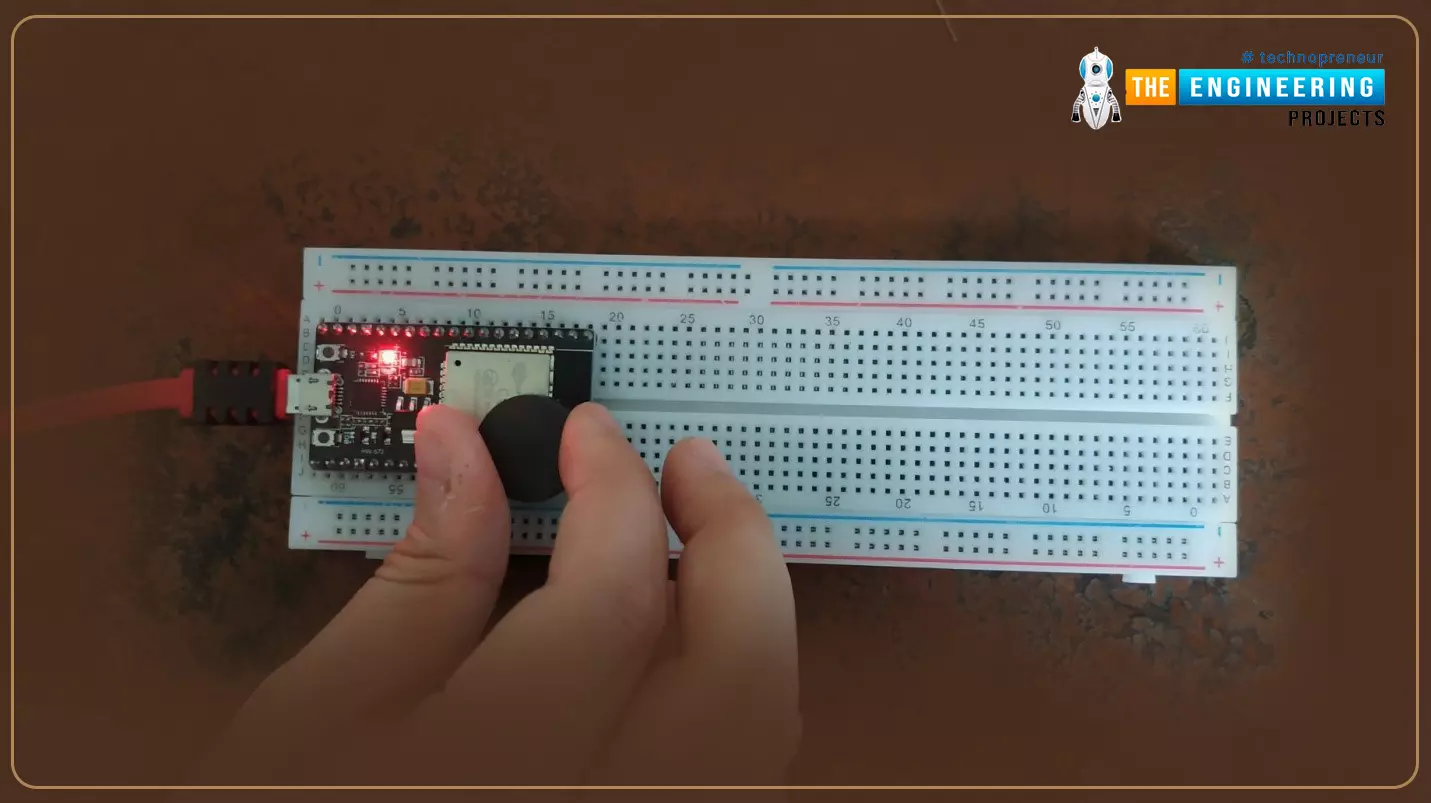
In today's lecture, we will discuss the working/operation of the ESP32 built-in Hall Effect Sensor. Hall Effect sensor is used to detect the variation in the magnetic field of its surroundings. So, let's first understand What's Hall Effect:
What is the Hall Effect?
The Hall Effect phenomenon was fir ...
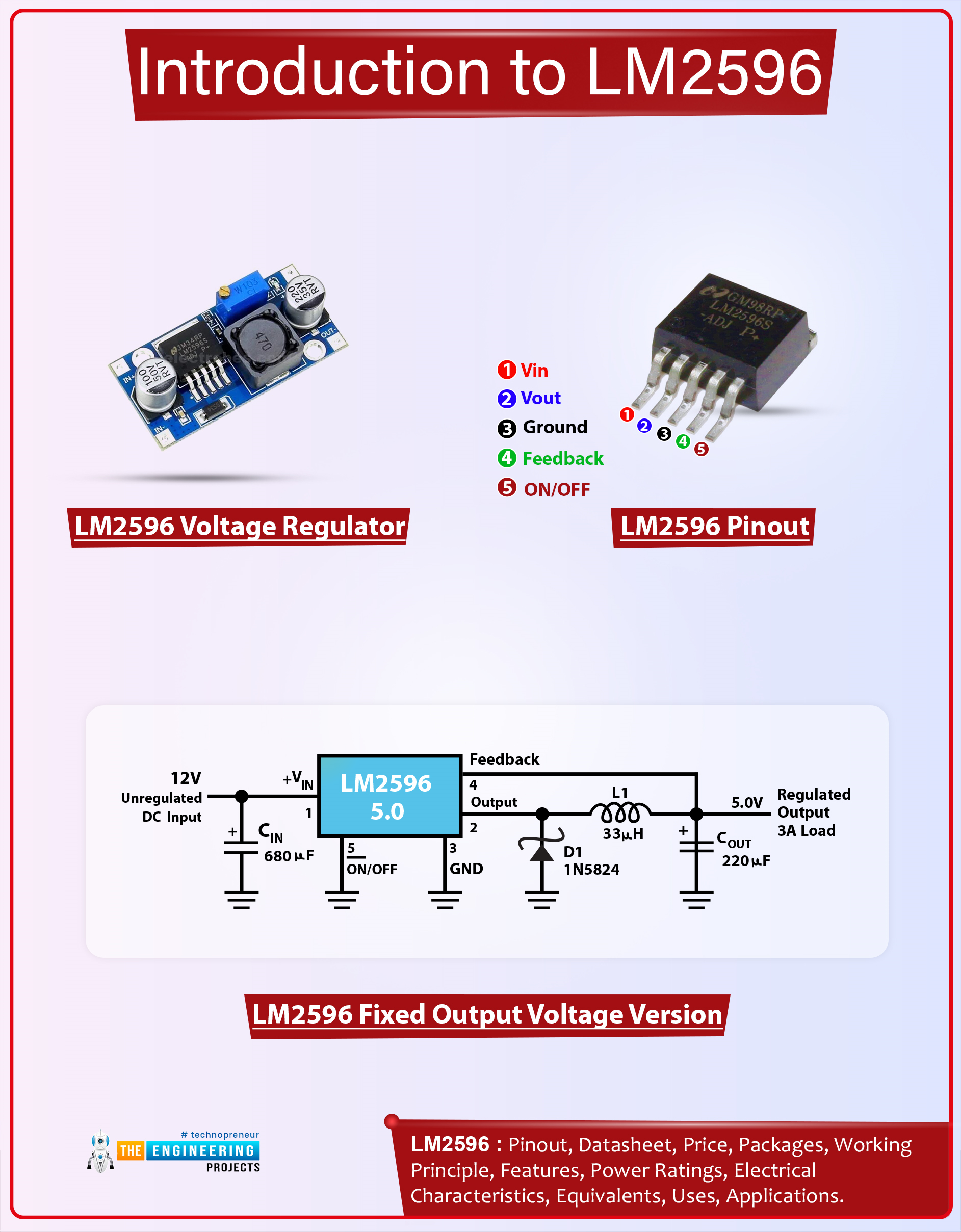
Hi Guys! Welcome you on board. Happy to see you around. In this post today, I’ll detail the Introduction to LM2596.LM2596 is a step-down voltage regulator, also known as a buck converter, mainly used to step down the voltage or to drive load under 3A. It carries remarkable load and line regulation and is available in fixed output voltages including 3.3V, 5V, and 12V. It also comes with a customized output version where you can set the output voltage as per your requirement.
Just stay with me for a little while, as in this post I’ll walk you through the Introduction to LM2596 covering the datasheet, pinout, features, and main applications of this tiny device. Let’s jump right in.
Introduction to LM2596
LM2596 is a voltage regulator mainly used to step down the voltage or to drive ...
The Internet of Things (IoT) and the Industry 4.0. Distinct technological revolutions but with a common goal: To integrate equipment (digital or analog) to a computer network.
And to be part of this revolution, the developer goes out of its way to include wired ethernet modules or WIFI modules in its circuits. Which increases complexity, circuit size and development cost.
What if I told you that already has a built-in WIFI microcontroller? And that it fits in the palm of your hand? For just 1 US dollar?
Today I’m going to introduce you to the ESP8266 microcontroller, from Espressif. And for those of you who already program in 8Bit microcontrollers like the Atmega328 (one of the most common on Arduino) and struggle to build your code in the modic SR ...
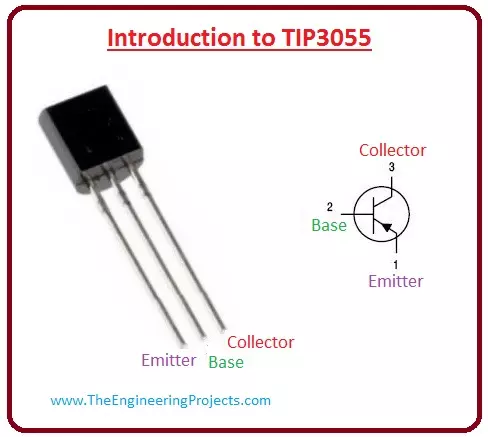
Hello friends, I hope you all are doing great. In today's tutorial, we are gonna have a look at detailed Introduction to TIP3055. TIP3055 is a silicon epitaxial-ignoble NPN transistor, which is assembled in TO-218 malleable parcels. It is the best device for power swapping circuits, parallel and series controllers (regulators), output phases and high power amplifiers. Its corresponding PNP transistor is TIP2955.
It is a universal device used in many industrial projects where audio amplification is required. Its structures are attractive much the identical excluding for the maximum power indulgence that is a slightly lesser. In today’s post, we will have a look at its fortification, smashup, prominence, proposals, etc. I will also share some links ...
Hello everyone! I hope you all will be absolutely fine and having fun. Today I am going to given elaboration on Introduction to L293D. L 293D is basically a high current dual motor driver/controller Integrated Circuit (IC). It is able to drive load having current up to 1A at the voltage ranging from 4.5V to 36V. Motor driver usually act as current amplifier because they receive a low current signal as an input and provides high current signal at the output.
Motors usually operates on this higher current. L-293D has to builtin H-Bridge driver circuits and is able to control two DC motors at a time in both clockwise and counter clockwise direction. It has two enable pins and they should be kept high in order to control the motor. By changing the p ...
Hello everyone! I hope you will absolutely fine and having fun. Today, I am going to give you a detailed discussion on the topic Introduction to 4N60. I have shared characteristics of the different IC's in my previous tutorials in Introduction to 75N75, SG3524, 2N3772, L298, L293D, 2SC3320 and 20N60. You must need to go through all these tutorials for the better understanding of today's article. 4N-60 is a high voltage Metal Oxide Semiconductor Field Effect Transistor (MOSFET). It is a three pin device including drain (D), gate (G) and source (S).
4N60 is basically a power MOSFET and is able to handle the certain levels of power. It is specially designed to achieve the different characteristics e.g. high speed switching time, low charge on gate ...
Internet of Things is a system of multiple inter-related computing devices. The factor ‘thing’ in IoT is designated to an entity capable of communicating data over a network (IOT), which can be a digital machine, sensor, human being, animals etc. Each component that is included in IoT network is assigned with an unique identity called UID and the ability to communicate data over IoT network without any external human or computer intervention.
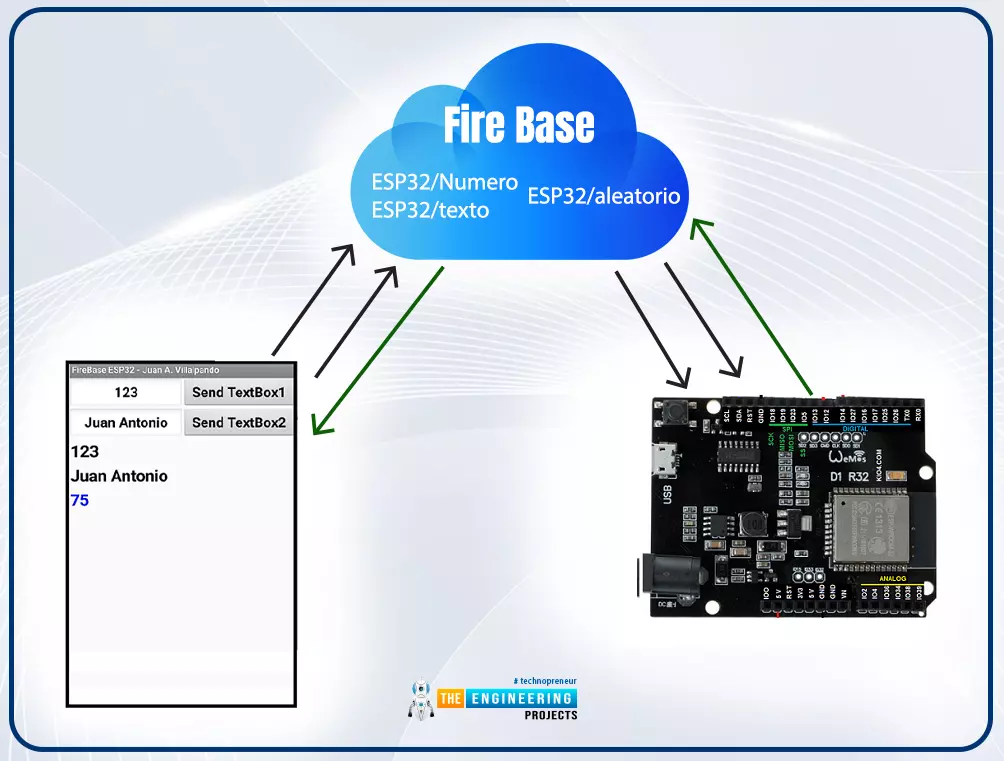
Hello readers, I hope you all are doing great. In our previous tutorial, we discussed how to upload data to Firebase Real-time Database using ESP32. In this tutorial, we will learn how to read the data stored on the Firebase Database with ESP32.
We can access the data stored in Firebase database from anywhere in the world, which makes this preferable ...
Hello everyone! I hope you all will be absolutely fine and having fun. Today, I am going to give you a detailed Introduction to PC817. PC-817 is also known as an optocoupler / optoisolator. It consists of Infrared Emitting Diode (IRED). This IRED is coupled to a photo transistor optically and not electrically. It is closed in a four (4) pin package. This package is usually available in two different forms. The first one is wide lead (Pb) spacing option and the second one is SMT gullwing lead form option.
PC 817 has an internal LED and a photo transistor. The photo transistor's base becomes activate when LED throws light on it. The output obtained can be divided into two formats either common emitter or common collector. But the configuration is ...