Hello friends, I hope you all are doing great. In today's tutorial, we are gonna have a look at detailed Introduction to TIP127. The TIP127 is a PNP type Darlington pair transistor. It is manufactured for universal drive amplifications and less velocity swapping submissions. It is existing in TO-220 kind of cascading. Its corresponding NPN transistor is the TIP122.
This is a common transistor it used in varied engineering schemes. It formed for least time taking swap proposals. In today’s post, we will have a look at its protection, wreck, difference, entitlements, etc. I will also share some links where I have connected it with other microcontrollers. You can also get more material about it in comments, I will guide you more about it. So, let’s g ...
3D printing is one of the most promising technologies in recent breakthroughs. One of the most inherent benefits of 3D printing is additive innovation; it opens up an entirely new way of creating products and provides numerous benefits over traditional fabrication techniques.
Nowadays, more businesses across many industrial sectors adopt 3D printing as a viable alternative to subtractive manufacturing (acquiring machined parts online) and injection molding. We'll look at the benefits of 3D printing and how you can use this production method to benefit your company. Is it worthwhile to use 3D printing for your project?
Affordability
One of the best aspects of 3d printing is the reduced labor costs. Operating costs heavily influence the quantity of ...
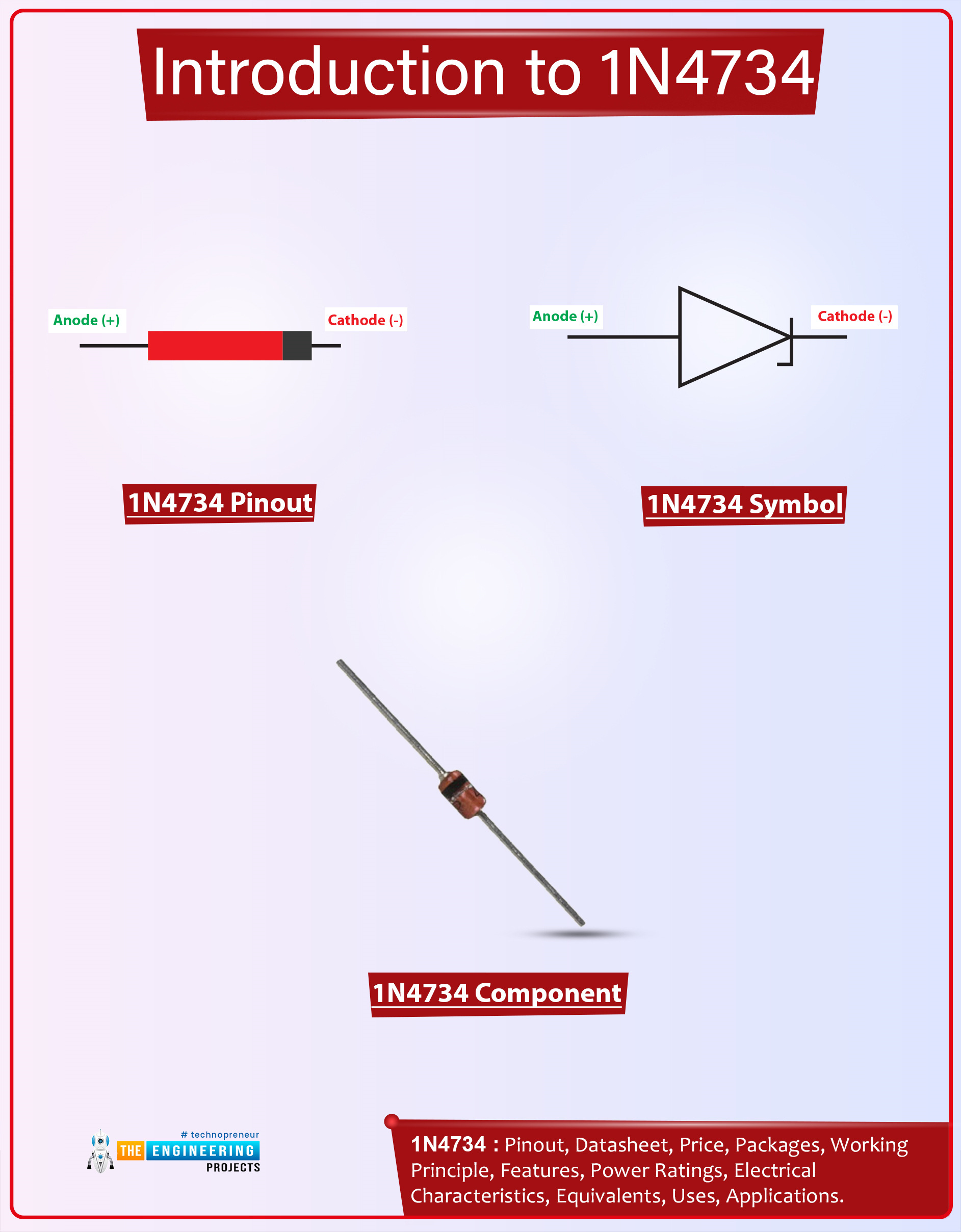
Hi Folks! I hope you’re well today. I welcome you on board. In this post today, I’ll walk you through the Introduction to 1n4734.The 1n4734 is a silicon planner power Zener diode that is employed as a low current voltage regulator. It is incorporated as a shunt regulator in many applications. This Zener diode conducts the current in both directions in contrast to the regular diode that conducts in one direction only i.e. regular diode conducts in forward biased condition only. This Zener diode conducts in both conditions forward biased condition and reverse biased condition. Power dissipation in this Zener diode is 1W and standard Zener voltage tolerance is ±10%.
I suggest you read this entire post till the end, as I’ll detail the complete Introduction to 1n4734 covering datasheet, pino ...
Hello friends, I hope you all are doing great. In today's tutorial, we are gonna have a look at a detailed Introduction to TCS3200. TCS3200 is a color-detecting sensor, it consists of TAOS TCS3200 RGB sensor chip and four white LEDs. It is used to detect visible color in a measurable range. This sensor has an array of a photodetector diode, some diodes are equipped with different color filters i.e. red, blue or green color and some diodes do not have any filter.
TCS3200 has different applications such as test strip reading, sorting by color and ambient light sensing. In today's post, we will have a look at its working, protocol, pinout, specification, etc. I will also share some links where I have interfaced it with other microcontrollers. If you have any questions about it ask in the c ...
Hello friends, I hope you all are doing great. In today's tutorial, we are gonna have a look at detailed Introduction to TIP31. The TIP31 is a typical NPN transistor which is frequently cast-off for intermediate power submissions. This (BJT) is a three (3) points expedient which works for intensification or swapping submissions. It is designed by linking three units of semiconductors with alternatively dissimilar doping. The central unit which is (base) is thin and the other two external areas (emitter and collector) are greatly doped.
Some transistors can intensify a minor current which will then be dominant sufficient to work a spotlight or other higher current expedients. These diplomacies are also capable to notice an alteration in voltage an ...
Hello everyone! I hope you all will be absolutely fine and having fun. Today, I am going to elaborate you, how to make Arduino Projects for beginners. Before gong into the detail of this tutorial first of all I would like to explain you a bit about Arduino. Arduino is an open source micro controller. A lot of help is available online so its user friendly hardware. Most of the students prefer to do work on this device.
Arduino is a low cost high performance device. Due to its cost effectiveness and open source feature it is commonly available in the market these days. An amazing thing about Arduino is that students can take help online with a lot of examples regarding any of the task. There are thousands of Arduino projects are available online f ...
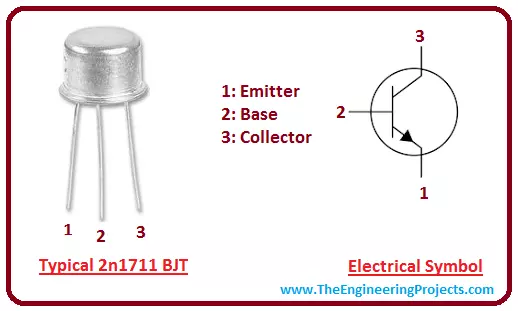
Hey Everyone! I hope you are doing great. We always come with some awesome topics related to engineering so you can excel and progress in your relevant field. Today, I am going to give you a brief details on the Introduction to 2n1711. It is an NPN (Negative-positive-Negative) bipolar junction transistor (BJT) which is mainly used for amplification and switching purpose. It encompasses low leakage current, high break down voltage, and low capacity which makes it useful over widely current range. I'll try to touch every aspect related to this transistor so you can get an idea what it does and what are its main applications? Let's get started.
Introduction to 2n1711
2n1711 is an NPN bipolar junction transistor which is mainly used for switching a ...
Hi Guys! Hope you are getting along with life pretty well. I always strive to keep you updated with most valuable information related to engineering and technology. Today, I'll discuss the detailed Introduction to Arduino Leonardo. It is a microcontroller board based on the ATmega32U4 and comes with 23 digital input/output pins. It is developed by Arduino.cc, aiming to provide easy to use interface with the ability to perform a number of functions on a single chip.
It incorporates everything required to drive the automation in the relevant project. Simply connect this device with the USB cable or power it up using DC adapter and start playing with it
In this post, I'll try to cover each and everything related to Arduino Leonardo, so you don't n ...
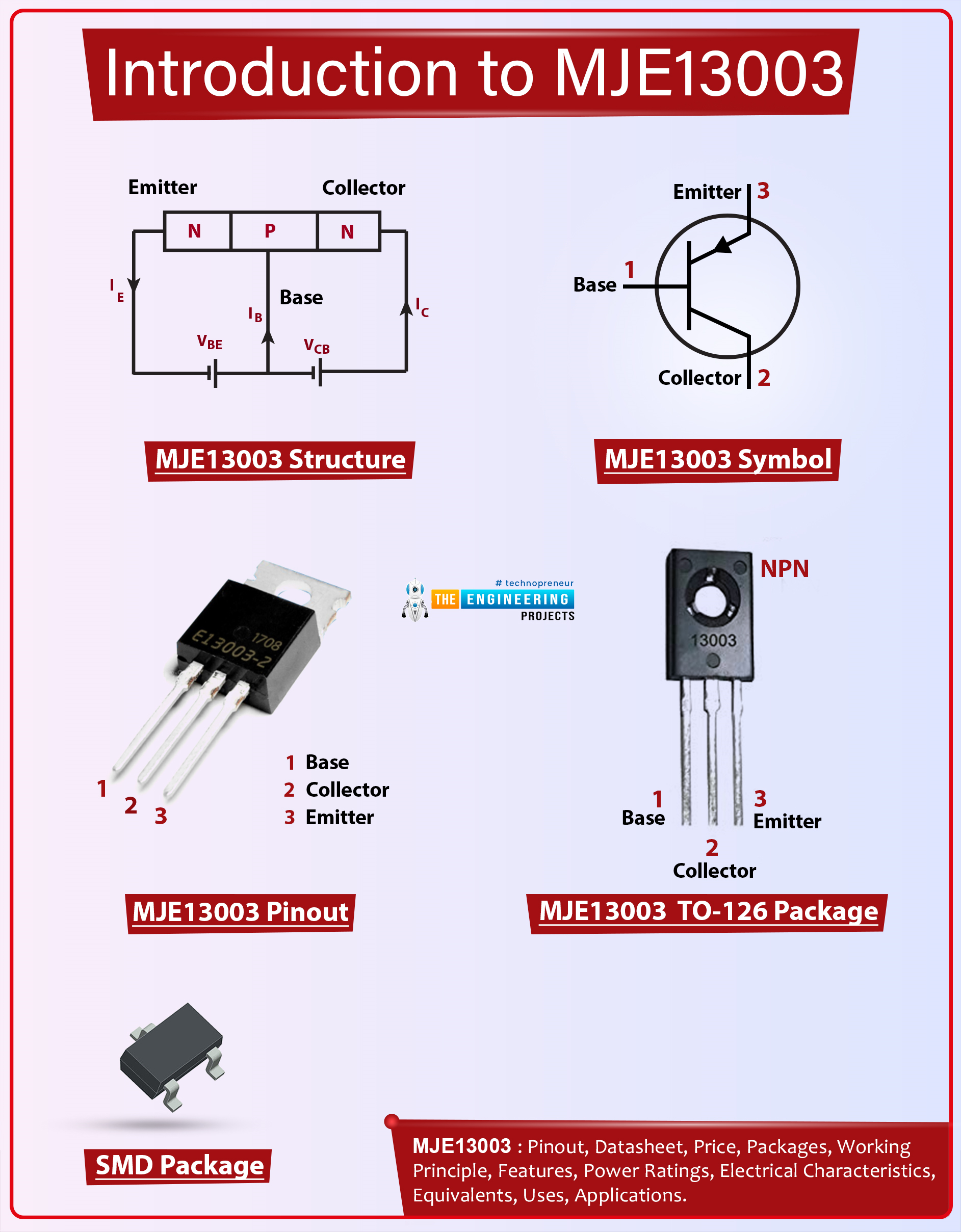
Hi Friends! Hope you’re well today. I welcome you on board. In this post today, I’ll demonstrate the Introduction to MJE13003.
MJE13003 is an NPN silicon transistor mainly used for high-speed high voltage power switching applications. This chip is a three-terminal device where a small current at one terminal is used to produce a large current at the remaining terminals. The collector current is 1.5A which projects this device can support load up to 1.5A.
I suggest you buckle up as I’ll describe the complete Introduction to MJE13003 covering datasheet, pinout, working principle, applications, power ratings, and physical dimensions.
Let’s get started.
Introduction to MJE13003
MJE13003 is a bipolar junction transistor that belongs to the NPN transistor family. It is mainly used ...
Hello friends! I hope you will be absolutely fine and having fun. Today, I will give you a detailed discussion about Introduction to 75N75. I have also shared different articles on Introduction to 2N3904, 2N3906, BC547, C945 and IRF540. You must go through all of these articles for the better understanding of this tutorial. 75-N75 is basically a Metal Oxide Field Effect Transistor (MOSFET). MOSFET is a transistor which is frequently used in electronic devices for the amplification and fast switching purposes.
MOSFET consists of four different terminals. These terminals include body terminal, source, drain and gain respectively. There two different type of transistors i.e. P-channel transistor and N-channel transistor. 75N-75 is N-channel MOSFET. ...