Hello everyone, I hope you all are fine and having fun. In today's tutorial, I am going to show you How to write Arduino code. In the previous tutorial, we have seen the Simple Arduino LED Example so if you haven't read that tutorial then I must suggest you to read it first because I am gonna use the same simulation with some advancements in it.
Moreover, you should also have a look at How to do Arduino Serial Communication because we are also gonna use Serial Port in today's tutorial and one more tutorial which you must read is How to use digitalRead in Arduino because we are dealing with digital pins here. So, I hope that you have read those tutorial and are ready to learn How to write Arduino code. So, let's have a look at How to write Arduino ...
Hello everyone, I hope you all are doing great. In today's tutorial, we are gonna have a look at How to design a Smoke Detector with Arduino. Its quite a simple project but if you are working on any security project then you must add this feature in it. You should also download this Gas Sensor Library for Proteus, and design its simulation.
I will use gas sensor MQ2 for this project. I have purchased MQ2 Gas Sensor module as its quite easy to interface with Arduino. Arduino board I'm using is Arduino UNO. I have also designed an LPG Gas Leak Detect using Arduino using this MQ2 Sensor. So, let's get started with How to design Smoke Detector with Arduino & MQ2 Sensor.
Smoke Detector with Arduino & MQ2 Sensor
First of all, we need to conn ...
Hello friends, I hope you all are fine and enjoying yourself. Today I am going to share a new project titled Interfacing of temperature sensor LM35 with Arduino UNO in Proteus ISIS. So far, I have only worked on temperature sensor DS18B20 for temperature measurements and I have also uploaded a tutorial on Interfacing of Temperature Sensor 18B20 with Arduino.
Recently I got a chance to work on a project regarding temperature sensing but the condition of this project was that to use only LM35 for temperature detection. Then, I get to know much about LM35, its operating conditions and features. So I thought I should also upload its tutorial as it will also be advantageous for engineering students. Because learning new things is always a charm.
An exc ...
[vc_row][vc_column][vc_column_text]
Hello friends, hope you are fine and having fun with your lives. Till now we have seen two tutorials on Pixy Camera module, in the first tutorial we have seen How to Get started with Pixy Camera and after that we have seen How to Install Pixy Camera software which is named as PixyMon. So, now I hope that you have installed the Pixy camera software and have the Pixy Camera module in hand along with USB to Mini USB cable. Because in this tutorial we are gonna plug our Pixy Camera module with moduter and will upload the latest firmware in our Pixy Camera Module, which isn't much difficult and would be a piece of cake if you followed all the instructions carefully.
Pixy Camera comes with some old firmware which is up ...
Hello friends, I hope you all are fine and having fun with your lives. In today's tutorial, I am going to show you the Interfacing of XBee with Computer. In the previous part of this tutorial, I have given the Introduction to XBee Module. Hope you guys have read it and if not then go visit it so that you may have some idea about XBee module.
Now come to the second part about how to interface xbee with computer because its important as if you cant interface the xbee with computer then you cant interface it with any microcontroller and later I will tell you its interfacing with microcontroller. You should also check this XBee Library for Proteus which will help you to simulate XBee module in Proteus.
We will cover arduino with more detail as its ...
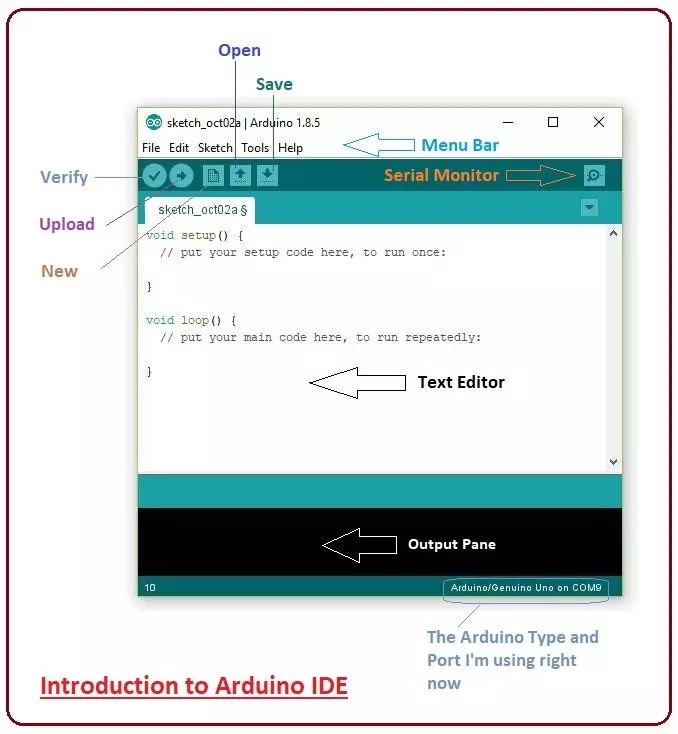
Hey Guys! Hope you are doing well. Today, I'll discuss the detailed Introduction to Arduino IDE, where IDE stands for Integrated Development Environment - An official software introduced by Arduino.cc, that is mainly used for writing, compiling and uploading the code in almost all Arduino modules/boards. Arduino IDE is open-source software and is easily available to download & install from Arduino's Official Site.
In this post, I'll take you through the brief Introduction of the Software, how you can install it, and make it ready for your required Arduino module. Let's dive in and get down to the nitty-gritty of this Software.
Introduction to Arduino IDE
Arduino IDE is an open-source software, designed by Arduino.cc and mainly used for wri ...
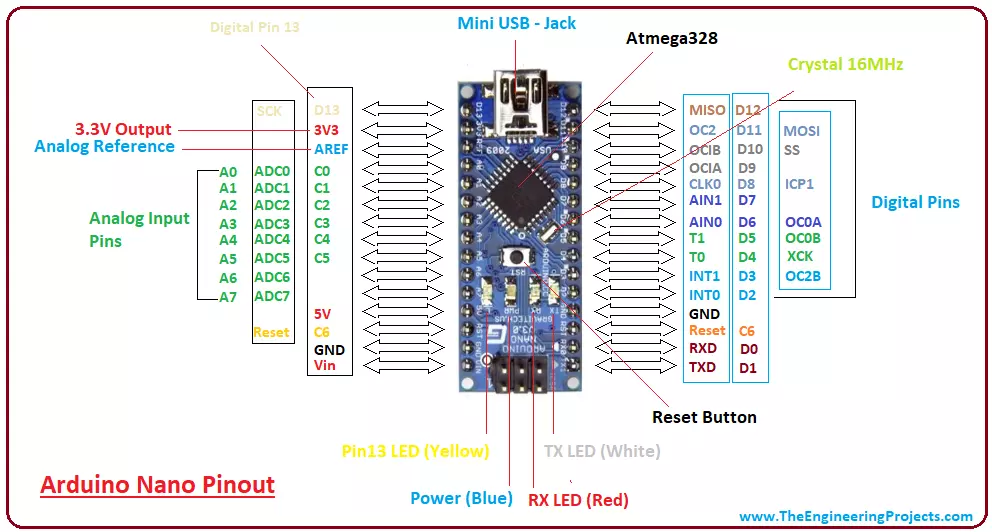
Hi Friends! I hope you are doing fine. Today, I am going to give you a detailed Introduction to Arduino Nano. We will also discuss Arduino Nano Pinout, datasheet, drivers & applications. It is a Microcontroller board developed by arduino.cc and based on Atmega328p / Atmega168.
Arduino boards are widely used in robotics, embedded systems, automation, Internet of Things(IoT) and electronics projects. These boards were initially introduced for students and non-technical users but nowadays Arduino boards are widely used in industrial projects.
Any kind of technical support and help is readily provided by the Arduino community. I have also designed this video tutorial on Arduino Nano:
Here's the figure showing the key points of Arduino Nano:
...
Hi Guys! Hope you’re well today. Thank you for viewing this read. In this post today, I’ll walk you through the Arduino Mega 1280 Library for Proteus.
You may already be familiar with Arduino Boards, in case you don’t, they are the open-source easy to use hardware and software platform used in modern electronic projects. These boards receive inputs and convert them into outputs to activate motors, LEDs, electrical circuits, robots, and embedded systems.
They are mainly designed for newbies and non-tech geeks who hesitate to construct the electrical circuits from the get-go and hate diving into the nitty-gritty of architecting electrical wires accurately to fashion electrical circuits.
Arduino boards come with both ready-made electronic kit and ...
Hello everyone, I hope you all are fine and having fun. Today's tutorial is the next episode in the series of basic Arduino tutorial for Beginners. In today's tutorial, we are gonna have a look at How to use digitalRead in Arduino. In the previous tutorial, we have seen How to use pinMode Arduino Command, which sets the Arduino Pin either as Input or Output. So, if you are using this pin as input then you have to read its status and that's where you need to use this digitalRead Arduino Command.
Other than Serial Pins in Arduino UNO, we also have 12 digital Pins. Serial Pins are also digital Pins so in total we have 14 digital Pins in Arduino UNO starting from 0 to 13. I am gonna explain them in detail in today's tutorial and we will also have a lo ...
Buy This Project
Hello everyone, I hope you all are doing great. Today, I am going to share a new Project which is Smart Blind Stick using Arduino in Proteus ISIS. I have designed its complete Simulation which I am gonna share today. We have designed this Proteus simulation off Smart Blind Stick after quite a lot of effort that's why its not free. We have placed a small amount on it and you can buy it from our shop via PayPal. You need to click on above button in order to buy this project's code and Simulation. If you have any problem in understanding this project, then you can ask in comments and I will try my best to resolve your issues.
Smart Blind Stick project is designed quite a lot in engineering universities. That's why, I thought of sha ...