Hi Friends! Hope you’re well today. Happy to see you around. In this post, I’ll detail the Introduction to Arduino UNO REV3. Arduino Uno REV 3 is an Arduino board based on the microcontroller ATmega328P. It carries 14 digital I/O pins out of which 6 can be used as PWM outputs. Moreover, 6 analog input pins are available on the board and the clock frequency is 16MHz. Arduino UNO is one of the most used boards from the Arduino family. The robust and clean design helps you shape your ideas into reality. Know that Arduino UNO REV3 is an advanced version of Arduino UNO. The new version includes four solder pads JP2 attached with the pins PB4 to PB7 of the USB ATmega. Uno stands for one in Italian and this name was picked for the release of Arduino Software (IDE) 1.0. The version 1.0 of Arduino ...
Hello Everyone! Hope you’re well today. Happy to see you around. In this post today, I’ll walk you through the Introduction to Arduino Uno WiFi Rev 2. Arduino Uno WiFi Rev 2 is a microcontroller board based on ATmega4809 and carries an ECC608 crypto chip to ensure a secure and safe WiFi connection. The board contains 14 digital I/O pins, 5 PWM pins, 6 analog pins, one SPI protocol, one I2C, and one UART communication protocol. I suggest you read this entire post till the end as I’ll detail the complete Introduction to Arduino Uno WiFi Rev2 covering pinout, pin description, features, programming, and applications. Let’s jump right in. Introduction to Arduino Uno WiFi Rev 2 The Arduino Uno WiFi Rev 2 is a microcontroller board that is mainly based on the ATmega4809 microcontroller. Contains ...
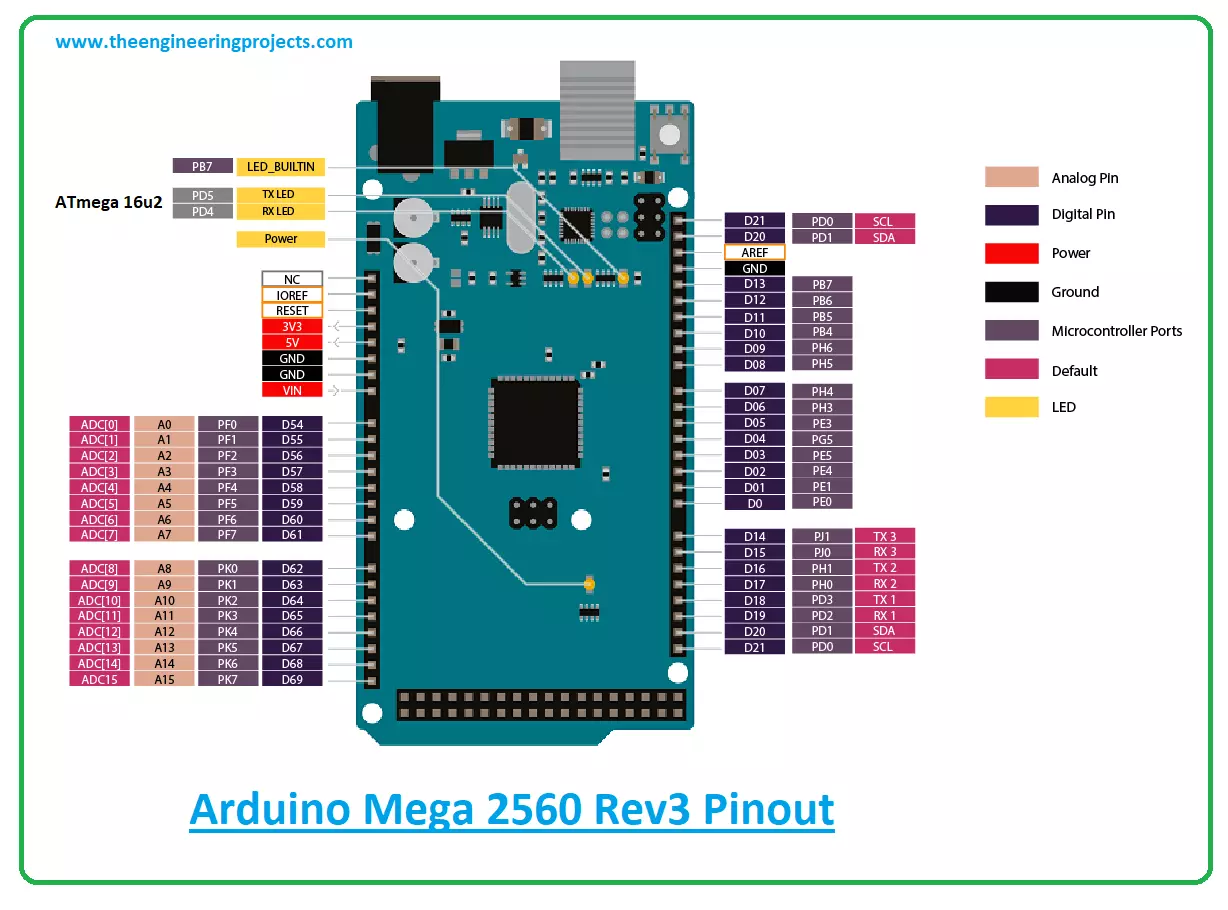
Hi Friends! Hope you’re well today. In this post today, I’ll walk you through the detailed Introduction to Arduino Mega 2560 Rev3. The Arduino Mega 2560 Rev3 is a microcontroller board that is based on the ATmega2560 microcontroller. The Arduino boards are widely used in the automation industry and embedded projects. Other boards like Arduino Uno, Arduino Nano, Arduino Every, Arduino Beetle all seem a good pick for the projects that require little memory to store the program. However, when the nature of projects becomes complex, requiring more memory and a rich set of I/O interfaces, the Arduino Mega 2560 Rev3 comes into play. In order to power up these Arduino boards, we need to use a Power supply for electronics or we can also use the USB port on the board. I suggest you buckle up and re ...
Hi Guys! Hope you’re well today. Happy to see you around. In this post today, I’ll walk you through the Introduction to Arduino Nano 33 IoT. Arduino Nano 33 IoT is mainly used in basic IoT applications. The Internet of things is one of the most exciting and robust developments in the field of information technology. Using this technology you can interface a network of physical things with software, sensors, or other technologies to develop communication and data exchange between devices and other systems using the internet. For example, you can control the room temperature by interfacing the sensors in your rooms with your smartphone through WiFi. Traditional systems including control systems, wireless sensor networks, embedded systems, and home automation all contribute to activating the ...
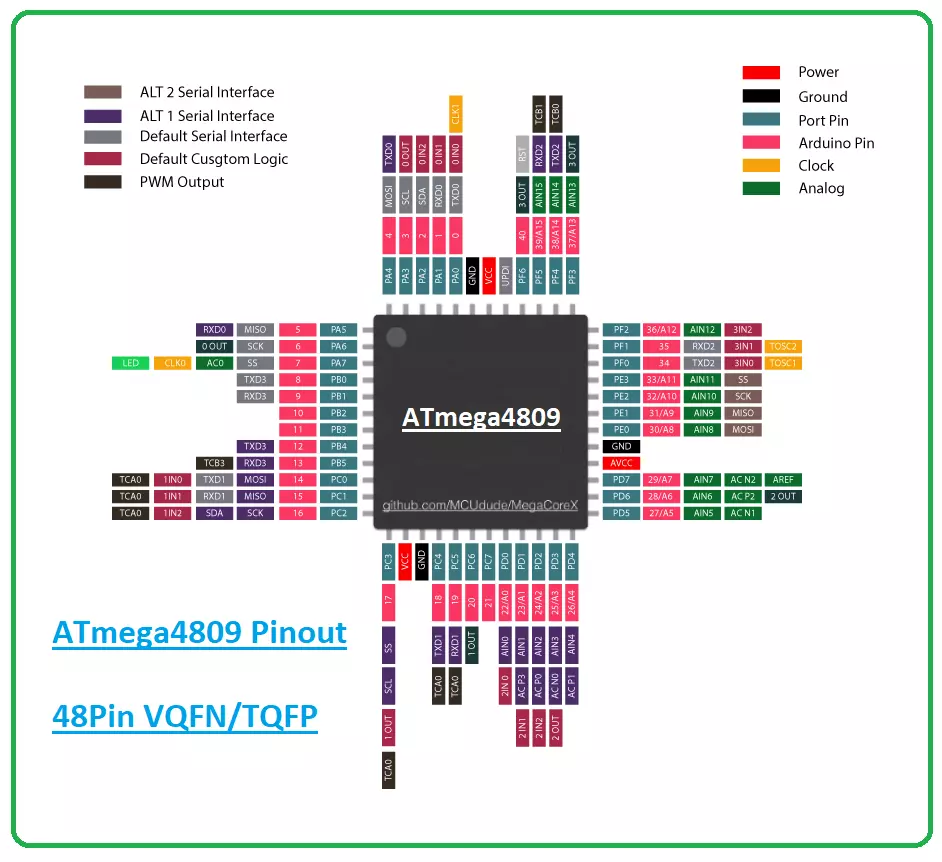
Hi Guys! I welcome you on board. Happy to see you around. In this post today, I’ll walk you through the Introduction to ATmega4809. The ATmega4809 is a type of microcontroller that belongs to the megaAVR® 0-series. It features an AVR® processor with a clock speed running at up to 20 MHz. It comes with a Flash memory size up to 48 KB, 256 bytes of EEPROM, and 6 KB of SRAM. It is available in 28-, 32-, 40-, or 48-pin packages. I suggest you buckle up as I’ll detail the complete Introduction to ATmega4809 covering datasheet, pinout, features, power ratings, and applications. Let’s get started. Introduction to ATmega4809 The ATmega4809 microcontroller belongs to the megaAVR® 0-series that contains an AVR processor. The series carries low power features with the latest core independent peripher ...
Hi Guys! Hope you’re well today. I welcome you on board. In this post today, I’ll walk you through the Introduction to Arduino Nano 33 BLE. Arduino Nano 33 BLE is an advanced version of Arduino Nano board that is based on a robust and powerful processor the nRF52840 from Nordic Semiconductors, a 32-bit ARM® Cortex™-M4 CPU. It comes with a crystal oscillator frequency of around 64MHz. It features 32 times bigger program memory than the Arduino Uno board, helping you store programs with much larger memory. With this device, you can produce a lot more variable as it comes with RAM that is 128 times bigger than the RAM of Arduino Uno. Before you move further, I recommend you read this article on the Introduction to Arduino Nano which we have published a while ago. I suggest you buckle up as I’ ...
Hi Guys! I welcome you on board. Happy to see you around. In this post today, I’ll give you a detailed Introduction to Arduino MKR WiFi 1010. The Arduino MKR Wifi 1010 is a solution to your basic IoT applications. Using this device, you can develop a WiFi-connected sensors network or can produce a BLE device connected to your cell phone. This board is based on the SAMD21 microcontroller and comes with a clock speed of around 32.768 kHz (RTC), 48 MHz. There are 8 digital pins, 13 PWM pins, and 7 analog pins incorporated on the board. The operating voltage is 3.3V while the voltage through USB or Vin is 5V. I suggest you read this post all the way through, as I’ll detail the complete introduction to Arduino MKR Wifi 1010 covering pinout, pin description, features, programming, and applicatio ...
Hi Guys! Hope you’re well today. I welcome you on board. In this post today, I’ll walk you through the Introduction to Arduino MKR WAN 1310. The Arduino MKR WAN 1310 includes Lora connectivity that can perform very long-range transmission operations consuming low power. This device is an ideal pick for the hobbyists requiring to develop IoT devices using the minimum networking experience using low power devices. The MKR WAN 1300 is incorporated with the Microchip® SAMD21 which is the low-power processor, the MKR family’s characteristic crypto chip (the ECC508), and the Murata CMWX1ZZABZ LoRa® module. Before you read further, I recommend you have a look at Introduction to Arduino Nano Every and Arduino MKR Vidor 4000 that I have uploaded previously. I suggest you read this post all the way ...
Hi Guys! I welcome you on board. Thank you for clicking this read. In this post today, I’ll detail the Introduction to Arduino Nano Every. Arduino Nano Every is a tiny powerful board that is based on the ATMega4809 AVR processor. It comes with a clock speed of around 20MHz and flash memory of around 48KB. It carries two 15 pin connectors on each side of the board that are pin-pin compatible with the Arduino Nano Every. The low price and small size make this board an ideal pick for the range of electrical projects like electronic musical instruments, low-cost robots, and general development of the small parts of the large projects. Needless to say, Arduino has been a cornerstone of many electronic projects ranging from simple student projects to complex automation and embedded projects. The ...
Hey Everyone! Hope you’re well today. I welcome you on board. In this post today, I’ll walk you through the Introduction to Arduino MKR Vidor 4000. The Arduino MKR Vidor 4000 is a powerful board with which you can develop your own controller board. The inclusion of FPGA makes this device unique and separate from other Arduino boards available in the market. With this FPGA feature, you can do audio and video processing which is not possible with other Arduino boards. Using this device, you can design a real-time computer reading sensor information and the best part is this board is compatible with all other Arduino boards. With this board, you can make all pins PWM signals (on the FPGA block side) for handling the speed of motors. Moreover, you can develop a sound effect pedal for your guit ...