Hi Guys! Hope you’re well today. Thank you for viewing this read. In this post today, I’ll walk you through the Arduino Mega 1280 Library for Proteus.
You may already be familiar with Arduino Boards, in case you don’t, they are the open-source easy to use hardware and software platform used in modern electronic projects. These boards receive inputs and convert them into outputs to activate motors, LEDs, electrical circuits, robots, and embedded systems.
They are mainly designed for newbies and non-tech geeks who hesitate to construct the electrical circuits from the get-go and hate diving into the nitty-gritty of architecting electrical wires accurately to fashion electrical circuits.
Arduino boards come with both ready-made electronic kit and ...
Hi Friends! I welcome you on board. Thank you for clicking this read. In this post today, I’ll document the Introduction to D13003K.
The D13003K is an NPN silicon transistor mainly employed for switching and amplification purposes. It comes with a power dissipation of around 50W which demonstrates the amount of energy this device releases during the functioning of this device. As this is an NPN transistor as here electrons are the major charge carriers. The collector current is 1.8A which means it can support load under 1.8A. The emitter-base voltage is 9V which means it needs 9V to bias this device and start the transistor action.
I suggest you read this post all the way through as I’ll walk you through the complete Introduction to D13003K covering pinout, datasheet, power ratings, ...
Hello everyone! I hope you all will be absolutely fine and having fun. Today, I am going to share my knowledge about Introduction to LM339. LM339 belongs to the family of devices having 4 independent voltage comparators. Each comparator is designed in such a way that it is capable of operating from a single power source over a wide range of power supplies. It can also operate for split power supplies. There is a unique characteristic of comparators, Input Common-Mode Voltage Range (ICMR) includes a ground even when it is operating from a single power supply voltage.
Basically, LM339 is a comparator IC having four built-in comparators. The basic purpose of a comparator is to rotate the signal between analog and digital domains. At its input termina ...
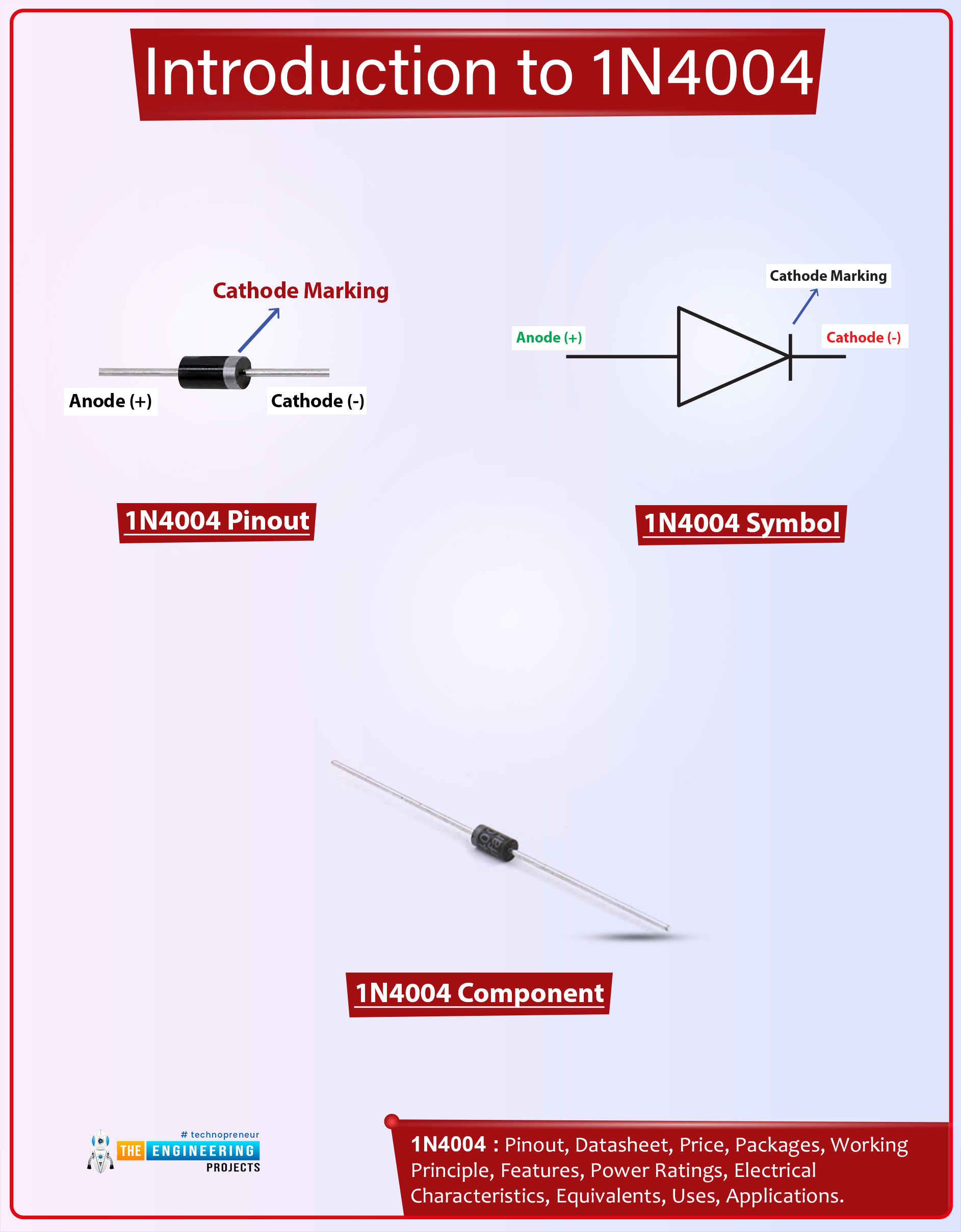
Hi Guys! I welcome you on board. Happy to see you around. In this post today, I’ll walk you through the Introduction to 1n4004.The 1n4004 is a diode that allows the current to flow in one direction only. It blocks the flow of current in the opposite direction. It comes with two terminals called anode and cathode and current always flows from the anode terminal to the cathode terminal. This device comes with a reverse peak voltage of around 400V and it can support loads under 1A.
I’d recommend reading the Introduction to 1n4007 that I’ve uploaded previously. This diode is almost similar to the device 1n4004 that I’m going to stretch in this post.
I suggest you buckle up as I’ll discuss the complete introduction to 1n4004 covering datasheet, pinout, features, equivalents, and applicati ...
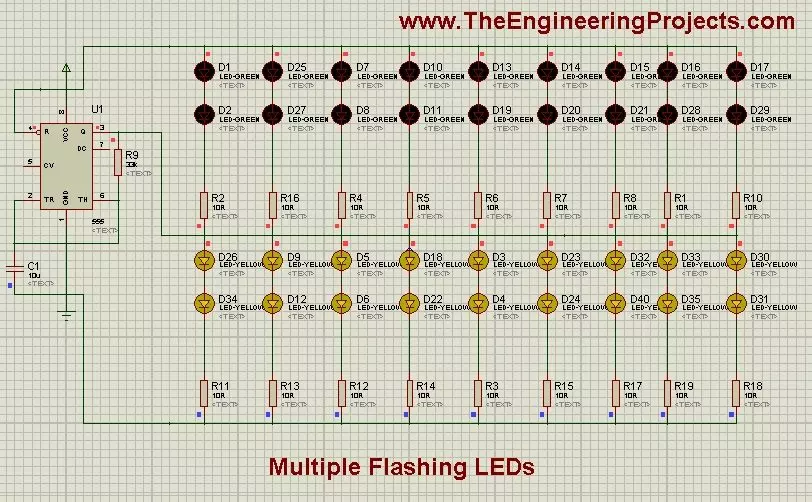
Hello friends, hope you all are enjoying and having fun. In today's tutorial, we are gonna see How to design a Multiple LED Flasher Project using 555 Timer in Proteus ISIS. In our previous tutorial we have seen How to design a LED Flasher Project with 555 Timer in Proteus ISIS, in which we have flashed single and double LEDs. In today's post, I am gonna extend that previous tutorial and will see How to flash multiple LEDs with 555 Timer in Proteus ISIS.
Its quite a quick tutorial, as I don't have much material on it and its also quite simple so no much explanation is required. The complete project is given at the end for download but again as I always mention, try to design it by yourself, so that you get some knowledge out of it.This type of proj ...
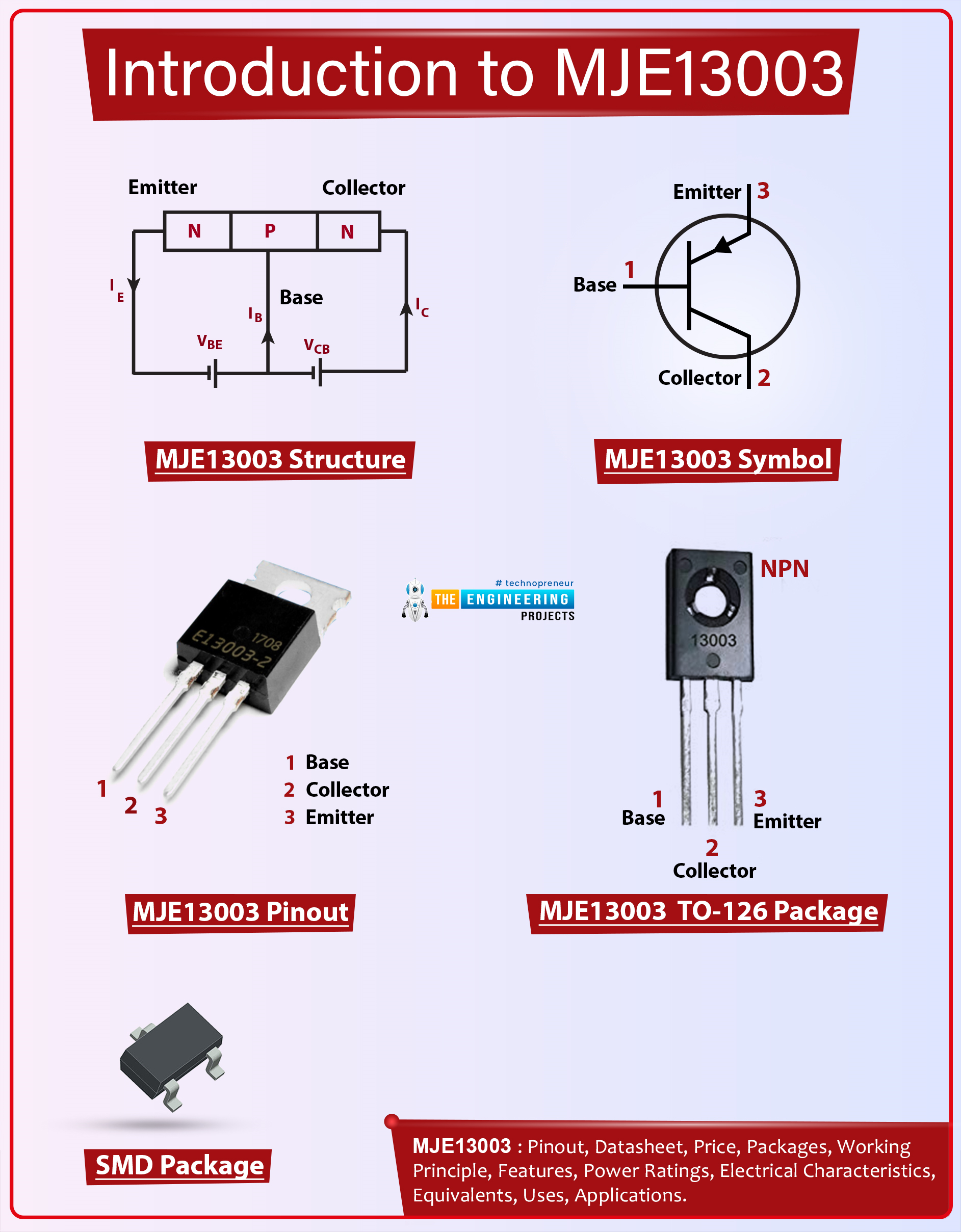
Hi Friends! Hope you’re well today. I welcome you on board. In this post today, I’ll demonstrate the Introduction to MJE13003.
MJE13003 is an NPN silicon transistor mainly used for high-speed high voltage power switching applications. This chip is a three-terminal device where a small current at one terminal is used to produce a large current at the remaining terminals. The collector current is 1.5A which projects this device can support load up to 1.5A.
I suggest you buckle up as I’ll describe the complete Introduction to MJE13003 covering datasheet, pinout, working principle, applications, power ratings, and physical dimensions.
Let’s get started.
Introduction to MJE13003
MJE13003 is a bipolar junction transistor that belongs to the NPN transistor family. It is mainly used ...
Hello Friends! I hope you are enjoying your life and having fun. Today, I am going to give you brief details on the Introduction to 6n137. It is a photocoupler that is used to transfer electrical signal with the help of light between two separated circuits. It consists of one chip photo IC and high emitting diode. It is a 8 pin device which comes in DIP package. I'll try to cover as many aspects as possible related to this photocoupler. Let's get started.
Introduction to 6n137
6n137 is a photocoupler also known as optocoupler that is used to connects the two electrically isolated circuits with the help of light.
It consists of 8 pins where inputs and outputs terminals are electrically isolated which help in controlling the large power, curren ...
Hello friends, I hope you all are having fun. In today's tutorial, I am going to share a new Proteus library for Raspberry Pi 2. We have already shared the Proteus Libraries of other Raspberry Pi modules i.e. Raspberry Pi 4, 3, Pico etc. and we discussed that these Pi modules won't be able to read the Python code. We have just designed the external appearance of these modules and you can use these Pi modules for circuit designing and project presentations.We have also added the Arduino firmware in these boards, which is just to provide a bit of interaction with these boards. We have given these boards an unofficial title "Arduino Pi".So, let's have a look at How to simulate Raspberry Pi in Proteus:
Raspberry Pi 2 Library for Proteus
First of all, we need to download the Proteus Library ...
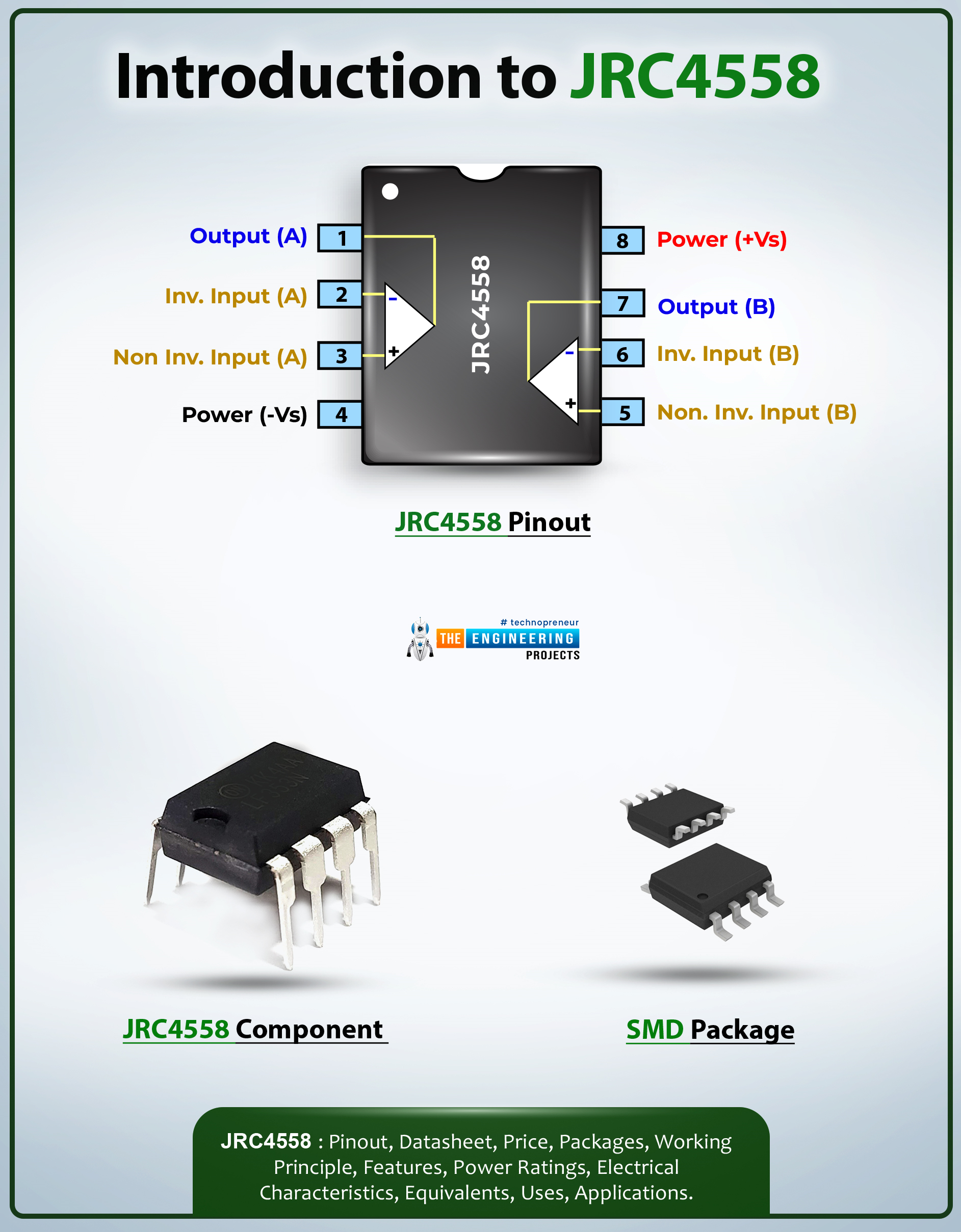
Hi Guys! Happy to see you around. I welcome you on board. Thank you for clicking this read. In this post today, I’ll walk you through the Introduction to JRC4558.The JRC4558 is a single silicon-chip monolithic dual operational amplifier. This amplifier is a high-performance device and is internally compensated. It is widely used in sample and hold amplifiers and pedal circuit designs. The JRC4558 is available with a remarkable input impedance of around 5 MO, a high voltage gain of around 100 dB, and a good slew rate of around 1.7V/µs.
I suggest you buckle up as I will walk you through the complete introduction to JRC4558 covering datasheet, pinout, features, alternatives, and applications. Let’s jump right in.
Introduction to JRC4558
The JRC4558 is a single silicon-chip mono ...
Hello everyone, I hope you all are fine and having fun. Today's tutorial is the next episode in the series of basic Arduino tutorial for Beginners. In today's tutorial, we are gonna have a look at How to use digitalRead in Arduino. In the previous tutorial, we have seen How to use pinMode Arduino Command, which sets the Arduino Pin either as Input or Output. So, if you are using this pin as input then you have to read its status and that's where you need to use this digitalRead Arduino Command.
Other than Serial Pins in Arduino UNO, we also have 12 digital Pins. Serial Pins are also digital Pins so in total we have 14 digital Pins in Arduino UNO starting from 0 to 13. I am gonna explain them in detail in today's tutorial and we will also have a lo ...