Hello everyone! I hope you all will be absolutely fine and having fun. Today, I am going to share my knowledge about Introduction to LM380. LM-380 is an audio amplifier, specially designed for the customer's power audio amplification purposes. Its designers fix its gain internally up to 34dB. In LM 380, ground reference signal is allowed by a unique input stage and the output automatically maintains its level to half of the supplied input voltage.
LM-380 has a copper lead frame. The three pins in the middle of the IC on both side, are basically the ground pins. These three pins on both sides makes it easy for the user to use this device for standard PC's. LM 380 has several different features e.g. wide supply voltage range, high peak current, lo ...
Hi Friends! We welcome you on board. Electronic industry is already filled with a number of devices and components that help ease the daily life of a common man. However, there is always much room for innovation in the electronics industry when it comes to facilitating the customers. When there comes a requirement for switching and amplification, there is a need for transistors. Today, I am going to unlock the details on the Introduction to TIP120. This is an NPN Darlington transistor which is mainly used for general purpose amplification and medium power switching applications.
It comes with a Darlington pair in which two transistors are connected in such a way, the current amplified by the one transistor is being amplified further by the other ...
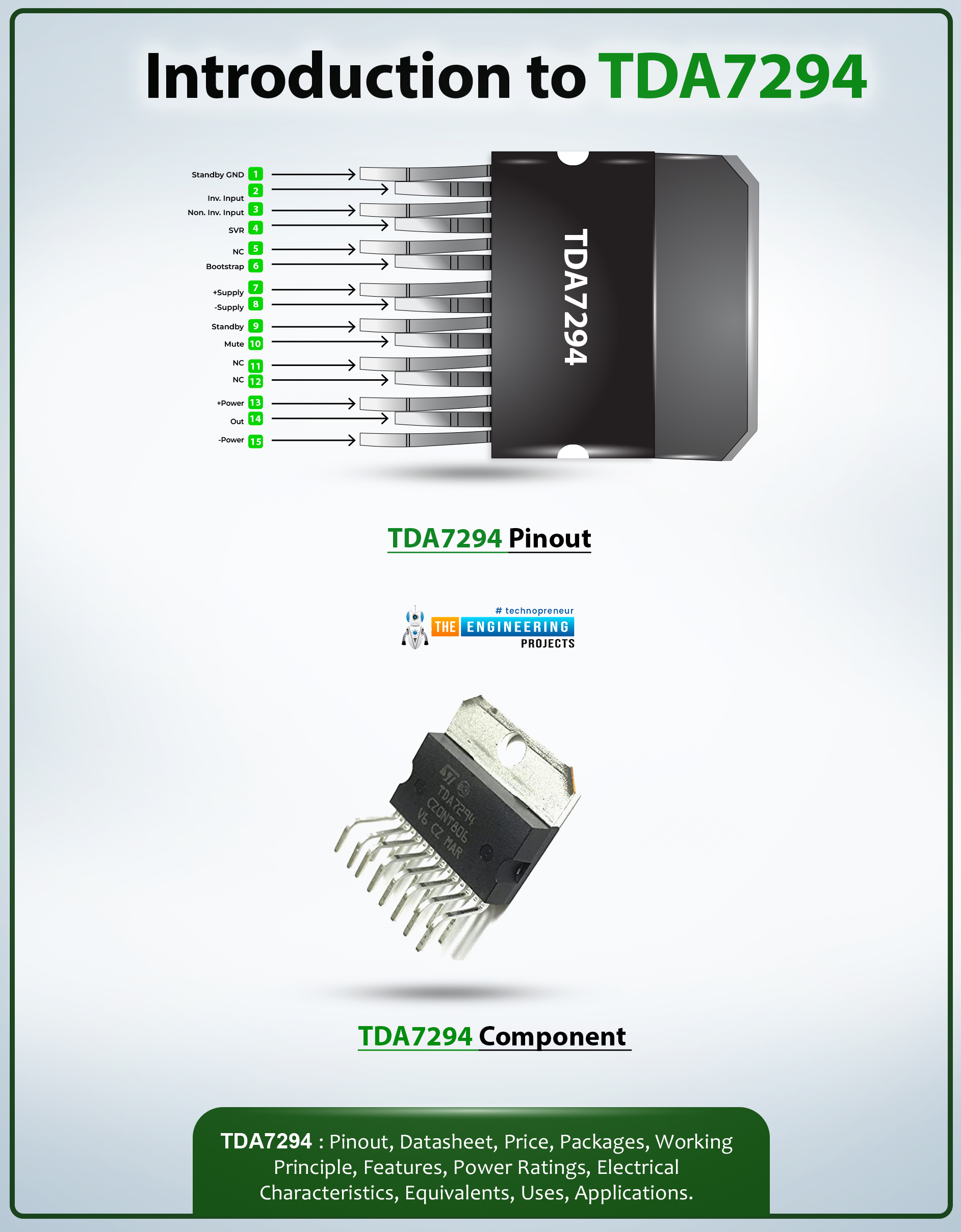
Hi Guys! Hope you’re well today. I welcome you on board. In this post today, I’ll walk you through the Introduction to TDA7294.
TDA7294 is a monolithic class AB power-based audio amplifier that comes with a DMOS output stage. It is primarily used for the amplification of audio signals in Hi-Fi field applications containing self-powered loudspeakers. The fault protection circuitry used in this device protects against short circuits.
I suggest you read this post all the way through, as I’ll detail the complete introduction to TDA7294 covering datasheet, pinout, features, and applications.
Let’s get started.
Introduction to TDA7294
TDA7294 is a monolithic class AB power-based audio amplifier that comes with a DMOS output stage.
This device comes with a wide voltage supply ra ...
Hi Guys! Hope you are doing well. In this platform, we always strive to keep updated with valuable information related to engineering and technology. Today, I'll discuss the detailed Introduction to CD4047. It is a CMOS Low Power monostable/astable multivibrator mainly used for converting DC current signal to AC signal.
This inverter proves to be very handy in some countries where load-shedding creates a significant problem as it comes with an ability to store electrical energy and discharge it in the absence of main electrical power.
In this tutorial, I'll cover the entire details on this inverter, its main features, working, and applications. Let's dive in and explore everything you need to know about this inverter.
Introduction to CD4047
CD40 ...
Introduction
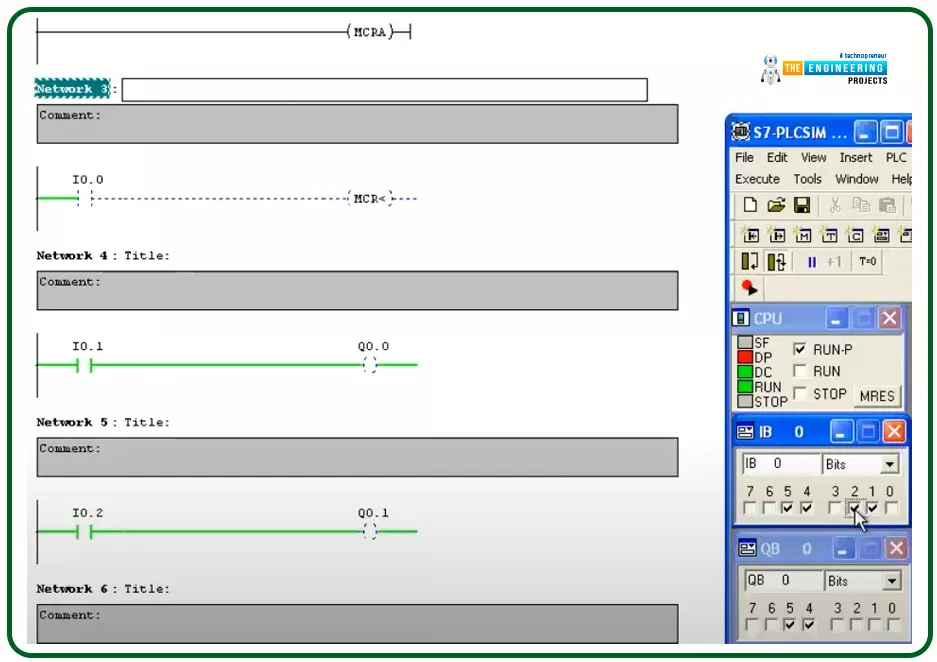
Hello friends, I hope you are doing very well. Today we are going to learn and practice the master control reset (MCR)! So what is that MCR? Well! This is a tool you might use to control a group of devices with one push button for performing fast emergency responses with one click for a group of devices in one zone. In another word, you divide the program into zones and put this zone between a master control to control their operation as one unit by one contact. This technique is useful for applying emergence stops and also protecting some equipment by applying a safety restriction to not operate when that condition is in effect.
The concept of the master control reset (MCR)
Figure 1 shows the master control relay in a ladder logic showing a couple of rungs between the ma ...
Hello friends, hope you all are fine and having fun with your lives. Today, I am going to share a Traffic Signal Control using Arduino. Few days earlier, I have posted the same tutorial but it was Traffic Light Signal Using 555 Timer in Proteus ISIS and today we will do the same thing but using Arduino programming. Its quite a simple but good starting project on Arduino. So, if you are new to Arduino then must give it a try.
Traffic Signal Control is quite a usual thing. We see traffic signals daily on our roads and usually engineers are asked to design such projects in their initial semesters. If we look at the traffic signals then we can see they are simply turning ON and OFF lights at some fixed regular intervals. and the pattern is quite simpl ...
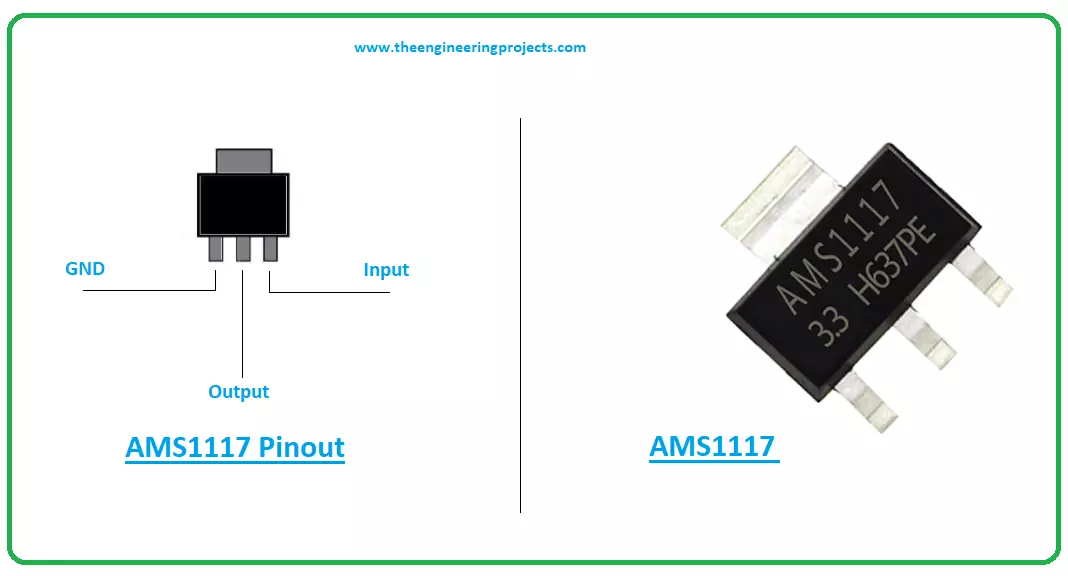
Hello Guys! Hope you’re well today. I welcome you on board. Thank you for clicking this read. In this post today, I’ll walk you through the Introduction to AMS1117.
The AMS1117 is a common voltage regulator that comes with both fixed and customizable voltages. It is a 3-pin device mainly used to drive load under 1A. The output voltage ranges from 1.5V to 5V. When it works at maximum current, it results in a low dropout voltage of 1.3A.
I suggest you read this post all the way through, as I’ll be discussing Pinout, datasheet, features, and applications of this tiny device AMS1117.
Let’s jump right in.
Introduction to AMS1117
The AMS1117 is a common voltage regulator mainly used for high-efficiency linear regulation and post-regulation switchi ...
Hello friends, I hope you are all fine and will be doing something special in your life. In today's post, we are gonna have a look at a detailed Introduction to MPU6050. MPU6050 is a sensor for motion processing devices. It is the world's first six-dimension motion tracking device. It was designed for low-cost and high-performance smartphones, tablets and wearable sensors. It is capable of processing nine-axis algorithms, it captures motion in X, Y and Z axis at the same time.
MPU6050 is used in different industrial projects and electronic devices to control and detect the 3-D motion of different objects. In today's post, we will have a look at its working, pinout, protocol, it's interfacing with Arduino, features, applications, etc. I will also share some links of projects wh ...
Hello everyone! I hope you all will be absolutely fine and having fun. Today, I am going to share my knowledge with all of guys about Introduction to IRF540. It is basically an N-Channel power Metal Oxide Silicon Field Effect Transistor (MOSFET) and operates in enhancement mode.
MOSFET is a lot sensitive in comparison to an FET (Field Effect Transistor) due to its very high input impdence. IRF540 can perform very fast switching as compared to the normal transistor. It is based on HEXFET technology and operates on the temperature ranging from -55 degrees celsius to 175 degree celsius. If we need some switching application between different signals or to perform any of amplification process, MOSFET IRF540 will be the best option in this case bec ...
Hello everyone! I hope you all will be absolutely fine and having fun. Today, we will have a look at the DHT11 Arduino Interfacing. DHT11 is an embedded sensor, used to measure both temperature and humidity of the surroundings. It is made up of two different parts i.e. capacitive humidity sensor and a thermistor. DHT11 is a slow sensor but is quite efficient for the applications where we need to do some basic analog data exchange. There is a small chip inside this sensor which performs the function of analog to digital to analog conversion and gives the results for temperature as well as for humidity in digital form. This digital signal can be read easily through any micro-controller.
LM335 is another temperature sensor and to understand today's p ...