Hello friends, I hope you all are doing great. In today's tutorial, we are gonna have a look at a detailed Introduction to DS3231. DS3231 is a real-time clock (RTC) with an integrated temperature-compensated crystal oscillator. It consists of a battery that provides supply to DS3231 when the main supply is off. In this way, it continues working without any interference. It is available in industrial and commercial temperature ranges. It exists in a 16-pin, 300-mil SO package.
DS3231 is used in industrial projects and different electronic devices such as laptops, computers, and GPS for high accuracy of time. In today's post, we will have a look at its working, pinout, applications, protocol, etc. I will also share some links to projects where I have interfaced it with some oth ...
Hello Friends! Hope this finds you well. I welcome you on board. Thank you for clicking this read. In this post today, I’ll walk you through the Introduction to BD140.
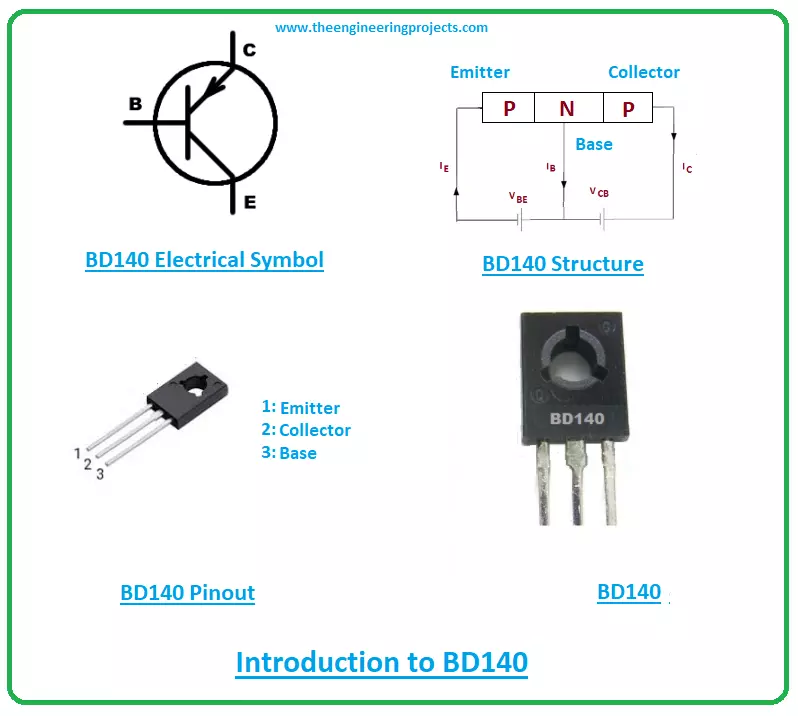
BD140 is a medium power bipolar junction transistor that is mainly used for switching and amplification purpose. It belongs to the PNP transistor category and comes in the TO-126 package. It is made up of silicon material with collector current 1.5A which indicates it can support loads under 1.5A. The collector-base and collector-emitter terminal voltages are 80V and emitter-base voltage is 5V which is used to bias the transistor.
In this post, I’ll be detailing the complete introduction to BD140 covering pinout, working, absolute maximum ratings, physical dimensions, alternatives ...
Hello friends, hope you all are fine and having fun with your lives. In today's tutorial, I am gonna share another awesome library designed by our team for Proteus, which is GPS Library for Proteus. It's my second library for Proteus, the first one was Arduino Library for Proteus which I have already shared. I am really enjoying designing these modules in Proteus because its a new and quite challenging thing. I haven't found even a single website who has designed these modules in Proteus already. So, now for the first time, you can have the GPS Library for Proteus using which you can easily simulate your GPS module in Proteus and can design your code for Arduino, PIC Microcontroller or 8051 Microcontroller.
Other bloggers are welcome to share this ...
Hello friends, I hope you all are doing great. In today's tutorial, I am going to show you Arduino 74HC595 Interfacing and we will have a loook at How to Increase Arduino Output Pins with 74HC595. Suppose you are working on some project where you need to control 20 LEDs with Arduino UNO and you know we will 12 digital Pins so we can't control all of these 20 LEDs with Arduino UNO. We can use Arduino Mega as well but if we wanna stick to Arduino UNO then we need to increase its Output Pins and we will use 74HC595 for that purpose.
You should read this basic Introduction to 74HC595, it will help you to better understand this shift register. It's a Serial In Parallel Out Shift register and we will give it value serially from single Pin of Arduino and ...
Hello everyone! I hope you all will be absolutely fine and having fun. Today, I will share the details discussion on Introduction to LM311. LM 311 is basically a voltage comparator having high speed. It can operate over wide ranges of voltage i.e. from -15V to15V, in case of operational amplifier. LM-311 can also operate on 5V for the logic systems.
LM-311 output levels has the compatibility with Transistor Transistor Logic (TTL) levels circuits. At 50mA and at 50V too, LM-311 can operate lamps and relays. LM 311 can operate from 0 degree Celsius to 70 degree Celsius. LM-311 has several different features. These features include fast response time, strobe capability, wide voltage supply ranges, maximum input current, operating at single 5V power ...
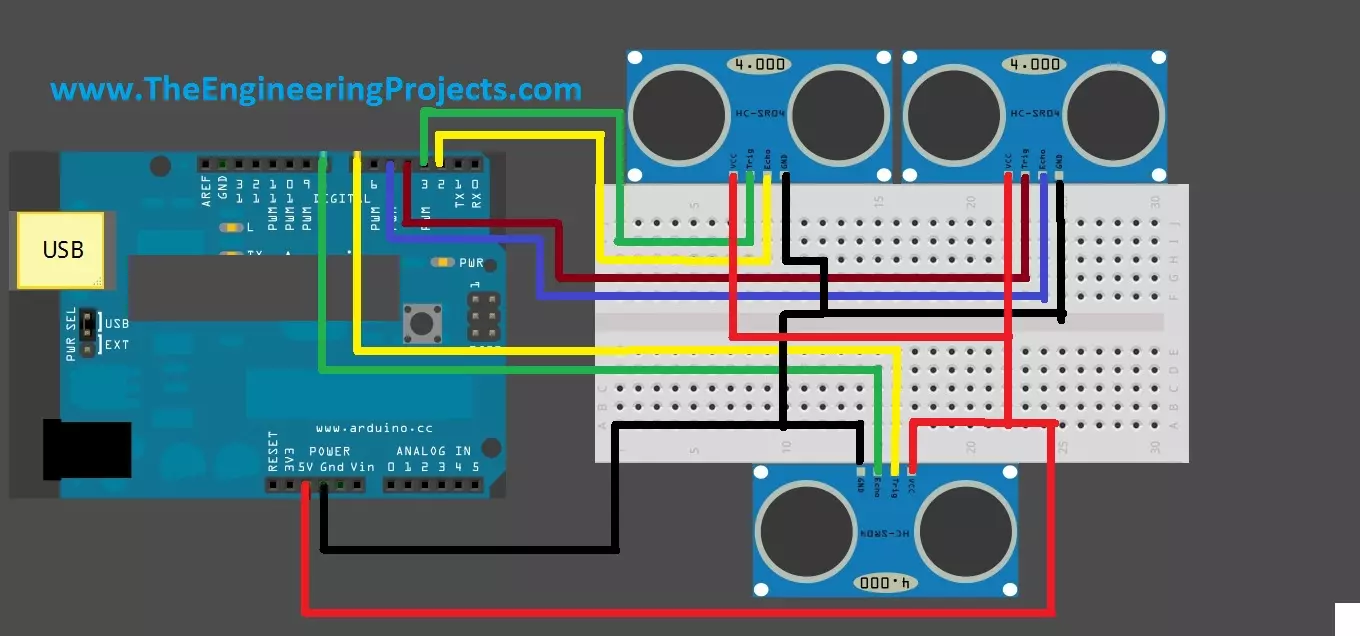
Hello friends, hope you are having fun and enjoying life. Today, I am gonna post about interfacing of multiple Ultrasonic sensor with Arduino. In the previous post, we have seen Interfacing of Ultrasonic Sensor With Arduino and in this post I have interfaced single ultrasonic sensor but in projects especially related to robotics, we have to interface multiple ultrasonic sensors. For example you have an obstacle detection robot, now in order to detect obstacle in front of robot you have to place once sensor on the front side but now you can't detect any object present on left or right side of your robot, so you have to place two sensors one on the left side of robot and one on the right side so in this project you need to use total three ultrasonic ...
Hello everyone, today I am going to share a complete project which is DS1307 Arduino based digital Clock in Proteus ISIS. In this project, I have designed a digital clock using Arduino UNO and DS1307 RTC Module. So, first of all, if you haven't yet installed then, you should install Arduino Library for Proteus using which you will be able to easily simulate Arduino baords in Proteus. Along with Arduino Library you will also need to install DS1307 Library for Proteus, which I have shared in my previous post as we are gonna use this RTC Module DS1307 for designing our digital clock.
So, now I hope that you have installed both these libraries successfully and are ready to design this DS1307 Arduino based Digital Clock. I have given the Simulation and ...
Hello friends, I hope you all are fine and having fun with your lives. Today, I am going to share a new tutorial which is Interfacing of Flame Sensor with Arduino. I have recently posted a tutorial in which I have shared the Flame Sensor Library for Proteus. Now in this tutorial, I am gonna use that Flame Sensor Library and will interface this Flame Sensor with Arduino. So, if you haven't downloaded this file then I suggest you to download this Flame Sensor Library so that you can easily simulate this flame Sensor in Proteus.
I am sharing interfacing of this Flame Sensor with Arduino today, but soon I will also post a tutorial on Interfacing of Flame Sensor with PIC Microcontroller. If you guys have any questions then ask in comments. I have also ...
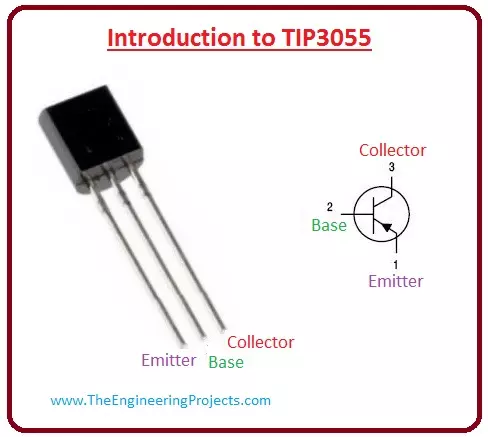
Hello friends, I hope you all are doing great. In today's tutorial, we are gonna have a look at detailed Introduction to TIP3055. TIP3055 is a silicon epitaxial-ignoble NPN transistor, which is assembled in TO-218 malleable parcels. It is the best device for power swapping circuits, parallel and series controllers (regulators), output phases and high power amplifiers. Its corresponding PNP transistor is TIP2955.
It is a universal device used in many industrial projects where audio amplification is required. Its structures are attractive much the identical excluding for the maximum power indulgence that is a slightly lesser. In today’s post, we will have a look at its fortification, smashup, prominence, proposals, etc. I will also share some links ...
Hi Fellas! Hope you’re doing well today. I welcome you on board. In this post today, I’ll detail the Introduction to 2SD882.
2sd882 is an NPN bipolar junction transistor used for amplification and switching purposes. It is a semiconductor device composed of silicon material and comes in the TO-126 package. As this is a bipolar transistor, here conductivity is carried out by two charge carriers i.e. electrons and holes where electrons are major charge carriers and holes are minority carriers. During the amplification application, the small input current across one pair of terminals is used to produce a large output current across other pairs of terminals.
In this post, I’ll walk you through the working principle, pinout, power ratings, alternat ...