


Project Files of IoT Haptic Notifier with ESP32 - Proteus Simulation
 Libraries
 Code
 Projects
 Simulation
94b5cdc4bd52440f8dfe18c7d5fc7c30.zip

IoT Haptic Notifier with ESP32 - Proteus Simulation V1.0
IoT Haptic Notifier with ESP32 - Proteus Simulation V1.0 comes as a ZIP archive of 18 files (3.6 MB, 7.8 MB unpacked) holding Proteus library files, simulation model DLLs, a Proteus simulation, an Arduino sketch and compiled HEX firmware.
- LIBProteus library
- DLLProteus model
- DSNProteus simulation
- INOArduino sketch
- HEXHEX firmware
Description
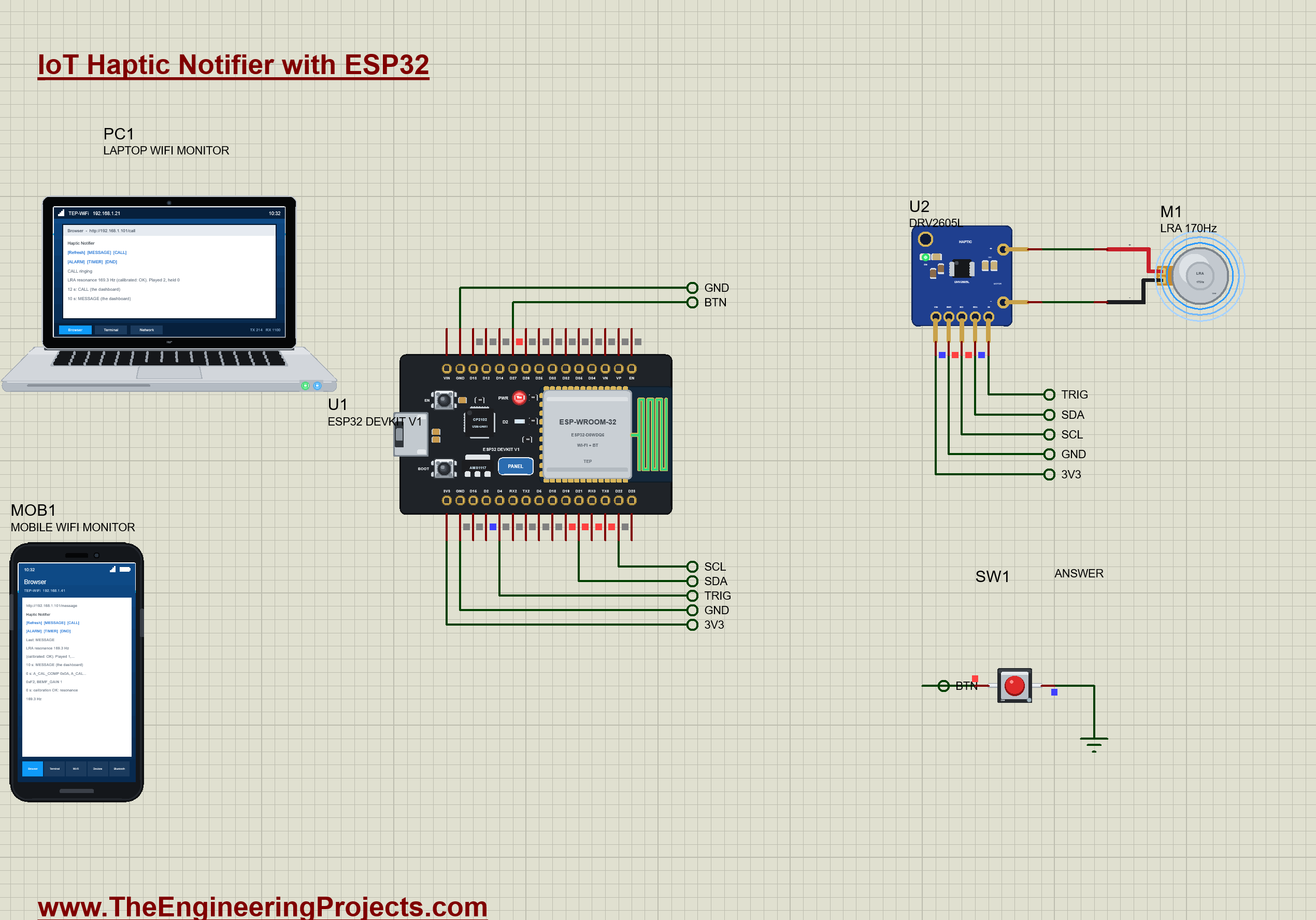
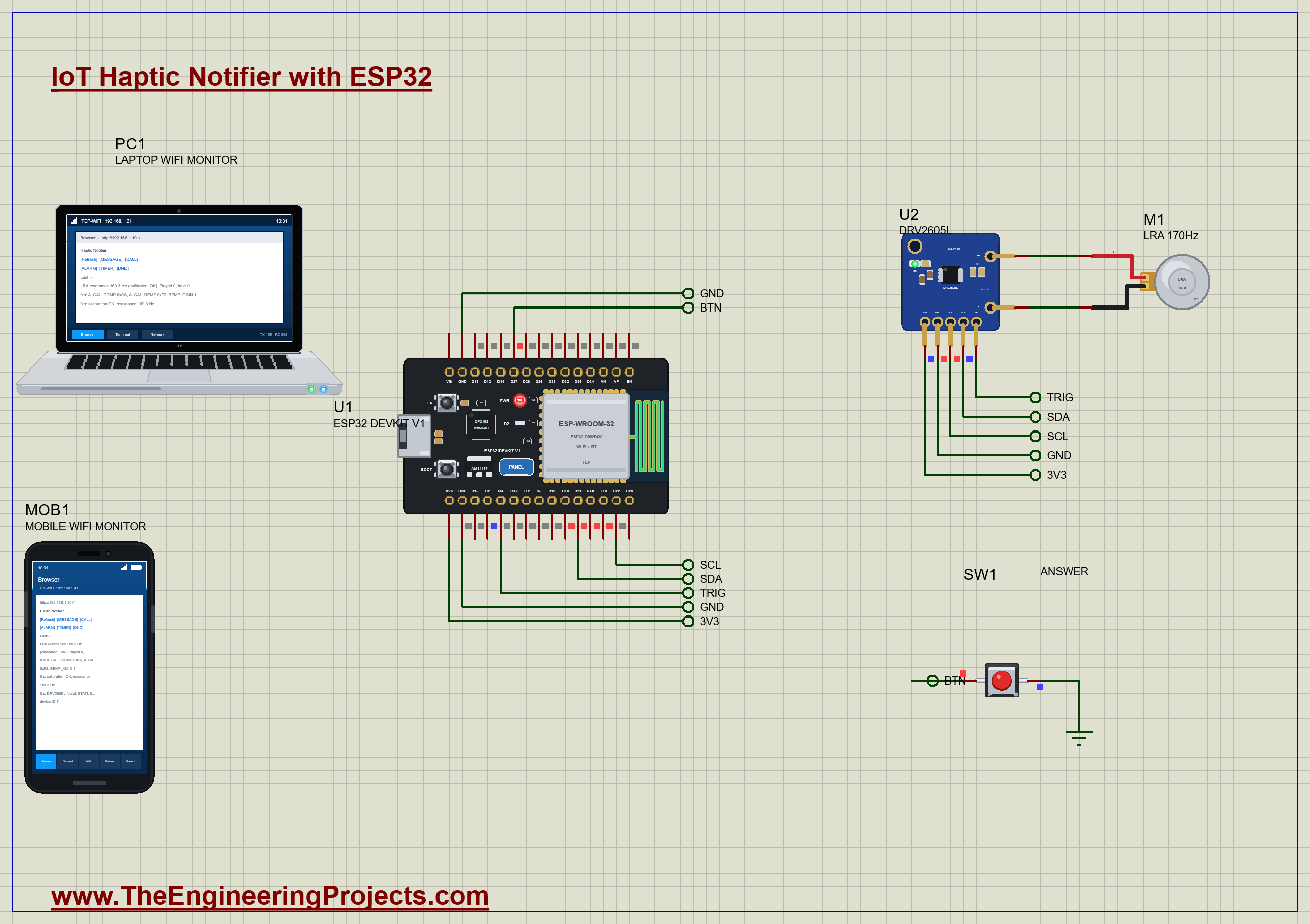
IoT-Haptic-Notifier-ESP32-Proteus-Simulation-v1.0.zip: the complete Proteus simulation project (ESP32 DevKit V1, DRV2605L haptic driver, 10 mm coin LRA, push button, the Laptop and Mobile WiFi Monitors), the Arduino sketch, every LIB and DLL the simulation needs and a README.

File Structure
 File Structure
8.6 KB20.7 KB14.4 KB36.6 KB39.5 KB10.9 KB13.1 KB274 KB322.5 KB303 KB2.9 MB26.5 KB69.3 KB274 KB322.5 KB303 KB2.9 MB8.9 KBGallery12 images from the tutorialOpen the tutorial
 Gallery12 images from the tutorial
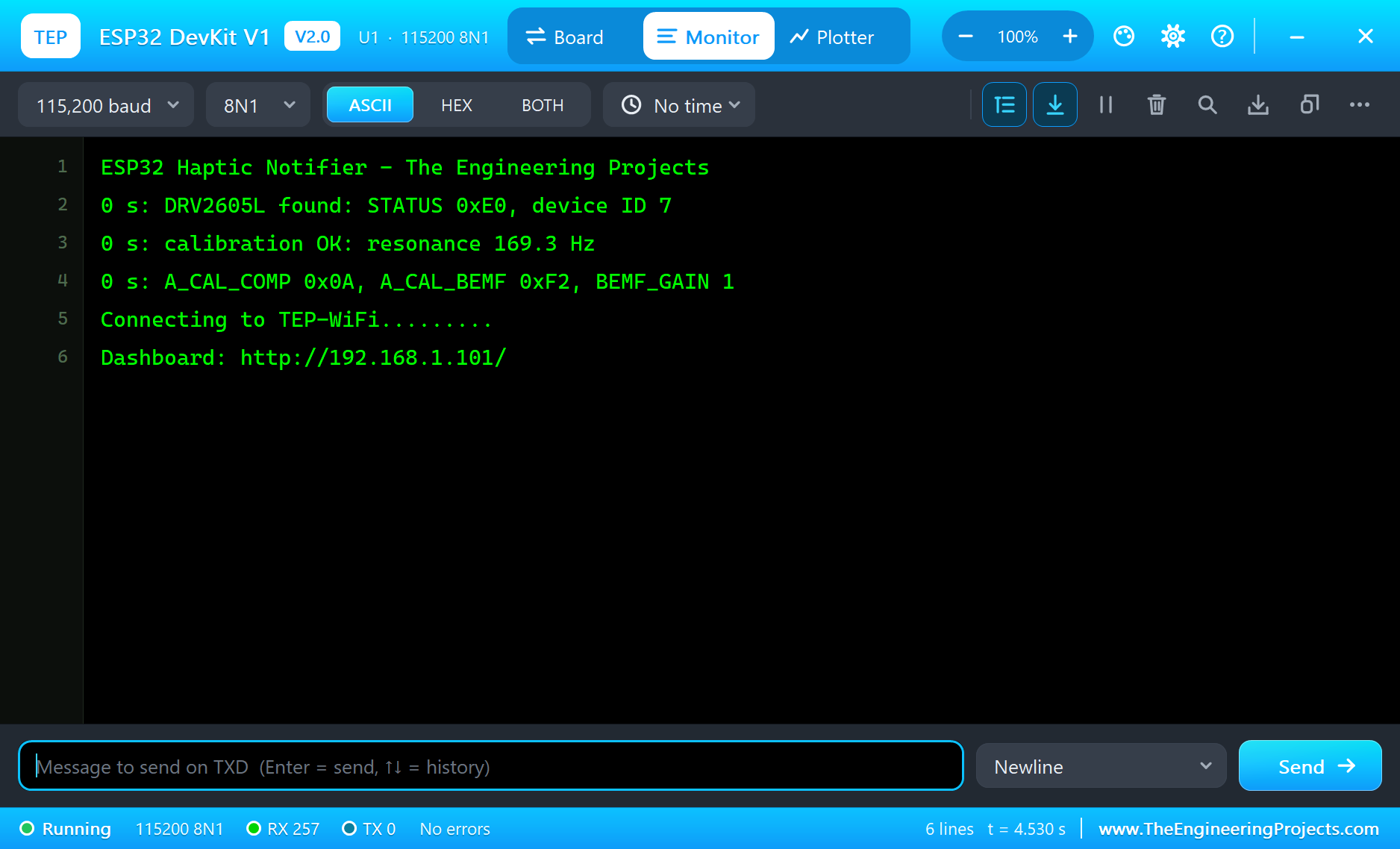
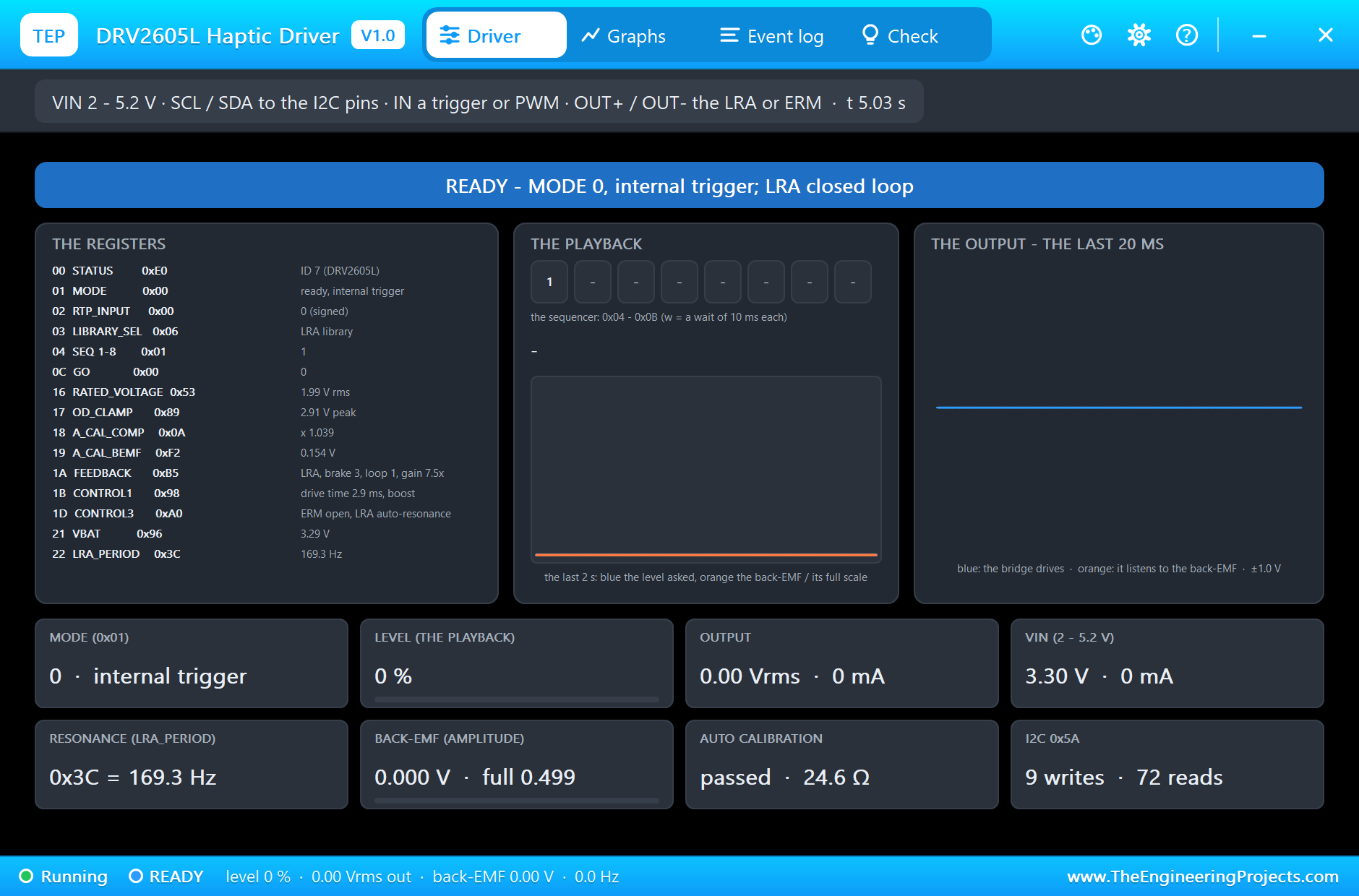
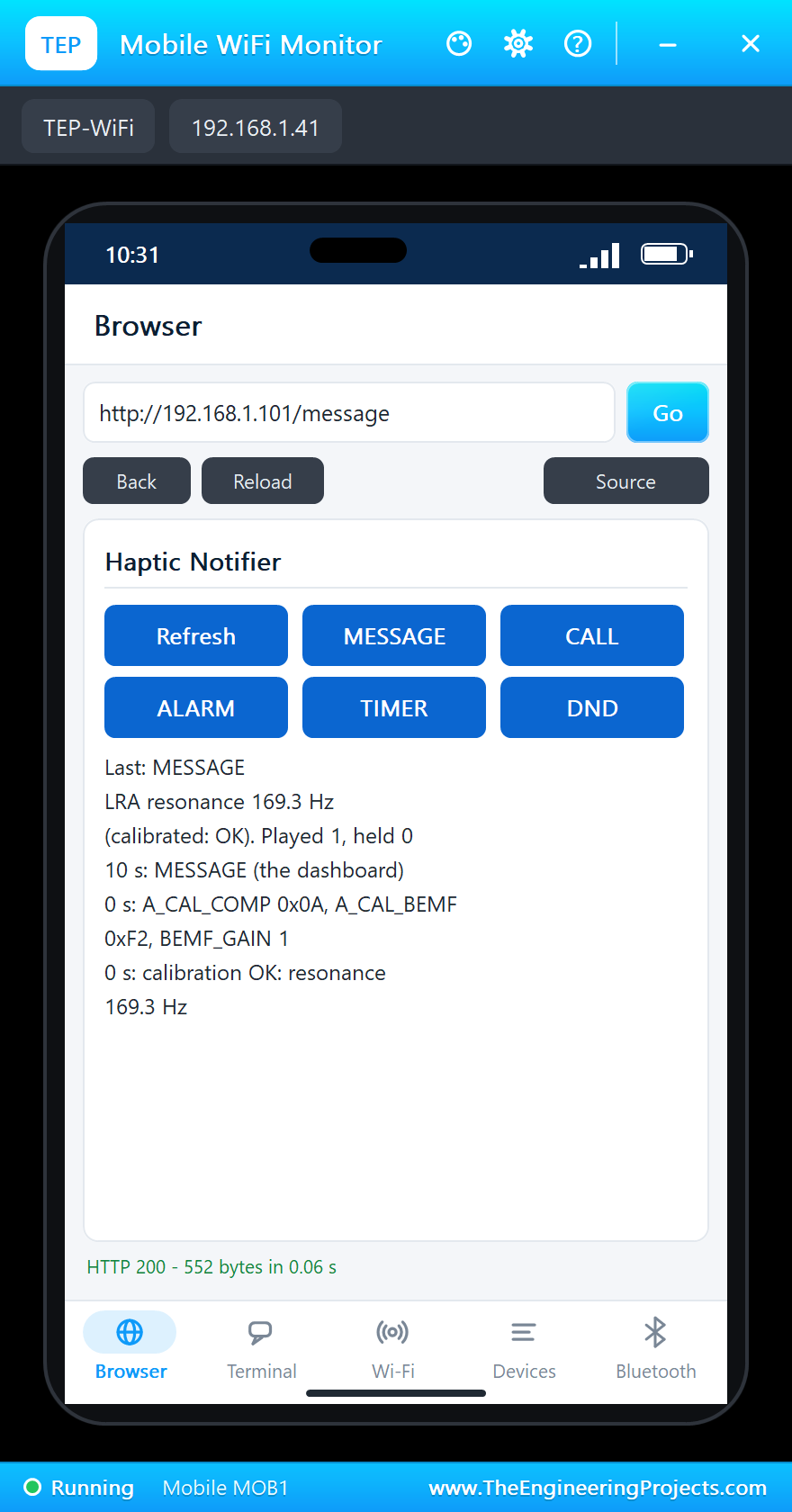
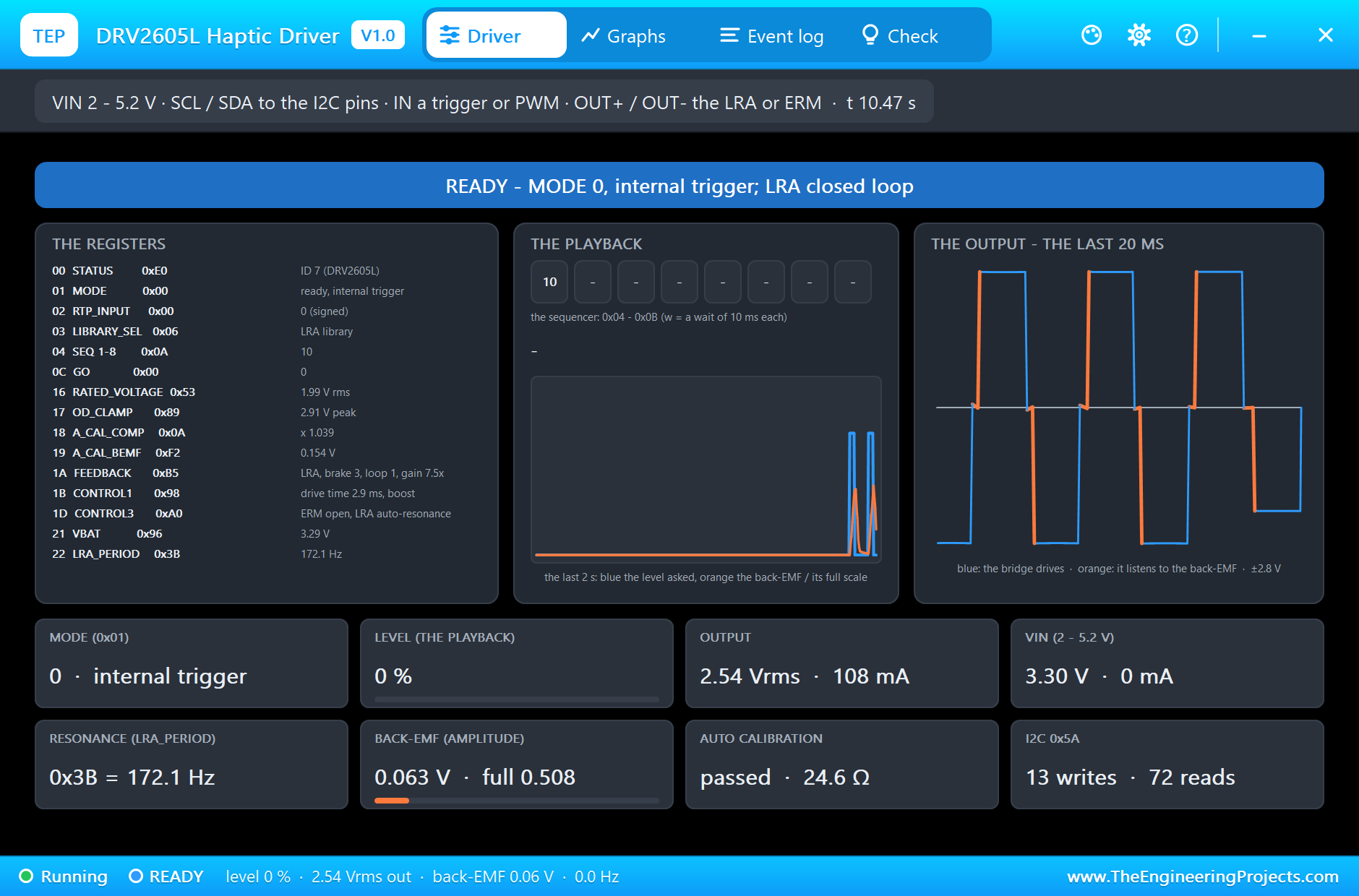
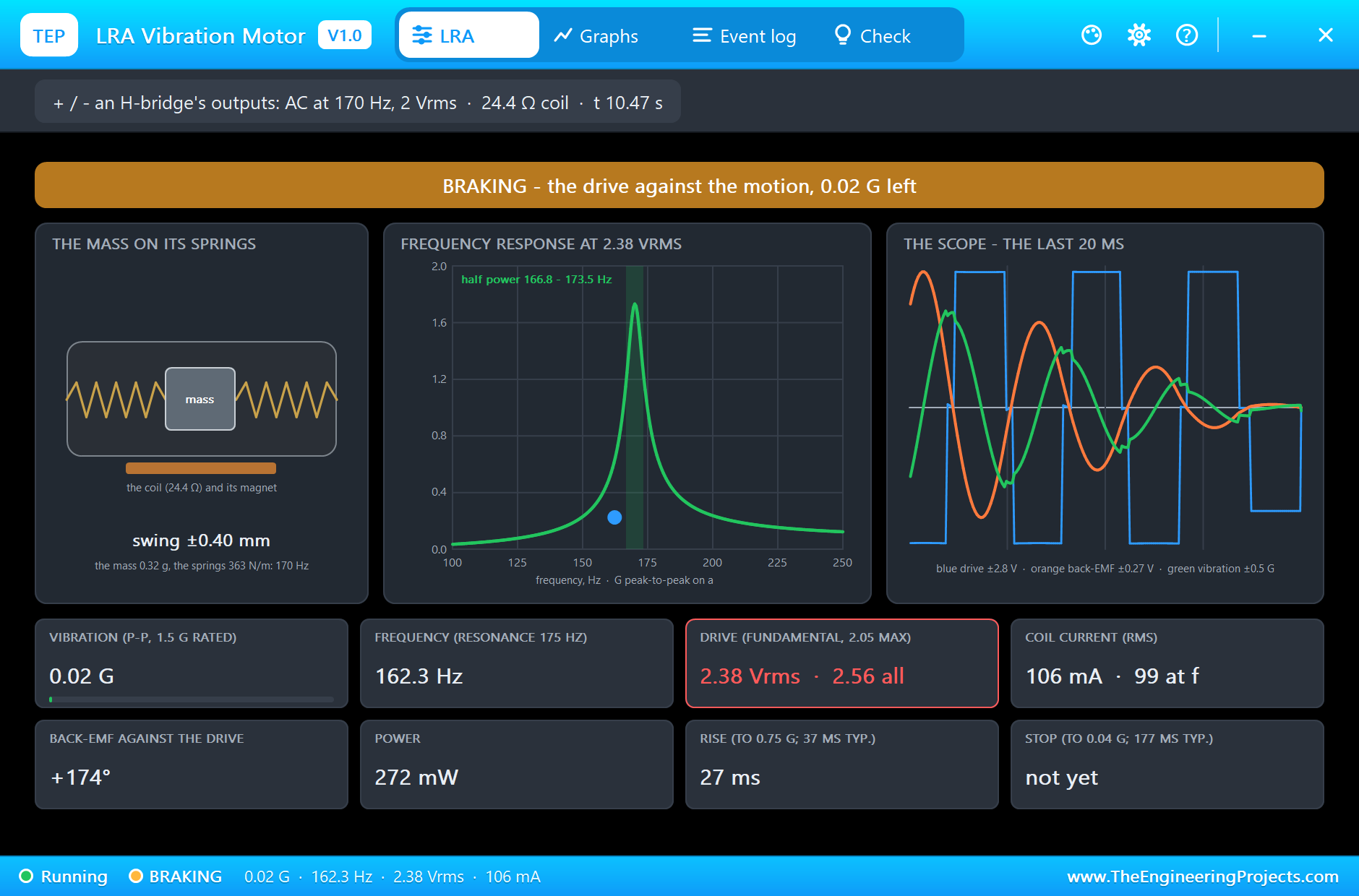
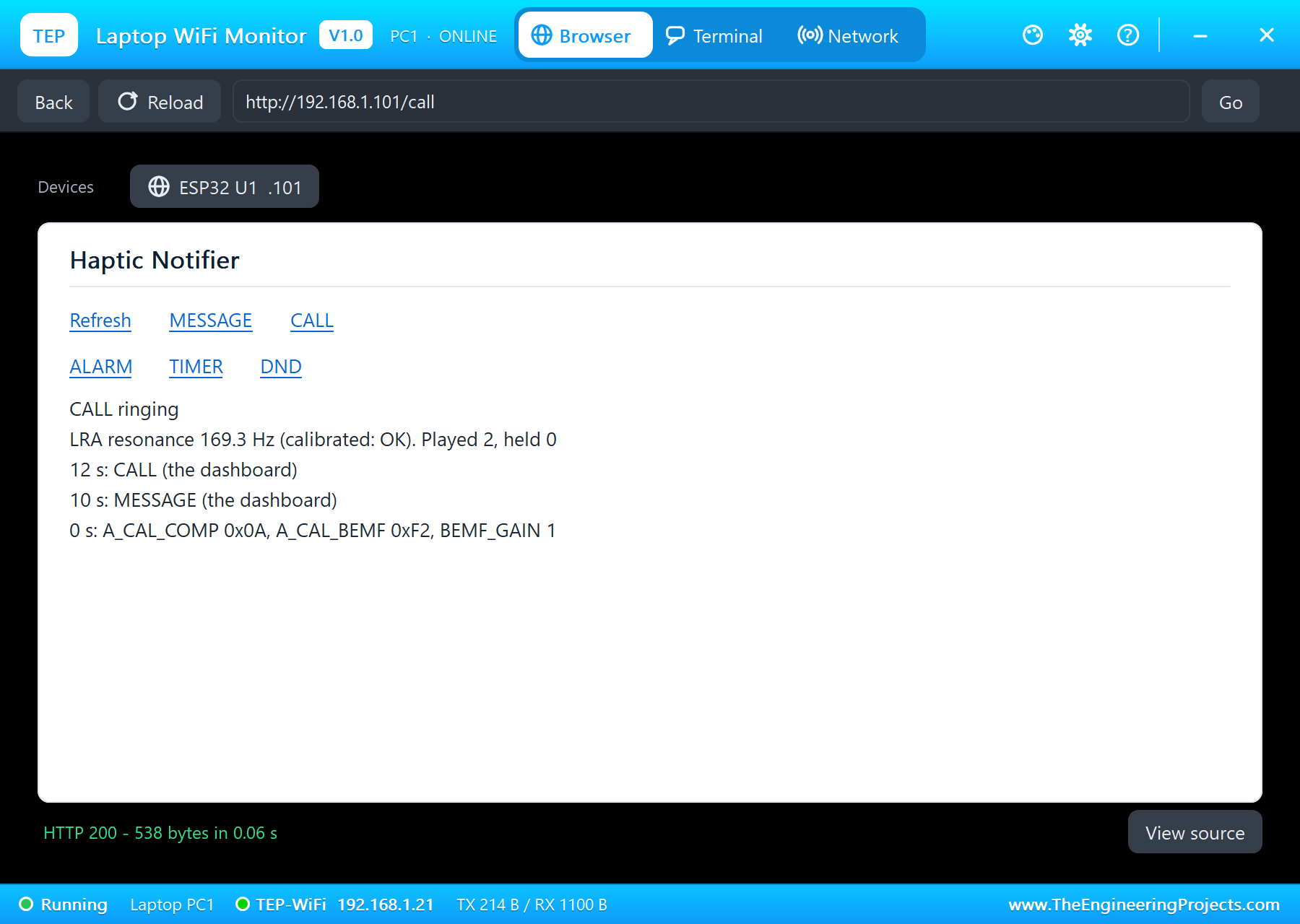
The circuit, the board and the results as they appear in IoT Haptic Notifier with ESP32 - Proteus Simulation. Open an image for its full size.
README
 README
===============================================================================================================
  IoT Haptic Notifier with ESP32 - Proteus Simulation Project V1.0
  The Engineering Projects - www.TheEngineeringProjects.com
===============================================================================================================

IMPORTANT LINKS
  The project tutorial (circuit, code, simulation results):
    https://www.theengineeringprojects.com/2026/11/iot-haptic-notifier-esp32-proteus-simulation.html
  The libraries this project is built from (each post has its own full download and tutorial):
    ESP32 DevKit V1 board:
      https://www.theengineeringprojects.com/2026/10/esp32-devkit-v1-library-for-proteus-v2-0.html
    DRV2605L haptic driver:
      https://www.theengineeringprojects.com/2026/11/drv2605l-haptic-driver-library-for-proteus.html
    LRA vibration motor:
      https://www.theengineeringprojects.com/2026/11/lra-vibration-motor-library-for-proteus.html
    Push button:
      https://www.theengineeringprojects.com/2026/11/push-button-library-for-proteus.html
    Laptop WiFi Monitor:
      https://www.theengineeringprojects.com/2026/10/laptop-wifi-monitor-library-for-proteus.html
    Mobile WiFi Monitor:
      https://www.theengineeringprojects.com/2026/10/mobile-wifi-monitor-library-for-proteus.html
  Support our free work: https://www.theengineeringprojects.com/donate

FILE STRUCTURE
ESP32-Haptic-Notifier-TEP-v1.0/
|-- Proteus Library Files/
|   |-- TEPBUTTON.LIB                                  20.7 KB   a part of the project -> LIBRARY folder
|   |-- TEPDRV2605.LIB                                 14.4 KB   a part of the project -> LIBRARY folder
|   |-- TEPESP32V1.LIB                                 36.6 KB   a part of the project -> LIBRARY folder
|   |-- TEPLAPTOP.LIB                                  39.5 KB   a part of the project -> LIBRARY folder
|   |-- TEPLRA10.LIB                                   10.9 KB   a part of the project -> LIBRARY folder
|   |-- TEPMOBILE.LIB                                  13.1 KB   a part of the project -> LIBRARY folder
|-- Proteus Model Files/
|   |-- TEPBUTTON.DLL                                 274.0 KB   a model -> MODELS folder
|   |-- TEPDRV2605.DLL                                322.5 KB   a model -> MODELS folder
|   |-- TEPLRA10.DLL                                  303.0 KB   a model -> MODELS folder
|   |-- TEPNET.DLL                                     2.89 MB   a model -> MODELS folder
|-- Proteus Simulation/
|   |-- ESP32_Haptic_Notifier.hex                      69.3 KB   the firmware
|   |-- ESP32-Haptic-Notifier.pdsprj                   26.5 KB   the project simulation
|   |-- TEPBUTTON.DLL                                 274.0 KB   copy of the model
|   |-- TEPDRV2605.DLL                                322.5 KB   copy of the model
|   |-- TEPLRA10.DLL                                  303.0 KB   copy of the model
|   |-- TEPNET.DLL                                     2.89 MB   copy of the model
|-- Arduino Code/
|   |-- ESP32_Haptic_Notifier/ESP32_Haptic_Notifier.ino    8.6 KB   the sketch (source of the .hex)
|-- README.txt                                         ~9.4 KB   this file
Total: 7.79 MB (unzipped). The C++ source code of the models is not included.

WHAT IS IT?
  A vibrating notifier, the brain of a smart wristband, you can run in Proteus: an ESP32 gives every kind of
  notification its own feel through a DRV2605L haptic driver and a coin LRA, so the wearer knows what came in
  without looking; a button answers a call; DO NOT DISTURB holds everything but alarms; a web dashboard sends the
  notifications.
    * DRV2605L haptic driver (DRV2605LTEP, U2) on I2C at 0x5A: VIN on the ESP32's 3.3 V pin, GND, SCL D22, SDA D21,
      IN/TRIG D4 (held low). Its library of 123 effects, played closed loop at the LRA's resonance.
    * 10 mm coin LRA, a linear resonant actuator (LRACOIN10TEP, M1), on OUT+ / OUT-: F0 = 170 Hz.
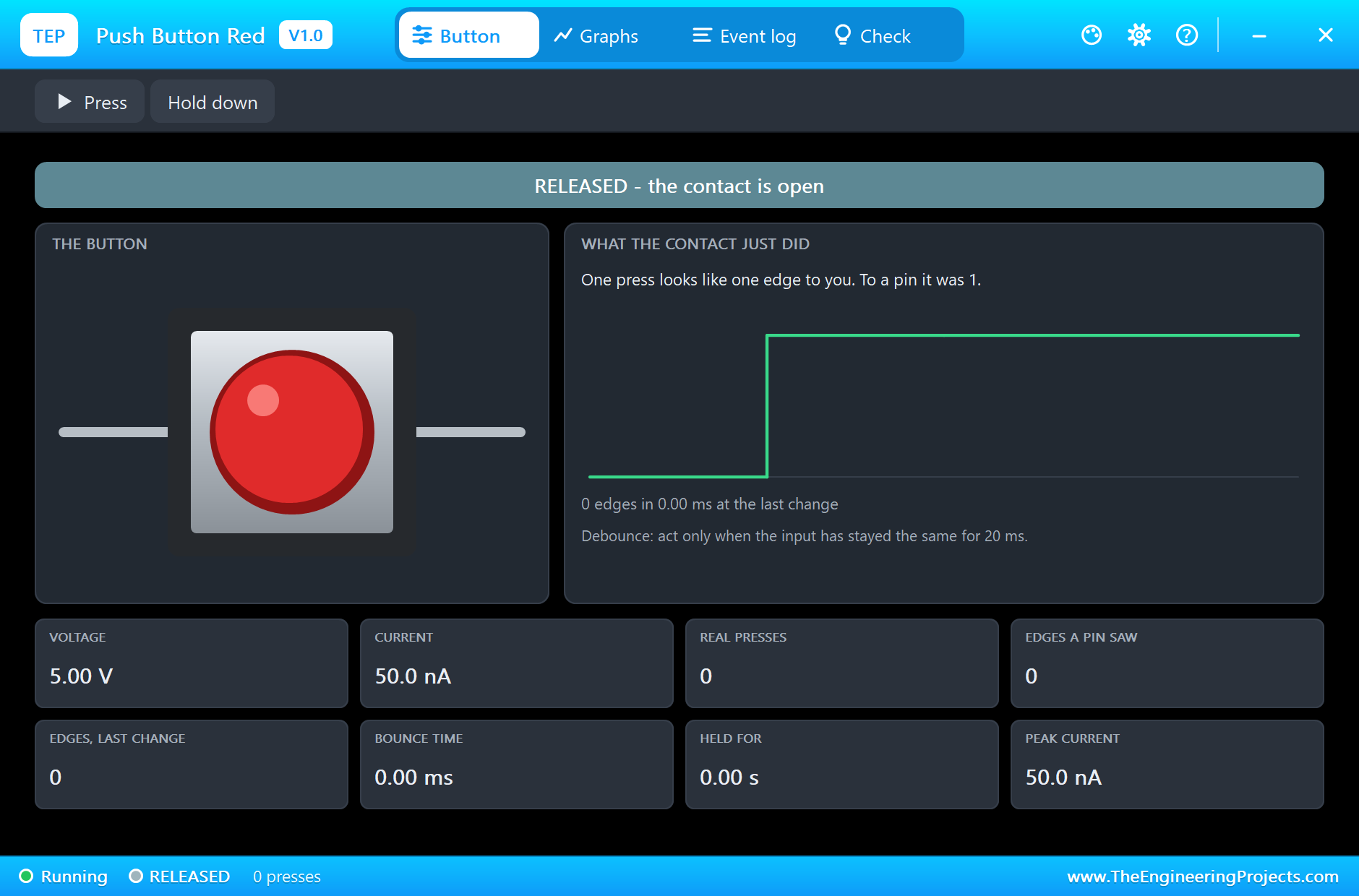
    * Red push button (BUTTONREDTEP, SW1): 1 on D27 (INPUT_PULLUP), 2 to GND.
    * ESP32 DEVKIT V1 (U1) runs ESP32_Haptic_Notifier.hex on TEP-WiFi at 192.168.1.101 (port 80).
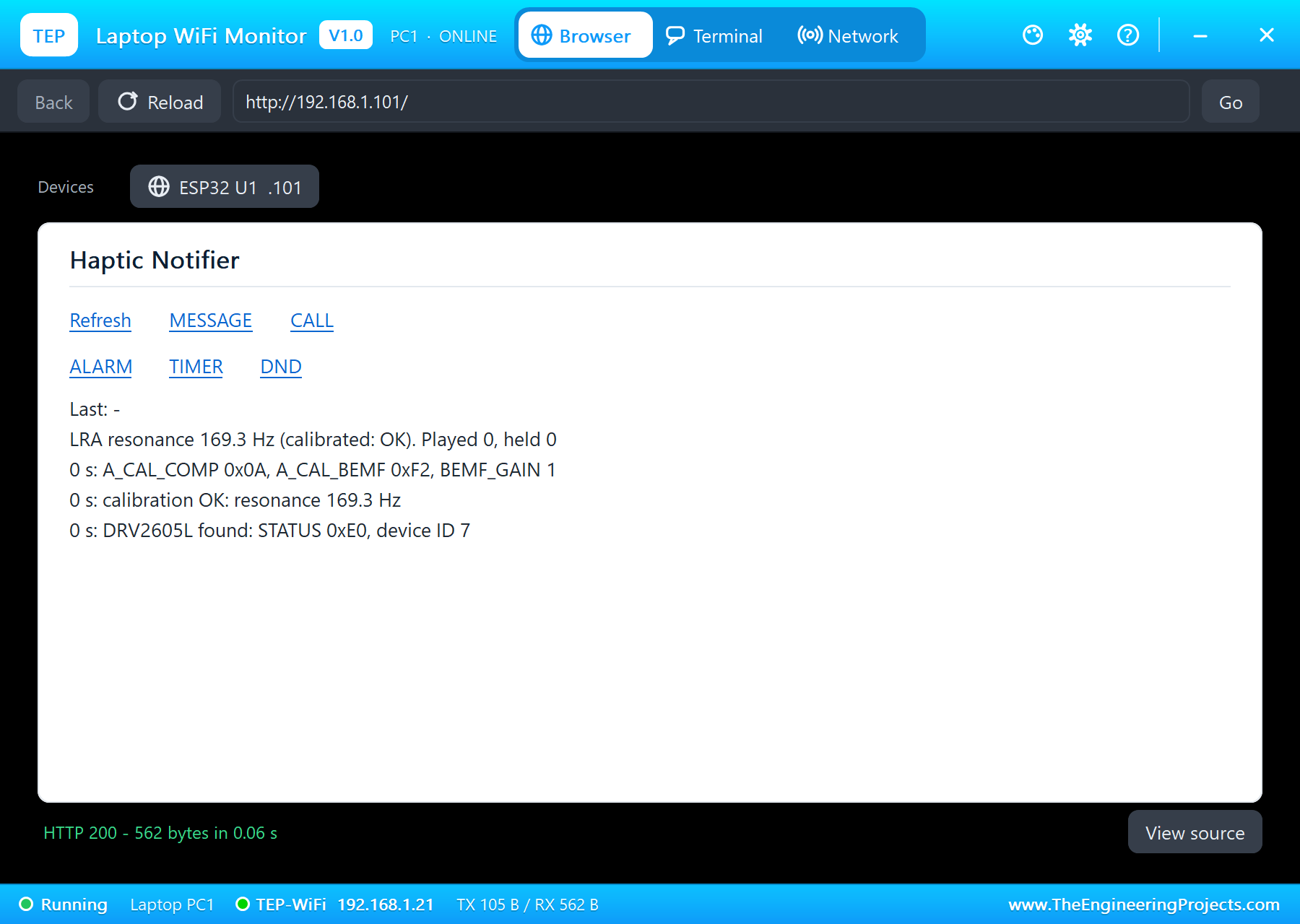
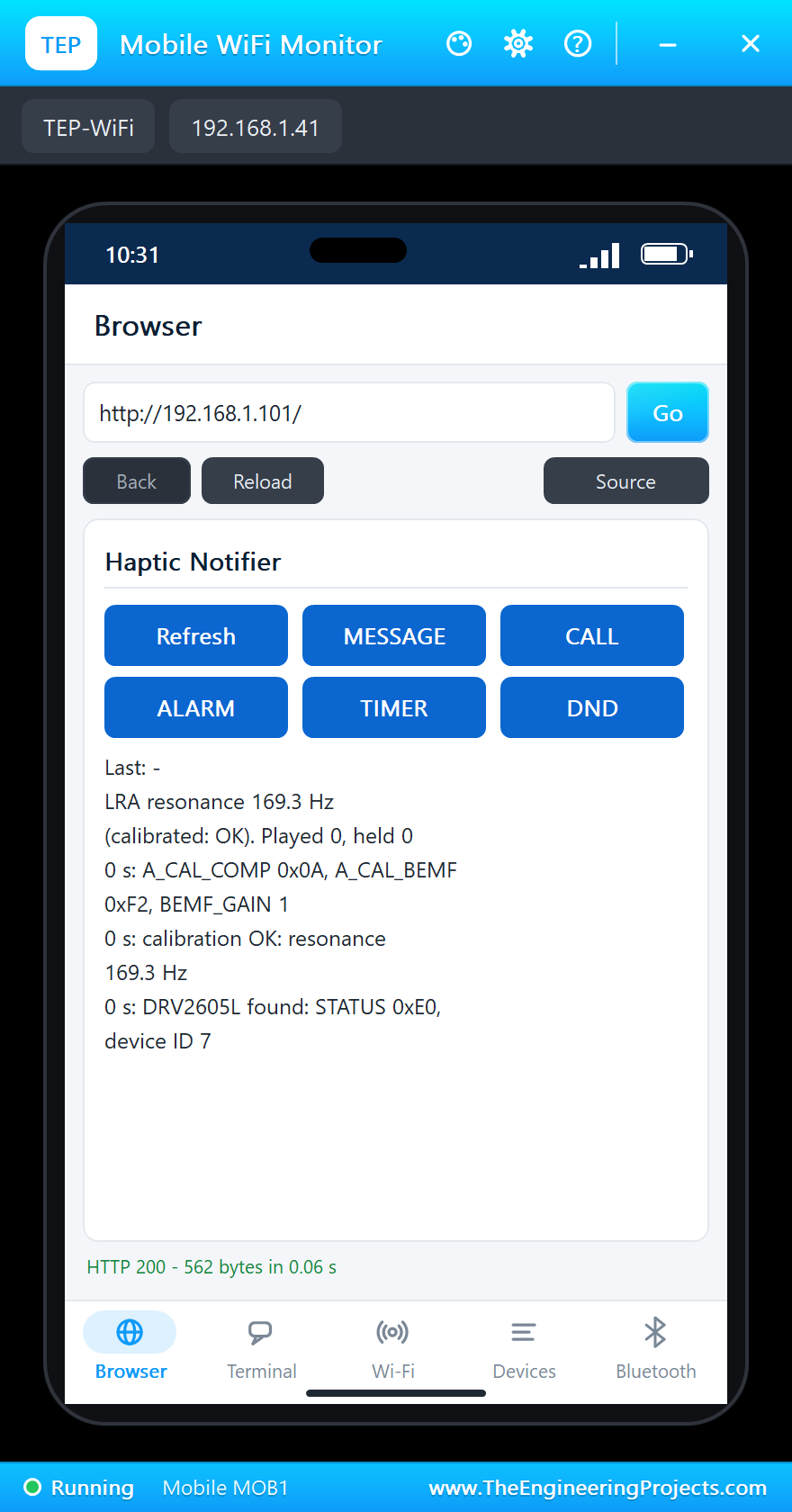
    * Laptop WiFi Monitor (PC1) and Mobile WiFi Monitor (MOB1) open http://192.168.1.101/.
  The rules (at the top of the sketch):
    * at power-up: out of standby, LRA mode, the rated voltage 2.0 Vrms (RATED_VOLTAGE 0x53), the clamp 2.9 V peak
      (OD_CLAMP 0x89), DRIVE_TIME 24, then the AUTO CALIBRATION - the resonance from LRA_PERIOD (98.46 us steps);
    * the patterns (the sequencer's 8 slots; a wait slot is 0x80 + tens of ms):
        MESSAGE  effect 10, Double Click 100 %
        TIMER    effect 1, Strong Click 100 %, three times 150 ms apart
        CALL     effect 16, 1000 ms Alert 100 %, every 2 s until the button (or 20 s: missed)
        ALARM    effect 82, Transition Ramp Up Long Smooth 1 (0 - 100 %), three times 200 ms apart
    * DND: everything but ALARM is held and counted; the button answers a ringing call, else replays the last one.
  Its pages:
    /          the dashboard: the controls, the last notification, DND, the resonance, the events
    /message  /call  /alarm  /timer      a notification
    /dnd       do not disturb on / off
    /data      everything as JSON
  No extra library: plain Wire writes to the DRV2605L's registers.

TEST STATUS
  Tested in Proteus 8 Professional on Windows 11, the run that made the tutorial's screenshots (the sketch's times):
  - 0 s: "DRV2605L found: STATUS 0xE0, device ID 7"; "calibration OK: resonance 169.3 Hz" (LRA_PERIOD 0x3C;
    the LRA set to 170 Hz), "A_CAL_COMP 0x0A, A_CAL_BEMF 0xF2, BEMF_GAIN 1"; VIN 3.30 V.
  - 10 s: MESSAGE from the phone - the double click; the shot catches its end: the driver BRAKING against the motion.
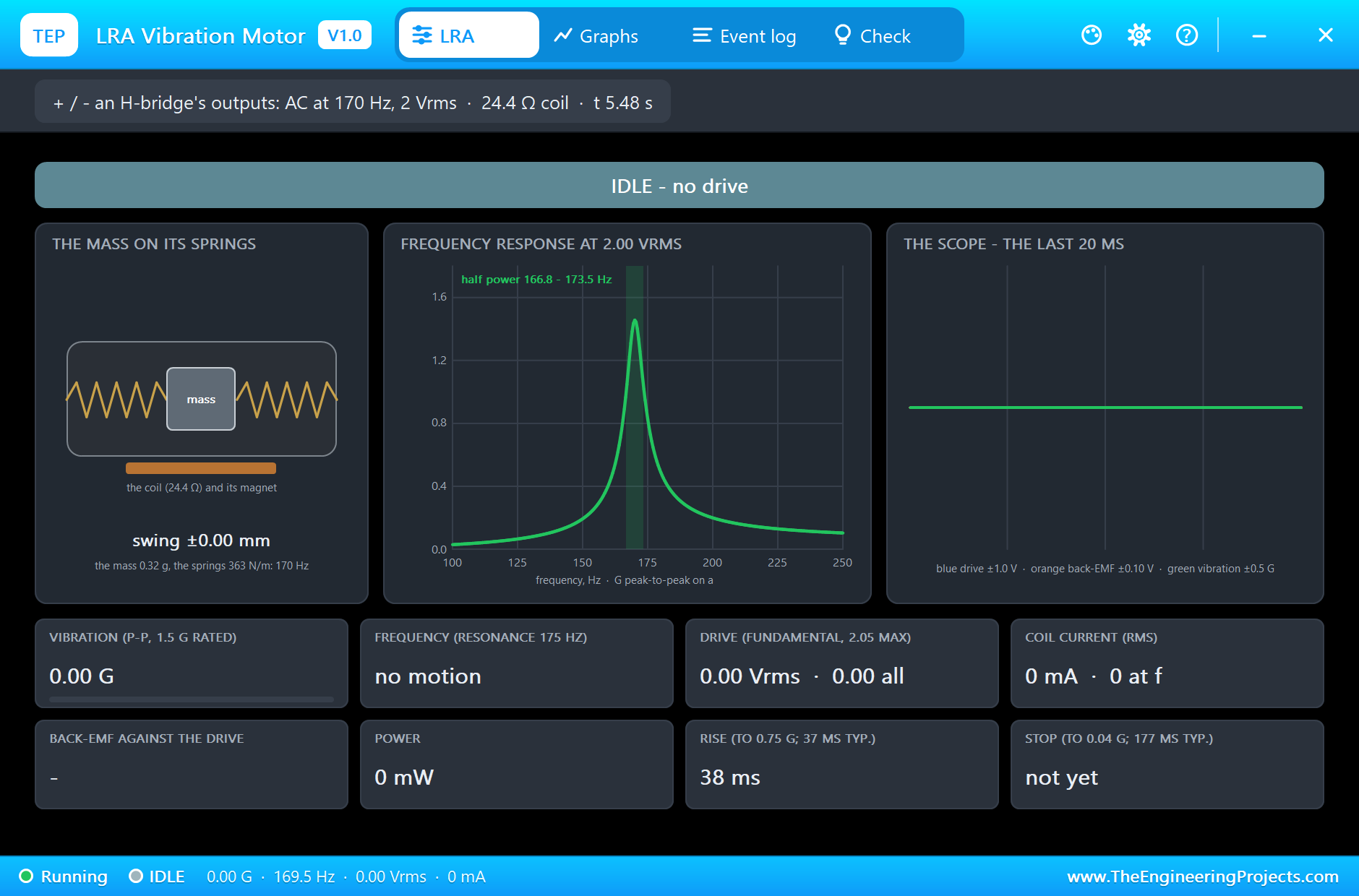
  - 12 s: CALL from the laptop - effect 16 every 2 s ("CALL buzz 2", "3"): 2.03 Vrms, 70 mA out of the DRV2605L,
    the resonance tracked at 170.1 Hz; the LRA 1.40 G peak-to-peak at 170.1 Hz, back-EMF 5 deg from the drive,
    rise 27 ms, braked stop 26 ms. 18 s: "CALL answered (the button)".
  - 20 s: DND ON; 21 s: "MESSAGE held (do not disturb), 1 held"; 22 s: ALARM comes through (three ramps, 200 ms
    apart); 27 s: "do not disturb OFF - 1 were held".
  - 29 s: TIMER from the phone - three strong clicks 150 ms apart; 30 s: the button plays it again.
  - 33.6 s of simulation in 319 s.

INSTALLATION
  1. Close Proteus. Extract the WHOLE zip file, for example to your Desktop.
  2. Copy the files from "Proteus Library Files" into the LIBRARY folder of Proteus, for example
     C:\Program Files (x86)\Labcenter Electronics\Proteus 8 Professional\LIBRARY
  3. Copy the files from "Proteus Model Files" into the MODELS folder (next to LIBRARY).
  4. Start Proteus. Press P in the schematic and search for ESP32 DEVKIT V1, DRV2605LTEP, LRACOIN10TEP or
     BUTTONREDTEP to check that the parts are there.

RUN THE SIMULATION
  1. Open "Proteus Simulation\ESP32-Haptic-Notifier.pdsprj". Keep the HEX and the DLL files beside it.
  2. Press Play. The DRV2605L calibrates the LRA; the serial monitor prints the resonance.
  3. Open the Laptop WiFi Monitor (PC1) or the Mobile WiFi Monitor (MOB1) and press Go: MESSAGE, CALL, ALARM, TIMER.
  4. Answer a CALL with the button's pop-up (Press). Watch the DRV2605L's and the LRA's pop-ups.
  Your own sketch: compile it, export the compiled binary and set U1's PROGRAM property to the new file.

PROPERTIES USED IN THIS PROJECT
  U1 ESP32 DEVKIT V1           PROGRAM=ESP32_Haptic_Notifier.hex, AUTOOPEN=YES (TEP-WiFi, 192.168.1.101)
  U2 DRV2605LTEP               (no changes)
  M1 LRACOIN10TEP              F0=170 (Hz: a real LRA is rarely exactly at its 175 Hz rating), MOUNT=100 (g)
  SW1 BUTTONREDTEP             (no changes)
  PC1, MOB1                    HOMEPAGE=http://192.168.1.101/

TROUBLESHOOTING
  * No vibration: the DRV2605L still in standby (MODE 0x40), or the LRA not selected (FEEDBACK bit 7).
  * The calibration fails (DIAG_RESULT 1): the LRA not connected, or the rated voltage / drive time far off.
  * A weak buzz: an LRA needs AC at its resonance - keep the closed loop (auto resonance) on.
  * The dashboard does nothing: DO NOT DISTURB holds all but ALARM - see the held count.

LICENCES
  * The project, the sketch, the parts (LIB files) and the models (DLL files) are made by The Engineering Projects
    and are free for learning and for your own projects. The models use only standard Windows libraries.
    The C++ source code of the models is not included; the source code is not included for any model.
  * Proteus is a product of Labcenter Electronics and is not included. ESP32 is a product of Espressif Systems; the
    DRV2605L of Texas Instruments; coin LRAs are made by several companies.
    This project is not made or endorsed by them.

VERSION
  V1.0 - the first release of the project.
===============================================================================================================Development1 release
 Development1 release
-
V1.0IoT Haptic Notifier with ESP32 - Proteus Simulation V1.0this page
V1.0 is the only release in the Download Center so far. When a newer version is published, it appears above with its own download page.
Installation8 steps
 Installation8 steps
From the download to a working project, in order. The steps follow what the package contains.
You will need
- Proteus Design SuiteProteus 8 or newer (Labcenter), on Windows
- Arduino IDE1.8 or 2.x, with the board of the tutorial chosen under Tools → Board
- Any archive toolWindows, macOS and Linux extract ZIP files on their own
Steps
- 1
Extract the archive
Right-click 94b5cdc4bd52440f8dfe18c7d5fc7c30.zip and choose Extract All (or open it with 7-Zip or WinRAR) into a folder you can find again. Keep its folder structure (ESP32-Haptic-Notifier-TEP-v1.0) as it is.
- 2
Copy the library files into Proteus
Move TEPBUTTON.LIB, TEPDRV2605.LIB and TEPESP32V1.LIB and 3 more and the files into the LIBRARY folder of your Proteus installation: C:\Program Files (x86)\Labcenter Electronics\Proteus 8 Professional\LIBRARY for Proteus 8, or the matching Proteus 7 folder. Older versions keep it under ProgramData\Labcenter Electronics. If Proteus is open, close it first.
- 3
Add the simulation model
Copy TEPBUTTON.DLL, TEPDRV2605.DLL and TEPLRA10.DLL and 1 more into the MODELS folder next to LIBRARY, so the component can run, not only be drawn.
- 4
Restart Proteus and place the component
Start Proteus, open a schematic, press P (Pick Devices) and search for the component by the name used in the tutorial. It appears with its pins ready to wire.
- 5
Open the sketch in the Arduino IDE
Open ESP32_Haptic_Notifier.ino, select your board and port under Tools, then Verify. Sketch → Export Compiled Binary writes the HEX file a simulation needs.
- 6
Load the HEX file
In Proteus double-click the microcontroller, set Program File to ESP32_Haptic_Notifier.hex and run the simulation. For real hardware, flash the same file with your programmer.
- 7
Open the example simulation
Open ESP32-Haptic-Notifier.pdsprj in Proteus to see the wiring exactly as in the tutorial. Check the controller's Program File path, then press Play.
- 8
Follow the tutorial
IoT Haptic Notifier with ESP32 - Proteus Simulation explains every connection and setting in order; keep it open beside the files while you build.
FAQs9 questionsContact TEP
 FAQs9 questions
How do I download IoT Haptic Notifier with ESP32 - Proteus Simulation V1.0?
Wait for the 30-second guest countdown on this page, then press the download button; the file comes straight from our storage. Members who are logged in skip the wait. If the browser opens the file instead of saving it, use its Save as option. The download link is made for you when the countdown ends and works for 15 minutes; a saved or shared link stops working, so share this page instead.
What is inside the archive?
IoT Haptic Notifier with ESP32 - Proteus Simulation V1.0 comes as a ZIP archive of 18 files (3.6 MB, 7.8 MB unpacked) holding Proteus library files, simulation model DLLs, a Proteus simulation, an Arduino sketch and compiled HEX firmware. Open the File Structure tab for the full list of 18 files.
What should I do if the download does not start?
Check the browser's download list first; an ad blocker or a company firewall can also hold it back, so try another browser or network. If the file arrives incomplete, download it again. For an installation problem, read the Install tab or tell us in the comments with your software version and the exact error message.
Is this file free?
Yes. Every file in the TEP Download Center is free for learning, personal and student projects. If you share it, link back to this page or the tutorial so others find the latest version.
How do I check that the file arrived complete?
Compare its SHA-256 with the one on this page, 0114ff88ceba20150a80a7a2d43dfb8fa66046daabc1c9ab2a5a4a915d2bd058. In PowerShell run Get-FileHash "94b5cdc4bd52440f8dfe18c7d5fc7c30.zip"; on macOS or Linux run shasum -a 256 "94b5cdc4bd52440f8dfe18c7d5fc7c30.zip". The same value means the file is exactly the one in our storage; a different one means the download broke off, so download it again.
Do I need WinRAR to open the ZIP file?
No. Windows, macOS and Linux open ZIP archives on their own (Extract All, or double-click). WinRAR and 7-Zip work too. Extract the whole archive before using the files.
Where do I put the LIB and IDX files?
Both files go into the LIBRARY folder of your Proteus installation (Proteus 8: C:\Program Files (x86)\Labcenter Electronics\Proteus 8 Professional\LIBRARY; Proteus 7 has the same folder under its own name). Restart Proteus afterwards and search for the component with P.
Which Proteus version does the library need?
The tutorial names the Proteus version the library was made and tested with. Most TEP libraries work in Proteus 7 and Proteus 8; if the component does not appear after a restart, check that both the LIB and the IDX file were copied and that Proteus was fully closed while copying.
How do I get the HEX file into the simulation?
Compile the sketch in the Arduino IDE (Sketch → Export Compiled Binary gives you the HEX next to the sketch), then in Proteus double-click the board, set Program File to that HEX and run.
Members skip the wait. Log in or join TEP.

- 0Total downloads
- 4%Popularity
- ESP32 ProjectsCategory
- 0Comments
- ssyedzainnasirUploaded by
- 16 Nov 2026Uploaded at


 SHA-256
0114ff88ceba20150a80a7a2d43dfb8fa66046daabc1c9ab2a5a4a915d2bd058


 Need help with this file?
 Tags
Related ESP32 Projects
All ESP32 Projects tutorials





More ESP32 project files
All ESP32 tutorials



Comments
0