Hello everyone, I hope you all are doing great. In today's tutorial, we are gonna have a look at How to design a Smoke Detector with Arduino . Its quite a simple project but if you are working on any security project then you must add this feature in it. You should also download this Gas Sensor Library for Proteus , and design its simulation. I will use gas sensor MQ2 for this project. I have purchased MQ2 Gas Sensor module as its quite easy to interface with Arduino. Arduino board I'm using is Arduino UNO. I have also designed an LPG Gas Leak Detect using Arduino using this MQ2 Sensor. So, let's get started with How to design Smoke Detector with Arduino & MQ2 Sensor. Smoke Detector with Arduino & MQ2 Sensor First of all, we need to connect some jumper wires between Arduino and MQ2 smoke s ...
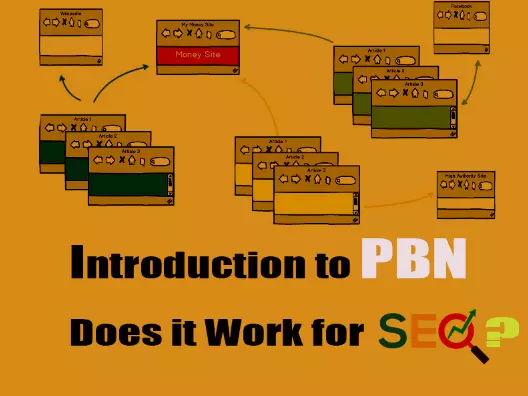
Hey Fellas! We are here to help you with the latest information related to your field of interest so you keep coming back for what we have to offer. Today, I'm going to unlock the details on the Introduction to PBN and Why it Important for SEO. This is the fourteenth article of complete SEO series. You can check my previous article on Web 2.0. Before we move forward and check the importance of PBN in SEO, we must know what is PBN? PBN stands for private blogging network and is defined as a number of blogs you build for linking back to your main blog. A huge round of applause is due for the SEO Gurus who still guide you through traditional techniques for SEO that have been abandoned long while ago. It is true, PBN is used for better SEO that ultimately puts your blog on the top of search en ...
Hello everyone, I hope you all are doing great. In today's tutorial, I am going to share 5 Tips for Extending Your SCADA System. What do you do if your existing SCADA system isn’t doing the job you need? Obviously, you need to extend it, but doing so can be a frustrating and costly exercise. How do you manage budget, increase efficiency and provide the functionality you need? Of course, it all depends on your specific implementation, but some general tips to keep in mind might relieve some stress. Look at The Big Picture Again When you find your SCADA system can’t provide the data or control you need, the first instinct is to quickly patch the missing functions, but over the long haul this can be a costly and inefficient process leading to a tangled web of sensors, RTUs and controls. Take ...
Hi Friends! I am back to help you with a daily dose of useful information so you can excel and grow in your field. Today, I am going to discuss the details on the Introduction to Web 2.0 . This is the thirteenth article of complete SEO series. You can also have a look at my previous article on SMO and why it is important for SEO and overall blog growth. Web 2.0 is a term defined as how the content and data is shared, edited and collaborated among end users using online tools to enhance the user experience and provide them equal opportunity to take an active part in the discussions initiated by the business owners and bloggers. In this way, visitors remain updated with most relevant and useful information where they can share their experience in case the information they find is limited and ...
Hello Guys! Hope you are doing great. We always keep your needs and demands on the top and strive to provide you content that truly resonates with your field of interest so you keep coming back every now and then. Today, I am going to give a quick review about Online PCB Prototype Service Called PCBWay. If you are student or technology geek, you are pretty much interested in embedded system projects that require lots of components to be placed together. A breadboard is useful and meets the requirement of the project when a temporary solution is required, however, when you need a permanent solution you require PCB where you can put and connect all of your components together. Also, an end to end wiring is becoming obsolete due to the complexity and nature of the projects being developed in ...
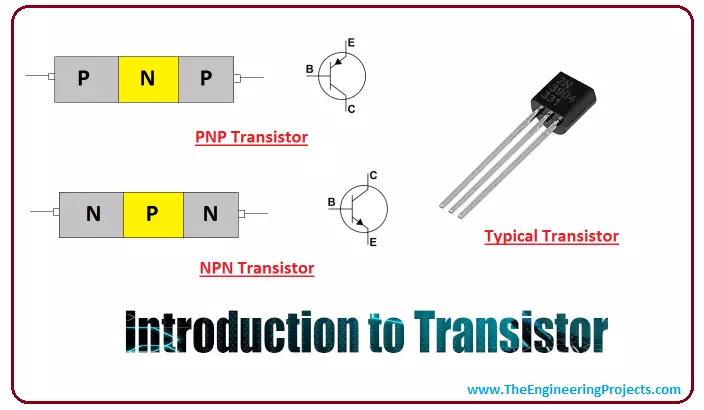
Hi Guys! Hope you are doing fine. Today, I am going to give you a detailed Introduction to Transistor. A transistor is a semiconductor device that comes with three terminals, where a small current at one terminal is used to control current at the other terminals. Transistors are mainly used for the amplification of electronic signals. Transistors were first invented by American Physicists John Bardeen in 1947. Before the inception of transistors, vacuum tubes were used to control the electronic signals. These vacuum tubes come with anode & cathode arrangement and the potential difference across these ends produces the electric current. In the later versions, a filament is added which is used to provide heat to the cathode that directs the electrons towards the anode side. Their complex des ...
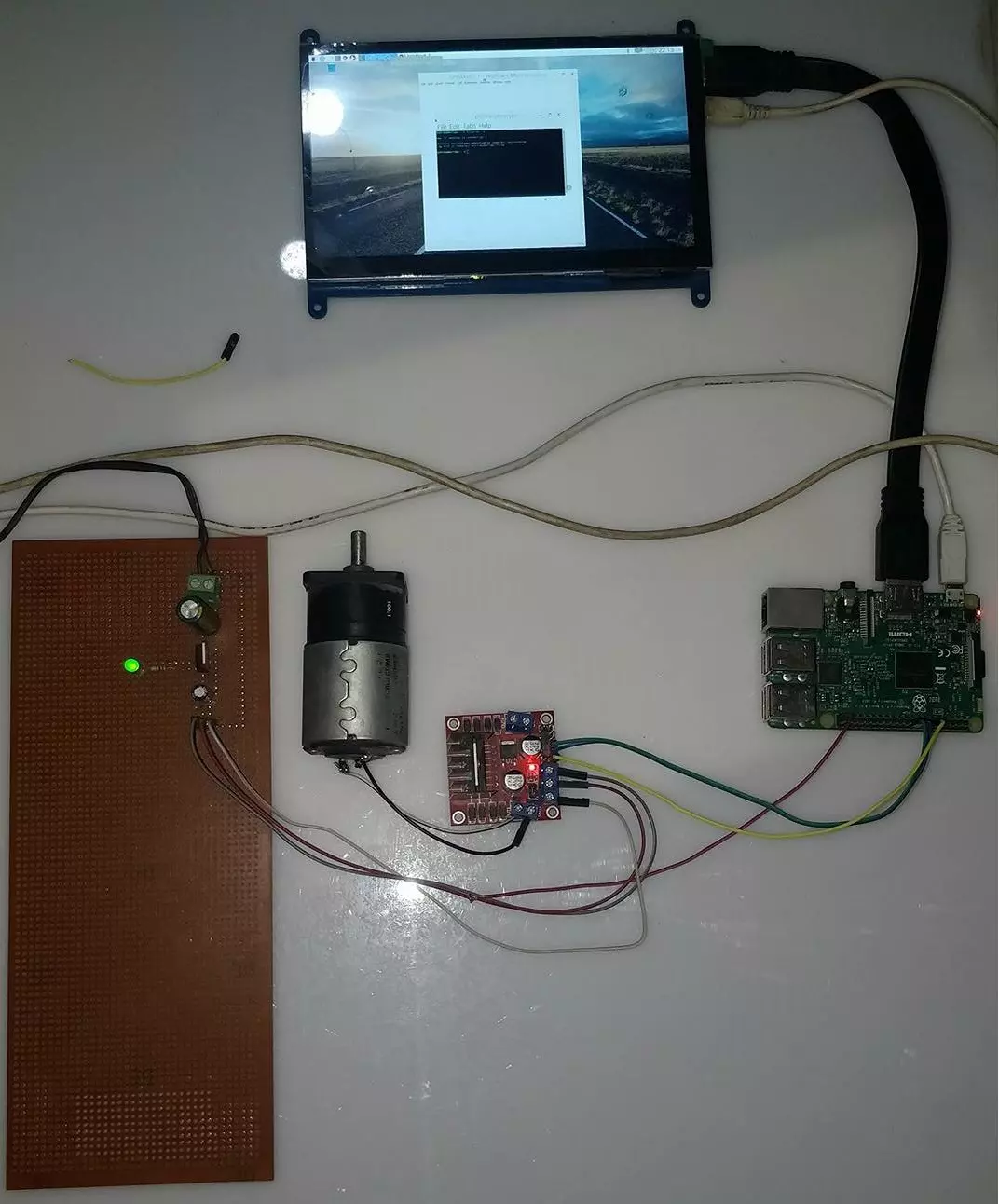
Hello friends, I hope you all are doing great. In today's tutorial, I am going to show you How to Control DC Motor with Raspberry Pi 3. We will control both the speed and direction of DC Motor. I hope you have read the previous tutorial on How to Create a GUI in Raspberry Pi 3 as we are gonna create a small GUI in this tutorial as well and then we are gonna control our DC Motor with Buttons on GUI. In order to control the DC Motor, we have to use some drivers in between our Microcontroller and DC Motor. This driver's functionality is to control a 12V DC Motor with a 5V signal from a microcontroller. In today's tutorial, we are gonna use L298 Motor Driver . So, let's get started with How to Control DC Motor with Raspberry Pi 3: How to Control DC Motor with Raspberry Pi 3 I have divided this ...
Hey Guys! I hope you all are doing great. In the previous tutorial, we studied the basics of Semiconductors , where we briefly discussed the PN Junction. Today, we are going to have a detailed overview of PN Junction. But before getting into the details of PN Junction, we need to first recall a few concepts from the previous lecture: Semiconductor Basics As we know, the conductive power of a semiconductor material lies between a conductor and an insulator. So, it can act as a pure conductor as well as a pure insulator, depending on the applied conditions. Semiconductors are divided into two types: Intrinsic Semiconductor. Extrinsic Semiconductor. Intrinsic Semiconductor A semiconductor in its pure form is called an Intrinsic semiconductor. In this state, the outermost valance shell of the ...
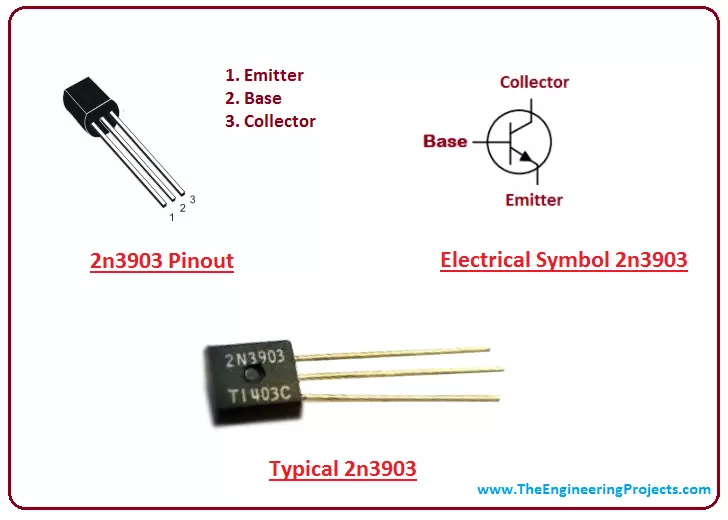
Hi Friends! Hope you are doing great. I am back to give you a daily dose of valuable information so you can excel and grow in your relevant field. Transistors are the fundamental parts of most of the electronic circuits. Today, I am going to unlock the details on the Introduction to 2n3903 . It is an NPN transistor main used for general purpose amplification and switching applications. Transistor comes in two types i.e. NPN and PNP transistors . This transistor falls under the category of NPN transistor. This is a bipolar junctions transistor where conduction is carried out by movement of both charge carriers i.e. electrons and holes. However, electrons are major charge carriers in case of NPN transistors. If you are unsure how these bipolar transistors work, you can check this read on Int ...
Hey Friends! Hope you are doing great. I am back to give you a daily dose of valuable information so you can always stay ahead of your competitors. I have previously updated the article on NPN transistor that is used for amplification and switching purpose. Today, I am going to unveil the details on the Introduction to PNP Transistor which falls under the category of bipolar junction transistors and comes with three layers i.e. two P-doped layers and one N-doped layer where an N-doped layer exists between two P-doped layers. Main Function: Small current at one terminal is used to control large current at other terminals. Major Charge Carriers: Holes These NPN and PNP transistors come with their own benefits based on the nature of the electronic project, however, NPN transistors always deem ...