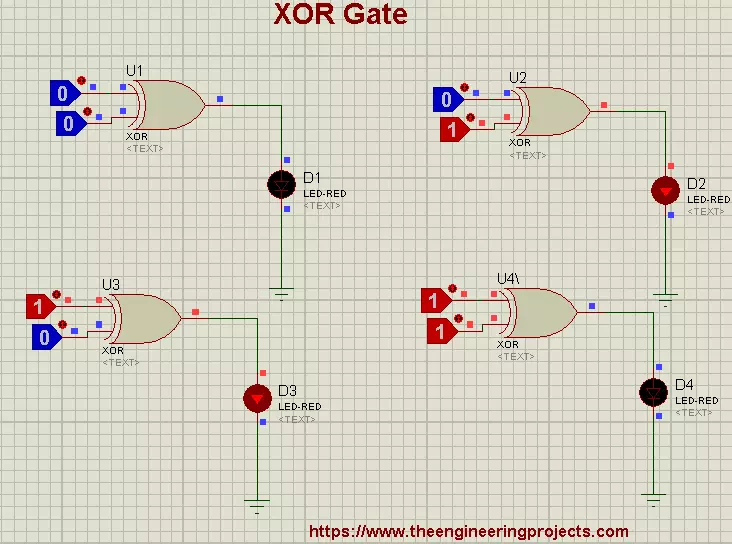
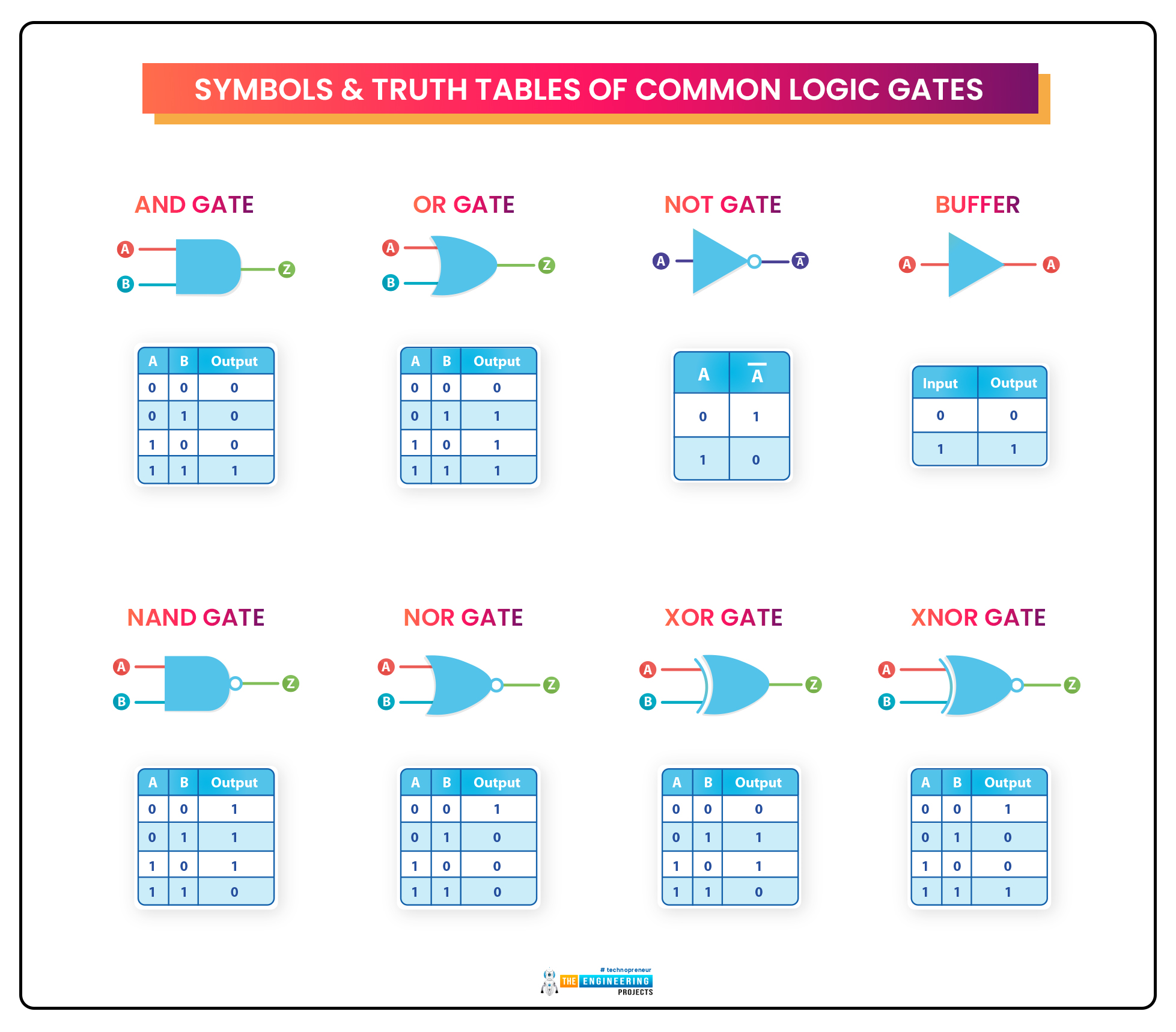
Hey pals, we hope you are doing well. In our previous lecture, we discussed the basic DLD Basic Logic Gates and simulated in Proteus. Today, we are going to discuss another logic gate called Exclusive OR Gate(XOR Gate). We will also design the XOR Gate in Proteus using the basic logic gates(i.e. AND, OR and NOT), discussed in the previous lecture.
In today's tutorial, we are going to focus on:
What are Exclusive OR Gates
Experimental Proof in Proteus ISIS.
How Truth Table of Exclusive OR Gate is designed.
How is its Timing Diagram?
Circuit of Exclusive OR Gate in Proteus Simulation
Applications of Exclusive OR Gates
Exclusive OR Gate(XOR Gate)
In the Exclusive OR Gate(XOR Gate), the output will be HIGH(1), only if the odd no. of inputs is HIGH(1) and at least one o ...
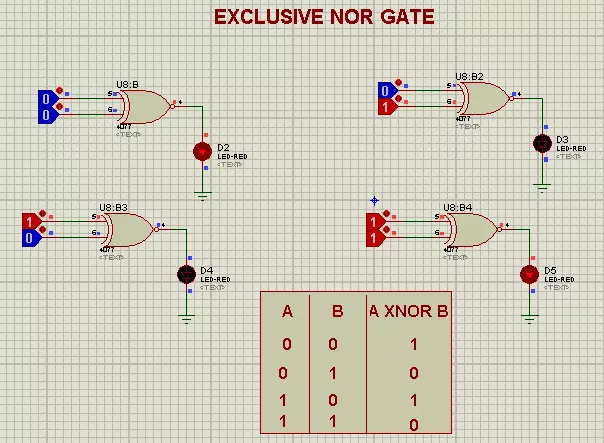
Hello Mentees!, I hope you have a productive day. Welcome to The Engineering Projects. In the previous lecture, we discussed the XOR Logic Gate and designed its circuit using basic logic gates i.e. AND, OR and NOT. Today, I am going to explain another Logic Gate named XNOR Gate in detail.We are going to discuss these concepts in today's lecture:
What are Exclusive NOR Gates
Experimental Proof in Proteus ISIS.
How Truth Table of Exclusive NOR Gate is designed.
How is its Timing Diagram?
Circuit of Exclusive NOR Gate in Proteus Simulation
Applications of Exclusive NOR Gates
XNOR Gate
The exclusive NOR Gate(also called XNOR Gate) simply inverts the output of the XOR Gate(we discussed in the last lecture).So, if we simply place a NOT Gate in front of the XOR Gate, we wi ...
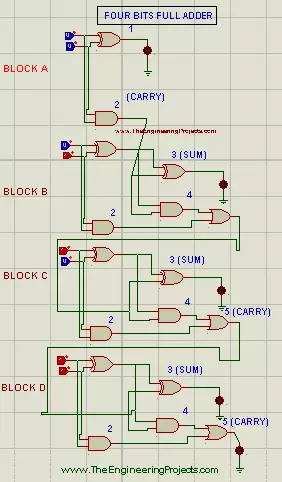
Hi Learners! I hope you are having a productive Day. Welcome from the Team of The Engineering Projects. The digital logic circuit that we are learning today is 4-Bit Full Adder. In our previous tutorial, we designed 2-Bit Full Adder using Logic Gates in Proteus software. Today, we are going to design & simulate 4-Bit Full Adder using Logic Gates in Proteus.
We will discuss the following topics in today's lecture:
What is Adder?
What is Full Adder?
Working Principle of 4-bit Full Adder.
Simulation of four-bit full Adder in Proteus ISIS.
What is Adder?
Let's recall the Adder Definition from our previous lectures:
Adders are Digital Logical Circuits, specially designed to add two or more binary numbers or bits.In the world o ...
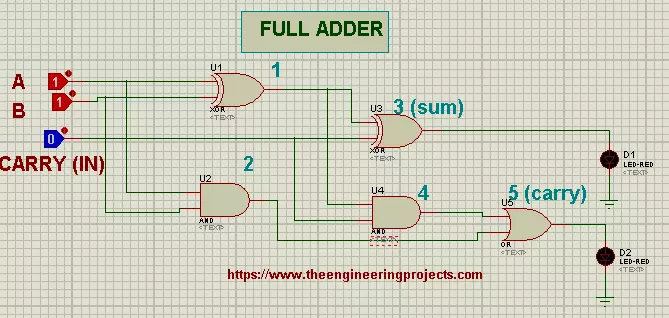
Hello Learners! I hope you are doing great. Welcome to The Engineering Projects. In our previous lecture, we discussed How to design Half Adder with Universal Gates. In today's tutorial, we are going to design Full Adder with Logical Gates.
In today's tutorial, we will learn the complete information about:
What is Adder?
What is Full Adder?
How is the Truth Table of Full Adder?
How can we design Full Adder in Proteus ISIS?
What are the uses of Full Adder?
What is Adder?
Recalling from our previous lectures:The Adders are simple Logical Circuits that take the bits in as the input, sum the bits together and generate the sum and the carry at the output.Adders are present in computer architecture, mainly to control the ...
Hello Mentees! I hope you all are doing well. In today's article, we'll learn about the very basic pillar of Digital Logic Circuits i.e. Logic Gates. As we know, the digital world depends on Boolean digits either 0 or 1. So, there's always a need to perform different operations on these boolean numbers i.e. addition, subtraction, multiplication, shifting etc. In order to perform these operations on the binary signals, we use Digital Logic Gates in DLD circuits.So, let's have a look at What is a Logic Gate:What is a Logic Gate?
Logic Gates are designed to perform a specified operation(i.e. addition, bit shift etc.) on the input signals and generate the output signal.
For example, a simple NOT gate takes a single binary input and returns its inverse in the output, i.e.If Input is 0, the Ou ...
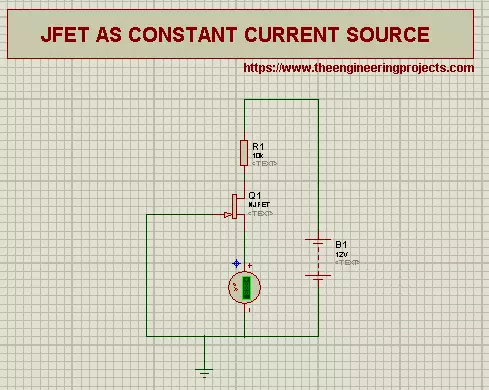
Hi Pupils, Welcome to another Experiment of Proteus at The Engineering Projects. Previously, we saw what are the Junction Field Effect Transistors. Today we'll learn about some of the applications of Junction Field Effect Transistors.
Just before the Experiment, it is useful to revise that:
Transistors are three terminal, unipolar Devices. The terminals of Junction Field Effect Transistor are named as :
Drain
Source
Gate
The Gate Terminal is common to both Source and Drain.
Prior to start, let's clear some Concepts about Junction Field Effect Transistor.
Resistor
Resistor is an electrical device. we define the resistors as:
"A Resister is a two terminal Passive electrical device that shows the electrical resistance and is useful in almos ...
Hi mentees, we are here with a new tutorial. I hope you all are fine. So far, we have been designing combinational circuits i.e. Adder, Subtractor, Multiplexer etc. using logic gates. But from today onward, we will design sequential circuits using logic gates i.e. Latches, Flip Flops etc. Let's quickly recall what's the difference between combinational & Sequential Circuits:
Combinational Circuits:
Combinational circuits only use the current state of the input values to generate the output.Examples of DLD Combinational Circuits are: Adders, Subtractors, Multiplexers etc.
Sequential Circuits
Sequential Circuits use both the current & previous states of the inputs to generate the output.Examples of DLD Sequential Circuits are: Latches, Flip Flops, Timers, Counters etc.
Digital M ...
Hey Pals, Welcome to the new lesson. I hope you are having a productive day. Today, we'll talk about installation of Emu8086 application in windows. but before this, It is important to have the brief introduction of the application.
Lets find out what is Emu8086.
"Emu8086 is a powerful, offline and free software for emulation, disassembling and debugging of 8086 programs i.e, 16 bits/DOS."
It is an Integrated Development Environment (IDE) that write a source, assemble it and link into .COM or .EXE file then trace it in machine code and source file. When we launch the Emu8086 Asm or Ist will start the assembler source editor. one the other hand, .exe and obj files starts the disassembler and debugger units.
Let's move towards its installation:
P ...
Bonjour trainees!!! Welcome to the Engineering projects, We hope you are doing great. In our previous lecture, we discussed the first type of clippers in detail i.e. Series Clippers. Today, we are going to discuss the next two types of Clippers i.e. Shunt Clippers and Dual Clippers. Here are the types of Clippers from the last lecture:
So, today, we are going to cover the below concepts:
what is a Shunt Clipper?
Types of Shunt Clippers
Implementation of shunt Clippers in Proteus ISIS.
Dual Clippers basics.
Implementation of Dual Clippers in Proteus ISIS.
So, let's get started:
What is a Shunt Clipper?
In Shunt Clippers(Parallel Clippers), the diode is connected in Shunt(Parallel) to the input signal source & the load resi ...
Hey buddies, hope you all are fine. In our previous tutorial, we studied Half Wave Rectification and have seen that it rectifies the half wave of the AC signal. Today, we are going to study Full Wave Rectification to rectify the complete AC source. We will design the simulation of the Full Wave Rectifier in Proteus software. So, let's get started:
What is Full Wave Rectification?
A comprehensive definition of full-wave rectification is:
Full-wave rectification
is a process to convert both cycles(positive & negative) of input(sinusoidal) wave to pulsating DC
(Direct current).
We have studied in the previous lecture that Half Wave Rectifiers are used to convert only one cycle(either positive or negative) of an AC signal into a DC signal, thus dissipating the 50% energy of the o ...