Hi everyone! Hope you’re well today. I welcome you on board. In this post today, I’ll walk you through the Introduction to P6KE220A.The P6KE200A is a transient voltage suppressor (TVS) diode that uses clamping action to provide circuit protection against overvoltage. It is widely used in low-voltage supplied ICs and MOS technology due to its quick response to transient overvoltages. For P6KE200A the clamping voltage is 246V and the breakdown voltage is ranged from 190V to 210V.
I suggest you read this entire post till the end as I’ll detail the complete introduction to P6KE200A covering datasheet, pinout, features equivalents, and applications of this component P6KE200A.
Introduction to P6KE200A
The P6KE200A is a transient voltage suppre ...
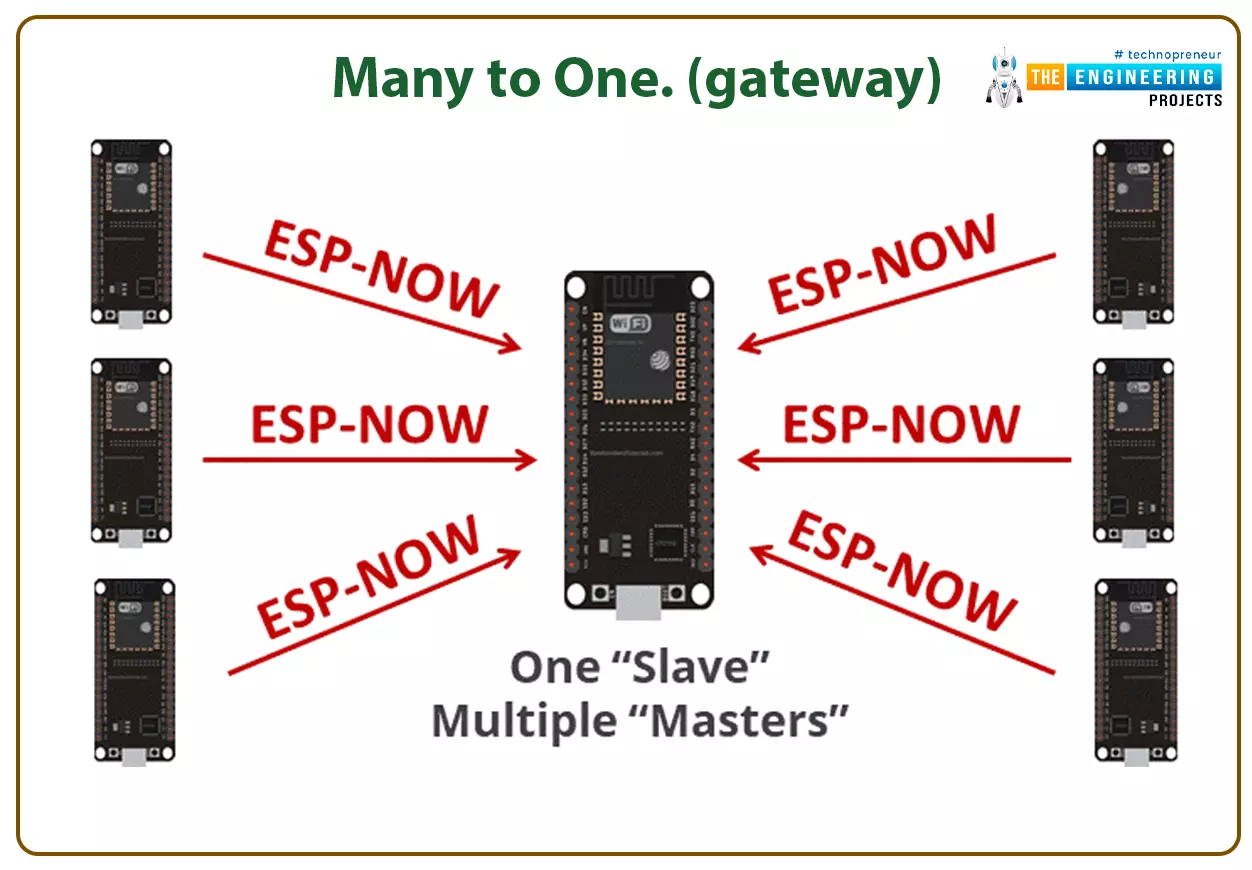
Hello readers, I hope you all are doing great. In this tutorial, we will learn about the ESP-NOW protocol and how to communicate data between two ESP modules through ESP-NOW protocol and that is too without Wi-Fi connectivity.
What is ESP-NOW Protocol?
Fig. 1: ESP-NOW Protocol
ESP–NOW is a connectionless communication protocol that is used for sharing small data packets between two ESP boards. This protocol is developed by Espressif.
Features of ESP-NOW Protocol:
It is a low-power wireless protocol, which makes two or more ESP devices communicate directly with each other without using Wi-Fi.
ESP-NOW protocol does not require a handshake for establishing a connection but, they require pairing and once the devices are paired they can exchang ...
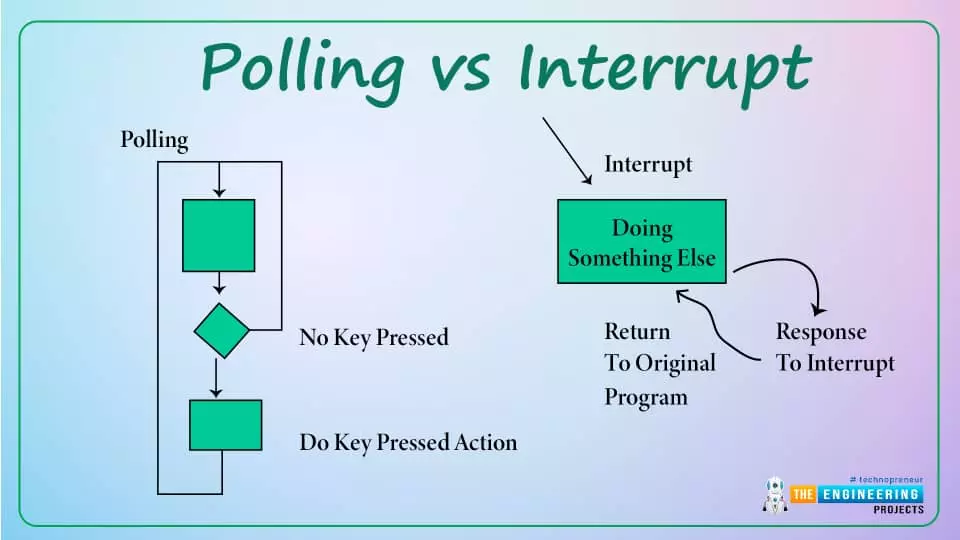
Hello readers, hope you all are doing great. Today, we will discuss interrupts and timers in ESP32 and how to handle internal as well as external interrupts. So, we will discuss What is interrupt, Polling, ESP32 interrupt, Software interrupts, Hardware Interrupts, IRS (Interrupt Service routine), Steps to execute an interrupt or how is an interrupt handled in the microcontroller, Code description for ESP32 interrupts with Arduino IDE, Code description for hardware interrupts, Why is it preferred to use timer to add delay instead of using delay() function. So, let's get started:
What is Interrupt?
Interrupts are used when a micro-controller needs to continuously monitor for an event while the same micro-controller is executing a particular task ...
Hello readers, I hope you all are doing great. Today, we are going to start the second section of the ESP32 tutorial series and today's our first tutorial, where we will have a look at How to Create a Web Server with ESP32. In our previous tutorial, we introduced you to the basics of the ESP32 microcontroller. where we discuss How to set up Arduino IDE to program ESP32. In this tutorial, we will discuss creating a web server using the ESP32 module.One of the most interesting features of the ESP microcontroller series is its wireless connectivity via WiFi & Bluetooth. Wireless connectivity protocols supported by ESP32 are:
Wi-fi: 802.11b/g/n/e/i
Bluetooth : BLE(Bluetooth low energy) and V4.2
What is a Web server?
A web server is software or hardware that stores, processe ...
Hello Everyone! I welcome you on board. Hope you’re well today. In this post today, I’ll detail the Introduction to FR106.The Fr106 is a fast recovery diode mainly employed in fast-switching applications. It supports loads under 1A and carries a peak inverse voltage of 800 V.
I suggest you read this post all the way through as I’ll walk you through the complete Introduction to FR106 covering datasheet, pinout, features, characteristics, and applications. Let’s jump right in.
Introduction to FR106
Fr106 is commonly known as a fast recovery diode mainly employed in fast-switching applications. This is a two-terminal device named anode and cathode.
The gray-colored band at one side of the diode indicates the cathode side while the other side is the anode terminal.
...
Hi Guys! Hope you are doing well. Welcome you onboard. Today, I'll unlock the detailed Introduction to 2sa1265 which is a PNP transistor mainly used for power amplifier applications and proves to be an ideal choice for 70W high fidelity audio frequency amplifier output stage applications.
This PNP transistor falls under the category of Bipolar Junction Transistors where two charge carriers i.e. electrons and holes take part in the conduction process, however, holes are major charge carriers in the PNP transistors, unlike NPN transistors where electrons are the major charge carriers.
BJTs are different than that unipolar transistors like JFETs as former is the current controlled device and later is a voltage controlled device. Both are used in ...
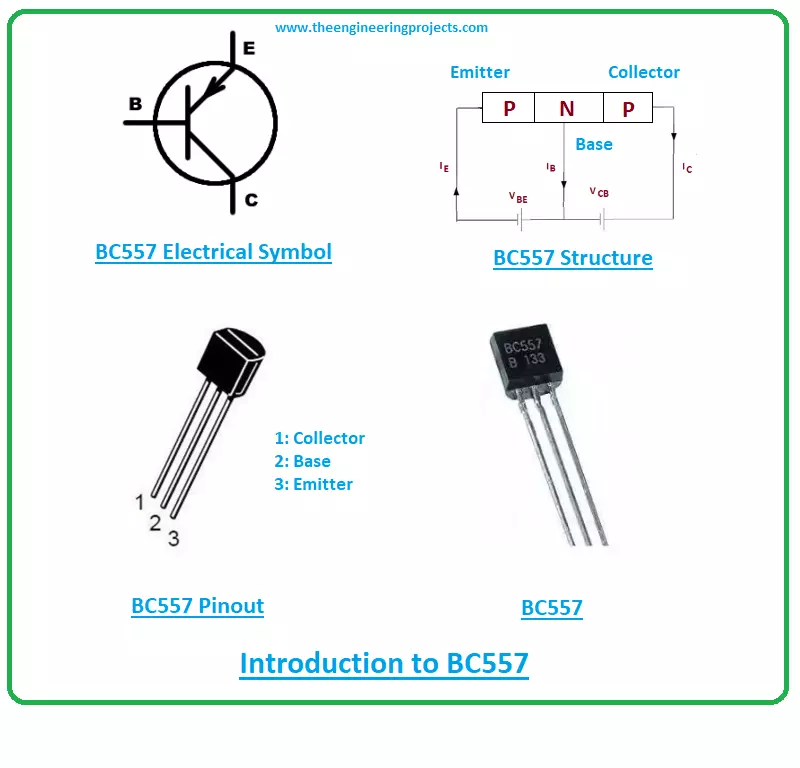
Hi Guys! Hope you’re well. I welcome you on board. Thank you for viewing this read. In this post today, I’ll walk you through the Introduction to BC557.
BC557 is a bipolar junction transistor with DC current gain 300. It falls under the category of PNP transistors where one N-doped layer stands between the two P-doped layers. The continuous collector current is 100mA means it can drive load under 100mA. BC557 comes in the TO-92 package and is mainly used for switching and amplification purpose.
Before I bore you to tears, let’s dive in and read the complete introduction to BC557 covering datasheet, pinout, working principle, power ratings, physical dimensions, and applications.
Continue reading.
Introduction to BC557
BC557 is a bipolar junct ...
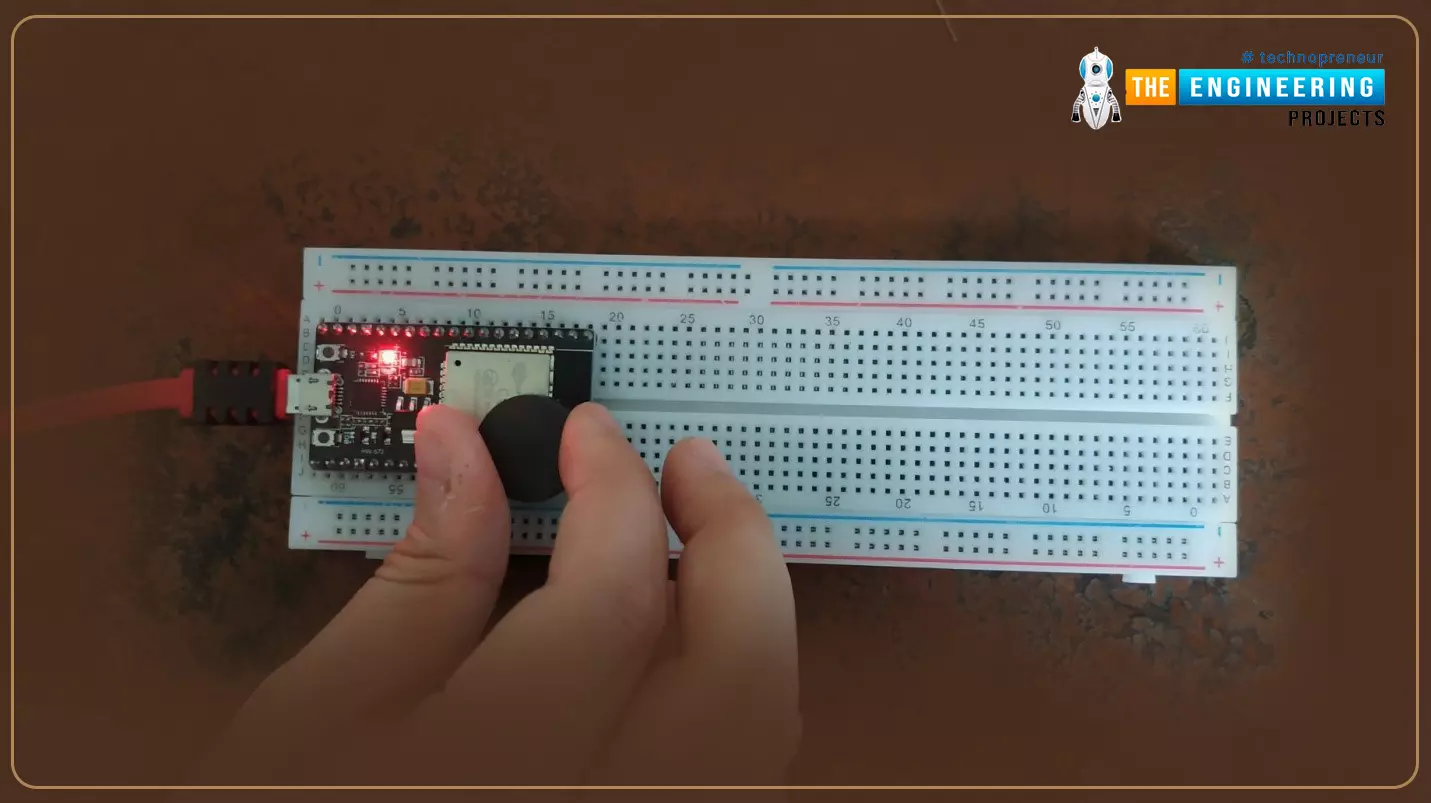
Hello readers, I hope you all are doing great. Welcome to Section 5 of the ESP32 Programming Series. In this section, we are going to interface different Embedded Sensors with the ESP32 Microcontroller Board. ESP32 development board is featured with some inbuilt sensors(i.e. hall effect sensor, capacitive touch sensor) so, in the initial tutorials of this section, we will explore these built-in ESP32 sensors and in the later lectures, we will interface third-party sensors with the ESP32.
In today's lecture, we will discuss the working/operation of the ESP32 built-in Hall Effect Sensor. Hall Effect sensor is used to detect the variation in the magnetic field of its surroundings. So, let's first understand What's Hall Effect:
What is the Hall Effect?
The Hall Effect phenomenon was fir ...
Hey Friends! Hope you are doing great. I am back to give you a daily dose of valuable information so you can always stay ahead of your competitors. I have previously updated the article on NPN transistor that is used for amplification and switching purpose. Today, I am going to unveil the details on the Introduction to PNP Transistor which falls under the category of bipolar junction transistors and comes with three layers i.e. two P-doped layers and one N-doped layer where an N-doped layer exists between two P-doped layers.
Main Function: Small current at one terminal is used to control large current at other terminals.
Major Charge Carriers: Holes
These NPN and PNP transistors come with their own benefits based on the nature of the e ...
Yesterday, I have posted a new Arduino Lilypad / Nano Library for Proteus in which we have seen how to add that library into Proteus so that you could be able to use these boards in Proteus. That was quite easy. Today I am gonna post a small project in which we will see how to use that library and produce an Arduino Lilypad simulation in Proteus. In this Arduino Lilypad simulation in Proteus, I am gonna use obviously he Arduino Lilypad board along with few LED lightsand will make them blink. Its also quite easy and you can also download the simulation and the hex file at the end of this project but I would suggest you to do it yourself so that you learn something out of it.
Before starting this project, you must have first integrated the Arduino L ...