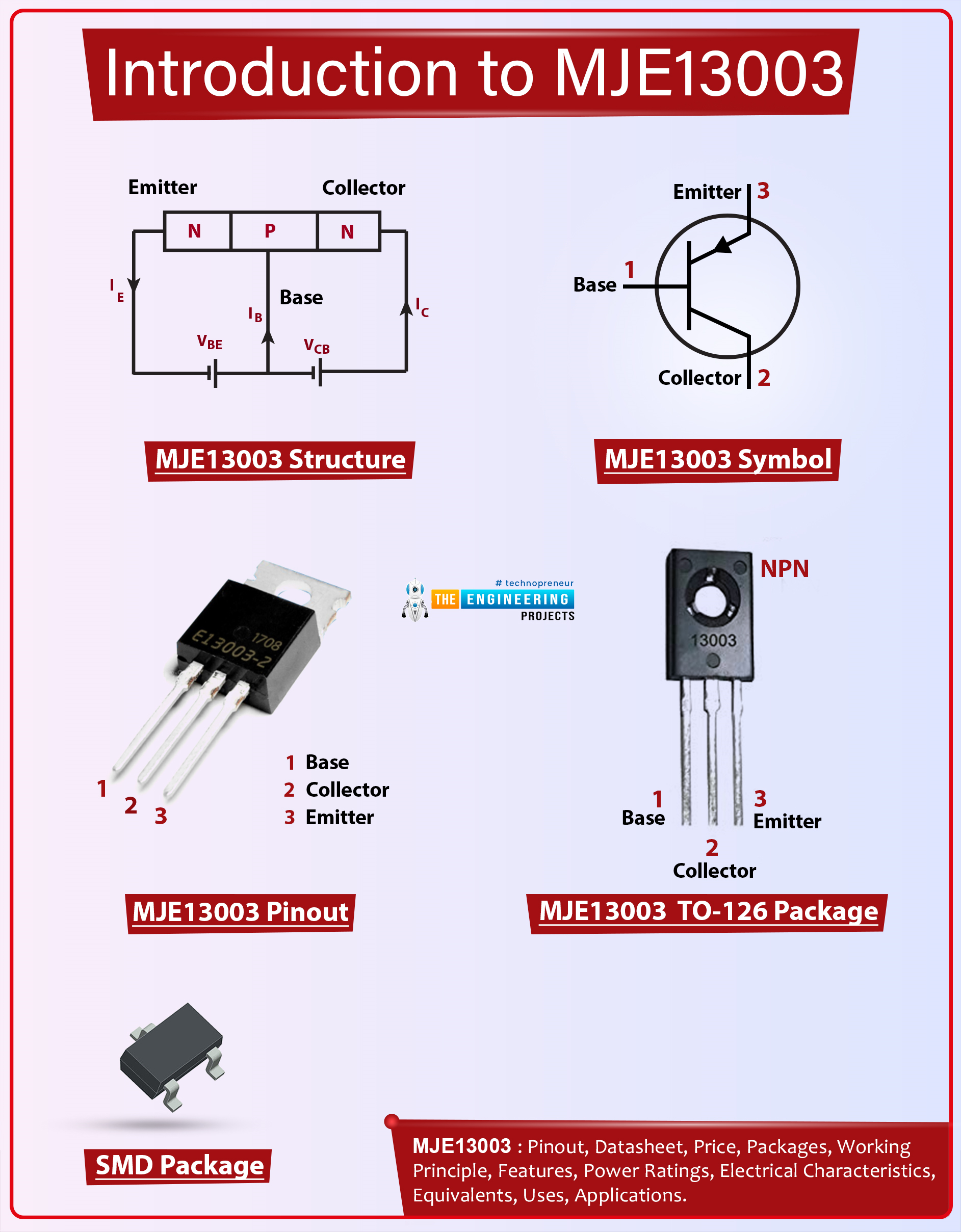
Hi Friends! Hope you’re well today. I welcome you on board. In this post today, I’ll demonstrate the Introduction to MJE13003.
MJE13003 is an NPN silicon transistor mainly used for high-speed high voltage power switching applications. This chip is a three-terminal device where a small current at one terminal is used to produce a large current at the remaining terminals. The collector current is 1.5A which projects this device can support load up to 1.5A.
I suggest you buckle up as I’ll describe the complete Introduction to MJE13003 covering datasheet, pinout, working principle, applications, power ratings, and physical dimensions.
Let’s get started.
Introduction to MJE13003
MJE13003 is a bipolar junction transistor that belongs to the NPN transistor family. It is mainly used ...
Hello everyone! I hope you will be fine and having fun. Today, I am going to give a detailed Introduction to Relay. In this tutorial, we will learn the basics of relays, the working principle of relays, the types of relays and their applications in detail. A relay is a simple automatic switch that opens and closes the circuit(either electronically or mechanically) based on its input signal. A relay is an electromechanical switch that uses electromagnetism from a small current or voltage to switch higher current or voltage for different appliances. When a relay is in a Normally Open (NO) state, no current passes through it and when the relay is energized, the current starts to flow and we can say the relay is in a Normally Closed state. You should also have a look at Relay Interfacing with ...
Hello readers, hope you all are doing great. This is our 3rd tutorial in the ESP32 programming series. In our previous tutorial, we discussed the ESP32 Web server, where we created the ESP32 web server in STA mode.
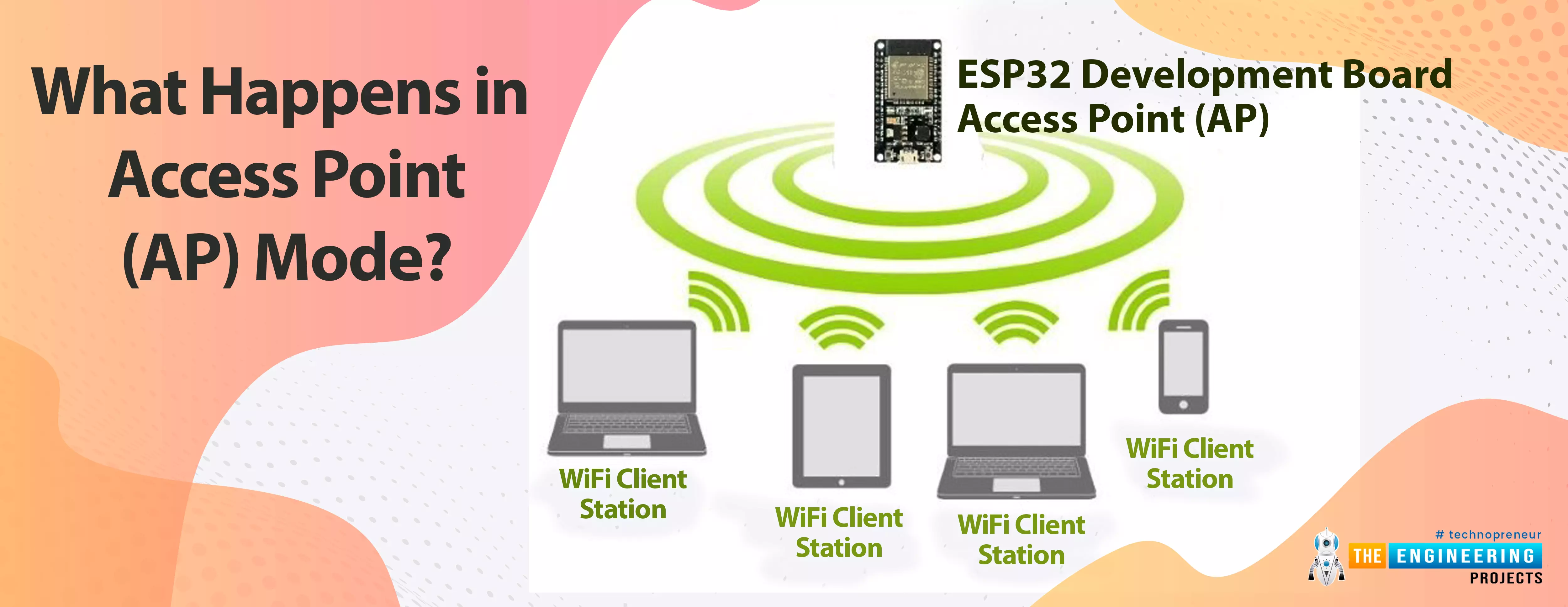
ESP32 can be operated as an access point (AP) or a Wi-Fi station (STA mode). So, in this tutorial, we will create an ESP32 web server in access point (AP) mode. Here's the video demonstration of ESP32 WebServer in Access Point Mode:
As I mentioned above, in our 2nd tutorial, we already discussed the basics of the ESP32 web server. So, in this tutorial, we will only discuss how to create the ESP32 in access point mode.
For detailed information about the basics of the ESP32 web server and how client-server communication takes place, fol ...
Hello learners, Welcome to another tutorial on signals and systems. We are learning about the responses of the signals. We all have experience in situations where the change in the frequency of a system, such as radios or control systems, results in a change in the working or result of that system. So we have the idea that frequencies play an important role in different types of systems. In the previous lecture, we saw the impulse response of the system. Our mission today is to learn about the frequency response of the LTI system. We will learn all the basic information about the topic and will revise some important points as well. To do this, have a look at today’s concepts:
What is the LTI system?
What is frequency response?
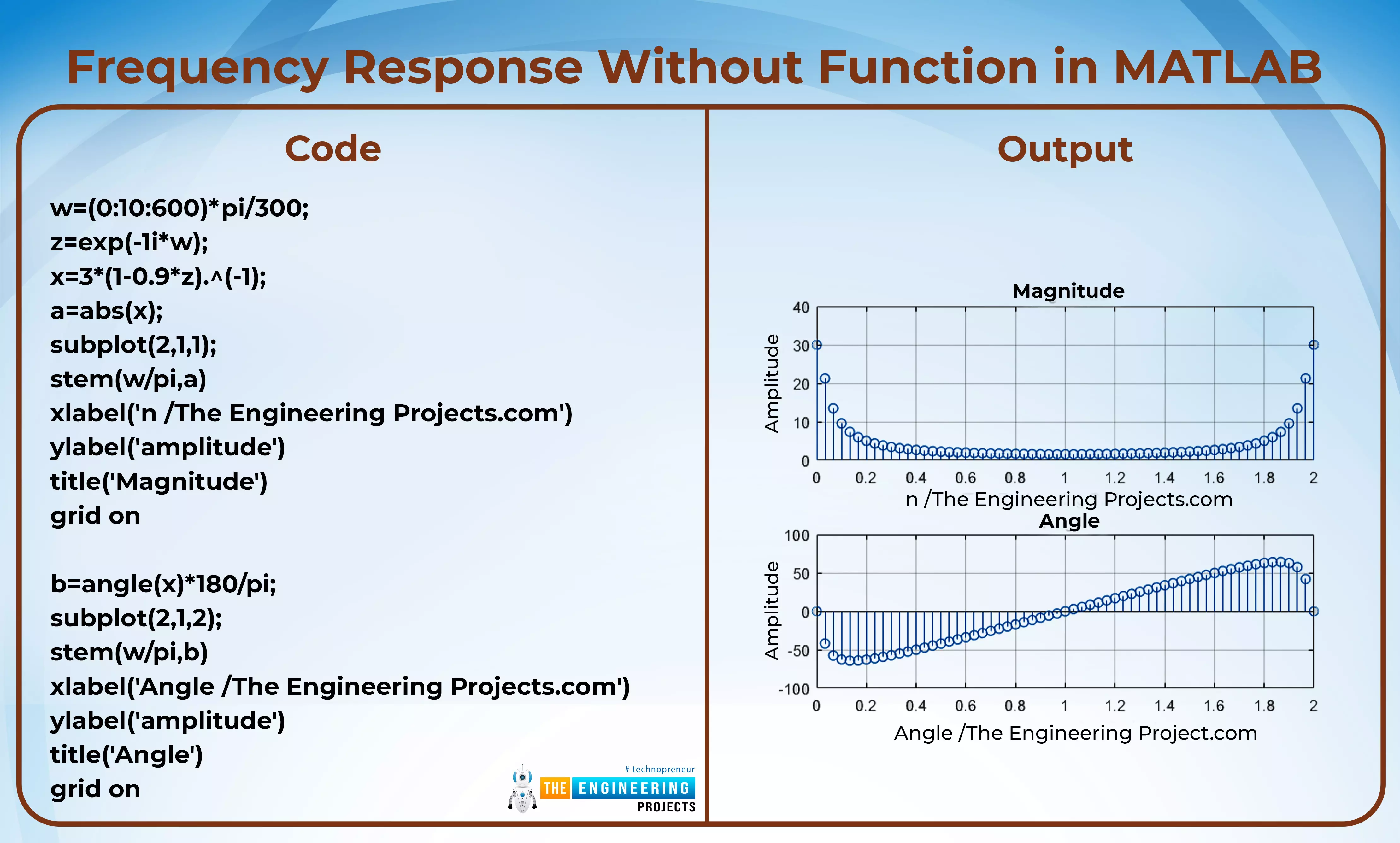
How is frequency response performed without the function i ...
Hi Fellas! I am back to give you a daily dose of valuable information. Today, I'll give you a detailed Introduction to IRF3205. It is an N-Channel HEXFET Power MOSFET that comes in a TO-220AB package and operates on 55V and 110A. It is mainly used for dynamic dv/dt rating and consumer full bridge applications.
Additionally, it falls under the category of ultra LOW on-resistance devices based on Advanced Process Technology, making it a building block of the electronic applications where fast switching is a major concern.
In this post, I'll cover each and everything related to this transistor, its main features, working, pinout, and applications. Let's get down to the nitty-gritty of this tiny component.
Introduction to IRF3205
IRF3205 is an N- ...
Hey Guys! Hope you all are doing great and having fun with your lives. I am back to feed your stomach with plenty of information so you can progress and grow in real life. Today, I am going to unlock the details on the Introduction to 2n3055. It is a semiconductor NPN (negative-positive-negative) power transistor which comes in TO-3 Casing.
I'll try to cover as many aspects possible related to this device so can get a brief overview about what it does and what are the applications it is used for. Let's get started.
Introduction to 2n3055
The 2n3055 is a semiconductor NPN bipolar transistor which consists of three terminals called emitter, base, and collector.
Unlike FETs(Field effect transistors) it is a current controlled device in which sm ...
Hello Friends! Hope you’re well today. I welcome you on board. In this post today, I’ll be discussing the Introduction to 1n5408.
The 1n5408 is a component where current flows in one direction only. It comes with two pins named anode and cathode. The Anode side is positive from where the current enters the diode and the cathode is negative from where the current leaves the diode. The colored band side is the indication that the side is the cathode and the other side without the colored band is the anode of the diode.
Just stay with me for a little while as I’ll walk you through the 1n5408 power diode pinout, datasheet, features, equivalents, and applications.
Let’s get started.
Introduction to 1N5408
The 1n5408 is a power diode where current ...
Hi Friends! Hope you are getting along with life pretty well. Today, I'll uncover the detailed Introduction to 2n5415 which is a PNP transistor mainly used for general purpose low-power amplifying and switching applications.
It comes with three layers: two P semiconductor layers and one doped N-layer where later is encapsulated between other two P-layers.
There are two major types of transistor: Bipolar Junction Transistor and Unipolar Transistor. This transistor falls under the category of Bipolar Junction Transistor as it comes with two charge carriers i.e. electrons and holes where later are the major charge carriers in PNP transistors.
In this post, I'll try to nail down everything related to 2n5415: its main features, working, and applicat ...
Hello friends, I hope you all are doing great. In today's tutorial, we are gonna have a look at detailed Introduction to TIP127. The TIP127 is a PNP type Darlington pair transistor. It is manufactured for universal drive amplifications and less velocity swapping submissions. It is existing in TO-220 kind of cascading. Its corresponding NPN transistor is the TIP122.
This is a common transistor it used in varied engineering schemes. It formed for least time taking swap proposals. In today’s post, we will have a look at its protection, wreck, difference, entitlements, etc. I will also share some links where I have connected it with other microcontrollers. You can also get more material about it in comments, I will guide you more about it. So, let’s g ...
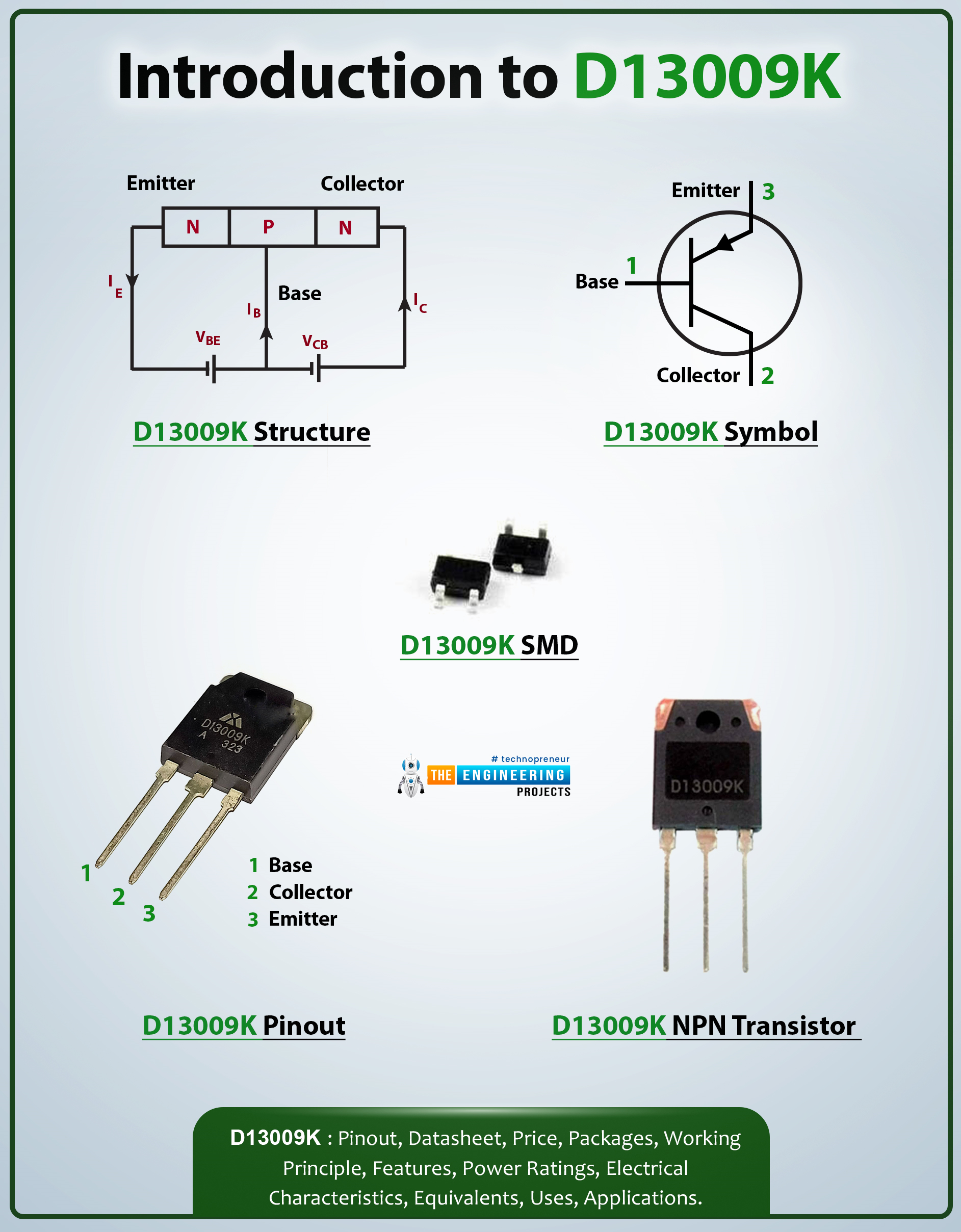
Hello Folks! I welcome you on board. Happy to see you around. In this post today, I’ll walk you through the Introduction to D13009K.
D13009K is a high voltage fast switching power transistor that falls under the category of NPN transistors. The collector current of this device is 12A which projects it can endure load under 12A. This chip is mainly used in amplification and switching applications. The small current change at one pair of terminals is used to produce a large current change across the remaining terminals. The power dissipation is 100W which features the amount of power this chip dissipates during the working of this integrated chip.
I recommend you check out this post all the way through as I’ll demonstrate the complete Introduction to D13009K covering datasheet, pin ...