Hey Fellas! Hope you are doing well. I feel pleasure to have you on this platform. Today, I'll discuss the detailed Introduction to Arduino Duemilanove which is a Microcontroller Board, introduced by Arduino.cc and is based on ATmega168 or ATmega328. It comes with 14 pins that can be used both ways: Input or Output. Duemilanove means "2009" in Italian.
Arduino boards have always been a good pick for hobbyists and students who intend to design projects that are mainly related to embedded system and automation. These boards are similar to microcontrollers, with little advantage over them as they come with some built-in peripheral features, setting you free from buying external components to employ automation in your project.
If we focus on Arduino ...
Today we will talk about an extremely powerful tool in the use of microcontrollers. The Serial communication, specifically the USART (Universal Synchronous Asynchronous Receiver Transmitter) standard.
The system works using two wires. RX (Receiver) and TX (Transmitter), connecting two devices. The RX of one is connected to the TX of the other. If the choice is for a synchronous connection, it may be necessary to add one or two more pins to operate as a “traffic light”. But most current microcontrollers can operate asynchronously, which saves us the expense of pins. Data is sent, as the name implies, in a series of bits.
ESP8266 provides us with two ports, one of them converted to USB in the NodeMCU module.
Applications
The range of uses of se ...
Hi everyone! Hope you’re well today. I welcome you on board. In this post today, I’ll walk you through the Introduction to P6KE220A.The P6KE200A is a transient voltage suppressor (TVS) diode that uses clamping action to provide circuit protection against overvoltage. It is widely used in low-voltage supplied ICs and MOS technology due to its quick response to transient overvoltages. For P6KE200A the clamping voltage is 246V and the breakdown voltage is ranged from 190V to 210V.
I suggest you read this entire post till the end as I’ll detail the complete introduction to P6KE200A covering datasheet, pinout, features equivalents, and applications of this component P6KE200A.
Introduction to P6KE200A
The P6KE200A is a transient voltage suppre ...
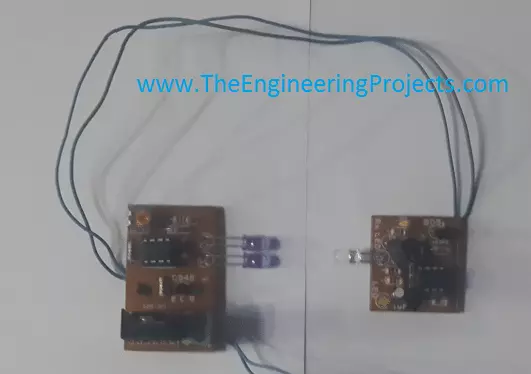
Hello everyone, hope you all are fine and having fun with your lives. Today's tutorial is quite simple and we will have a look at circuit diagram of IR sensor using 555 Timer. There are different types of IR sensors available in the market. IR is abbreviation of infrared and so they use infrared ray for detection of objects. There are many types of IR sensors with different functionality, but in all of them infrared rays are omitted from transmitter and are received by the receiver. and using these ray we can say whether an object is placed in the path or not.
Today we are gonna see how to design your own IR sensor using 555 Timer. We can also interface these IR sensors quite easily with any microcontroller like PIC Microcontroller , Arduino etc. ...
Hello everyone! I hope you all will be absolutely fine and having fun. Today, I will share the details discussion on Introduction to LM311. LM 311 is basically a voltage comparator having high speed. It can operate over wide ranges of voltage i.e. from -15V to15V, in case of operational amplifier. LM-311 can also operate on 5V for the logic systems.
LM-311 output levels has the compatibility with Transistor Transistor Logic (TTL) levels circuits. At 50mA and at 50V too, LM-311 can operate lamps and relays. LM 311 can operate from 0 degree Celsius to 70 degree Celsius. LM-311 has several different features. These features include fast response time, strobe capability, wide voltage supply ranges, maximum input current, operating at single 5V power ...
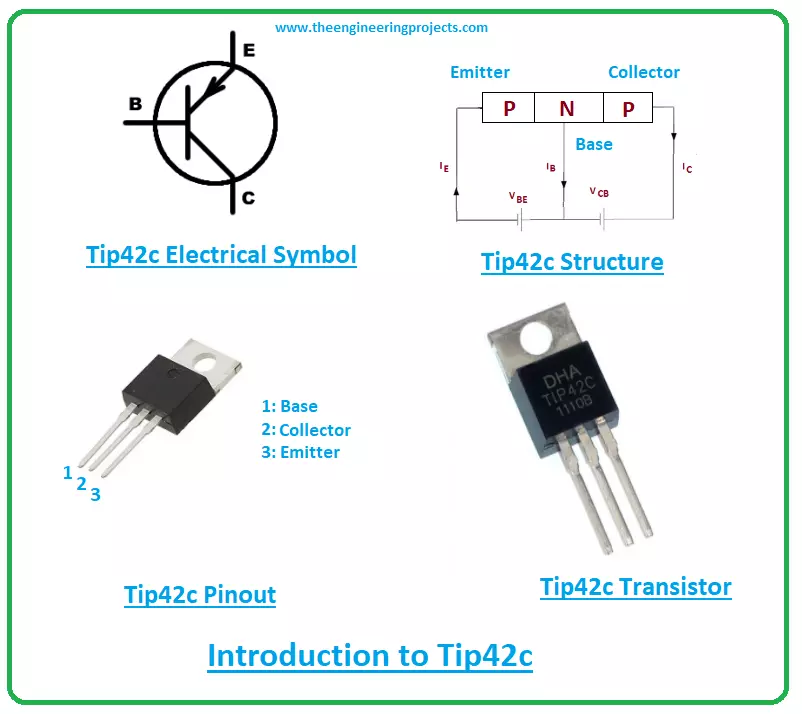
Hi Friends! I welcome you on board. Happy to see you around. In this post, I’ll detail the Introduction to Tip42c.
Tip42c is a medium power transistor mainly used for amplification and switching purpose. It is made up of silicon material and falls under the category of PNP transistors. The voltage across collector and emitter terminals is 100V and the voltage across base and collector terminals is 100V. The 5V is the voltage across base and emitter terminals which projects the value of voltage required to bias this transistor. The 6A is collector current which indicates the value of loads this transistor can support.
Just bear with me for a little while as I’ll be documenting the main features, pinout, applications, and datasheet of this tiny co ...
Hello friends, I hope you all are doing great. In today's tutorial, we are gonna have a look at a detailed Introduction to TCS3200. TCS3200 is a color-detecting sensor, it consists of TAOS TCS3200 RGB sensor chip and four white LEDs. It is used to detect visible color in a measurable range. This sensor has an array of a photodetector diode, some diodes are equipped with different color filters i.e. red, blue or green color and some diodes do not have any filter.
TCS3200 has different applications such as test strip reading, sorting by color and ambient light sensing. In today's post, we will have a look at its working, protocol, pinout, specification, etc. I will also share some links where I have interfaced it with other microcontrollers. If you have any questions about it ask in the c ...
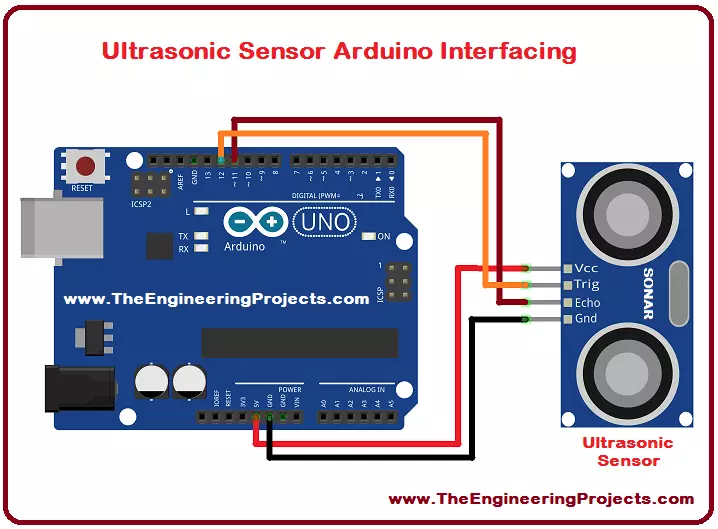
Hello everyone! I hope you all will be absolutely fine and having fun. Today, I would like to provide a complete discussion on Ultrasonic Sensor Arduino Interfacing. I would like to tell you some detail about ultrasonic sensor, after that we will move towards ultrasonic sensor Arduino interfacing. Ultrasonic sensor is also known as SONAR sensor. SONAR basically stands for Sound Navigation and Ranging. Ultrasonic is mostly used for the distance measurements. It can also be used for measuring the depth of the sea.
I have already shared Ultrasonic Sensor Library for Proteus. Ultrasonic/SONAR sensor is an electronic device used to estimate the distance of an object by continuously transmitting sound waves at a particular frequency and listens to tha ...
Hello friends, I hope you all are fine and having fun with your lives. In today's tutorial, I am going to show you How to use Arduino Serial Monitor. It's not gonna be a very big post but its really very essential if you wanna learn Arduino coding. Because Arduino Serial Monitor is a great debugging tool and it helps a lot in Arduino Projects. In the previous post we have seen How to use digitalRead in Arduino and if you recall that tutorial then you must remember that in it we have used some Serial printing. So that's what we are gonna cover in today's tutorial.
Before going into the details, I must suggest you to first read these two posts because in those tutorials I have shown the serial communication which is essential for Serial Monitor Work ...
Hi Friends! We welcome you on board. Electronic industry is already filled with a number of devices and components that help ease the daily life of a common man. However, there is always much room for innovation in the electronics industry when it comes to facilitating the customers. When there comes a requirement for switching and amplification, there is a need for transistors. Today, I am going to unlock the details on the Introduction to TIP120. This is an NPN Darlington transistor which is mainly used for general purpose amplification and medium power switching applications.
It comes with a Darlington pair in which two transistors are connected in such a way, the current amplified by the one transistor is being amplified further by the other ...