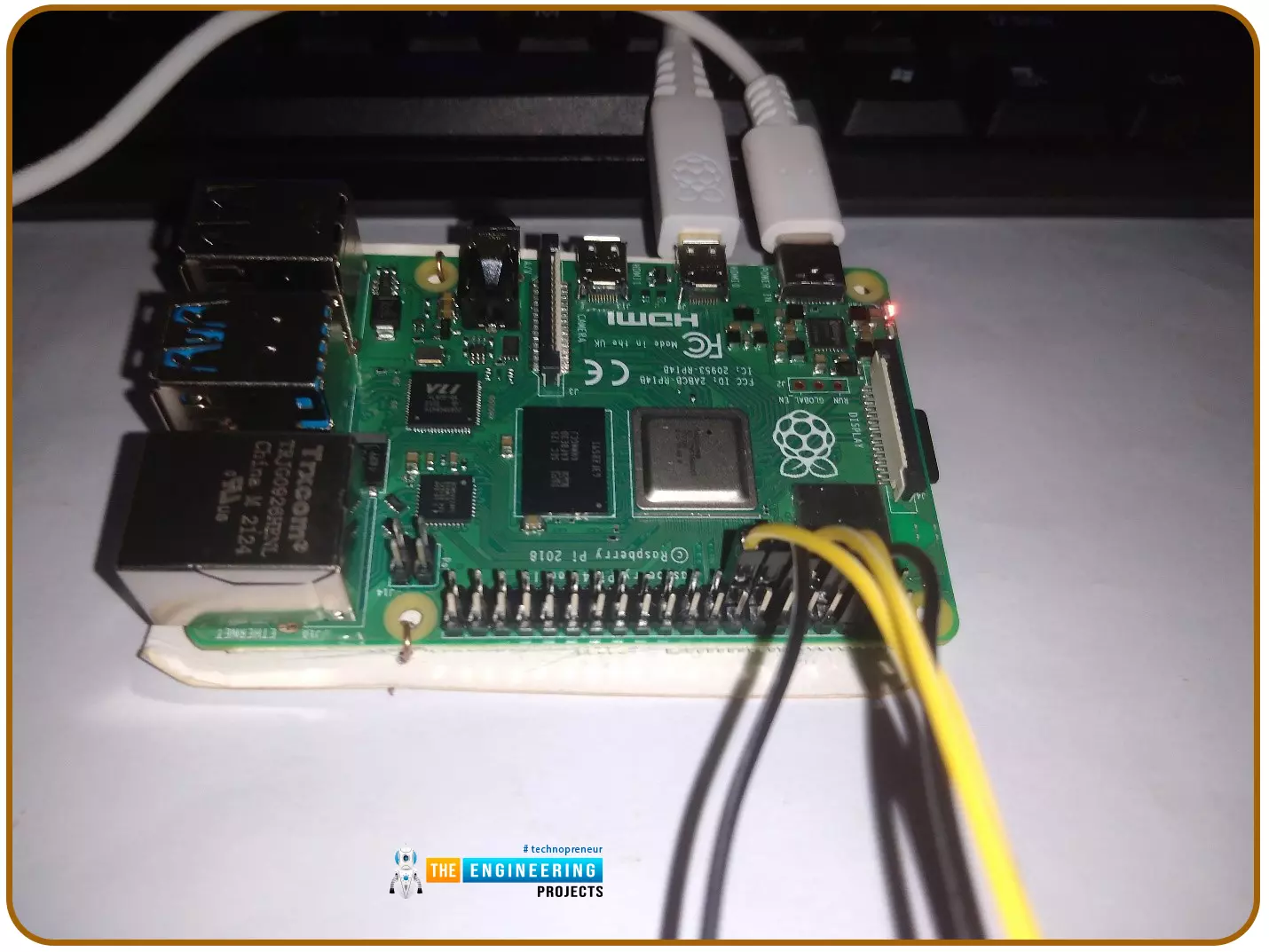
Hello friends, I hope you all are having fun. Welcome to the 10th tutorial of our Raspberry Pi programming course. In the last chapter, PWM was utilized to regulate the DC motor's speed and direction with a motor driver L293D. In this chapter, we'll advance our skills with PWM and use it to control a stepper motor using the same motor driver L293D. Here's the video demonstration of this project: Let's get started: Components Required Here's the list of components, which we will use to control the speed and direction of Raspberry Pi 4: Raspberry Pi 4. Stepper Motor. Motor Driver IC(L293D). Jumper wires. 9V Battery. Breadboard. The Raspberry Pi with desktop is required for this project. An SSH connection can be made, or the RPi can be shown on an LCD screen with a keyboard, and mouse. (We di ...
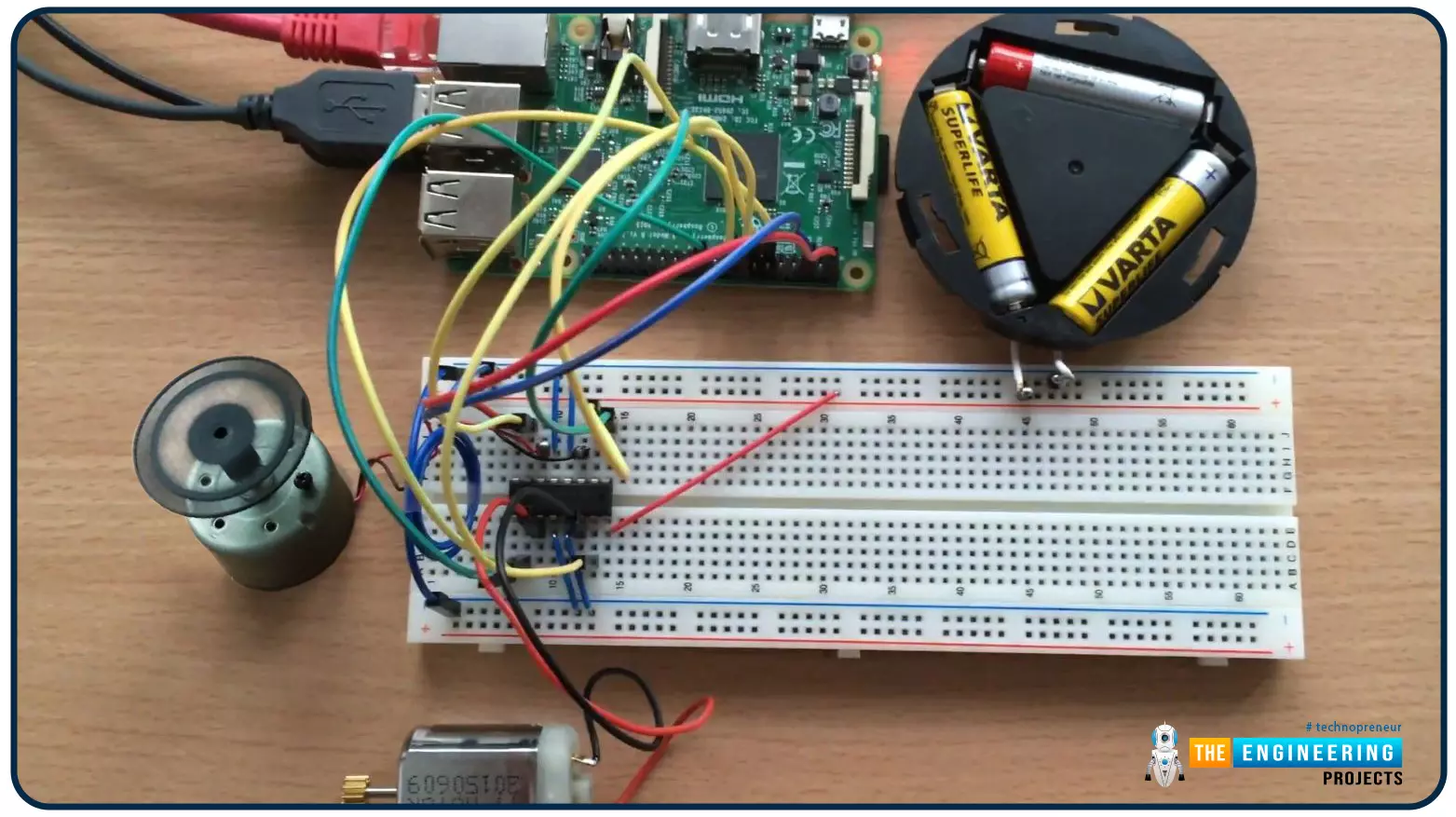
Hello friends, I hope you all are doing well. Welcome to the 9th tutorial of our Raspberry Pi programming course. In the last chapter, we generated a PWM signal from our Raspberry Pi to control the brightness of an LED. We also studied different functions used in Python to perform PWM. In this chapter, we'll get a bit advanced with PWM and use it to control the speed and direction of a DC motor with the help of a motor driver IC. To control the speed & direction of the DC Motor, we will: Design a Circuit Diagram. Write Python code. Components Required We will use the following components to control the DC motor speed: Raspberry Pi 4. DC Motor. Motor driver IC(L293D). Breadboard. Jumper wires. Controlling DC Motor speed with Raspberry Pi 4 In order to control the DC motor with any microcont ...
Hello friends, I hope you all are doing great. It's the 8th tutorial in our Raspberry Pi programming course. In the previous lectures, we interfaced LCD 16x2 and Keypad 4x4 with Raspberry Pi 4 . In this chapter, we are not going to interface any external module with Pi, instead, we'll create a PWM signal in the raspberry pi using Python. Let's get started: Components Required We are going to use the below components in today's PWM project: Raspberry Pi 4. LED. A resistor of 330 ohms. Breadboard. Jumper wires. Before going forward, let's first understand what is PWM: What is PWM? In PWM(Pulse Width Modulation) , we simply turn on and off our power supply at regular intervals and thus reduce the average power of the signal. We have shared a detailed tutorial on Introduction to PWM(Pulse Widt ...
Hey readers! I hope you are doing good and learning something. Have you ever thought about electric vehicles, which are rechargeable and run on a battery? Now, it is possible, and today, we will discuss electric vehicles. All over the globe, EVs have made a major difference by being a cleaner and cheaper way to travel than gasoline and diesel cars. Unlike cars with engines, electric cars are environmentally friendly because their engines use rechargeable batteries and give out no emissions. The rise in buyers and producers of EVs is thanks in part to new kinds of batteries, better motors, and certain actions taken by the government. Because of their various operating systems, Battery Electric Vehicles (BEVs), Plug-in Hybrid Electric Vehicles (PHEVs), Hybrid Electric Vehicles (HEVs), and Fu ...
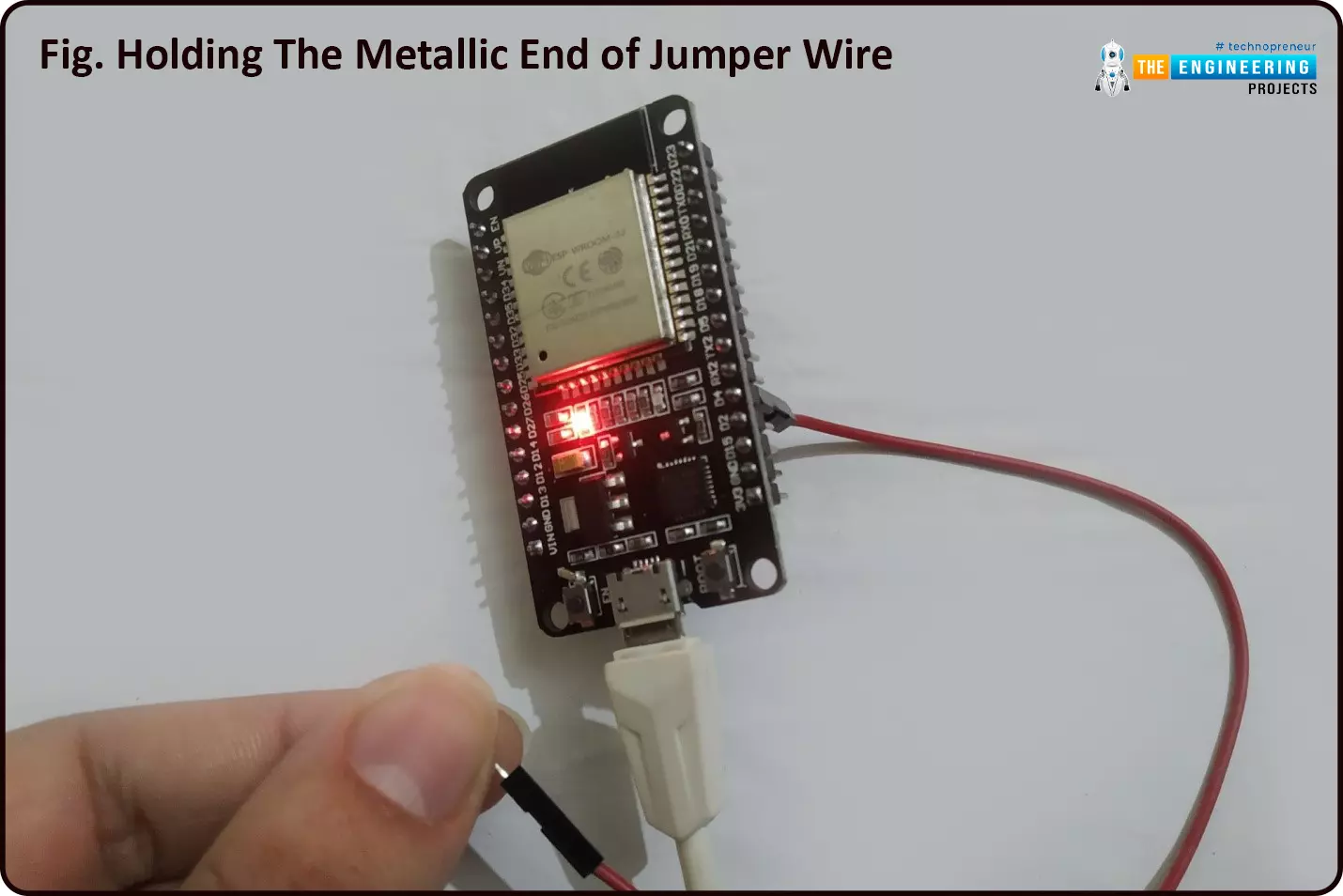
Hello readers, I hope you are all doing great. Welcome to the 2nd lecture of Section 5(ESP32 Sensors) in the ESP32 Programming Series . In the previous tutorial, we discussed the built-in ESP32 Hall Effect Sensor . In this tutorial, we will discuss another inbuilt sensor of the ESP32 i.e. Capacitive Touch Sensor . ESP32 Board has 10 built-in capacitive touch pins, which generate an electrical signal when someone touches these pins. These ESP32 touch pins are normally used to wake up the board from deep sleep mode. These touch pins are also used to replace the normal mechanical buttons with touch pads, improving the presentation of the IoT projects. Here's the video demonstration of the ESP32 Capacitive Touch Sensor: Before going forward, let's first understand how this touch sensor works: ...
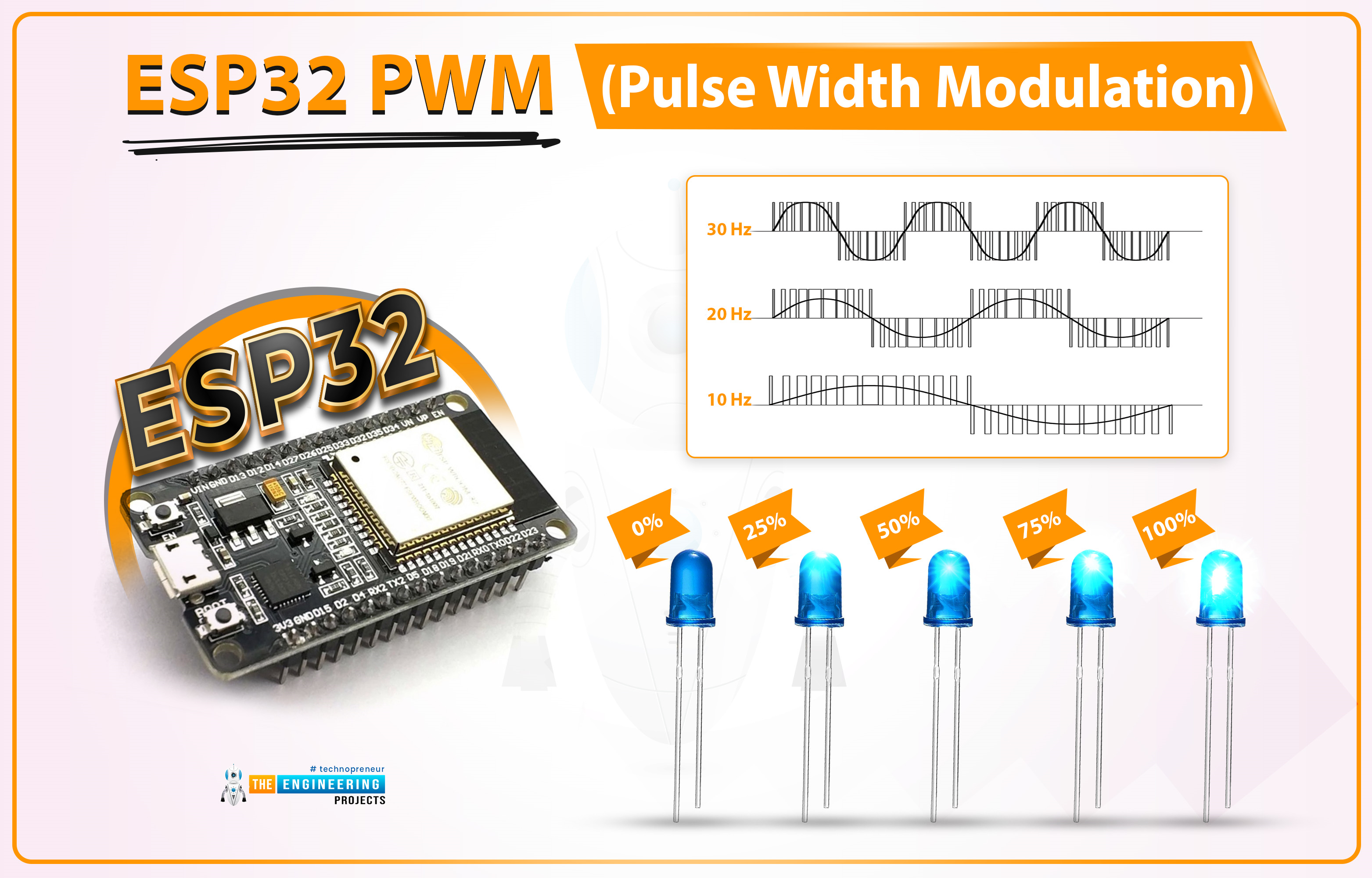
PWM stands for P ulse- W idth M odulation. Once the switching frequency (f sw ) has been chosen, the ratio between the switch-on time (T ON ) and the switch-off time (T OFF ) is varied. This is commonly called duty-cycle (D). The duty cycle can be between 0 and 1 and is generally expressed as a percentage (%). D = T ON / (T ON + T OFF ) = T ON x f sw The variation of the pulse width, made at a high frequency (kHz), is perceived as continuous and can be translated into a variation of the rotation speed of a motor, dimming a LED, driving an encoder, driving power conversion, and etc. The use of PWM is also widely used in the automotive sector in electronic control units (ECU - Electronic Control Unit) to manage the energy to be supplied to some actuators, both fixed and variable frequency. A ...
Hello readers, I hope you all are doing great. Welcome to the 3rd Lecture of Section 2 in the ESP32 Programming Series. In this tutorial, we are going to discuss another important feature of ESP32 i.e. PWM(Pulse Width Modulation) . Pulse Width Modulation is a technique to reduce the voltage by pulsating it. In today's lecture, we will first understand the basic concept of PWM, and after that will design two projects to fully grasp it. In the first project, we will control the brightness of an LED, while in the second one, we will control the speed of a DC Motor. Here's the video demonstration of PWM Control in ESP32: Before going forward, let's first have a look at the PWM working: What is Pulse Width Modulation? PWM is used to control the power delivered to the load by pulsating the ON-Ti ...
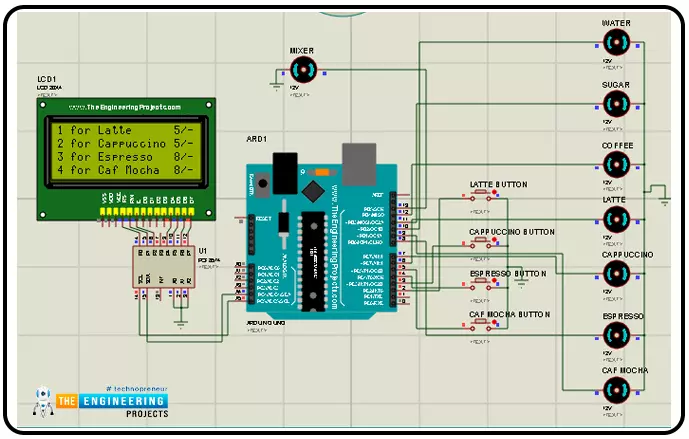
Hello geeks, Welcome to our new project. As most readers have already seen the coffee vending machine or maybe you are drinking coffee while reading this article and if you are a tinker or a geek, it must have come to your mind how to make a coffee vending machine on your own. In today's tutorial, we are going to learn how to make a Smart Coffee Vending Machine using Arduino with Proteus Simulation for the same. We can use this project for an engineering project’s showcase for electronics, electrical engineering students, and can be used in offices as well. Coffee is the second most popular drink in the world and it is one of the oldest beverages of the world. According to Wikipedia, more than 2 billion cups of coffee are consumed every day in the whole world. As engineers or working profe ...
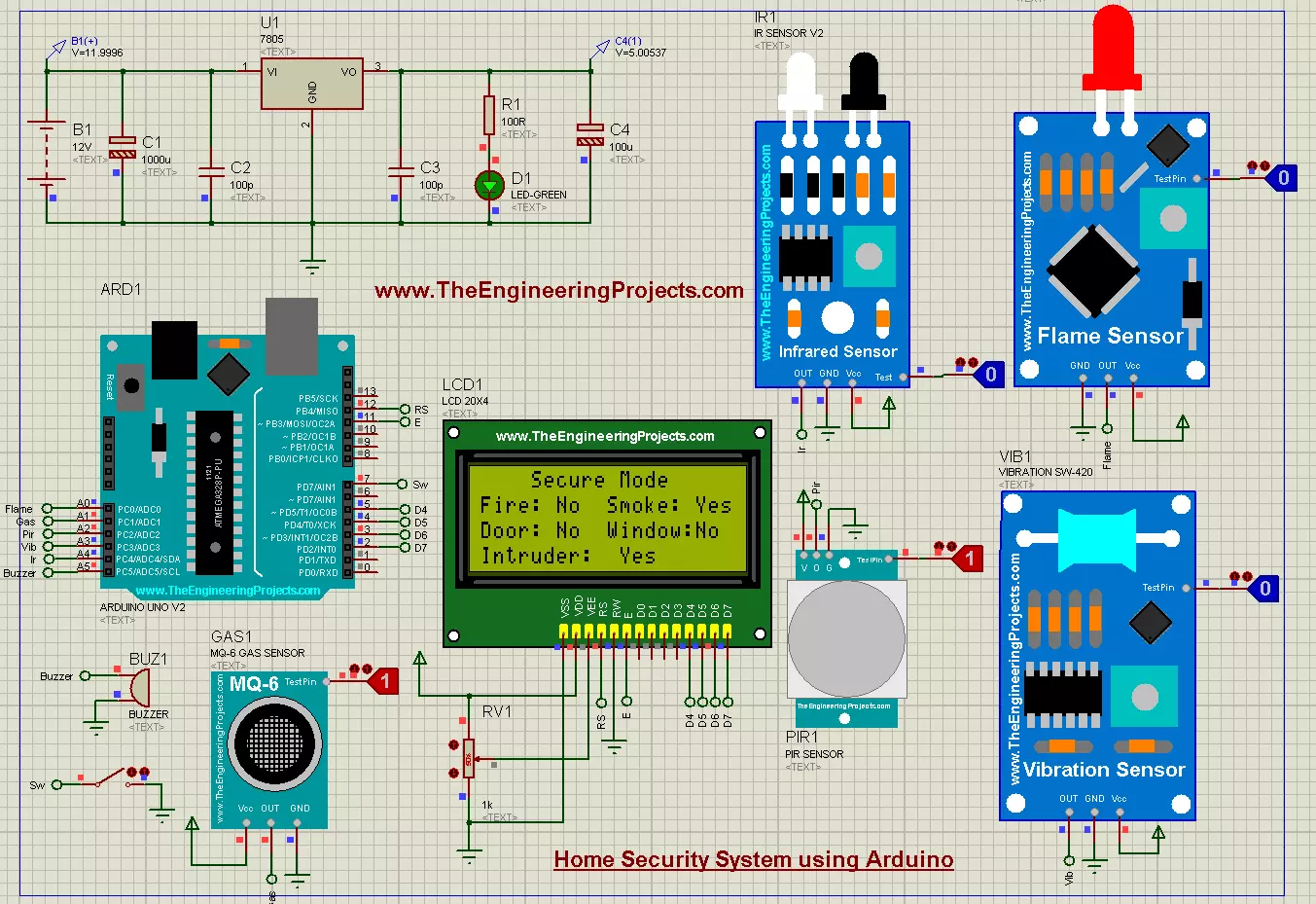
Hello friends, I hope you all are doing well. In today's tutorial, we are going to design a Home Security System using Arduino UNO in Proteus software. It's the most commonly designed engineering project, especially in electrical, electronics and mechatronics engineering. Normally engineering students design it as a semester project during their engineering course. So, today we will design a home security system from scratch in Proteus software. I have given the complete project below to download but I would suggest you to design it on your own so that you could understand it better. So, let's get started: Libraries Libraries used in this project Arduino Library for Proteus: V2.0 (2021, used in this project) · latest version: V4.0 (October 2026) Flame Sensor Library for Proteus: V1.0 (2016 ...
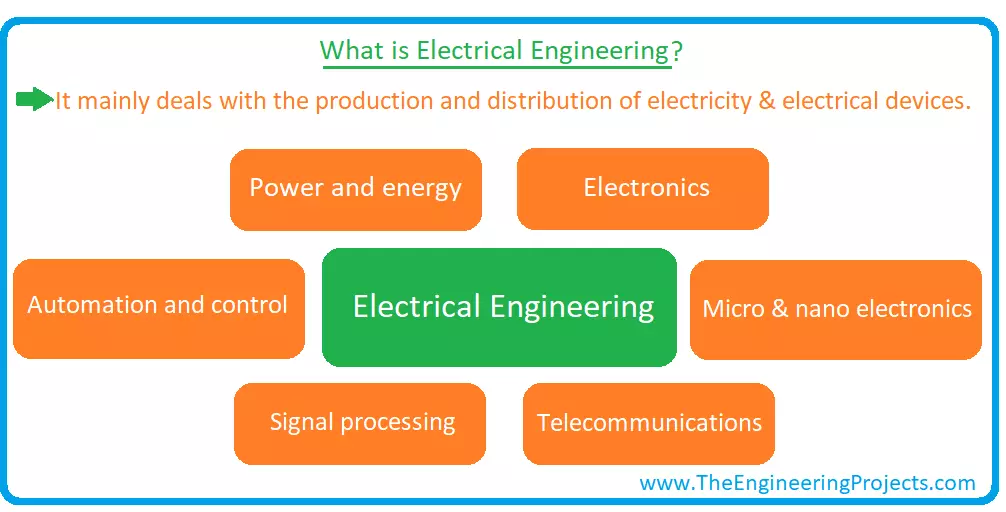
Hello friends, I hope you are having a good time. In today's tutorial, I am going to discuss detailed information about what is Electrical Engineering? We will cover the following contents; Electrical Engineering fields, major & minor courses, Scope, Jobs, Salary, famous electrical engineers & their contributions and top universities that offer Electrical Engineering degrees. Before further discussing our topic, let me ask you a question. Did you ever imagine your life without electricity? We can’t, right? That’s why, I always find electrical engineering, including its FE Electrical aspect, the most developed and broad field of engineering, provides thousands of job opportunities in different companies. For example, from smartphones to power generation houses, companies everywhere require ...